IMDb RATING
7.3/10
3.1K
YOUR RATING
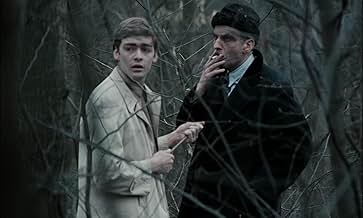
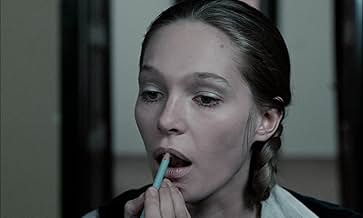
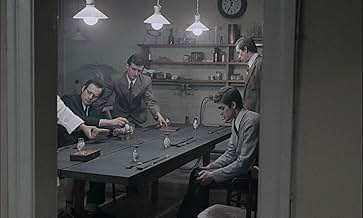
During Nazi occupation of WWII Poland, after his family's slaughter, a husband joins the resistance while hunted by Gestapo. He aids a woman in labor, works as a typhus vaccine guinea pig, a... Read allDuring Nazi occupation of WWII Poland, after his family's slaughter, a husband joins the resistance while hunted by Gestapo. He aids a woman in labor, works as a typhus vaccine guinea pig, and confronts a man tortured in his place.During Nazi occupation of WWII Poland, after his family's slaughter, a husband joins the resistance while hunted by Gestapo. He aids a woman in labor, works as a typhus vaccine guinea pig, and confronts a man tortured in his place.
- Director
- Writers
- Stars
- Director
- Writers
- All cast & crew
- Production, box office & more at IMDbPro
7.33.1K
1
2
3
4
5
6
7
8
9
10
Featured reviews
I have watched into the void and it's filled with lice.
I have watched into the void and it's filled with lice. The Third Part of the Night has been described as many things, but HORROR is the one word that makes justice to it. The one thing mostly remotely like it are the Silent Hills games and Come and See. At first I could not tell that the film was set in WWII, but when it became apparent to me, the riddle of the film also became apparent. Most of the film is actually a rather straightforward film, but the way the events are realized it becomes a surreal vision of the end of the world. I have trouble describing it other than a disturbing nightmare about the end of time. A furious debut of a filmmaker, possessed by the Gods of film, who summon a town beyond space, time and hope.
Surreal take on Nazi occupied Poland
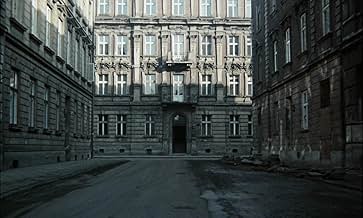
The film jumps between time-lines and characters in a somewhat confusing manner with dead figures re-appearing throughout the film, so trying to give a detailed story-line is somewhat pointless. The dialogue is extreme and sometimes absurd, but that only adds to the atmosphere of a character being eaten by lice and perhaps in a fever. The lice thing is based on fact - Polish resistance fighters were happy to put themselves forward for scientific experimentation with lice (in an effort to eradicate typhoid), as no German soldiers would go near them if their cards said that they were involved in the programme. The lice in any case are a symbol of war - people sucking the blood out of each other etc. A chaotic and incoherent film, but amazing first-time direction from Zuwavski. It is all filmed in hand-held camera (usual stuff now, but extremely unusual back in the early 70's), so there is a lot of movement. The film was made in Krakow and the city looks nothing like is now - an empty desolate filthy city of dilapidated grey building. Very Kafka-esque indeed, with stark bleak colours. I liked the film for atmosphere and cinematics, but many will not if they concentrate on the story and often somewhat obscure dialogue.The film was a big thing when it came out in Poland with huge queues to see it by the public - it has lost its relevance today and looks VERY dated (ie. as does all Polish 1970s cinema), but is still an interesting view.
10raul-4
Death and schizophrenia
Having seen two other movies by Zulawski, that forgotten artist, I'm starting to distinguish a style, some themes and his conception of human emotions. He doesn't care to develop a clear story, he has a way of surprising us continually through the exploitation of the characters which cover all the range of emotions. He can take any human and expose them to supernatural occurrences until they goes mad; they live in a constant nightmare. His actors occasionally go in a real trance and purge themselves of all emotions, crying and laughing simultaneously. It seems as if he is dissecting humans and beneath all that flesh and terror there lies a spirit, alone and in darkness.
Near the end someone cites the Apocalypse, and goes something like this: and then they will search for death and they won't find it. And that seems as the center point to the movies I've seen. In a way you can say he believes in an eternal return of the soul, but what he longs for is tranquility in death and so life to him is just a terrible passing, and so it is occasionally for many.
About the movie, well, it can be mistaken for some supernatural horror flick, some will be repelled by the style others will embrace it. But to me his movies are more of the overall experience and the way they linger in our subconscious as an infernal palace which we try to discredit and judge unreal, but which we inhabit.
Near the end someone cites the Apocalypse, and goes something like this: and then they will search for death and they won't find it. And that seems as the center point to the movies I've seen. In a way you can say he believes in an eternal return of the soul, but what he longs for is tranquility in death and so life to him is just a terrible passing, and so it is occasionally for many.
About the movie, well, it can be mistaken for some supernatural horror flick, some will be repelled by the style others will embrace it. But to me his movies are more of the overall experience and the way they linger in our subconscious as an infernal palace which we try to discredit and judge unreal, but which we inhabit.
A film I can appreciate and almost admire, but not necessarily enjoy.
A film which very much captures what a nightmare feels like; The film does a superb job of really immersing you into the moody and horrifying world and sends you on a confusing 'adventure' alongside Michal. It features some really amazing camera work, some of the best I have seen. But a lot of the religious and philosophical dialogue and themes just didn't click with me, and at times it can seem rather 'silly'. And the ending music seems almost insulting, like "look, we gotcha!" (Cue cool rock music)
Amazing cinematic velocity
Just watched the excellent Second Run DVD release of this film, and I was not disappointed. He must be one of the most underrated directors alive at the moment. In each of his movies (I have only seen two others) he manages to create an amazing cinematic velocity, you are not sure about the meaning and of the plot twists, but you are defenseless against the intensity of the camera-work, editing, performances and staging. He uses film in the way I usually find most interesting, to convey dream states and give fragmented views into other worlds, in that sense he is like Bergman when he was at his best. I can't help comparing the two since Bergmans recent passing and my seeing this film happened almost simultaneously...Watching this film is like experiencing someones nightmare, based in a gritty reality but at the same time far removed from it, and also managing to convey political issues in a non-realistic way. Which is the way I prefer, not ramming it down the audiences throats, but keeping it in the subtext for you to explore if you want.
Did you know
- TriviaIs based (in part) on the life of the director's father, Miroslaw Zulawski, during the Second World War. Similarities include the birth of his first son during the occupation of Lwow, Poland (now L'viv, Ukraine), being a member of the Armia Krajowa (A.K., or Home Army, essentially the Polish underground), and working as a lice feeder at The Rudolf Weigl Institute.
- ConnectionsReferenced in The Other Side of the Wall: The Making of Possession (2009)
- How long is The Third Part of the Night?Powered by Alexa
Details
- Release date
- Country of origin
- Language
- Also known as
- Ein Drittel der Nacht
- Filming locations
- Production company
- See more company credits at IMDbPro
- Runtime
- 1h 47m(107 min)
- Sound mix
- Aspect ratio
- 1.66 : 1
Contribute to this page
Suggest an edit or add missing content