IMDb RATING
7.8/10
67K
YOUR RATING


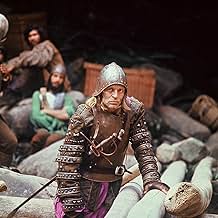
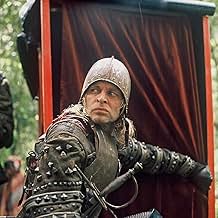
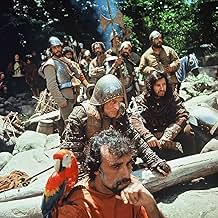
In the 16th century, the ruthless and insane Don Lope de Aguirre leads a Spanish expedition in search of El Dorado.In the 16th century, the ruthless and insane Don Lope de Aguirre leads a Spanish expedition in search of El Dorado.In the 16th century, the ruthless and insane Don Lope de Aguirre leads a Spanish expedition in search of El Dorado.
- Awards
- 4 wins & 3 nominations total







Claus Biederstaedt
- Brother Gaspar de Carvajal
- (voice)
- (uncredited)
Lothar Blumhagen
- Don Pedro de Ursua
- (voice)
- (uncredited)

Heinz Theo Branding
- Don Fernando de Guzman
- (voice)
- (uncredited)
Christian Brückner
- Balthasar
- (voice)
- (uncredited)
- Director
- Writer
- All cast & crew
- Production, box office & more at IMDbPro
7.866.8K
1
2
3
4
5
6
7
8
9
10
Featured reviews
Herzog's masterpiece
AGUIRRE: THE WRATH OF GOD (1972) Spaniards in search of El Dorado descend down an intense mountain peak with barely a path on it. Men slosh through a wet jungle forest with cannibals, dragging horses, cannons and women on thrones with them. Rafts try to navigate harsh rapids with no end in sight, sending one of them into a whirlpool. This is the first ten minutes. And it is probably easier than what it took to make the film.
Werner Herzog's masterpiece follows Klaus Kinski as a conquistador leading a group of men through his personal madness in Peru, searching for the mythical city of gold. Kinski wasn't an actor, he was a time-traveller, and his performances for Herzog are his best. My favorite scene of all his work is in this film early-on: as the huge group of slaves struggle and burn their souls carrying a woman on a throne-chair against the unforgiving jungle mud and trees, Kinski suddenly appears in the middle to offer a helping hand. He writhes and morphs, grabbing the slaves and shoving them, screaming at the top of his lungs, "Fools!!! The sedan chair is stuck!"
AGUIRRE is what got Herzog noticed around the world as part of a new group of German filmmakers along with Fassbinder and Wenders. His previous film was EVEN DWARVES STARTED SMALL, which resulted in Kinski calling him, "A mere dwarf director." The battles between he and Kinski should be legendary by now. The final result in Herzog stating he will grab his gun and kill both himself and Kinski as the actor was threatening to leave the production. Kinski was convinced and finished the film.
This story and more is part of the excellent analog track by Herzog, covering all of the hardcore production that overwhelms the more famous Coppola problems making Apocalypse Now. Herzog didn't have millions of dollars, rather 300 grand, had to live on the rafts for months and deal with the jungle and Kinski. But he never bitches - you do what you have to do, and the film is never compromised, from the costumes, the beautiful real locations and the boat hanging in the tree to the eerie group of small monkeys at the end (which Herzog had to steal, even though he paid for them). The analog track is constant (many now seem to take pauses to watch the film) with background on the idea, actors, filming and philosophies. Yes, that is a real mummy in the cannibal camp, for which Herzog's brother had to buy a passenger ticket for the plane ride over.
The DVD is another fantastic release giving the nice treatment to a title that can't be making them millionaires. The image looks great and is not letterboxed, so I assume that that is how Herzog prefers it. The three trailers didn't add much to the presentation, but that's a minor point. When they are finished with the entire Herzog collection, it will be one of the most fascinating career studies on DVD.
Werner Herzog's masterpiece follows Klaus Kinski as a conquistador leading a group of men through his personal madness in Peru, searching for the mythical city of gold. Kinski wasn't an actor, he was a time-traveller, and his performances for Herzog are his best. My favorite scene of all his work is in this film early-on: as the huge group of slaves struggle and burn their souls carrying a woman on a throne-chair against the unforgiving jungle mud and trees, Kinski suddenly appears in the middle to offer a helping hand. He writhes and morphs, grabbing the slaves and shoving them, screaming at the top of his lungs, "Fools!!! The sedan chair is stuck!"
AGUIRRE is what got Herzog noticed around the world as part of a new group of German filmmakers along with Fassbinder and Wenders. His previous film was EVEN DWARVES STARTED SMALL, which resulted in Kinski calling him, "A mere dwarf director." The battles between he and Kinski should be legendary by now. The final result in Herzog stating he will grab his gun and kill both himself and Kinski as the actor was threatening to leave the production. Kinski was convinced and finished the film.
This story and more is part of the excellent analog track by Herzog, covering all of the hardcore production that overwhelms the more famous Coppola problems making Apocalypse Now. Herzog didn't have millions of dollars, rather 300 grand, had to live on the rafts for months and deal with the jungle and Kinski. But he never bitches - you do what you have to do, and the film is never compromised, from the costumes, the beautiful real locations and the boat hanging in the tree to the eerie group of small monkeys at the end (which Herzog had to steal, even though he paid for them). The analog track is constant (many now seem to take pauses to watch the film) with background on the idea, actors, filming and philosophies. Yes, that is a real mummy in the cannibal camp, for which Herzog's brother had to buy a passenger ticket for the plane ride over.
The DVD is another fantastic release giving the nice treatment to a title that can't be making them millionaires. The image looks great and is not letterboxed, so I assume that that is how Herzog prefers it. The three trailers didn't add much to the presentation, but that's a minor point. When they are finished with the entire Herzog collection, it will be one of the most fascinating career studies on DVD.
A disappointment.
I definitely would not say that I find nothing about this film to recommend. The story is compelling, as is the script's exploration of Aguirre's character. When Aguirre says that he intends to stage history as some men do plays, I believe it is a moment of genius. But that is about all that interests me in this film.
As far as the direction goes, I was not impressed. The actors seem uncomfortable and the scenes come off as deliberately staged, which is in stark contrast to the filming style, which wants to try and capture everything as natural. The sound is natural and possibly untouched, the camera work is documentary style. The contrast between the home movie feel of the camera and sound and the awkwardness of the actors on scene is jarring.
I read in another review that many of the shots were first and only takes. This comes as no surprise when one sees the film. So much of it seems unnatural. This can certainly be used to good effect. David Lynch, for instance, uses styles that are very unnatural, but they fit in with his overall vision of the film. The acting, the blocking, the lighting, the sound, the camera work... it all fits together into a coherent hole, no matter how absurd the pacing of the dialogue in Lost Highway, for instance, may seem on its own. I got no such impression of cohesion from Aguirre: Der Zorn Gottes.
Worst of all, the film very suddenly gets quite silly towards the end, almost like a lost episode of Monty Python's Flying Circus. I am sure that many people would say that I missed the point, that the ridiculousness was meant to represent their hallucinations, and they may be right. But I still was put off by it.
This was my first experience with Werner Herzog, and perhaps later on I will regret typing this review, like the critics who tore into Psycho only later to put it on their Ten Best list for the decade of the sixties. But this was my impression of the movie. I can see certain attractive aspects, but I cannot say that I enjoyed it.
As far as the direction goes, I was not impressed. The actors seem uncomfortable and the scenes come off as deliberately staged, which is in stark contrast to the filming style, which wants to try and capture everything as natural. The sound is natural and possibly untouched, the camera work is documentary style. The contrast between the home movie feel of the camera and sound and the awkwardness of the actors on scene is jarring.
I read in another review that many of the shots were first and only takes. This comes as no surprise when one sees the film. So much of it seems unnatural. This can certainly be used to good effect. David Lynch, for instance, uses styles that are very unnatural, but they fit in with his overall vision of the film. The acting, the blocking, the lighting, the sound, the camera work... it all fits together into a coherent hole, no matter how absurd the pacing of the dialogue in Lost Highway, for instance, may seem on its own. I got no such impression of cohesion from Aguirre: Der Zorn Gottes.
Worst of all, the film very suddenly gets quite silly towards the end, almost like a lost episode of Monty Python's Flying Circus. I am sure that many people would say that I missed the point, that the ridiculousness was meant to represent their hallucinations, and they may be right. But I still was put off by it.
This was my first experience with Werner Herzog, and perhaps later on I will regret typing this review, like the critics who tore into Psycho only later to put it on their Ten Best list for the decade of the sixties. But this was my impression of the movie. I can see certain attractive aspects, but I cannot say that I enjoyed it.
Delusions of Grandeur
My expectations going in to this film were pretty high given its critical acclaim and reputation. Grizzly Man is the only other Herzog film I have seen and it happens to be my current favorite documentary of all time, so needless to say I was quite excited to see another film by him. And I'm happy to report that, although on a first viewing I didn't love it to quite the same degree as Grizzly Man, Aguirre: The Wrath of God definitely did not disappoint.
I was quite interested to see what Herzog's style would be like as a filmmaker working with his own script and actors rather than as a documentarian. Based only on this film, he definitely seems to have a very deliberate, methodical air to his direction. The entire film is very even-toned and it slides along at a steady pace that feels neither fast nor slow. There is definitely an emotional coldness to the film that feels almost Kubrickian. None of the characters are very relatable or likable; quite the contrary in fact - they are consumed by greed, selfishness and delusions of grandeur, our "hero" in particular. Thus, there is an emotional distance between the audience and the characters that is definitely reminiscent of a Kubrick film.
And ironically, despite the fact that I turned to this movie as my first Herzog non-documentary, the film almost feels like a documentary. The way the film is shot with hand-held camera and without any pomp or dramatization makes everything feel so real and authentic. It's very obvious that everything in the film was done for real on location and that is to its advantage as you really feel like you're there with these men rather than just watching a dramatization.
This ultra-realism also works very well in bringing the themes of the film through and making them resonate. The film is clearly about man's misguided and even delusional thirst for power. Aguirre embodies this more than anyone in the film - a man with very clear delusions of grandeur who fancies himself a god despite clear evidence that his expedition is futile and doomed to failure. Klaus Kinski gives a spectacular performance in this role which is even more impressive given his relatively minimal amount of dialogue. He just has such an ominous presence on screen, his face perpetually twisted in a snarl, and he becomes almost hypnotic to watch as the film goes on.
And it isn't just Aguirre. Essentially every Spaniard in the film engages in treachery at least once, including the holy man who utters one of the most searing lines of the film: "You know, my child, for the good of our Lord, the Church was always on the side of the strong." Ouch. These men commit mutiny, elect "emperors", make grand declarations of land ownership, and hold trials with their only audience being the indifferent tangle of vegetation and the raging river. The realism of the film perfectly captures how delusional these men really are as they parade around with their notions of power and fame in the middle of the jungle. Nothing could be further from the truth as they slowly succumb one by one, lost in a foreign and foreboding land. And their impossible goal of finding El Dorado, the imaginary city of gold, is the perfect metaphor for their delusion. A great strength of the film is that the way this theme is executed feels so universal. Herzog isn't just showing us the madness of these particular men in this particular scenario, he's showing us the madness of man in general. He showing us that these illusions of power are just that - illusions. In the grand scheme of the world and the universe, the titles of men are meaningless and transient.
Aguirre: The Wrath of God is a powerful film and an impressive achievement from a filmmaking perspective. However, it is definitely not a movie that is out to entertain or dazzle its audience. It is a film of ideas rather than plot or spectacle. Really the only criticism I can make of the film on a first viewing is that there were some moments of humor which felt a bit out of place given the tone of the film - a man makes a quip after being shot with an arrow or a decapitated head speaks its last word. There is definitely an absurdity to the film and you could argue that these scenes play to that, but I felt these moments perhaps went a bit to far and were too cartoony to mesh well within the film's fabric of realism. Regardless, it's a minor complaint which does very little to sour an otherwise excellent film.
I was quite interested to see what Herzog's style would be like as a filmmaker working with his own script and actors rather than as a documentarian. Based only on this film, he definitely seems to have a very deliberate, methodical air to his direction. The entire film is very even-toned and it slides along at a steady pace that feels neither fast nor slow. There is definitely an emotional coldness to the film that feels almost Kubrickian. None of the characters are very relatable or likable; quite the contrary in fact - they are consumed by greed, selfishness and delusions of grandeur, our "hero" in particular. Thus, there is an emotional distance between the audience and the characters that is definitely reminiscent of a Kubrick film.
And ironically, despite the fact that I turned to this movie as my first Herzog non-documentary, the film almost feels like a documentary. The way the film is shot with hand-held camera and without any pomp or dramatization makes everything feel so real and authentic. It's very obvious that everything in the film was done for real on location and that is to its advantage as you really feel like you're there with these men rather than just watching a dramatization.
This ultra-realism also works very well in bringing the themes of the film through and making them resonate. The film is clearly about man's misguided and even delusional thirst for power. Aguirre embodies this more than anyone in the film - a man with very clear delusions of grandeur who fancies himself a god despite clear evidence that his expedition is futile and doomed to failure. Klaus Kinski gives a spectacular performance in this role which is even more impressive given his relatively minimal amount of dialogue. He just has such an ominous presence on screen, his face perpetually twisted in a snarl, and he becomes almost hypnotic to watch as the film goes on.
And it isn't just Aguirre. Essentially every Spaniard in the film engages in treachery at least once, including the holy man who utters one of the most searing lines of the film: "You know, my child, for the good of our Lord, the Church was always on the side of the strong." Ouch. These men commit mutiny, elect "emperors", make grand declarations of land ownership, and hold trials with their only audience being the indifferent tangle of vegetation and the raging river. The realism of the film perfectly captures how delusional these men really are as they parade around with their notions of power and fame in the middle of the jungle. Nothing could be further from the truth as they slowly succumb one by one, lost in a foreign and foreboding land. And their impossible goal of finding El Dorado, the imaginary city of gold, is the perfect metaphor for their delusion. A great strength of the film is that the way this theme is executed feels so universal. Herzog isn't just showing us the madness of these particular men in this particular scenario, he's showing us the madness of man in general. He showing us that these illusions of power are just that - illusions. In the grand scheme of the world and the universe, the titles of men are meaningless and transient.
Aguirre: The Wrath of God is a powerful film and an impressive achievement from a filmmaking perspective. However, it is definitely not a movie that is out to entertain or dazzle its audience. It is a film of ideas rather than plot or spectacle. Really the only criticism I can make of the film on a first viewing is that there were some moments of humor which felt a bit out of place given the tone of the film - a man makes a quip after being shot with an arrow or a decapitated head speaks its last word. There is definitely an absurdity to the film and you could argue that these scenes play to that, but I felt these moments perhaps went a bit to far and were too cartoony to mesh well within the film's fabric of realism. Regardless, it's a minor complaint which does very little to sour an otherwise excellent film.
Incredibly intense film
AGUIRRE: THE WRATH OF GOD (Werner Herzog - West Germany 1972).
Herzog's daring and unconventional approach in film-making is something very few filmmakers can match. Due to the incredible hardships while filming on location in the Amazonian jungle, the myth surrounding AGUIRRE has almost outgrown the virtues of the film itself and over the years it has become an almost integral part when (re)viewing this film, even more so since Herzog's documentary MY BEST FIEND (1999) was released about his relationship with "best enemy" and star in many of his films, Klaus Kinski.
A mesmerizing exploration of human obsession based on the diaries of Gaspar de Varvajal, a monk who accompanied Gonzalez Pizarro (half-brother of the brutal conqueror of the Incas) and died during the expedition, the film chronicles Pizarro's 1560 Peruvian expedition in search of the legendary city of gold, El Dorado. When the expedition is faltering by the difficult terrain, Pizarro decides to send a small party ahead to determine if exploration should continue. Though Don Pedro de Ursua (Ruy Guerra) is put in charge, he is soon challenged by the ambitious fanatical Aguirre (Klaus Kinski), who against all odds wants the journey to continue, with catastrophic consequences.
One of the key elements in Herzog's work is the use of landscape and the natural surroundings. The Amazonian jungle is a key third dimension in the film and really is a green hell, threatening and unforgiven. There's no romanticism in Herzog's view of nature. The continuing sounds of the running water and the birds are just as important for the story and the despair of Aguirre's men as the ambient electronic soundtrack by the German ensemble Popol Vuh, the ultimate modern and very German pioneers in electronic music, mixing choral chants with electronic samples and organ music. To me it is simply astonishing Herzog decided to use their in a film about 16th century Spanish explorers shot on location in the Amazon and somehow it works wonderfully, a perfect blend of image and sound. Hard to identify a very important element of the "natural soundtrack": what's the name of the bird that produces this whistling shriek, that is heard almost continuously in the background and is one of the most recognizable sounds of Neo-tropical rain forests? A Quetzal?
Klaus Kinski's performance is a perfect match for Aguirre's descent into madness, eerily resemblant to Kinski's own Mad Kraut persona and well-published rampant behavior on the set and his misconduct in general actually. Watching the film for the first time with audio commentary by Herzog and he revealed many things I never heard before. One of the strangest anecdotes is not really about the film itself but is, well..truly one of the most bizarre things I ever heard.
Before the shooting started, Herzog and his crew were boarding for the plane that would bring them from Lima to Cuzco when the airplane had some technical problems. Since the airline company in question already had two or three serious accidents not long before, they decided to wait and take the next plane. Repaired or not, the plane left off anyway and crashed in the Amazonian jungle with the only survivor a young German woman, Juliane Koepcke. After weeks she finally reached a remote Indian village, malnourished, an almost fatal larval infection, close to death. Later Herzog would make a documentary about this, JULIANES STURZ IN DEN DSCHUNGEL (English title: Wings of Hope) (2000). Besides the already astonishing, many times near-fatal accidents and Kinski's impossible madman behavior, this film seemed doomed from the start, like an old curse from the Incas.
For those less familiar with Herzog's work, FITZCARRALDO (1982), also by Herzog and shot under equally horrendous conditions in the Peruvian jungle, would make a good companion piece. For Herzog's relationship with Kinski there is the interesting documentary MEIN LIEBSTER FEIND (My best fiend) (1999).
Camera Obscura --- 10/10
Herzog's daring and unconventional approach in film-making is something very few filmmakers can match. Due to the incredible hardships while filming on location in the Amazonian jungle, the myth surrounding AGUIRRE has almost outgrown the virtues of the film itself and over the years it has become an almost integral part when (re)viewing this film, even more so since Herzog's documentary MY BEST FIEND (1999) was released about his relationship with "best enemy" and star in many of his films, Klaus Kinski.
A mesmerizing exploration of human obsession based on the diaries of Gaspar de Varvajal, a monk who accompanied Gonzalez Pizarro (half-brother of the brutal conqueror of the Incas) and died during the expedition, the film chronicles Pizarro's 1560 Peruvian expedition in search of the legendary city of gold, El Dorado. When the expedition is faltering by the difficult terrain, Pizarro decides to send a small party ahead to determine if exploration should continue. Though Don Pedro de Ursua (Ruy Guerra) is put in charge, he is soon challenged by the ambitious fanatical Aguirre (Klaus Kinski), who against all odds wants the journey to continue, with catastrophic consequences.
One of the key elements in Herzog's work is the use of landscape and the natural surroundings. The Amazonian jungle is a key third dimension in the film and really is a green hell, threatening and unforgiven. There's no romanticism in Herzog's view of nature. The continuing sounds of the running water and the birds are just as important for the story and the despair of Aguirre's men as the ambient electronic soundtrack by the German ensemble Popol Vuh, the ultimate modern and very German pioneers in electronic music, mixing choral chants with electronic samples and organ music. To me it is simply astonishing Herzog decided to use their in a film about 16th century Spanish explorers shot on location in the Amazon and somehow it works wonderfully, a perfect blend of image and sound. Hard to identify a very important element of the "natural soundtrack": what's the name of the bird that produces this whistling shriek, that is heard almost continuously in the background and is one of the most recognizable sounds of Neo-tropical rain forests? A Quetzal?
Klaus Kinski's performance is a perfect match for Aguirre's descent into madness, eerily resemblant to Kinski's own Mad Kraut persona and well-published rampant behavior on the set and his misconduct in general actually. Watching the film for the first time with audio commentary by Herzog and he revealed many things I never heard before. One of the strangest anecdotes is not really about the film itself but is, well..truly one of the most bizarre things I ever heard.
Before the shooting started, Herzog and his crew were boarding for the plane that would bring them from Lima to Cuzco when the airplane had some technical problems. Since the airline company in question already had two or three serious accidents not long before, they decided to wait and take the next plane. Repaired or not, the plane left off anyway and crashed in the Amazonian jungle with the only survivor a young German woman, Juliane Koepcke. After weeks she finally reached a remote Indian village, malnourished, an almost fatal larval infection, close to death. Later Herzog would make a documentary about this, JULIANES STURZ IN DEN DSCHUNGEL (English title: Wings of Hope) (2000). Besides the already astonishing, many times near-fatal accidents and Kinski's impossible madman behavior, this film seemed doomed from the start, like an old curse from the Incas.
For those less familiar with Herzog's work, FITZCARRALDO (1982), also by Herzog and shot under equally horrendous conditions in the Peruvian jungle, would make a good companion piece. For Herzog's relationship with Kinski there is the interesting documentary MEIN LIEBSTER FEIND (My best fiend) (1999).
Camera Obscura --- 10/10
10mstomaso
Brilliant, beautiful and desperately disturbing
Werner Herzog and Klaus Kinski's masterful achievement - Aguirre: The Wrath of God (Aguirre, der Zorn Gottes) is a rich and powerful film set deep in the the South American rain forest. Ostensibly a piece of historical fiction based on fragmentary evidence concerning one of the many ill-fated attempts to find and conquer the mythic El Dorado (a city of gold rumored to be anywhere from southern Canada to Patagonia), Aguirre operates on so many levels and reflects so many aspects of its story that it is difficult to convey precisely what the film is really about. It is too fictionalized (yet plausible) to fit comfortably in the "historical fiction" shoebox; the dialog is as much a presentistic bit of reflexive thinking as it is fitting for the historical context of the film; and the setting is so breathtaking that without a plot and without the brilliant concept and fantastic acting, the film would still be breathtaking and painful.
The opening scene, which very slowly depicts a caravan of Spanish soldiers, African and South American Indian slaves, burros, horses, cannons, and provisions making their way down a steep mountain path surrounded by miles of rain forest, is breathtaking and ominous, and sets not just the tone, but the pace of the film. Many people will find the pace a little too slow to handle. After a few minutes of struggle, the nobleman leader of the expedition throws in, and appoints a small number of participants to go forward into the jungle. Of these, only Lope Del Aguirre, a career soldier with vast ruthless ambition, and Ursua, a more gentle nobleman, are really leadership material. As the party floats down-river on rafts, it rapidly becomes clear by whose will the party continues on, and who will emerge as its sole leader in the end.
Herzog develops some of his usual themes in this film, and does so with poignancy and cinematography nothing short of beauty. The film is about power, madness, religion, oppression, nature, and culture, but certainly does not stop there. This is film as high art. Brilliantly executed, multi-faceted, moving, and as ambiguous as real life so often is.
This is also one of the great actor Klaus Kinski's most profound and appealing roles. Though Kinski was later typecast in mad, or at least eccentric, roles, as Aguirre he is able to show his range very effectively - because the character varies from a cold, brooding, Machiavellian rationalism to an obsessive sociopathic suicidalism. The rest of the cast rises to the challenge and acts right at Kinski's level, making this film one of the best actors/production team collaborations I have ever seen.
This film is definitely not for everybody, it is a long, slow sip of delicious and yet bitter wine which the typical movie-goer will only appreciate when 'in the mood' for something which requires thought and energy to watch. It is also one of my favorite films of all time.
The opening scene, which very slowly depicts a caravan of Spanish soldiers, African and South American Indian slaves, burros, horses, cannons, and provisions making their way down a steep mountain path surrounded by miles of rain forest, is breathtaking and ominous, and sets not just the tone, but the pace of the film. Many people will find the pace a little too slow to handle. After a few minutes of struggle, the nobleman leader of the expedition throws in, and appoints a small number of participants to go forward into the jungle. Of these, only Lope Del Aguirre, a career soldier with vast ruthless ambition, and Ursua, a more gentle nobleman, are really leadership material. As the party floats down-river on rafts, it rapidly becomes clear by whose will the party continues on, and who will emerge as its sole leader in the end.
Herzog develops some of his usual themes in this film, and does so with poignancy and cinematography nothing short of beauty. The film is about power, madness, religion, oppression, nature, and culture, but certainly does not stop there. This is film as high art. Brilliantly executed, multi-faceted, moving, and as ambiguous as real life so often is.
This is also one of the great actor Klaus Kinski's most profound and appealing roles. Though Kinski was later typecast in mad, or at least eccentric, roles, as Aguirre he is able to show his range very effectively - because the character varies from a cold, brooding, Machiavellian rationalism to an obsessive sociopathic suicidalism. The rest of the cast rises to the challenge and acts right at Kinski's level, making this film one of the best actors/production team collaborations I have ever seen.
This film is definitely not for everybody, it is a long, slow sip of delicious and yet bitter wine which the typical movie-goer will only appreciate when 'in the mood' for something which requires thought and energy to watch. It is also one of my favorite films of all time.


Did you know
- TriviaDuring a particularly rowdy night of production, Klaus Kinski, irritated by the noise from a hut where cast and crew were playing cards, repeatedly fired with a Winchester rifle into it. One of the bullets took the tip of an unnamed extra's finger off. Werner Herzog immediately confiscated the weapon and it remains his property to this day.
- GoofsThe indigenous Peruvians wear clothes that were imported by Europeans in the 19th century.
- Quotes
Don Lope de Aguirre: That man is a head taller than me. That may change.
- Alternate versionsThe early 2000's DVD release is missing the opening shot (after the text scroll) of the clouds parting to reveal the mountains. It simply opens on the shot following the line of people descending the narrow mountain trail. It also is missing the title credits over the river water. Earlier U.S. video versions were missing these titles as well, but kept the footage so that the film had several seemingly unmotivated long shots of the flowing water.
- ConnectionsEdited into Catalogue of Ships (2008)
- SoundtracksAguirre, Der Zorn Gottes (Lacrime Di Re)
Written by Florian Fricke
Performed by Popol Vuh
Published by Edition Intro Meisel
Courtesy of Gammarock Music
Details
- Release date
- Countries of origin
- Languages
- Also known as
- Aguirre, la ira de Dios
- Filming locations
- Huayna Picchu, Peru(mountain with stone stairway in the opening scene)
- Production companies
- See more company credits at IMDbPro
Box office
- Budget
- $370,000 (estimated)
- Gross worldwide
- $37,794
Contribute to this page
Suggest an edit or add missing content