IMDb RATING
5.4/10
1.4K
YOUR RATING

A respected psychologist who regularly works with the police becomes a suspect in a series of gruesome murders of young women.A respected psychologist who regularly works with the police becomes a suspect in a series of gruesome murders of young women.A respected psychologist who regularly works with the police becomes a suspect in a series of gruesome murders of young women.


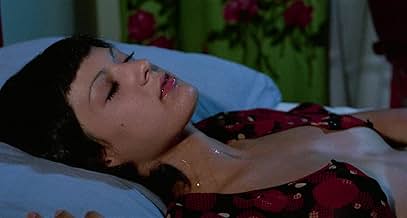
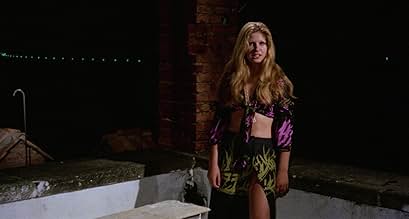


Raul Lovecchio
- Ispettore Edwards
- (as Raoul)

Stefania Fassio
- Prima vittima
- (as Steffy Steffen)
- Director
- Writer
- All cast & crew
- Production, box office & more at IMDbPro
5.41.3K
1
2
3
4
5
6
7
8
9
10
Featured reviews
Not exactly a movie for the kiddies...
Not exactly a movie for the kiddies, I would consider 1972's Delirium to be some what of a grade B Giallo. The production is okay, the acting not bad, the dialogue average, but the violence is over the top with several grisley murder scenes. There is also way more nudity than your average Giallo.
There are two versions, the American (85 minutes) and the European (102 minutes). The American version starts out with the main character, Herbert Lyutak, getting wounded in Vietnam. The movie mixes stock footage from the war with newly filmed scenes in a pretty ungraceful job of editing. But we
do learn that Herbert was born in Hungary and immigrated to the US in 1961 and joined the army in 1962. He has done three tours of duty in Vietnam and is a decorated, model soldier. He has been wounded and is being taken away in a helicopter. He is looking at a nurse and she changes into another woman who we soon find out is his wife, Marcia, played by the lovely Rita Calderoni (The Reincarnation of Isabel, Nude for Satan). Right after the credits we get to see Herbert pick up a girl in a bar and drive her out to a remote spot, chase her into a stream and then strip her and beat her to death. It's a pretty violent scene and not for the squeamish. Of course that could apply to almost every murder in this movie.
The European version really is quite different than the American release and I thought it had a more coherent story. Both versions are a bit confusing but the European version is more consistant. It also skips the whole Vietnam segment which wasn't very well done anyway. The endings are both quite different as well and a couple murders are filmed differently also.
I don't want to give away too much but we do know that Herbert murders a girl at the beginning of both versions and after that it is a bit of a cat and mouse with the cops who are trying to solve the murders along with Herbert who is a criminal psychologists and suposed to be helping them in the investigation. His wife starts having weird S&M dreams invloving her husband as the sadist and their maid and another woman who we later find out is her niece. Ther three women fondle and kiss each other while Herebert watches. The editing from the dreams to reality is a bit confusing and at one point early in the film Herbert does beat and cut Marcia as a substitution for sex which he can't perform with his wife. He does seem troubled about his violent tendencies and does not want to unleash his murderous ways on his wife. But he does like looking at her throat which is a very enticing part of female anatomy for him.
The picture on the European version looks fine and is presented in 1.85:1 widescreen. The American version however is missing a couple sections of the original so Anchor Bay had to take some Dutch footage from a VHS copy and splice it in. So you are watching and all of a sudden the picture gets worse and there are Dutch subtitles! But we are talking only a couple minutes worth so it is pretty minor actually. There is also a recently filmed 14 minute interview with director and writer Renato Polselli and Actor Mickey Hargitay which is pretty good really. I watched the US version, then the interview, and then the European version of the film. I did have more of an appreciation for the film after the watching the interview and as I said earlier, the European version is overall a better and more coherent storyline. The US version is dubbed in English and the European version is in Italian with English subtitles. Overall not too bad if you like extreme Giallo. Not nearly as good as say, What Have You Done With Solange, or most Bava's or Argento's, but certainly worthy of $15 or so.
There are two versions, the American (85 minutes) and the European (102 minutes). The American version starts out with the main character, Herbert Lyutak, getting wounded in Vietnam. The movie mixes stock footage from the war with newly filmed scenes in a pretty ungraceful job of editing. But we
do learn that Herbert was born in Hungary and immigrated to the US in 1961 and joined the army in 1962. He has done three tours of duty in Vietnam and is a decorated, model soldier. He has been wounded and is being taken away in a helicopter. He is looking at a nurse and she changes into another woman who we soon find out is his wife, Marcia, played by the lovely Rita Calderoni (The Reincarnation of Isabel, Nude for Satan). Right after the credits we get to see Herbert pick up a girl in a bar and drive her out to a remote spot, chase her into a stream and then strip her and beat her to death. It's a pretty violent scene and not for the squeamish. Of course that could apply to almost every murder in this movie.
The European version really is quite different than the American release and I thought it had a more coherent story. Both versions are a bit confusing but the European version is more consistant. It also skips the whole Vietnam segment which wasn't very well done anyway. The endings are both quite different as well and a couple murders are filmed differently also.
I don't want to give away too much but we do know that Herbert murders a girl at the beginning of both versions and after that it is a bit of a cat and mouse with the cops who are trying to solve the murders along with Herbert who is a criminal psychologists and suposed to be helping them in the investigation. His wife starts having weird S&M dreams invloving her husband as the sadist and their maid and another woman who we later find out is her niece. Ther three women fondle and kiss each other while Herebert watches. The editing from the dreams to reality is a bit confusing and at one point early in the film Herbert does beat and cut Marcia as a substitution for sex which he can't perform with his wife. He does seem troubled about his violent tendencies and does not want to unleash his murderous ways on his wife. But he does like looking at her throat which is a very enticing part of female anatomy for him.
The picture on the European version looks fine and is presented in 1.85:1 widescreen. The American version however is missing a couple sections of the original so Anchor Bay had to take some Dutch footage from a VHS copy and splice it in. So you are watching and all of a sudden the picture gets worse and there are Dutch subtitles! But we are talking only a couple minutes worth so it is pretty minor actually. There is also a recently filmed 14 minute interview with director and writer Renato Polselli and Actor Mickey Hargitay which is pretty good really. I watched the US version, then the interview, and then the European version of the film. I did have more of an appreciation for the film after the watching the interview and as I said earlier, the European version is overall a better and more coherent storyline. The US version is dubbed in English and the European version is in Italian with English subtitles. Overall not too bad if you like extreme Giallo. Not nearly as good as say, What Have You Done With Solange, or most Bava's or Argento's, but certainly worthy of $15 or so.
Dirty!
This is nasty stuff. Surprisingly strong for a 1972 movie, Polselli's over-complex and contrived giallo happily depicts what other people would only dare hint to in a number of jaw-droppingly misogynistic scenes of sexual violence. In one remarkably unpleasant scene, a black gloved killer masturbates a female victim as he strangles her. I find it surprising that movies like NEW YORK RIPPER are so infamous when extreme stuff like this and GIALLO A VENEZIA exist. It's quite amazing that these films were made at all, let alone had a cinema release!
Focusing away from the violence, this is actually a pretty well made and tight giallo. Whilst a lot more sleazy than some of the classy entries into the genre, Polselli hits the viewer with some relatively innovative scenes and camera-work. The plot is hilariously winding- I won't give too much away, but fans of the more ridiculous giallos will not be disappointed. There is also a definite undercurrent of black humour, particularly in some of the scenes of violence. I think it is safe to say that the misogynistic humour will be left misunderstood by most.
Unfortunately, DELIRIUM fell victim to distributor re-cutting in a big way. The American version is hugely different to the original Italian release, losing a lot of violence, gaining some new footage, and asa result suffering quite marked changes to the plot itself! The different versions are really quite different, and I'd advise any giallo collector to check out both. By all accounts, the French print of the movie is the most complete "uncut" form. Definitely worth a look for fans of giallos and of good, honest cinematic scum.
Focusing away from the violence, this is actually a pretty well made and tight giallo. Whilst a lot more sleazy than some of the classy entries into the genre, Polselli hits the viewer with some relatively innovative scenes and camera-work. The plot is hilariously winding- I won't give too much away, but fans of the more ridiculous giallos will not be disappointed. There is also a definite undercurrent of black humour, particularly in some of the scenes of violence. I think it is safe to say that the misogynistic humour will be left misunderstood by most.
Unfortunately, DELIRIUM fell victim to distributor re-cutting in a big way. The American version is hugely different to the original Italian release, losing a lot of violence, gaining some new footage, and asa result suffering quite marked changes to the plot itself! The different versions are really quite different, and I'd advise any giallo collector to check out both. By all accounts, the French print of the movie is the most complete "uncut" form. Definitely worth a look for fans of giallos and of good, honest cinematic scum.
renato polselli delivers again
I thought that the impious happenings in the Reincarnation of Isabelle couldn't be surpassed. Well I proved myself wrong after I witnessed this little picture. Although i enjoyed the film, I felt a little disappointed at times. I thought that the character of Rita Calderoni was a little over the top and i just expected more with the sexual content. The dialogue became a little risible at times and the plot to predictable. I didn't care for the ending either but overall it worked. Don't forget to check out the domestic release that is featured on the anchor bay dvd and witness for yourself how the Americans can destroy a film.
10ulgol
One of the best...
Whenever I take a look at today's big multiplex cinemasm playing nothing but dreck, I'm really happy, that, in better times, films like this one have been made: "Delirio Caldo" is a sick, a-logical and hilariously funny thriller, the nightmare of any "cineaste". There's lots of violence, psychedelic colours, stylish cinematography and enough of that naive "misogyny" prevalent in 70ies cinema to make any PC-feminists break out in tears. What else could one ask for? Be sure not to miss this treat. And, by the way, watch the continental cut, as the english-dubbed version has been shorn of nearly 20 minutes of fun!
🤕🔥 Hot Mess or Cinematic Genius? Unravel the Mystery of This 1972 Giallo 🔥🤕
Renato Polselli's 1972 film "Delirio caldo" is a polarizing entry into the giallo genre, offering an experience that is equal parts perplexing and fascinating. The film's chaotic narrative and stylized presentation make it a noteworthy piece for fans of Italian horror, though it might not appeal to a broader audience.
Set against the backdrop of a psychosexual murder mystery, the film dives headfirst into the twisted mind of Dr. Herbert Lyutak, played by the intense and memorable Mickey Hargitay. Hargitay's performance is a standout, delivering a portrayal that oscillates between chilling and absurd. His portrayal of a disturbed psychologist who grapples with violent urges adds a layer of psychological depth to the film's otherwise disjointed storyline.
The film's plot, however, is a labyrinthine mix of subplots and red herrings, making it difficult to follow at times. Polselli's direction leans heavily into surrealism, creating an atmosphere thick with tension and unease. The non-linear narrative structure, coupled with abrupt shifts in tone and pace, can be disorienting, yet it also contributes to the film's unique charm. This erratic style is both a strength and a weakness, showcasing Polselli's ambition while simultaneously alienating viewers who prefer coherent storytelling.
One particularly stand-out scene involves a dreamlike sequence where Dr. Lyutak's psyche unravels in a visually striking montage. The use of vivid colors, rapid cuts, and unsettling imagery captures the essence of his internal chaos, leaving a lasting impression. This scene exemplifies Polselli's knack for visual storytelling, even if the narrative itself falters.
The supporting cast, including Rita Calderoni as Lyutak's wife, Marzia Damon, delivers commendable performances, adding layers to the film's exploration of trust, betrayal, and madness. Calderoni's portrayal is nuanced, bringing a touch of vulnerability and strength to her character, which contrasts sharply with Hargitay's more bombastic presence.
"Delirio caldo" is also notable for its bold and often controversial approach to themes of sexuality and violence. The explicit content, while shocking, serves to underscore the film's exploration of human depravity and psychological torment. However, the excessive nature of these elements can feel gratuitous, detracting from the film's more profound moments.
Visually, the film is a feast for fans of 70s Italian cinema. The cinematography, with its use of stark contrasts and shadowy compositions, creates a sense of foreboding that permeates the entire film. The score, composed by Gianfranco Reverberi, complements the visual style with its haunting melodies, further immersing the audience in the film's unsettling world.
Despite its flaws, "Delirio caldo" remains a compelling watch for aficionados of the genre. Its audacious approach and the memorable performance by Mickey Hargitay elevate it above many of its contemporaries, even if it doesn't quite achieve the coherence or impact it aims for. The film's fragmented narrative and provocative content ensure that it will remain a topic of discussion among fans and critics alike.
It is a film that strives for greatness through its ambition and style but falls short due to its convoluted plot and occasional overindulgence in shock value. Nevertheless, it stands as a curious artifact of its time, reflecting the experimental spirit of 70s Italian horror.
Set against the backdrop of a psychosexual murder mystery, the film dives headfirst into the twisted mind of Dr. Herbert Lyutak, played by the intense and memorable Mickey Hargitay. Hargitay's performance is a standout, delivering a portrayal that oscillates between chilling and absurd. His portrayal of a disturbed psychologist who grapples with violent urges adds a layer of psychological depth to the film's otherwise disjointed storyline.
The film's plot, however, is a labyrinthine mix of subplots and red herrings, making it difficult to follow at times. Polselli's direction leans heavily into surrealism, creating an atmosphere thick with tension and unease. The non-linear narrative structure, coupled with abrupt shifts in tone and pace, can be disorienting, yet it also contributes to the film's unique charm. This erratic style is both a strength and a weakness, showcasing Polselli's ambition while simultaneously alienating viewers who prefer coherent storytelling.
One particularly stand-out scene involves a dreamlike sequence where Dr. Lyutak's psyche unravels in a visually striking montage. The use of vivid colors, rapid cuts, and unsettling imagery captures the essence of his internal chaos, leaving a lasting impression. This scene exemplifies Polselli's knack for visual storytelling, even if the narrative itself falters.
The supporting cast, including Rita Calderoni as Lyutak's wife, Marzia Damon, delivers commendable performances, adding layers to the film's exploration of trust, betrayal, and madness. Calderoni's portrayal is nuanced, bringing a touch of vulnerability and strength to her character, which contrasts sharply with Hargitay's more bombastic presence.
"Delirio caldo" is also notable for its bold and often controversial approach to themes of sexuality and violence. The explicit content, while shocking, serves to underscore the film's exploration of human depravity and psychological torment. However, the excessive nature of these elements can feel gratuitous, detracting from the film's more profound moments.
Visually, the film is a feast for fans of 70s Italian cinema. The cinematography, with its use of stark contrasts and shadowy compositions, creates a sense of foreboding that permeates the entire film. The score, composed by Gianfranco Reverberi, complements the visual style with its haunting melodies, further immersing the audience in the film's unsettling world.
Despite its flaws, "Delirio caldo" remains a compelling watch for aficionados of the genre. Its audacious approach and the memorable performance by Mickey Hargitay elevate it above many of its contemporaries, even if it doesn't quite achieve the coherence or impact it aims for. The film's fragmented narrative and provocative content ensure that it will remain a topic of discussion among fans and critics alike.
It is a film that strives for greatness through its ambition and style but falls short due to its convoluted plot and occasional overindulgence in shock value. Nevertheless, it stands as a curious artifact of its time, reflecting the experimental spirit of 70s Italian horror.


Did you know
- GoofsWhen the killer is whipping the woman in the bathtub, he turns away to get the sheet to smother her. It would be an opportunity for her to at least try to get out of the tub, but she just lies there, flailing around. instead.
- Quotes
Herbert Lyutak: Enough, Herbert! You are a hyena, hyena!
- Alternate versionsThe American Blue Underground DVD offers two distinctly different versions of the film. The full-length Italian version runs 102 minutes. The shorter American version runs 85 minutes. It begins and ends with scenes set in Vietnam with Mickey Hargitay as a wounded soldier and Rita Calderoni as a helicopter nurse. This version also features an extra killing and a different denouement.
- ConnectionsFeatured in The Theorem of Delirium (2002)
- How long is Delirium?Powered by Alexa
Details
- Runtime
- 1h 42m(102 min)
- Sound mix
- Aspect ratio
- 1.85 : 1
Contribute to this page
Suggest an edit or add missing content