IMDb RATING
5.7/10
1.3K
YOUR RATING

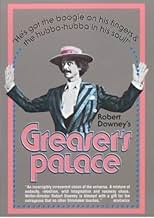
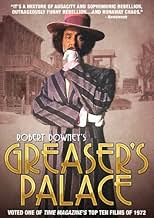
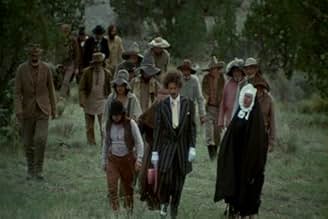
A strange man named Jesse who can revive life and walk on water comes into a surreal and cruel western town.A strange man named Jesse who can revive life and walk on water comes into a surreal and cruel western town.A strange man named Jesse who can revive life and walk on water comes into a surreal and cruel western town.



Lawrence Wolf
- French Padre
- (as Larry Wolf)


- Director
- Writer
- All cast & crew
- Production, box office & more at IMDbPro
5.71.2K
1
2
3
4
5
6
7
8
9
10
Featured reviews
Robert Downey's savagely funny take on the passion and death of Christ is original and thought provoking.
Jesus comes back to the old west as a 1930's song-and-dance man in a zoot suit and takes on local strongman Mr. Greaser, whose struggles with constipation are painful to witness. I love this film. It will never be selected as entertainment for anyone's church youth group, but its fresh take on Christianity make for a wild and very original ride.
Favorite moments: Lamey Homo protesting his dad, Mr. Greaser's, disciplinary methods, "I dreamed I was swimmin' in a rainbow and there was millions of babies and they was naked...Dad? I don't want to die any more." Dad's response: "Then behave yourself!" Sibling rivalry on the part of the Holy Ghost protesting God the Father's refusal to let him take on some of God the Son's perks (like being crucified): "You'll never know what I can do because you never give me a chance!" Jesus healing the paralyzed man, who is seen later in the film crying, "I can crawl again! I can crawl again!"
It took me a moment to identify which character was supposed to be Judas, until the woman settler, who goes through so many terrible disasters, began counting out thirty pieces of silverware.
It is somewhat disjointed, and definitely sacrilegious in spots, but those drawbacks are very minor. This is an original, savagely funny film.
Favorite moments: Lamey Homo protesting his dad, Mr. Greaser's, disciplinary methods, "I dreamed I was swimmin' in a rainbow and there was millions of babies and they was naked...Dad? I don't want to die any more." Dad's response: "Then behave yourself!" Sibling rivalry on the part of the Holy Ghost protesting God the Father's refusal to let him take on some of God the Son's perks (like being crucified): "You'll never know what I can do because you never give me a chance!" Jesus healing the paralyzed man, who is seen later in the film crying, "I can crawl again! I can crawl again!"
It took me a moment to identify which character was supposed to be Judas, until the woman settler, who goes through so many terrible disasters, began counting out thirty pieces of silverware.
It is somewhat disjointed, and definitely sacrilegious in spots, but those drawbacks are very minor. This is an original, savagely funny film.
Jesus plays the palace
Quite simply one of the odder incarnations of a Jesus story: in a desolate town in the middle of a borax desert in the late 19th century, where Herod has a serious case of constipation, the holy ghost is a cigar smoking actor under a white sheet with eye-holes and a mouth cutout, and Jesse aka Jesus wants to be a song and dance man. But the people won't let him be. Alan Arbus is dry and laid back in the role, always puzzled and not at all a mystery. Downey hit the high point of his career with this one, possibly the last movie he made without someone looking over his shoulder. I wish he'd the opportunity to continue exploring filmmaking of this type.
Genius or Madness? You make the call!
Movie Review: Sometimes in film a scene which is weird, horrifying or disturbing is carried to such an extreme that it transcends being grotesque and becomes beautiful. Jodorowsky's "Santa Sangre," Fellini's "Satyricon," and all of Lynch's films have moments like these. Unfortunately, "Greaser's Palace," though it tries really hard, never quite goes from ugly duckling to swan. Weird, horrifying and disturbing (and sometimes hilarious) it is indeed, but the pieces in the puzzle never quite come together. I must say this, though, Robert Downey has made one hell of a riveting film. I couldn't turn away from my TV screen for an instant. The movie seems to be a rather loosely told version fo the passion of Christ, set in the wild west. There is a Christ figure (who arrives on earth rather anachronistically via a parachute wearing a pimp suit), some disciples (about 17 of them), a miracle or three (some walking on water, some raising of the dead, a little healing, a little stigmata, etc.), and the obligatory being nailed to a crucifix. However, I don't recall the rest of the plot being in the Bible. I'm not going to try and describe it, except to say that the Christ figure is a singer-dancer-actor going to Jerusalem, to get an audition with the great agent Morris. Indeed, in one scene he puts on a little song and dance routine for his disciples, but they aren't impressed with his performance until he starts screaming and bleeding from the holes that appear in his hands, at which point they applaud. The image of Christ as showman, rather than a shaman, is quite provocative, and the audience that is only satisfied when their savior is in pain seems to be a glimpse into human nature not often afforded the viewer of this film, which is filled with cartoony violence, stilted dialogue, and unnatural posturing. The fact that this hint of truth about what we really want out of entertainment (in an age when we pay $29.95 to watch the Ultimate Fighting Championship on Pay-Per-View, who wouldn't enjoy a little screaming and stigmata?) comes in the midst of all these people doing their best to act inhuman, or at least unhuman, may indicate that there is more to this film than meets the eye. But is the movie good? I'm not certain about how good or bad it is, but I know that I was mesmerized by it. There were so many disturbing, fantastic, and humorous things...A few that come to mind are: --Herve Villechaize as the diminutive gay man who has "Jesus" over for dinner and flirts with him. --Herve's "wife," a bearded man in drag who angrily squeezes the Messiah's testicles after he refuses to sleep with the couple. --The woman who keeps getting shot throughout the film by an unknown assailant. --Mr. Greaser's intense orgasm and/or bowel movement which causes his palace to explode (I didn't understand either...). --Lamey Homo's description of the afterlife, "I was swimming in a rainbow with naked babies, and I turned into a beautiful smile," which he repeats three times during the film (he keeps getting killed and brought back to life). --The Holy Ghost. --The Native American who gets his lower back problem fixed when the Messiah turns out to be not only the son of God, but also a fairly good chiropractor. --The savage beating of a transvestite nun by Lamey Homo and the monk. --Etc. Throughout the film I was continually trying to determine whether I was watching the work of a genius or a just a load of crap. I'm still not sure, but I know one thing; this movie is fascinating, and though it never really becomes more than the sum of its parts, they certainly are interesting parts. "Greaser's Palace," is weird, funny, disturbing, gross, ugly, and strange, and I wholeheartedly recommend it. I guarantee you won't forget this film.
A sometimes interesting, sometimes entertaining, and always messy film from Robert Downey
I discovered Robert Downey Sr. fairly recently, given that, in all modesty, I consider myself rather well versed in cinema. I don't know what I expected, but certainly it wasn't what I got. Without question, this is the appeal of Robert Downey's work: its absolute unpredictability, its complete absurdity. He is not a genius of the cinema, but he's clever as can be, he's unrelenting in his satire, and he's highly original.
This quality — originality, uniqueness; call it what you like — means a great deal to me. I've seen so much cinema, from the late 1800s to the present, from America to Japan and everything in between, that I very rarely stumble across something that is a truly novel viewing experience. The three amateur films that began his career as a filmmaker — "Babo 73", "Chafed Elbows", and "No More Excuses" — were the first experiences I had with Downey, and I was pretty instantly enamored with him. The films aren't masterpieces. In fact, they're far from it. They're filled with flaws and shortcomings, but also with moments of fantastic off-the-wall humor and scathing satire. More than anything, they're almost completely unique. I was reminded very slightly of a few of Godard's films with the Dziga Vertov Group from the early '70s, like "Wind From the East" and "Vladimir and Rosa", and a bit more of Scorsese's early short films, but otherwise I can't really recall any films that came to mind as being similar to these remarkable bundles of absurdist energy.
I next saw "Putney Swope", Downey's first professional film, if I'm not mistaken. It was very similar to its predecessors, only much more polished and professionally executed. Two films later, in 1972, Downey came out with "Greaser's Palace".
The first thing I noted about this film was the change to color. Aside from that, however, the cinematography is very similar to "Putney Swope", utilizing a realist style with hand-held camera-work and so forth. Downey's basic sense of humor is present, but on the whole, "Greaser's Palace" is a very different film from the other four Downey films I've seen. It's much more toned down, and the general mood of the film diverges significantly from what we're used to. Downey deviates somewhat from his usual absurdist farce and buffoonery (although he definitely doesn't dispense with it entirely), replacing it instead with something more quiet and understated, by comparison to his other films, that is. For the first time in any of his films that I've seen, there are moments in "Greaser's Palace" that actually appear to be intended to be taken seriously, at least to some extent. The final shot of the film is absolutely stunning, both beautiful and disturbing on a visceral level. It's truly a very strange film, and while it doesn't all together work, it has its moments.
"Greaser's Palace" is an allegorical film, a parable of the life of Christ. Downey clearly doesn't subscribe to any specific political beliefs or ideologies, and has said so himself. These aren't left-wing films with a social message; they're just raw satire for its own sake. When all is said and done, the primary function of Downey's films is to be enjoyed. It's comedy for comedy's sake. If, however, there was ever a Robert Downey film that felt like it was intended to mean something, this is that film. Religious satire has always been present in Downey's films, but until now it had always been overwhelmed by the much more dominant political satire in his films. In "Greaser's Palace", though, the religious satire is the core of the film. The allegory is extremely thinly veiled, comically so, and Downey pulls no punches.
For instance, I recall three figures standing together in a field near the end of the film. One is a younger man who refers to the older man next to him as his father. The third figure is a man covered in a white sheet, with two holes cut out where the eyes might be. These three not-so-mysterious figures are, of course, the Father, the Son, and the Holy Ghost. This is Downey's idea of humor. Whether it's funny or not will depend very much on the viewer. While the symbolism and metaphor are far from brilliant, I've found that there is more than enough humor to be found in his irreverence alone. His blatant lack of respect for religion and politics, I believe, has worked to wonderful comedic effect in his films.
I thought "Greaser's Palace" was a mess for the bulk of the viewing, and it probably is the worst of the five films I've seen by Downey — certainly the most flawed — but in its own way it may also be the most interesting. The usual frenetic pace of Downey's comedy is melted into something closer to deadpan humor at times, and by the end of the film I must say that I was vaguely interested. I haven't made a great deal of effort to interpret the symbolism and the allegory, and the specifics of what exactly Downey was trying to say, because ultimately I feel like I'd be left with what I already know: Downey never really tries to say much of anything. He simply makes fun of everything. And here he takes great pleasure in ridiculing religion on every imaginable level.
Is "Greaser's Palace" a good film? I don't think so. But it's interesting, at least in part, and while I think it fails on the whole, I won't say that I wasn't engaged by it for certain moments, particularly towards the end of the film. I found that it had much more impact on me than I could logically or rationally account for. Give it a shot, and see what you think. A film this original and unique earns some respect on those merits alone.
RATING: 5.67 out of 10 stars
This quality — originality, uniqueness; call it what you like — means a great deal to me. I've seen so much cinema, from the late 1800s to the present, from America to Japan and everything in between, that I very rarely stumble across something that is a truly novel viewing experience. The three amateur films that began his career as a filmmaker — "Babo 73", "Chafed Elbows", and "No More Excuses" — were the first experiences I had with Downey, and I was pretty instantly enamored with him. The films aren't masterpieces. In fact, they're far from it. They're filled with flaws and shortcomings, but also with moments of fantastic off-the-wall humor and scathing satire. More than anything, they're almost completely unique. I was reminded very slightly of a few of Godard's films with the Dziga Vertov Group from the early '70s, like "Wind From the East" and "Vladimir and Rosa", and a bit more of Scorsese's early short films, but otherwise I can't really recall any films that came to mind as being similar to these remarkable bundles of absurdist energy.
I next saw "Putney Swope", Downey's first professional film, if I'm not mistaken. It was very similar to its predecessors, only much more polished and professionally executed. Two films later, in 1972, Downey came out with "Greaser's Palace".
The first thing I noted about this film was the change to color. Aside from that, however, the cinematography is very similar to "Putney Swope", utilizing a realist style with hand-held camera-work and so forth. Downey's basic sense of humor is present, but on the whole, "Greaser's Palace" is a very different film from the other four Downey films I've seen. It's much more toned down, and the general mood of the film diverges significantly from what we're used to. Downey deviates somewhat from his usual absurdist farce and buffoonery (although he definitely doesn't dispense with it entirely), replacing it instead with something more quiet and understated, by comparison to his other films, that is. For the first time in any of his films that I've seen, there are moments in "Greaser's Palace" that actually appear to be intended to be taken seriously, at least to some extent. The final shot of the film is absolutely stunning, both beautiful and disturbing on a visceral level. It's truly a very strange film, and while it doesn't all together work, it has its moments.
"Greaser's Palace" is an allegorical film, a parable of the life of Christ. Downey clearly doesn't subscribe to any specific political beliefs or ideologies, and has said so himself. These aren't left-wing films with a social message; they're just raw satire for its own sake. When all is said and done, the primary function of Downey's films is to be enjoyed. It's comedy for comedy's sake. If, however, there was ever a Robert Downey film that felt like it was intended to mean something, this is that film. Religious satire has always been present in Downey's films, but until now it had always been overwhelmed by the much more dominant political satire in his films. In "Greaser's Palace", though, the religious satire is the core of the film. The allegory is extremely thinly veiled, comically so, and Downey pulls no punches.
For instance, I recall three figures standing together in a field near the end of the film. One is a younger man who refers to the older man next to him as his father. The third figure is a man covered in a white sheet, with two holes cut out where the eyes might be. These three not-so-mysterious figures are, of course, the Father, the Son, and the Holy Ghost. This is Downey's idea of humor. Whether it's funny or not will depend very much on the viewer. While the symbolism and metaphor are far from brilliant, I've found that there is more than enough humor to be found in his irreverence alone. His blatant lack of respect for religion and politics, I believe, has worked to wonderful comedic effect in his films.
I thought "Greaser's Palace" was a mess for the bulk of the viewing, and it probably is the worst of the five films I've seen by Downey — certainly the most flawed — but in its own way it may also be the most interesting. The usual frenetic pace of Downey's comedy is melted into something closer to deadpan humor at times, and by the end of the film I must say that I was vaguely interested. I haven't made a great deal of effort to interpret the symbolism and the allegory, and the specifics of what exactly Downey was trying to say, because ultimately I feel like I'd be left with what I already know: Downey never really tries to say much of anything. He simply makes fun of everything. And here he takes great pleasure in ridiculing religion on every imaginable level.
Is "Greaser's Palace" a good film? I don't think so. But it's interesting, at least in part, and while I think it fails on the whole, I won't say that I wasn't engaged by it for certain moments, particularly towards the end of the film. I found that it had much more impact on me than I could logically or rationally account for. Give it a shot, and see what you think. A film this original and unique earns some respect on those merits alone.
RATING: 5.67 out of 10 stars
6sol-
A Stranger Arrives
Dressed in a 1920s zoot suit, an amateur magician parachutes in an Old West town where he causes unrest by performing tricks that the locals believe are miracles in this decidedly weird western from Robert Downey Sr. Written as a deliberately anachronistic character, the protagonist here is intriguing; as his tricks involve healing the sick and walking on water, he is clearly modeled on Christ, yet with the way he dresses and lands in town, it is as if he has been sent from the future back to the Wild West. Whatever the case, Allan Arbus (of 'M*A*S*H' fame) is excellent in the lead role, remaining calm and collected throughout (turn the other cheek) and always very enthusiastic about performing - even when a card guessing trick terribly backfires. For a Christ-like figure, he is highly subverted, encouraging kindness and good will by getting those he comes across to applaud his acts and marvel at his showmanship. For all its ambition though, 'Greaser's Palace' remains a highly episodic motion picture, often coming across as a series of loose sketches than a plot-driven story - something that dulls the religious parable at hand and makes the overall experience a tad uneven. There are some great running gags in the mix too though, such as Arbus constantly bringing local black sheep Michael Sullivan back to life, much to the outcast's constant bewilderment.


Did you know
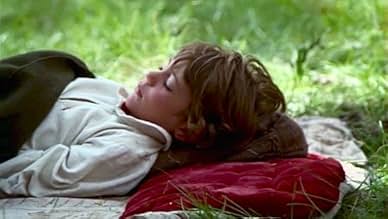
- TriviaRobert Downey, Jr., the son of the writer-director of the film, has an uncredited role as a Quasimodo-like child. Elsie Downey who played "the Woman" was Robert Downey Sr.'s wife. Also in the cast were Allyson Downey and Stacy Sheehan, Downey Sr.'s daughter and niece.
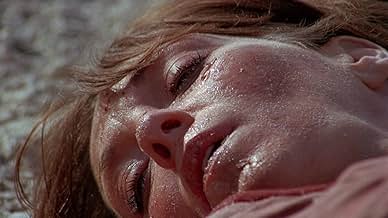
- GoofsIn the scene where the girl wakes to find her lover's throat cut she stands up wearing partially see-thru period underwear and you can see she is wearing tight-fitting modern panties underneath.
- Quotes
Lamy Homo Greaser: Dad, I was swimming in a rainbow with millions of babies... and they was naked... and then all of the sudden I turned into a perfect smile!
Old guy: Put a rope around the son of a bitch!
- ConnectionsFeatured in Remembering Greasers Palace (2010)
- How long is Greaser's Palace?Powered by Alexa
Details
- Runtime
- 1h 31m(91 min)
- Sound mix
- Aspect ratio
- 1.85 : 1
Contribute to this page
Suggest an edit or add missing content