IMDb RATING
7.4/10
5.9K
YOUR RATING
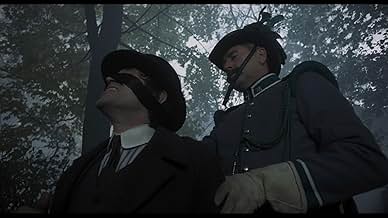
Józef visits his dying father at a remote mental institution, where time itself doesn't seem to exist, and the line between dreams and memories becomes indistinguishable.Józef visits his dying father at a remote mental institution, where time itself doesn't seem to exist, and the line between dreams and memories becomes indistinguishable.Józef visits his dying father at a remote mental institution, where time itself doesn't seem to exist, and the line between dreams and memories becomes indistinguishable.
- Awards
- 2 wins & 1 nomination total
- Director
- Writers
- All cast & crew
- Production, box office & more at IMDbPro
7.45.8K
1
2
3
4
5
6
7
8
9
10
Featured reviews
Bizarre and haunting
Based on a story collection of the same name by Bruno Schulz, who was shot by the Gestapo in 1942, this movie is one of the rare cases of a congenial adaptation of modern fantastic literature. It's a demanding movie and it is impossible to extract something like a plot line. There are various changes in between time and space, but once you get involved with the narrative, they seem perfectly logical. Also, there are many highly impressive sequences and settings - i have read somewhere (i can't give no reference right now, sorry) that it was the most expensive movie ever made in Poland, and maybe it still is. It certainly is one of the best. And, by the way, there is one scene with a room stuffed full of mannequins that looks like an inspiration to a similar sequence in Ridley Scott's "Blade Runner", which is a great movie of its kind, but was made some years later and did much better at the box office.
Quintissential "Art House" Movie -- Some will give it a 10, others a 1
The movie has no typical narrative or storyline, it is just a series of surrealistic vignettes (surrounded by the framing of a sanatorium with a dying father and time moving differently). So it's all about "finding meaning" and interpretation and symbolism. There is also a heavy dosage of holocaust & judaica themes. For those that like this sort of movie, especially the "film school" and arthouse types, this may be an amazing film. For other movie goers this may be a huge bore and seem meaningless and pretentious. I am somewhere in the middle (and I have studied film and seen numerous "art house" films by choice). I generally found this boring, but appreciate the attempt and historical context.
Striking but odd attempts at comedy and slack pace and length become tedious
The director, as he did with Sargosso Manuscript, seems more interested in trying for comic surreal than drama/horror or psychological depth.
This is not to say that Surrealism doesn't work when it has a comic edge, but that this director doesn't do surreal comedy that well, while when he gets serious, and visual he's so good you just wish he'd really stick with that.
As in the previous film the more serious aspects are the best elements, this film is more impressive visually but a good part of that is that it's in color. I admit the first time I saw this film I thought quite highly of it and in seeing it again I thought it would get even better as I'd understand more of how the pieces came together and what they meant. But after a long gap between viewings the film almost fell apart for me. Despite a powerful wrap up sequence.
After a strong start the script just doesn't come together or feel like it's rushing into nightmare or meaning, it plods along. Some of the episodes just seem pointless--especially the soldiers near the boat and the manikin sequence. These set pieces aren't really that funny and go on forever. And most of the manikins are obviously people trying to stand still so you end up watching to see them breath or move when you should be reading subtitles. Another thing about the attempts at antic bizarre comedy is that these are the talkiest sections of the film, really almost like a stage play in these spots.
These have nothing to do with the core story which is the man and his father sort of loose in time. At one point the son talking to his father says these various episodes are "hard to discern, the meaning." He's got that right!
The Jewish seuqences and elements are interesting--especially coming from a Communist country at the time it was made is praise worthy.
And yes indeed Blade Runner owes this film a debt.
But aside from the stunning sets and transitions you just don't know what is going on some of the time and with a film that is a bit over 2 hours in length you just stop caring. You can still sit there and marvel at the images, but this is not enough. It's almost like footage cut out of a great movie because it didn't advance the story.
The film also tends to get really talky in spots. The best moments and sequences are silent. The whole thing feels like a missed opportunity despite some great silent sequences and a great core idea, it doesn't hold you or hold together for the whole length. Opening and closing sequences are the best though there are scattered images and an excellent, if sparsely placed, music score. For the record there is also a fair amount of female nudity involving a brothel, though this too seems a bit forced after awhile and is played with a leering comic quality never with any erotic intent.
Though it has some great dream images it fails ultimately to convince us there is a dream logic at work here.
All in all an almost fascinating film that becomes frustrating instead. Have to fault the script as all the elements on a production level were there ready to make a great film, but as is so often the case you need a great script to make a great movie no matter what genre.
One final note I have read THE SARGOSSA MANUSCRIPT, I have not read the source material to this film, so I make an assumption about the director's interest in comedic twists rather than more serious horrific ones based on what he did with the first film and book.
This is not to say that Surrealism doesn't work when it has a comic edge, but that this director doesn't do surreal comedy that well, while when he gets serious, and visual he's so good you just wish he'd really stick with that.
As in the previous film the more serious aspects are the best elements, this film is more impressive visually but a good part of that is that it's in color. I admit the first time I saw this film I thought quite highly of it and in seeing it again I thought it would get even better as I'd understand more of how the pieces came together and what they meant. But after a long gap between viewings the film almost fell apart for me. Despite a powerful wrap up sequence.
After a strong start the script just doesn't come together or feel like it's rushing into nightmare or meaning, it plods along. Some of the episodes just seem pointless--especially the soldiers near the boat and the manikin sequence. These set pieces aren't really that funny and go on forever. And most of the manikins are obviously people trying to stand still so you end up watching to see them breath or move when you should be reading subtitles. Another thing about the attempts at antic bizarre comedy is that these are the talkiest sections of the film, really almost like a stage play in these spots.
These have nothing to do with the core story which is the man and his father sort of loose in time. At one point the son talking to his father says these various episodes are "hard to discern, the meaning." He's got that right!
The Jewish seuqences and elements are interesting--especially coming from a Communist country at the time it was made is praise worthy.
And yes indeed Blade Runner owes this film a debt.
But aside from the stunning sets and transitions you just don't know what is going on some of the time and with a film that is a bit over 2 hours in length you just stop caring. You can still sit there and marvel at the images, but this is not enough. It's almost like footage cut out of a great movie because it didn't advance the story.
The film also tends to get really talky in spots. The best moments and sequences are silent. The whole thing feels like a missed opportunity despite some great silent sequences and a great core idea, it doesn't hold you or hold together for the whole length. Opening and closing sequences are the best though there are scattered images and an excellent, if sparsely placed, music score. For the record there is also a fair amount of female nudity involving a brothel, though this too seems a bit forced after awhile and is played with a leering comic quality never with any erotic intent.
Though it has some great dream images it fails ultimately to convince us there is a dream logic at work here.
All in all an almost fascinating film that becomes frustrating instead. Have to fault the script as all the elements on a production level were there ready to make a great film, but as is so often the case you need a great script to make a great movie no matter what genre.
One final note I have read THE SARGOSSA MANUSCRIPT, I have not read the source material to this film, so I make an assumption about the director's interest in comedic twists rather than more serious horrific ones based on what he did with the first film and book.
Spellbinding
I've watched this film twice within the year now, and the first time, I'll admit, I was a little too overwhelmed to write a review for this movie. It left me both confused and completely enchanted, and I knew immediately that I wanted to watch the movie again, now knowing how the film would progress. Indeed, this is a movie that I feel like needs either two viewings or a bit of prior knowledge to fully appreciate. It's absolutely one of a kind when it comes to production design, story structure, even atmosphere and acting. This movie is a rabbit hole down which the viewer falls, and the first time through, it's difficult to take in everything, because there is so much going on. When I sat down to watch this for a second time I knew what to look for, I knew the general storyline, and I felt myself not only enjoying the film as a story a lot more, but I also found myself appreciating the cinematic tricks and imagery more too. This is not an easy film to watch- it requires thinking, patience, and a lot of imagination, but if you're a cinephile who likes movies in the same vein as Jodorowsky or have an interest in production design, this is a film you wont want to miss.
10NateManD
A beautiful puzzle that's complex and highly thought provoking!
Did I watch this film or did I dream it. This may be your initial response after watching "the Hourglass Sanatorium". Those who are fans of Fellini, Jodorowsky, Peter Greenaway and Andrej Zulawski will feel right at home. Originally the film was based on a novel, and the story deals with a man who takes a train to see his sick father at a sanatorium. The sanatorium feels Gothic and abandoned. Time seems to be non existent there. Since time has slowed down the father goes on living and the son gets lost in the many rooms of the sanatorium. His journey is as comical as it is frightening. Memories and history become reality and the main character walks throughout many strange scenarios from the past and from his childhood. A simple action like crawling under a bed, can transfer him to a different time and place. Among the strange images in the film which are the most breathtaking are, the Jewish Rabbis breaking out into a song number, people who are part human and part wax figures, dead zombie like soldiers, people in strange bird masks, elephants, and odd philosophical discussions. This is one movie that is so complex and confusing that if you miss 1 minute (or even if you don't miss anything) you'll feel lost. After the film was over, I was left scratching my head; it was like I had just woken up from a bizarre dream. This is one of the most breathtakingly surreal film experiences I have ever had. Film is a visual art, so words can't come close to describing "the Hourglass Sanitorium". You have to see it for yourself!
Did you know
- TriviaDespite the communist authorities' ban on the film, it was in secret sent to Cannes in film cans with false inscriptions on them. Because of this incident, Has couldn't make a movie for the next 8 years.
- Quotes
Blind Conductor: There are things which cannot fully happen. They are too big to be accommodated in an event, and too wonderful. They only try to happen.
- ConnectionsReferenced in SuperWizja (1993)
- How long is The Hourglass Sanatorium?Powered by Alexa
Details
- Runtime
- 2h 4m(124 min)
- Sound mix
- Aspect ratio
- 1.85 : 1
Contribute to this page
Suggest an edit or add missing content