
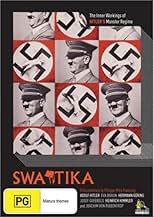
The Nazification of Germany from 1933 to 1945 told through a compilation of Nazi footage, newsreels, propaganda films and Eva Braun's home movies.The Nazification of Germany from 1933 to 1945 told through a compilation of Nazi footage, newsreels, propaganda films and Eva Braun's home movies.The Nazification of Germany from 1933 to 1945 told through a compilation of Nazi footage, newsreels, propaganda films and Eva Braun's home movies.



Galeazzo Ciano
- Self
- (archive footage)

Albert Einstein
- Self
- (archive footage)

Joseph Goebbels
- Self
- (archive footage)
- (as Josef Goebbels)

Hermann Göring
- Self
- (archive footage)

Heinrich Himmler
- Self
- (archive footage)

Adolf Hitler
- Self
- (archive footage)

Benito Mussolini
- Self
- (archive footage)

Jesse Owens
- Self
- (archive footage)

Joachim von Ribbentrop
- Self
- (archive footage)
- Director
- Writers
- All cast & crew
- Production, box office & more at IMDbPro
7.2436
1
2
3
4
5
6
7
8
9
10
Featured reviews
Better Than Average Documentary - Swastika
Nothing really new here for students of history. But for casual observers of world events who are not students of history, it may raise a few eyebrows. Lots of good footage and the Mora does a great job of not including unnecessary narration (the footage is painfully explicit on what happened (if not why it happened). Of course, the Versailles Treaty is not mentioned in detail; a major cause for the rise of Hitler because Germany was burdened with great war reparation debt from that treaty. This mightily led to Hitler's rise. Lesson? Reforming a country that loses a war is better than strangling it to a slow death. Nice home movie footage as well which tries to humanize Hitler. Good luck with that idea.
Can this be seen as a neutral documentary?
Watched version available in Youtube.
What is interesting is to find the narrative implemented by choice of shots and their editing, and the adding of dialogue(it is not the original) and music. That turns the sucession of shots something that may or intends to convey a message. Is it neutral? If not, is it for or against Nazism? Some earlier critics said it humanized Hitler. Well, he was a man (of sorts). When we hear epic Wagner music accompanyng some parts we get a bit suspicious... But the intelectual montage of shots of children with hitler and juden children starving (altough kind of speedy and forced comparing with the rest of the movie) and last part showing USA nazi party, makes it more somewhat balanced.
About the sound and dialogue added: first of all, it sounds very artificial, second it is supposedly added via lip reading, but in some cases it was clearly not possible, like when we hear Hitler saying that Churchil and Chamberlain are asleep and we can only see his back.
Nevertheless, I think it is not so polemic today as it was when first shown.
What is interesting is to find the narrative implemented by choice of shots and their editing, and the adding of dialogue(it is not the original) and music. That turns the sucession of shots something that may or intends to convey a message. Is it neutral? If not, is it for or against Nazism? Some earlier critics said it humanized Hitler. Well, he was a man (of sorts). When we hear epic Wagner music accompanyng some parts we get a bit suspicious... But the intelectual montage of shots of children with hitler and juden children starving (altough kind of speedy and forced comparing with the rest of the movie) and last part showing USA nazi party, makes it more somewhat balanced.
About the sound and dialogue added: first of all, it sounds very artificial, second it is supposedly added via lip reading, but in some cases it was clearly not possible, like when we hear Hitler saying that Churchil and Chamberlain are asleep and we can only see his back.
Nevertheless, I think it is not so polemic today as it was when first shown.
10joel-28
Fantastic documentary in the Riefenstahl style
Philippe Mora was the person who as a 19 year old film student discovered the now well known personal films of Eva Braun (that would make a fine film in itself). This fascinating color film footage is incorporated into this un narrated documentary along with a wide assortment of original Nazi newsreels and propaganda films to present life in Nazi Germany from 1933-45 as seen through the propaganda filmmakers (and Eva's) camera lens. A wonderful classical music score accompanies. This film is quite rare and is generally unavailable. I believe it was nominated for an award (or won an award). Nevertheless,if you get a chance to see it, buy it, etc, do it. It is the best documentary film on Nazi Germany of it's kind with much never before seen original footage.
10RandallB
Unbelievable documentary on the banality of evil
This feature length documentary will knock your socks off ... if you're ever lucky enough to see it. If you have ever wondered how Hitler and his thugs wooed the Germans? Philippe Mora has assembled an incredible body of film footage here and let the material tell the story ... there is no narration, something Philippe does particularly well (see his next doco, BROTHER CAN YOU SPARE A DIME). He was even able to find Eva Braun's home movies of Hitler, mostly taken at Obersalzburg, and with the help of German lipreaders, bring them to life. Students of history will find it particularly enlightening. It is also horrifying. Most people didn't think Hitler was at all bad. Famous reporter Dick Brinkly singing the praises of Hitler in the mid 30s must be embarrassing. See it if you can. Pray it comes out on DVD one day.
Ein volk, ein Reich, ein Führer
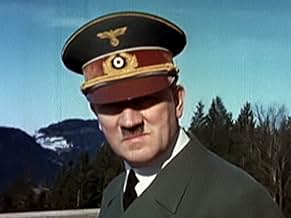
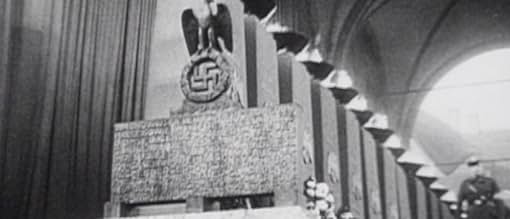
Because this documentary is centered on a place almost universally reviled by everyone on Earth, it was surprising to see it start off with quite a controversial statement. The opening slide states that if future historians demonize Hitler because of what he did, they're going to miss the entire point of the film, as it shows (largely through his eyes) what he really was: a human. This film, while basically just a large assortment of newsreels and footage from prewar Nazi Germany, surprised me more than a few times. With the Second World War being the historical subject I devote the most time to learning about, I wasn't expecting this movie to contain things I have never seen before. Most will be familiar with things like the huge rally in Nuremberg, as well as Neville Chamberlain professing to the British public Hitler won't fight England just because he signed a meaningless agreement. However, there's also scenes of propaganda minister Dr. Goebbels visiting Hitler at his mountain house in southern Bavaria. These types of clips tend to humanize Hitler and make him seem almost normal, which is probably why most people haven't seen them. I really did not expect to see Eva Braun saying how handsome she thinks Clark Gable is either. Her home movies taken at the Obersalzberg have been in countless ww2 documentaries, including what is probably the best one ever (World at War), but they never fail to be eerie to watch. We see her and her sister Gretl swim in a river, and later, she brings her scottish terriers to Hitler's house. Adolf reportedly didn't like Eva's dogs because they bit Blondi, his german shepherd. Ironically, one of her dogs was named Stasi, which would be the name of the postwar secret police in communist east germany. Another thing that caught my attention was taking a look inside the Reich Chancellery, which was the building Hitler commanded germany from. Aside from his office, pretty much the whole entire interior of the building looks like a 5 star hotel. Also shown is an art museum containing the works of National Socialist painters and sculptors, both trying their hardest to capture the perfect likeness of the Nordic race. One of Mussolini's in-laws is present at the opening ceremony. The statues in the museum are quite impressive, given that they were made in the 30s. One consisting of a man and his horse makes even Michaelangelo's David look tiny. The film includes some things that aren't really related to nazism, but were thrown in anyway simply because they occurred in germany. One of these is Einstein talking to an audience after he has learned the nazis want him out of germany. It never crossed my mind, but I think this is the first time I heard him talk. The documentary doesn't go into world war 2 itself, and only focuses on the period from 1933 to 39, but does jump ahead to 1945 at the end. This means it's nowhere near as comprehensive as something like World at War, which not only includes much of the same footage but also includes interviews with people who were within 5 feet of Hitler for much of his time as chancellor. While the footage of the 1936 Olympics, home movies and other things are enough to make the film passable in my eyes, it is hampered by a lack of substance to stand on. The footage is the only thing here telling the story. As a consequence, this will probably only please avid fans of this type of history, but it wasn't a problem for me. There's definitely a lot of things I never saw before, so it's excusable.


Did you know
- TriviaThe provocative documentary was banned in Israel on the ground that it projects a sympathetic image of Adolf Hitler.
- ConnectionsFeatured in Swastika Revisited (2006)
- How long is Swastika?Powered by Alexa
Details
- Release date
- Country of origin
- Official site
- Language
- Also known as
- Swastika - hakkorset
- Production company
- See more company credits at IMDbPro
- Runtime
- 1h 53m(113 min)
- Color
- Sound mix
Contribute to this page
Suggest an edit or add missing content