IMDb RATING
6.4/10
332
YOUR RATING
During the Japanese occupation of Korea, the leader of a resistance movement, who's also a Taekwondo master, and his apprentices struggle against the brutal Japanese occupiers, aided by a Ch... Read allDuring the Japanese occupation of Korea, the leader of a resistance movement, who's also a Taekwondo master, and his apprentices struggle against the brutal Japanese occupiers, aided by a Chinese female martial artist.During the Japanese occupation of Korea, the leader of a resistance movement, who's also a Taekwondo master, and his apprentices struggle against the brutal Japanese occupiers, aided by a Chinese female martial artist.
- Director
- Writer
- Stars
Carter Wong
- Jin Zheng Zhi
- (as Carter Huang)
- Director
- Writer
- All cast & crew
- Production, box office & more at IMDbPro
6.4332
1
2
3
4
5
6
7
8
9
10
Featured reviews
Martial Arts Fun and Action
While the film is not abundant with taekwondo philosophy or technique, it does tell a story that most American taekwondo students are unfamiliar with. That story is set in the backdrop of the Japanese occupation of Korea during World War II and the Korean resistance to that occupation. This tale of modern oppression is, simultaneously, a tale of how embedded in the fabric of the Korean culture taekwondo is. Rhee plays the leader of the underground resistance who is, of course, a taekwondo Grandmaster. Rhee is forced to reveal his identity, and risk death, in order to attempt to save the life of an imprisoned Catholic Priest.
The film's sparse dialogue is subtitled but the action is plentiful as Rhee is joined by an All Star cast of Asian action stars, including Angela Mao, Carter Wong, Sammo Hung, and many more fighters/actors. While many styles of martial arts are evident, the presence of Rhee and Anne Winton, Rhee's star pupil off the movie screen, remind us that this is, theoretically, a taekwondo action film.
As a snapshot of modern Korean history and a look at the role of Taekwondo in personal defense and the defense of a culture I do recommend this film."
Two years later, in 2018 Grandmaster Rhee would pass away and be mourned all over the world for his contributions to Taekwondo and humanity.
One of the interesting and little know facts about this film was that it was Bruce Lee who introduced his friend, Jhoon Rhee, to Golden Harvest to get the film made. In addition to Lee's friendship with Rhee he liked the fact that the story of the film involved a similar theme to Lee's own Fist of Fury. That theme was resistance to Japanese occupying forces.
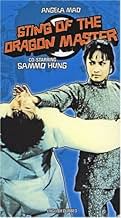
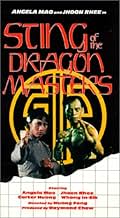
The film is also known and been released as Sting of the Dragon Masters and Taekwondo Heroes.
The film's sparse dialogue is subtitled but the action is plentiful as Rhee is joined by an All Star cast of Asian action stars, including Angela Mao, Carter Wong, Sammo Hung, and many more fighters/actors. While many styles of martial arts are evident, the presence of Rhee and Anne Winton, Rhee's star pupil off the movie screen, remind us that this is, theoretically, a taekwondo action film.
As a snapshot of modern Korean history and a look at the role of Taekwondo in personal defense and the defense of a culture I do recommend this film."
Two years later, in 2018 Grandmaster Rhee would pass away and be mourned all over the world for his contributions to Taekwondo and humanity.
One of the interesting and little know facts about this film was that it was Bruce Lee who introduced his friend, Jhoon Rhee, to Golden Harvest to get the film made. In addition to Lee's friendship with Rhee he liked the fact that the story of the film involved a similar theme to Lee's own Fist of Fury. That theme was resistance to Japanese occupying forces.
The film is also known and been released as Sting of the Dragon Masters and Taekwondo Heroes.
A slightly unique kind of martial arts movie.
Jhoon Rhee should have made more martial arts films as he is one of the top practioneers of his style, Tae Kwon Do. He was one of a few people who taught Bruce Lee high kicks.
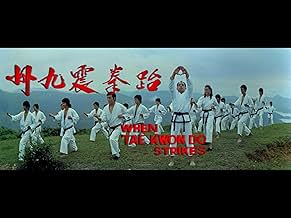
Even so, this Asian movie from 1973 is a solid one. Most of the time in an Asian production, the fight sequences are speeded up and ridiculously so. "When Tae Kwon Do Strikes" is a bit different, as the choreography is executed in real time. In my opinion, this doesn't detract from the film's entertainment.
I have been watching martial arts films for about 30 years but I hadn't heard of the above film until 2 years ago. It was worth the wait though.
Very Badly Mastered DVD Version
The DVD version released by Crash Cinema was very poorly done. The mastering engineer must have been either drunk, asleep or not even in the room while it was being done. It looks like it was mastered from about a tenth generation copy and about halfway through the film, the audio synchronization disappears. The dialog is about 10 or 15 seconds behind the audio. If you're thinking about purchasing this DVD, please save your money. I remember seeing this film at the theater back in 1973. Also, the VHS copy of this film under the title of "When Taekwondo Strikes" looks better than the DVD, but the remaining several minutes of the movie are "missing". Where is the original camera negative?
very bland
I won't waste your time by describing the plot for this, the other reviewer already did this quite well. I will however give you my opinion of this movie. This movie is basically anti japanese propoganda. The japanese are portrayed as incredably evil b**tards who have respect for nothing, as well as having very poor martial arts skills (groups of japanese men get there asses kicked by single women on more than one occasion.) The fact that the japanese fighters lose almost every (if not every) fight in the movie kind of takes away the suspense. The plot is actually quite solid and perfect for a kung fu movie though. The problem lies in the fact that there's not much fighting. When there are fights some of the fighting is quite good, but other scenes are choreographed badly. One scene angela mao takes on six japanese in a church and kicks all their asses. The problem is they show her fighting them one by one when they're all supposed to be attacking at the same time. I gather this movie was incredably cheap considering how cheap some of the sets are. They use the same village set for when they are in korea and when they are in china without changing it at all. Some scenes are filmed at real locations though, and they look good. Overall the only real problem with the movie is it's slow moving and uninteresting plot. Since there are few fight scenes we have to rely on the plot for entertainment and, well, I wasn't entertained.
one and a half stars out of four
Wall-to-wall action!
"Sting of the Dragon Masters" features Jhoon Rhee in his only martial arts film role. Rhee, who is known as the 'Father of American Tae Kwon Do' and counts Muhammad Ali among his students, plays a humble, unassuming man living in Japanese-occupied Korea in the early twentieth century. He makes every effort to conceal his martial skill, but is eventually forced to lash out against the Japanese oppressors. (In this regard, and also because it is a Golden Harvest production, "...Dragon Masters" bears more than a passing resemblance to Bruce Lee's "The Chinese Connection".) Fighting alongside Rhee are chop-socky stalwarts Angela Mao Ying and Carter Wong, while the seemingly endless array of villains includes Whang Ing-Sik (dressed in a very loud kimono) and Sammo Hung. As is the case with many martial arts films, the storyline is simple and exists primarily to link the fight scenes together. But, good god, what fight scenes they are! "Sting of the Dragon Masters" offers spectacular, jaw-dropping action, with a special focus on kicks (as you might expect from a film whose alternate title is "When Tae Kwon Do Strikes"), and you'll certainly feel that you've gotten your money's worth by the time the closing credits roll.
Did you know
- TriviaDespite being a Mandarin-language production, four languages were spoken during filming. Most of the cast spoke Mandarin (even westerner Andre Morgan, who was already a multi-lingual producer for Golden Harvest), while Hwang In-Shik and Kim Ki-Joo spoke Korean, Kazuma Kenji spoke Japanese, and Jhoon Rhee & Anne Winton spoke English. Despite being South Korean born (and Korean being his primary language), you can tell Rhee's lip movements more closely match lines from the dub and/or the English subtitles. While it's not known for sure why he spoke English instead of Korean during the production, it may have been to assist when the film would receive its eventual US release/dub, where the majority of his students (especially in the Washington DC area) were located.
- Alternate versionsThe UK theatrical version was heavily cut to remove the whipping of the priest, as well as substantial cuts to the fight scenes, including blows to head, kicks, chain-fighting, and a man being knocked down the stairs.
- ConnectionsFeatured in The Best of the Martial Arts Films (1990)
Details
- Release date
- Countries of origin
- Language
- Also known as
- When Tae Kwon Do Strikes
- Production companies
- See more company credits at IMDbPro
- Runtime
- 1h 35m(95 min)
- Sound mix
- Aspect ratio
- 2.35 : 1
Contribute to this page
Suggest an edit or add missing content