IMDb RATING
6.6/10
9.8K
YOUR RATING

In ancient Arabia, a beautiful slave girl chooses a youth to be her new master, then she is kidnapped and they must search for each other. Stories are told within stories: love, travel and t... Read allIn ancient Arabia, a beautiful slave girl chooses a youth to be her new master, then she is kidnapped and they must search for each other. Stories are told within stories: love, travel and the whims of destiny.In ancient Arabia, a beautiful slave girl chooses a youth to be her new master, then she is kidnapped and they must search for each other. Stories are told within stories: love, travel and the whims of destiny.
- Awards
- 1 win & 3 nominations total




Tessa Bouché
- Aziza
- (as Tessa Bouche')

Margareth Clémenti
- Madre di Aziz
- (as Margaret Clementi)

Elisabetta Genovese
- Munis
- (as Elisabetta Vito Genovese)
- Director
- Writer
- All cast & crew
- Production, box office & more at IMDbPro
6.69.7K
1
2
3
4
5
6
7
8
9
10
Featured reviews
Exotic, erotic, authentic
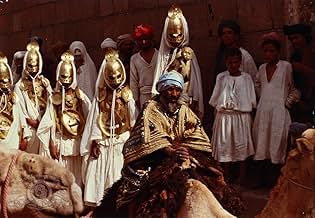
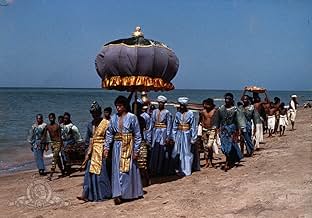
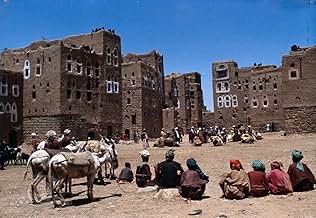
This very unique rendering of the Arabian Nights was filmed in natural locations in places as diverse as Ethiopia, Yemen, Iran and Nepal. The beauty of the landscapes is breathtaking, and makes the film an incredible voyage into time and space.
Please note that this movie is an explicitly erotic one, but one tends to forget that the original Arabian Nights were very much so, and not fairy tales for children. It is certainly difficult to make an erotic masterpiece, as sexual content does not make a movie better. It rather tends generally to get crassly exploitative, and rarely beautiful. There is plenty of sex in this movie, but it is depicted in a natural, feel-good and intelligent way that is rarely to be found elsewhere.
By the way, this movie should be seen again at the light of nowadays controversies. The Muslim world was far from always having been puritanical, and the sensual poetry that is rendered here is not Pasolini's invention. It is the faithful reflection of a hedonistic Orient that produced for instance poet Omar Khayyam as well as the original Arabian Nights. It is also a film about love, the most gripping part being the tragic and mysterious tale of Aziz and Aziza.
Don't expect any Aladdin or Ali Baba stuff here, you already figured this out. Anyway, it would be impossible to make a complete film version of the Arabian Nights, so this work just shows a few excerpts combined together (the Italian title is in in fact "the flower of the Arabian Nights"). However, the trend of the tales is respected in the sense that all the stories are interwoven into one another and eventually come back to the original plot.
The atmosphere of ancient Orient is rendered in a style that is lightyears away from usual clichés, and in an incredibly authentic and physical way. At times, you get the illusion that you feel the blazing sun on your skin, that you can smell the exotic vegetation, the sand, the noisy bazaars full of spices. There are a few flaws though : visible cutting, unadapted stances of classical music. The use of non professional actors was common for Pasolini, and gives a pleasant feeling of naive freshness.
The movie is probably Pasolini's best, and belongs to the "trilogy of Life" that included "the Decameron" and "the Canterbury tales", also literature classics. But much more than the two others, this movie is an ode to life. Hard to suspect that Pasolini's last work would be an ode to death. "Arabian Nights" belongs to the golden age of Italian cinema, that was incredibly prolific and innovative in the sixties and seventies.
All in all, not a family movie, but if you are curious and open-minded, get ready for a beautiful journey.
Please note that this movie is an explicitly erotic one, but one tends to forget that the original Arabian Nights were very much so, and not fairy tales for children. It is certainly difficult to make an erotic masterpiece, as sexual content does not make a movie better. It rather tends generally to get crassly exploitative, and rarely beautiful. There is plenty of sex in this movie, but it is depicted in a natural, feel-good and intelligent way that is rarely to be found elsewhere.
By the way, this movie should be seen again at the light of nowadays controversies. The Muslim world was far from always having been puritanical, and the sensual poetry that is rendered here is not Pasolini's invention. It is the faithful reflection of a hedonistic Orient that produced for instance poet Omar Khayyam as well as the original Arabian Nights. It is also a film about love, the most gripping part being the tragic and mysterious tale of Aziz and Aziza.
Don't expect any Aladdin or Ali Baba stuff here, you already figured this out. Anyway, it would be impossible to make a complete film version of the Arabian Nights, so this work just shows a few excerpts combined together (the Italian title is in in fact "the flower of the Arabian Nights"). However, the trend of the tales is respected in the sense that all the stories are interwoven into one another and eventually come back to the original plot.
The atmosphere of ancient Orient is rendered in a style that is lightyears away from usual clichés, and in an incredibly authentic and physical way. At times, you get the illusion that you feel the blazing sun on your skin, that you can smell the exotic vegetation, the sand, the noisy bazaars full of spices. There are a few flaws though : visible cutting, unadapted stances of classical music. The use of non professional actors was common for Pasolini, and gives a pleasant feeling of naive freshness.
The movie is probably Pasolini's best, and belongs to the "trilogy of Life" that included "the Decameron" and "the Canterbury tales", also literature classics. But much more than the two others, this movie is an ode to life. Hard to suspect that Pasolini's last work would be an ode to death. "Arabian Nights" belongs to the golden age of Italian cinema, that was incredibly prolific and innovative in the sixties and seventies.
All in all, not a family movie, but if you are curious and open-minded, get ready for a beautiful journey.
Strange, Poetic Filled with Moments of Greatness
This was the penultimate film of the great Italian director Pier Paolo Pasolini. It also concludes his "Trilogy of Life", based on medieval story collections (the others are "The Decameron" and "The Canterbury Tales"). Like the others in the series, this is a portmanteau film (i.e. the film is not just one story but several).
The film begins with a young man's search for his slave girl lover, who has been abducted. Along the way, several stories from "The Arabian Nights" are told.
The film has a very loose structure. There are stories, within stories, within stories. This can be quite confusing at times. It was filmed in Iran, Yemen and Nepal and the countries look absolutely spectacular. The main flaw of the film is that it does show signs of being hastily cut (Pasolini himself reduced the film by half an hour before general release, and there may have been cuts due to the censors). This often makes the film seem quite disjointed. One of the dominant themes in this film is love and sex, and yes, there is a lot of explicit nudity here.
The film touches on dreams, reality, deception, truth, freedom and slavery. While by no means perfect, there are times when the Pasolini's genius and humanity shines through.
The film begins with a young man's search for his slave girl lover, who has been abducted. Along the way, several stories from "The Arabian Nights" are told.
The film has a very loose structure. There are stories, within stories, within stories. This can be quite confusing at times. It was filmed in Iran, Yemen and Nepal and the countries look absolutely spectacular. The main flaw of the film is that it does show signs of being hastily cut (Pasolini himself reduced the film by half an hour before general release, and there may have been cuts due to the censors). This often makes the film seem quite disjointed. One of the dominant themes in this film is love and sex, and yes, there is a lot of explicit nudity here.
The film touches on dreams, reality, deception, truth, freedom and slavery. While by no means perfect, there are times when the Pasolini's genius and humanity shines through.
The sexual encounters in the film are strongly uninhibited, but not graphic or explicit...
This film version keeps much of the eroticism in Sir Richard Burton's original translation, which previous movie treatments saw fit to water down
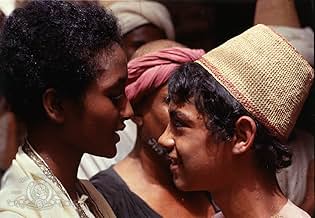
Great care was taken in the details: it was shot on location (Africa and the Middle East) and a dark skinned girl was cast as the princess
The acting is extremely good, and the stories connect in and out in intriguing fashion...
The film selects some of the more popular of the Arabian Nights stories, but intertwines them in strange ways Like the original, many stories lead into other stories and again into others
One of the most erotic sequences is when two supernatural beings decide to play a trick on a virginal girl and boy The beings make each young person seduce the other while he or she is asleep In another scene, one of the heroes finds himself in a pool with a group of very pretty, very nude Arabian women, who tease and tickle him into an intense joy
The film selects some of the more popular of the Arabian Nights stories, but intertwines them in strange ways Like the original, many stories lead into other stories and again into others
One of the most erotic sequences is when two supernatural beings decide to play a trick on a virginal girl and boy The beings make each young person seduce the other while he or she is asleep In another scene, one of the heroes finds himself in a pool with a group of very pretty, very nude Arabian women, who tease and tickle him into an intense joy
Pier Paolo Pasolini's third colorful pageant of his ¨trilogy of life¨ series , freely based on ten shameless tales
Pier Paolo Pasolini's third epic show of his ¨trilogy of life¨ series , based on 10 bawdy tales and riding out of the magic and splendor from Orient . This is a peculiar rendition of various stories from 1001 Nights written by an unknown autor . An explicit adaptation of classy portmanteu with adequate sets , gorgeous photography , humor and interwoven with strong sexual scenes . This Arabian Nights emerges as a marvelously relaxed and open puzzle of the interlinked tales dedicated to the multiplicity of truth amid a welter of sexual exhibitionism . The tales revolve around slaves , Kings , Queens , demons , love , loss and atonement . And representing an enjoyable life vision behind its humorous facade . As a lot of Arabian Nights tales were adapted , most notably : Set in ancient Arabia, there a youth comes to fall in love with a slave named Zumurrud (Ines Pellegrini) who selected him as her master . As Nur Ed Din (Franco Merli) is chosen by an attractive slave girl to be her new master . After a foolish error causes their separation, he travels in search for her . Later on , she is abducted and subsequently she becomes a wealthy queen and while they must search for each other . Stories are told within stories ; and various other travelers recount their own tragic , surprising , fantastic and romantic experiences . Dealing with travels , supernatural beings , an unfortunate lover (Ninetto Davoli) whose love results in terrible consequences , a nasty demon (Franco Citti) and the whims of destiny.
This Pier Paolo Pasolini's Tales of the Arabian Nights is an acclaimed , if sexually explicit retelling of a handful of Oriental tales . Here Pasolini has loosely modeled a recounting of 1001 Nights' famous tales that were previously adapted and very smoothly in Universal studios as ¨Arabian nights¨ (1942) by John Rawlins with John Hall , Maria Montez , though it nothing to do with this Pasolini film . This movie inspired by the ancient erotic and mysterious tales of Mid-West Asia ; however many tales don't make sense . Pasolini manages in his uninhibited fashion to capture the bawdy and anarchic spirit of far countries . This is episodic romp in which Pier Paolo is up to his old tricks satirizing social habits , religion , lower classes and throwing in liberal doses of love and life . It yields an engrossing array of liberating , mysterious and profound moments . However , the sights of the interminable assembly of seemingly ugly villagers Pasolini picked up as extras can be a bit embarrassing . As well as the endless sex scenes and bad taste can be a little intimidating . By the time these escenes were considered obscene , and some images deemed blasphemous. It was initially banned in Italy , and many other countries for several years . The best episodes are the followings : include stories of an innocent young man who falls for a gorgeous slave , another young man who becomes enraptured by a mysterious woman on his wedding day, and when Zumurrud , a slave turned monarch , after her drag wedding amid delightfully conspiratorial laughter reveals her true sexual identity to her diminutive and equally charming bride and another main story concerning a man who is determined to free a woman from a demon . This ¨Arabain Nights¨ is adorned by beautiful cinematography by Giuseppe Ruzzolini , and shot on location in several countries as Nepal , Zabid, Yemen ,Yazd, Iran , Mesjed-e-Imam, Esfahan, Iran , Mesjed-e Shah : Zumurrud's palace, Esfahan, Iran , San'a, Yemen , Eritrea ,Ethiopia Shibam,Wadi Dhar , Rock Palace , Yemen , Hanuman Dhoka, Durbar Square, Kathmandu, Nepal and Laparo Film Studios, Rome, Lazio, Italy . Evocative production design and art direction by Dante Ferreti , and enjoyable score by Ennio Morricone ; equally , there are lots of nudism : more male than female , homoeroticism and disagreeable scenes . Pasolini's film career would then alternate distinctly personal and often scandalously erotic adaptations of classic literary texts . As his first intallment of his trilogy of life titled Decameron was followed by Tales of Canterbury (1971) : the trilogy's weak point based on Godofredo Chaucer tales and finally the third ¨The Arabian nights¨ featuring 10 of the old Scherezade favorites .
The motion picture lavishly produced by Alberto Grimaldi was well directed by Pier Paolo Pasolini , it has rarely been seem in a great number of countries after its release in 1975 by United Artists , and being ludicrously cut by the censor and insanely dubbed . Pasolini was member of the Italian Communist Party from 1947 to 1949 and he was expelled because of his homosexuality. He was also a poet, a painter , actor and a novelist. He frequently casts Franco Citti , Ninetto Davoli , Franco Merli and Ines Pellegrini and non-professional actors as in Arabian nights . In his movies he shows his own more personal projects, expressing his controversial views on Marxism, atheism, fascism and homosexuality . His first film Accattone (1961) was based on his own novel and its violent depiction of the life of a pimp in the slums of Rome caused a sensation . He was arrested in 1962 by his contribution to the portmanteau film Ro.Go.Pa.G. (1963) . It might have been expected that his next film, Gospel According to St. Matthew (1964) , here Paolo presented the Biblical story in a totally realistic, stripped-down style, would cause a similar fuss but, in fact, it was rapturously acclaimed as one of the few honest portrayals of Christ on screen . Subsequently , he made a Greek rendition : Oedipus Rex (1967) . And other films as the Neorrealist Mamma Roma with Anna Magnani , Porcile , The Grim Reaper , Accatone , Il Bell' Antonio , That long night in , and , of course , ¨Trilogy of life¨. Finally , Salo or the 120 day of Sodom that was deemed extremely violent , obscene and Pasolini being judged , condemned and given a suspended sentence by the Italian courts , being a mercilessly grim fusion of the Marquis de Sade's story with Benito Mussolini's Fascist Italy , showing the sinister connection between consumerism and Nazism. Pasolini was murdered in still-mysterious circumstances shortly after completing the film.
This Pier Paolo Pasolini's Tales of the Arabian Nights is an acclaimed , if sexually explicit retelling of a handful of Oriental tales . Here Pasolini has loosely modeled a recounting of 1001 Nights' famous tales that were previously adapted and very smoothly in Universal studios as ¨Arabian nights¨ (1942) by John Rawlins with John Hall , Maria Montez , though it nothing to do with this Pasolini film . This movie inspired by the ancient erotic and mysterious tales of Mid-West Asia ; however many tales don't make sense . Pasolini manages in his uninhibited fashion to capture the bawdy and anarchic spirit of far countries . This is episodic romp in which Pier Paolo is up to his old tricks satirizing social habits , religion , lower classes and throwing in liberal doses of love and life . It yields an engrossing array of liberating , mysterious and profound moments . However , the sights of the interminable assembly of seemingly ugly villagers Pasolini picked up as extras can be a bit embarrassing . As well as the endless sex scenes and bad taste can be a little intimidating . By the time these escenes were considered obscene , and some images deemed blasphemous. It was initially banned in Italy , and many other countries for several years . The best episodes are the followings : include stories of an innocent young man who falls for a gorgeous slave , another young man who becomes enraptured by a mysterious woman on his wedding day, and when Zumurrud , a slave turned monarch , after her drag wedding amid delightfully conspiratorial laughter reveals her true sexual identity to her diminutive and equally charming bride and another main story concerning a man who is determined to free a woman from a demon . This ¨Arabain Nights¨ is adorned by beautiful cinematography by Giuseppe Ruzzolini , and shot on location in several countries as Nepal , Zabid, Yemen ,Yazd, Iran , Mesjed-e-Imam, Esfahan, Iran , Mesjed-e Shah : Zumurrud's palace, Esfahan, Iran , San'a, Yemen , Eritrea ,Ethiopia Shibam,Wadi Dhar , Rock Palace , Yemen , Hanuman Dhoka, Durbar Square, Kathmandu, Nepal and Laparo Film Studios, Rome, Lazio, Italy . Evocative production design and art direction by Dante Ferreti , and enjoyable score by Ennio Morricone ; equally , there are lots of nudism : more male than female , homoeroticism and disagreeable scenes . Pasolini's film career would then alternate distinctly personal and often scandalously erotic adaptations of classic literary texts . As his first intallment of his trilogy of life titled Decameron was followed by Tales of Canterbury (1971) : the trilogy's weak point based on Godofredo Chaucer tales and finally the third ¨The Arabian nights¨ featuring 10 of the old Scherezade favorites .
The motion picture lavishly produced by Alberto Grimaldi was well directed by Pier Paolo Pasolini , it has rarely been seem in a great number of countries after its release in 1975 by United Artists , and being ludicrously cut by the censor and insanely dubbed . Pasolini was member of the Italian Communist Party from 1947 to 1949 and he was expelled because of his homosexuality. He was also a poet, a painter , actor and a novelist. He frequently casts Franco Citti , Ninetto Davoli , Franco Merli and Ines Pellegrini and non-professional actors as in Arabian nights . In his movies he shows his own more personal projects, expressing his controversial views on Marxism, atheism, fascism and homosexuality . His first film Accattone (1961) was based on his own novel and its violent depiction of the life of a pimp in the slums of Rome caused a sensation . He was arrested in 1962 by his contribution to the portmanteau film Ro.Go.Pa.G. (1963) . It might have been expected that his next film, Gospel According to St. Matthew (1964) , here Paolo presented the Biblical story in a totally realistic, stripped-down style, would cause a similar fuss but, in fact, it was rapturously acclaimed as one of the few honest portrayals of Christ on screen . Subsequently , he made a Greek rendition : Oedipus Rex (1967) . And other films as the Neorrealist Mamma Roma with Anna Magnani , Porcile , The Grim Reaper , Accatone , Il Bell' Antonio , That long night in , and , of course , ¨Trilogy of life¨. Finally , Salo or the 120 day of Sodom that was deemed extremely violent , obscene and Pasolini being judged , condemned and given a suspended sentence by the Italian courts , being a mercilessly grim fusion of the Marquis de Sade's story with Benito Mussolini's Fascist Italy , showing the sinister connection between consumerism and Nazism. Pasolini was murdered in still-mysterious circumstances shortly after completing the film.
Third (and best) part of the trilogy of life.
"Fiore delle mille e una notte" ,which won special prize at CANNES 1974 is the third part of what Pasolini called the trilogy of life which encompasses "il decameron" (1971) and" racconti di Canterbury" (1972). It's the most accessible of all Pasolini movies ,and weren't it for the numerous nudities,it would appeal to large audience.
This must be the script:it's much better than the two first films because the story is built à la Shéhérazade ,with plots ,subplots and subsubplots which fit into each other;and although sex is the main vector,it features enough twists to sustain the interest throughout.It does not forget magic (the segment which features Ninetto Davoli,Pasolini's favorite actor,uses a lot of symbols)and mystery (the adolescent who must be killed when he's fifteen ).Humor is less vulgar than in "di racconti di Canterbury" The little riddle "the aromatic grass of the fields" "the slit pomegranate" and "the inn of the warm welcome " is witty.
Little did we know that Pasolini would follow his trilogy of life with the most depressing work ever made :"Salo" (1975).
This must be the script:it's much better than the two first films because the story is built à la Shéhérazade ,with plots ,subplots and subsubplots which fit into each other;and although sex is the main vector,it features enough twists to sustain the interest throughout.It does not forget magic (the segment which features Ninetto Davoli,Pasolini's favorite actor,uses a lot of symbols)and mystery (the adolescent who must be killed when he's fifteen ).Humor is less vulgar than in "di racconti di Canterbury" The little riddle "the aromatic grass of the fields" "the slit pomegranate" and "the inn of the warm welcome " is witty.
Little did we know that Pasolini would follow his trilogy of life with the most depressing work ever made :"Salo" (1975).


Did you know
- TriviaThis film is the final entry in director Pier Paolo Pasolini's "Trilogy of Life," following The Decameron (1971) and The Canterbury Tales (1972).
- GoofsWhen the chimpanzee is writing, it's clearly visible that it's not actually the chimp writing but an actor wearing a glove made to look like the chimp's hand.
- Crazy credits"Truth lies not in one dream, but in many." - Arabian Nights
- Alternate versionsThe 1990 Water Bearer Films video release (WBF 8001) is marked "Original Uncut Version" with a runtime of 133 min. It is rated X.
- ConnectionsEdited into Porn to Be Free (2016)
- How long is Arabian Nights?Powered by Alexa
Details
- Release date
- Countries of origin
- Languages
- Also known as
- Las mil y una noches
- Filming locations
- Mesjed-e-Imam, Esfahan, Iran(Zumurrud's palace)
- Production companies
- See more company credits at IMDbPro
Box office
- Gross worldwide
- $755
- Runtime
- 2h 10m(130 min)
- Sound mix
- Aspect ratio
- 1.85 : 1
Contribute to this page
Suggest an edit or add missing content