IMDb RATING
6.6/10
9.8K
YOUR RATING

In ancient Arabia, a beautiful slave girl chooses a youth to be her new master, then she is kidnapped and they must search for each other. Stories are told within stories: love, travel and t... Read allIn ancient Arabia, a beautiful slave girl chooses a youth to be her new master, then she is kidnapped and they must search for each other. Stories are told within stories: love, travel and the whims of destiny.In ancient Arabia, a beautiful slave girl chooses a youth to be her new master, then she is kidnapped and they must search for each other. Stories are told within stories: love, travel and the whims of destiny.
- Awards
- 1 win & 3 nominations total




Tessa Bouché
- Aziza
- (as Tessa Bouche')

Margareth Clémenti
- Madre di Aziz
- (as Margaret Clementi)

Elisabetta Genovese
- Munis
- (as Elisabetta Vito Genovese)
- Director
- Writer
- All cast & crew
- Production, box office & more at IMDbPro
6.69.7K
1
2
3
4
5
6
7
8
9
10
Featured reviews
The Story of the Story
Pasolini is a wonderful, wonderful adventure. Welcoming him into your heart is not without cost; he's a friend who is brilliant on one side and captive to banality on the other.
The bad? Well, its tolerable for me because it is so flamboyantly obvious. The man has a triple curse: he is outrageously gay, he is insufferably Italian and (perhaps because of these two) he has excessively simpleminded storytelling skills. The stories here in their individual content have juvenile dynamics. The way the emotions are handled is comically simpleminded.
That's in the nature of the stories of course, but our man here takes them seriously, so overlain on this is his own sexual nature. These stories are, some of them, erotic in nature and all of them have desire as the driver. Among the various stories, he's chosen these and that's fine enough. The original stories were distributed in places all over the Islamic world, a huge reach, but all of them which included sex joked about the dissonance between Islmac attitudes towards sex and the actual lives of folks within.
But its rather interesting actually watching how his own predilections enter the story. Most of the men here are slaves to their own desires. But those desires are all in the stories skipping over the most superficial of erotic notions. A teenage boy awakes and finds an unconscious teenage girl next to him. He has sex with her. This is equated to "falling in love." It happens over and over and if you encounter these stories in text, its part of the fun.
But see how Pasolini himself enters the story in how he chooses to portray the erotic content. Nudity and youth stand for the erotic, especially the nude boy. When sex is depicted (less than you would expect from the stories) its amazing wooden, mannikins. I suppose if you made some still images of parts of this it would be erotic, but repeatedly seeing the male member of a cartoon tells me that director has the same foibles as the characters we see.
The Good? Well there's more than enough of that to make up for the sexual inadequacies of that part of the world.
There's the absolute beauty of the thing cinematically. It isn't fully cinematic in motion, since Pasolini has no notion of how things flow, what the rhythms of things are. But each shot is fulfilling and some are absolutely breathtaking. He doesn't have any static tableaux like the striking ones in "Matthew," but the visual elegance is erotic in itself. Its a sort of continuous penis shot of life, and you'll find the beauty of the places erotic in their own ways, And then there's the way the stories are crafted.
Yes they are cartoonish. Yes, they have execrable pacing, almost as if they were found objects and put in inappropriate boxes. But the way they are tied one to another is nothing short of brilliant. If we had none of the beauty, and none of the amusement of watching an Italian fop struggle on screen, we'd still have this. And its great.
There isn't any one mechanism that links the stories; there may be a dozen. There isn't any sense to about half of them, and that's part of the miracle. Sometimes they are inside one another, but sometimes they walk through each other. Sometimes it is the same place of extras. Sometimes a repeated situation; "don't eat from that plate." Sometimes it is simply a segue that has no narrative connection at all but just seems nested or siblinged in some way. Its "Sarogossa Manuscript" with fun and beauty.
I must say that one story really is perfect. It alone has two really beautiful women acting erotically. It has expert pacing. It is funny: laugh out loud funny. And it has a punishment that is one of the most arresting images you'll see if you are a guy. Plus it has a framing story that makes me think it was the first one adapted and filmed.
Ted's Evaluation -- 3 of 3: Worth watching.
The bad? Well, its tolerable for me because it is so flamboyantly obvious. The man has a triple curse: he is outrageously gay, he is insufferably Italian and (perhaps because of these two) he has excessively simpleminded storytelling skills. The stories here in their individual content have juvenile dynamics. The way the emotions are handled is comically simpleminded.
That's in the nature of the stories of course, but our man here takes them seriously, so overlain on this is his own sexual nature. These stories are, some of them, erotic in nature and all of them have desire as the driver. Among the various stories, he's chosen these and that's fine enough. The original stories were distributed in places all over the Islamic world, a huge reach, but all of them which included sex joked about the dissonance between Islmac attitudes towards sex and the actual lives of folks within.
But its rather interesting actually watching how his own predilections enter the story. Most of the men here are slaves to their own desires. But those desires are all in the stories skipping over the most superficial of erotic notions. A teenage boy awakes and finds an unconscious teenage girl next to him. He has sex with her. This is equated to "falling in love." It happens over and over and if you encounter these stories in text, its part of the fun.
But see how Pasolini himself enters the story in how he chooses to portray the erotic content. Nudity and youth stand for the erotic, especially the nude boy. When sex is depicted (less than you would expect from the stories) its amazing wooden, mannikins. I suppose if you made some still images of parts of this it would be erotic, but repeatedly seeing the male member of a cartoon tells me that director has the same foibles as the characters we see.
The Good? Well there's more than enough of that to make up for the sexual inadequacies of that part of the world.
There's the absolute beauty of the thing cinematically. It isn't fully cinematic in motion, since Pasolini has no notion of how things flow, what the rhythms of things are. But each shot is fulfilling and some are absolutely breathtaking. He doesn't have any static tableaux like the striking ones in "Matthew," but the visual elegance is erotic in itself. Its a sort of continuous penis shot of life, and you'll find the beauty of the places erotic in their own ways, And then there's the way the stories are crafted.
Yes they are cartoonish. Yes, they have execrable pacing, almost as if they were found objects and put in inappropriate boxes. But the way they are tied one to another is nothing short of brilliant. If we had none of the beauty, and none of the amusement of watching an Italian fop struggle on screen, we'd still have this. And its great.
There isn't any one mechanism that links the stories; there may be a dozen. There isn't any sense to about half of them, and that's part of the miracle. Sometimes they are inside one another, but sometimes they walk through each other. Sometimes it is the same place of extras. Sometimes a repeated situation; "don't eat from that plate." Sometimes it is simply a segue that has no narrative connection at all but just seems nested or siblinged in some way. Its "Sarogossa Manuscript" with fun and beauty.
I must say that one story really is perfect. It alone has two really beautiful women acting erotically. It has expert pacing. It is funny: laugh out loud funny. And it has a punishment that is one of the most arresting images you'll see if you are a guy. Plus it has a framing story that makes me think it was the first one adapted and filmed.
Ted's Evaluation -- 3 of 3: Worth watching.
At least it's different...
'Il Fiore delle mille e una notte', or 'Arabian Nights', is Pier Paolo Pasolini's final film from his "trilogy of life" and his second to last film in general. His last of course is 'Salo, or 120 Days of Sodom', the controversial first film from his "trilogy of death".
With 'Arabian Nights' Pasolini combines a couple of stories from the book 'A Thousand and One Nights' into one story, although the film itself still feels very episodic. All parts of the story deal with love, or actually I should say lust, ending in sex. Especially the penis gets enough screen time here, it might as well be the leading character. The sex scenes themselves are, in my opinion, not very sensual or erotic (although they admittedly are when you compare them to such scenes in any other Pasolini film) which is not necessarily a bad thing, but it becomes exactly that when more than half the movie exists out of them.
On the other hand the film is pretty entertaining, mostly for its oddness. That again, is something we see in almost any other Pasolini film. His distant approach adds to that feeling, especially when he shows violent images. One might not expect them in a film that arguably celebrates love and sex. Another factor for the oddness is the terrible acting, especially from the men. Maybe good acting is impossible for them here since Pasolini presents them as a bunch of whiners who would do anything for love. Of course, once again, with love I mean sex. The Italian language in the Eastern setting is another thing that feels pretty weird as well. All these elements add to the oddness which makes the film more entertaining than it probably should have been.
I have to conclude with saying that I sort of admire Pasolini. I think only his 'Il vangelo secundo Matteo' can be considered as a truly great film, mostly since his approach is the distant one. I think that is a good thing when it comes to a religious film like that. that approach in his other films is not always the right one, but it is one aspect of why his films are different, often daring. Even when not much is happening, or when we have no clue what is happening, or when we normally would not care that much, Pasolini keeps it kind of interesting.
With 'Arabian Nights' Pasolini combines a couple of stories from the book 'A Thousand and One Nights' into one story, although the film itself still feels very episodic. All parts of the story deal with love, or actually I should say lust, ending in sex. Especially the penis gets enough screen time here, it might as well be the leading character. The sex scenes themselves are, in my opinion, not very sensual or erotic (although they admittedly are when you compare them to such scenes in any other Pasolini film) which is not necessarily a bad thing, but it becomes exactly that when more than half the movie exists out of them.
On the other hand the film is pretty entertaining, mostly for its oddness. That again, is something we see in almost any other Pasolini film. His distant approach adds to that feeling, especially when he shows violent images. One might not expect them in a film that arguably celebrates love and sex. Another factor for the oddness is the terrible acting, especially from the men. Maybe good acting is impossible for them here since Pasolini presents them as a bunch of whiners who would do anything for love. Of course, once again, with love I mean sex. The Italian language in the Eastern setting is another thing that feels pretty weird as well. All these elements add to the oddness which makes the film more entertaining than it probably should have been.
I have to conclude with saying that I sort of admire Pasolini. I think only his 'Il vangelo secundo Matteo' can be considered as a truly great film, mostly since his approach is the distant one. I think that is a good thing when it comes to a religious film like that. that approach in his other films is not always the right one, but it is one aspect of why his films are different, often daring. Even when not much is happening, or when we have no clue what is happening, or when we normally would not care that much, Pasolini keeps it kind of interesting.
it shouldn't work, but it does- a series of stories of the bizarre and romantic (or erotic, take your pick)
Whether or not you like some (or just respond positively to some) of Pier Paolo Pasolini's work, or you don't, will depend on how much one can take of provocative subject matter put forward in an upfront manner. For me, he's a director that can go both ways, be it completely muddled and pretentious (Teorema) or almost boring in its S&M tactics of twisted satire (Salo), or actually dramatically engaging (Mamma Roma), and he's never someone who takes the easy road. Arabian Nights is another one, as part of a 'trilogy' of films adapted from famous, erotically-laced works of stories that have scandalized for centuries (the others the Decameron and Canterbury Nights). Once again, Pasolini has a lot of people in his film that aren't actors, or even real extras- sometimes some people will just pop out, or a bunch of kids will run around, and they're plucked right from the scenery. If authentic, film fans, is what you want, Pasonili gives it, in all of the style of a guy out to shoot a documentary on the people in these settings and gets (pleasantly) sidetracked by a bunch of crazy-tragic stories of love and lust in the desert.
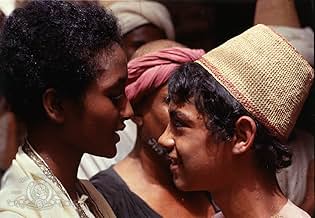
As if done in a pre-Pulp Fiction attempt at non-linear storytelling, we get the tale of Zumurrud (Ines Pellegini) and Nur ed din (Franco Merli), one a slave who is bought by the most innocent looking kid in the bunch of bidders. They fall in love, the wise young girl and naive grunt, but they get separated after she gets sold to another man. She escapes, but becomes the unwitting king after she is mistaken for a man. Meanwhile, her young little man is calling after her/him, and getting into his own trouble. Through this framework, we get other stories told of love lost and scrambled; a sad and silly story of a man who's engaged to his cousin, and is thwarted by a mysterious woman who gets his attention, which leads him down a path of semantics (yes, semantics, poetry-style) and sex, leaving his much caring cousin behind. Then there's the man who woos a woman who is under the ownership of a demon, and once their affair is discovered some unexpected things happen via the Demon (Franco Citti, maybe the most bad-ass character in the film despite the surreal-aspect of the showdown). And then one more story, which, hmm....
I could go on making descriptions, but then this wouldn't be much of a review of praise of the picture. Suffice to say it's one of Pasolini's strongest directed efforts, where he's surefire in his consistent usage of the hand-held lens, getting his actors to look sincere through dialog that is half ripped-from-the-pages and half with the sensibility of Pasolini as a poet (yes, I went there in the whole 'he's a poet' thing, but he is in a rough-edged and melodramatic timing and flow). He's also going for an interesting combo; neo-realist settings for a good chunk of the picture, set in and around real locations in areas that don't need much production design, and an epic sweep that includes many extras, some special effects at times (and how about that lion!), and extravagant costumes.
I also liked- if not loved- how Pasonili dealt with sex and more-so the human body itself. It would probably rightfully get an NC-17 if released today in America, and got an X when released in 1980. The dreaded 'thing' of a man is revealed about as often as a cut-away to a master shot of a building. Everything, in fact, is filmed frankly, without the style that tip-toes around the starkness of two people embraced and naked. But it's also not pornographic either; if anything Pasolini perhaps doesn't direct far enough with the sex, as one body just lays still on top of another. There's a specific intent to dealing with sexuality in this world that respects lust and desire from the original text without making it blatant- only in one big instance, involving the fate of the man from the cousin story (the one with Aziz I think) revels in the horror of sex that was delved tenfold in Salo. Add to this the exquisite score from Ennio Morricone, who enriches any scene his score pops up, as a mandolin strings away and the strings rise with just a hint of the sentimental. Without Morricone, in fact, it might not be as emotional a film, when need be.
And lest not forget Arabian Nights can be strangely comical, where Pasolini throws it back at the audience that he knows he's going (rightfully) into the surreal. Like with the story of the Demon and the fate of a man transformed as a chimpanzee, or the vision with the lion, or even the dialog in the pool with the three girls and the man, which is humorous while keeping a tongue-in-cheek. And there's even some good jokes to come out of the obvious step of having Zummurrud as the 'King' when it's clear as day from the Italian dubbing that he's the 'she', so to speak, as it stretches out into a final scene where lovers are united and things are as they should be, however much the director is thumbing his nose at power and sex and the dealings of the heart with organs. Arabian Nights probably couldn't be made today, but could anyone else but Pasolini make it anyway? There's daring in this film, and through the exotic exteriors and sets we see a filmmaker working along like there's nothing else to stop him, for better or worse. This time for the better.
As if done in a pre-Pulp Fiction attempt at non-linear storytelling, we get the tale of Zumurrud (Ines Pellegini) and Nur ed din (Franco Merli), one a slave who is bought by the most innocent looking kid in the bunch of bidders. They fall in love, the wise young girl and naive grunt, but they get separated after she gets sold to another man. She escapes, but becomes the unwitting king after she is mistaken for a man. Meanwhile, her young little man is calling after her/him, and getting into his own trouble. Through this framework, we get other stories told of love lost and scrambled; a sad and silly story of a man who's engaged to his cousin, and is thwarted by a mysterious woman who gets his attention, which leads him down a path of semantics (yes, semantics, poetry-style) and sex, leaving his much caring cousin behind. Then there's the man who woos a woman who is under the ownership of a demon, and once their affair is discovered some unexpected things happen via the Demon (Franco Citti, maybe the most bad-ass character in the film despite the surreal-aspect of the showdown). And then one more story, which, hmm....
I could go on making descriptions, but then this wouldn't be much of a review of praise of the picture. Suffice to say it's one of Pasolini's strongest directed efforts, where he's surefire in his consistent usage of the hand-held lens, getting his actors to look sincere through dialog that is half ripped-from-the-pages and half with the sensibility of Pasolini as a poet (yes, I went there in the whole 'he's a poet' thing, but he is in a rough-edged and melodramatic timing and flow). He's also going for an interesting combo; neo-realist settings for a good chunk of the picture, set in and around real locations in areas that don't need much production design, and an epic sweep that includes many extras, some special effects at times (and how about that lion!), and extravagant costumes.
I also liked- if not loved- how Pasonili dealt with sex and more-so the human body itself. It would probably rightfully get an NC-17 if released today in America, and got an X when released in 1980. The dreaded 'thing' of a man is revealed about as often as a cut-away to a master shot of a building. Everything, in fact, is filmed frankly, without the style that tip-toes around the starkness of two people embraced and naked. But it's also not pornographic either; if anything Pasolini perhaps doesn't direct far enough with the sex, as one body just lays still on top of another. There's a specific intent to dealing with sexuality in this world that respects lust and desire from the original text without making it blatant- only in one big instance, involving the fate of the man from the cousin story (the one with Aziz I think) revels in the horror of sex that was delved tenfold in Salo. Add to this the exquisite score from Ennio Morricone, who enriches any scene his score pops up, as a mandolin strings away and the strings rise with just a hint of the sentimental. Without Morricone, in fact, it might not be as emotional a film, when need be.
And lest not forget Arabian Nights can be strangely comical, where Pasolini throws it back at the audience that he knows he's going (rightfully) into the surreal. Like with the story of the Demon and the fate of a man transformed as a chimpanzee, or the vision with the lion, or even the dialog in the pool with the three girls and the man, which is humorous while keeping a tongue-in-cheek. And there's even some good jokes to come out of the obvious step of having Zummurrud as the 'King' when it's clear as day from the Italian dubbing that he's the 'she', so to speak, as it stretches out into a final scene where lovers are united and things are as they should be, however much the director is thumbing his nose at power and sex and the dealings of the heart with organs. Arabian Nights probably couldn't be made today, but could anyone else but Pasolini make it anyway? There's daring in this film, and through the exotic exteriors and sets we see a filmmaker working along like there's nothing else to stop him, for better or worse. This time for the better.
Exotic, erotic, authentic
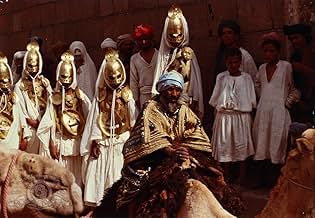
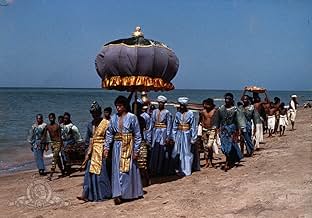
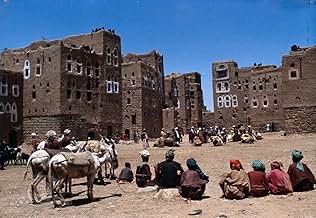
This very unique rendering of the Arabian Nights was filmed in natural locations in places as diverse as Ethiopia, Yemen, Iran and Nepal. The beauty of the landscapes is breathtaking, and makes the film an incredible voyage into time and space.
Please note that this movie is an explicitly erotic one, but one tends to forget that the original Arabian Nights were very much so, and not fairy tales for children. It is certainly difficult to make an erotic masterpiece, as sexual content does not make a movie better. It rather tends generally to get crassly exploitative, and rarely beautiful. There is plenty of sex in this movie, but it is depicted in a natural, feel-good and intelligent way that is rarely to be found elsewhere.
By the way, this movie should be seen again at the light of nowadays controversies. The Muslim world was far from always having been puritanical, and the sensual poetry that is rendered here is not Pasolini's invention. It is the faithful reflection of a hedonistic Orient that produced for instance poet Omar Khayyam as well as the original Arabian Nights. It is also a film about love, the most gripping part being the tragic and mysterious tale of Aziz and Aziza.
Don't expect any Aladdin or Ali Baba stuff here, you already figured this out. Anyway, it would be impossible to make a complete film version of the Arabian Nights, so this work just shows a few excerpts combined together (the Italian title is in in fact "the flower of the Arabian Nights"). However, the trend of the tales is respected in the sense that all the stories are interwoven into one another and eventually come back to the original plot.
The atmosphere of ancient Orient is rendered in a style that is lightyears away from usual clichés, and in an incredibly authentic and physical way. At times, you get the illusion that you feel the blazing sun on your skin, that you can smell the exotic vegetation, the sand, the noisy bazaars full of spices. There are a few flaws though : visible cutting, unadapted stances of classical music. The use of non professional actors was common for Pasolini, and gives a pleasant feeling of naive freshness.
The movie is probably Pasolini's best, and belongs to the "trilogy of Life" that included "the Decameron" and "the Canterbury tales", also literature classics. But much more than the two others, this movie is an ode to life. Hard to suspect that Pasolini's last work would be an ode to death. "Arabian Nights" belongs to the golden age of Italian cinema, that was incredibly prolific and innovative in the sixties and seventies.
All in all, not a family movie, but if you are curious and open-minded, get ready for a beautiful journey.
Please note that this movie is an explicitly erotic one, but one tends to forget that the original Arabian Nights were very much so, and not fairy tales for children. It is certainly difficult to make an erotic masterpiece, as sexual content does not make a movie better. It rather tends generally to get crassly exploitative, and rarely beautiful. There is plenty of sex in this movie, but it is depicted in a natural, feel-good and intelligent way that is rarely to be found elsewhere.
By the way, this movie should be seen again at the light of nowadays controversies. The Muslim world was far from always having been puritanical, and the sensual poetry that is rendered here is not Pasolini's invention. It is the faithful reflection of a hedonistic Orient that produced for instance poet Omar Khayyam as well as the original Arabian Nights. It is also a film about love, the most gripping part being the tragic and mysterious tale of Aziz and Aziza.
Don't expect any Aladdin or Ali Baba stuff here, you already figured this out. Anyway, it would be impossible to make a complete film version of the Arabian Nights, so this work just shows a few excerpts combined together (the Italian title is in in fact "the flower of the Arabian Nights"). However, the trend of the tales is respected in the sense that all the stories are interwoven into one another and eventually come back to the original plot.
The atmosphere of ancient Orient is rendered in a style that is lightyears away from usual clichés, and in an incredibly authentic and physical way. At times, you get the illusion that you feel the blazing sun on your skin, that you can smell the exotic vegetation, the sand, the noisy bazaars full of spices. There are a few flaws though : visible cutting, unadapted stances of classical music. The use of non professional actors was common for Pasolini, and gives a pleasant feeling of naive freshness.
The movie is probably Pasolini's best, and belongs to the "trilogy of Life" that included "the Decameron" and "the Canterbury tales", also literature classics. But much more than the two others, this movie is an ode to life. Hard to suspect that Pasolini's last work would be an ode to death. "Arabian Nights" belongs to the golden age of Italian cinema, that was incredibly prolific and innovative in the sixties and seventies.
All in all, not a family movie, but if you are curious and open-minded, get ready for a beautiful journey.
Pier Paolo Pasolini's third colorful pageant of his ¨trilogy of life¨ series , freely based on ten shameless tales
Pier Paolo Pasolini's third epic show of his ¨trilogy of life¨ series , based on 10 bawdy tales and riding out of the magic and splendor from Orient . This is a peculiar rendition of various stories from 1001 Nights written by an unknown autor . An explicit adaptation of classy portmanteu with adequate sets , gorgeous photography , humor and interwoven with strong sexual scenes . This Arabian Nights emerges as a marvelously relaxed and open puzzle of the interlinked tales dedicated to the multiplicity of truth amid a welter of sexual exhibitionism . The tales revolve around slaves , Kings , Queens , demons , love , loss and atonement . And representing an enjoyable life vision behind its humorous facade . As a lot of Arabian Nights tales were adapted , most notably : Set in ancient Arabia, there a youth comes to fall in love with a slave named Zumurrud (Ines Pellegrini) who selected him as her master . As Nur Ed Din (Franco Merli) is chosen by an attractive slave girl to be her new master . After a foolish error causes their separation, he travels in search for her . Later on , she is abducted and subsequently she becomes a wealthy queen and while they must search for each other . Stories are told within stories ; and various other travelers recount their own tragic , surprising , fantastic and romantic experiences . Dealing with travels , supernatural beings , an unfortunate lover (Ninetto Davoli) whose love results in terrible consequences , a nasty demon (Franco Citti) and the whims of destiny.
This Pier Paolo Pasolini's Tales of the Arabian Nights is an acclaimed , if sexually explicit retelling of a handful of Oriental tales . Here Pasolini has loosely modeled a recounting of 1001 Nights' famous tales that were previously adapted and very smoothly in Universal studios as ¨Arabian nights¨ (1942) by John Rawlins with John Hall , Maria Montez , though it nothing to do with this Pasolini film . This movie inspired by the ancient erotic and mysterious tales of Mid-West Asia ; however many tales don't make sense . Pasolini manages in his uninhibited fashion to capture the bawdy and anarchic spirit of far countries . This is episodic romp in which Pier Paolo is up to his old tricks satirizing social habits , religion , lower classes and throwing in liberal doses of love and life . It yields an engrossing array of liberating , mysterious and profound moments . However , the sights of the interminable assembly of seemingly ugly villagers Pasolini picked up as extras can be a bit embarrassing . As well as the endless sex scenes and bad taste can be a little intimidating . By the time these escenes were considered obscene , and some images deemed blasphemous. It was initially banned in Italy , and many other countries for several years . The best episodes are the followings : include stories of an innocent young man who falls for a gorgeous slave , another young man who becomes enraptured by a mysterious woman on his wedding day, and when Zumurrud , a slave turned monarch , after her drag wedding amid delightfully conspiratorial laughter reveals her true sexual identity to her diminutive and equally charming bride and another main story concerning a man who is determined to free a woman from a demon . This ¨Arabain Nights¨ is adorned by beautiful cinematography by Giuseppe Ruzzolini , and shot on location in several countries as Nepal , Zabid, Yemen ,Yazd, Iran , Mesjed-e-Imam, Esfahan, Iran , Mesjed-e Shah : Zumurrud's palace, Esfahan, Iran , San'a, Yemen , Eritrea ,Ethiopia Shibam,Wadi Dhar , Rock Palace , Yemen , Hanuman Dhoka, Durbar Square, Kathmandu, Nepal and Laparo Film Studios, Rome, Lazio, Italy . Evocative production design and art direction by Dante Ferreti , and enjoyable score by Ennio Morricone ; equally , there are lots of nudism : more male than female , homoeroticism and disagreeable scenes . Pasolini's film career would then alternate distinctly personal and often scandalously erotic adaptations of classic literary texts . As his first intallment of his trilogy of life titled Decameron was followed by Tales of Canterbury (1971) : the trilogy's weak point based on Godofredo Chaucer tales and finally the third ¨The Arabian nights¨ featuring 10 of the old Scherezade favorites .
The motion picture lavishly produced by Alberto Grimaldi was well directed by Pier Paolo Pasolini , it has rarely been seem in a great number of countries after its release in 1975 by United Artists , and being ludicrously cut by the censor and insanely dubbed . Pasolini was member of the Italian Communist Party from 1947 to 1949 and he was expelled because of his homosexuality. He was also a poet, a painter , actor and a novelist. He frequently casts Franco Citti , Ninetto Davoli , Franco Merli and Ines Pellegrini and non-professional actors as in Arabian nights . In his movies he shows his own more personal projects, expressing his controversial views on Marxism, atheism, fascism and homosexuality . His first film Accattone (1961) was based on his own novel and its violent depiction of the life of a pimp in the slums of Rome caused a sensation . He was arrested in 1962 by his contribution to the portmanteau film Ro.Go.Pa.G. (1963) . It might have been expected that his next film, Gospel According to St. Matthew (1964) , here Paolo presented the Biblical story in a totally realistic, stripped-down style, would cause a similar fuss but, in fact, it was rapturously acclaimed as one of the few honest portrayals of Christ on screen . Subsequently , he made a Greek rendition : Oedipus Rex (1967) . And other films as the Neorrealist Mamma Roma with Anna Magnani , Porcile , The Grim Reaper , Accatone , Il Bell' Antonio , That long night in , and , of course , ¨Trilogy of life¨. Finally , Salo or the 120 day of Sodom that was deemed extremely violent , obscene and Pasolini being judged , condemned and given a suspended sentence by the Italian courts , being a mercilessly grim fusion of the Marquis de Sade's story with Benito Mussolini's Fascist Italy , showing the sinister connection between consumerism and Nazism. Pasolini was murdered in still-mysterious circumstances shortly after completing the film.
This Pier Paolo Pasolini's Tales of the Arabian Nights is an acclaimed , if sexually explicit retelling of a handful of Oriental tales . Here Pasolini has loosely modeled a recounting of 1001 Nights' famous tales that were previously adapted and very smoothly in Universal studios as ¨Arabian nights¨ (1942) by John Rawlins with John Hall , Maria Montez , though it nothing to do with this Pasolini film . This movie inspired by the ancient erotic and mysterious tales of Mid-West Asia ; however many tales don't make sense . Pasolini manages in his uninhibited fashion to capture the bawdy and anarchic spirit of far countries . This is episodic romp in which Pier Paolo is up to his old tricks satirizing social habits , religion , lower classes and throwing in liberal doses of love and life . It yields an engrossing array of liberating , mysterious and profound moments . However , the sights of the interminable assembly of seemingly ugly villagers Pasolini picked up as extras can be a bit embarrassing . As well as the endless sex scenes and bad taste can be a little intimidating . By the time these escenes were considered obscene , and some images deemed blasphemous. It was initially banned in Italy , and many other countries for several years . The best episodes are the followings : include stories of an innocent young man who falls for a gorgeous slave , another young man who becomes enraptured by a mysterious woman on his wedding day, and when Zumurrud , a slave turned monarch , after her drag wedding amid delightfully conspiratorial laughter reveals her true sexual identity to her diminutive and equally charming bride and another main story concerning a man who is determined to free a woman from a demon . This ¨Arabain Nights¨ is adorned by beautiful cinematography by Giuseppe Ruzzolini , and shot on location in several countries as Nepal , Zabid, Yemen ,Yazd, Iran , Mesjed-e-Imam, Esfahan, Iran , Mesjed-e Shah : Zumurrud's palace, Esfahan, Iran , San'a, Yemen , Eritrea ,Ethiopia Shibam,Wadi Dhar , Rock Palace , Yemen , Hanuman Dhoka, Durbar Square, Kathmandu, Nepal and Laparo Film Studios, Rome, Lazio, Italy . Evocative production design and art direction by Dante Ferreti , and enjoyable score by Ennio Morricone ; equally , there are lots of nudism : more male than female , homoeroticism and disagreeable scenes . Pasolini's film career would then alternate distinctly personal and often scandalously erotic adaptations of classic literary texts . As his first intallment of his trilogy of life titled Decameron was followed by Tales of Canterbury (1971) : the trilogy's weak point based on Godofredo Chaucer tales and finally the third ¨The Arabian nights¨ featuring 10 of the old Scherezade favorites .
The motion picture lavishly produced by Alberto Grimaldi was well directed by Pier Paolo Pasolini , it has rarely been seem in a great number of countries after its release in 1975 by United Artists , and being ludicrously cut by the censor and insanely dubbed . Pasolini was member of the Italian Communist Party from 1947 to 1949 and he was expelled because of his homosexuality. He was also a poet, a painter , actor and a novelist. He frequently casts Franco Citti , Ninetto Davoli , Franco Merli and Ines Pellegrini and non-professional actors as in Arabian nights . In his movies he shows his own more personal projects, expressing his controversial views on Marxism, atheism, fascism and homosexuality . His first film Accattone (1961) was based on his own novel and its violent depiction of the life of a pimp in the slums of Rome caused a sensation . He was arrested in 1962 by his contribution to the portmanteau film Ro.Go.Pa.G. (1963) . It might have been expected that his next film, Gospel According to St. Matthew (1964) , here Paolo presented the Biblical story in a totally realistic, stripped-down style, would cause a similar fuss but, in fact, it was rapturously acclaimed as one of the few honest portrayals of Christ on screen . Subsequently , he made a Greek rendition : Oedipus Rex (1967) . And other films as the Neorrealist Mamma Roma with Anna Magnani , Porcile , The Grim Reaper , Accatone , Il Bell' Antonio , That long night in , and , of course , ¨Trilogy of life¨. Finally , Salo or the 120 day of Sodom that was deemed extremely violent , obscene and Pasolini being judged , condemned and given a suspended sentence by the Italian courts , being a mercilessly grim fusion of the Marquis de Sade's story with Benito Mussolini's Fascist Italy , showing the sinister connection between consumerism and Nazism. Pasolini was murdered in still-mysterious circumstances shortly after completing the film.


Did you know
- TriviaThis film is the final entry in director Pier Paolo Pasolini's "Trilogy of Life," following The Decameron (1971) and The Canterbury Tales (1972).
- GoofsWhen the chimpanzee is writing, it's clearly visible that it's not actually the chimp writing but an actor wearing a glove made to look like the chimp's hand.
- Crazy credits"Truth lies not in one dream, but in many." - Arabian Nights
- Alternate versionsThe 1990 Water Bearer Films video release (WBF 8001) is marked "Original Uncut Version" with a runtime of 133 min. It is rated X.
- ConnectionsEdited into Porn to Be Free (2016)
- How long is Arabian Nights?Powered by Alexa
Details
- Release date
- Countries of origin
- Languages
- Also known as
- Las mil y una noches
- Filming locations
- Mesjed-e-Imam, Esfahan, Iran(Zumurrud's palace)
- Production companies
- See more company credits at IMDbPro
Box office
- Gross worldwide
- $755
- Runtime
- 2h 10m(130 min)
- Sound mix
- Aspect ratio
- 1.85 : 1
Contribute to this page
Suggest an edit or add missing content