IMDb RATING
7.0/10
3.4K
YOUR RATING

Composer Gustav Mahler's (Robert Powell) life, told in a series of flashbacks as he and his wife (Georgina Hale) discuss their failing marriage during a train journey.Composer Gustav Mahler's (Robert Powell) life, told in a series of flashbacks as he and his wife (Georgina Hale) discuss their failing marriage during a train journey.Composer Gustav Mahler's (Robert Powell) life, told in a series of flashbacks as he and his wife (Georgina Hale) discuss their failing marriage during a train journey.
- Won 1 BAFTA Award
- 3 wins & 1 nomination total



- Director
- Writer
- All cast & crew
- Production, box office & more at IMDbPro
7.03.3K
1
2
3
4
5
6
7
8
9
10
Featured reviews
Mahler - A film that is silly and gets carried away
The life of Gustav Mahler could potentially be turned into a brilliant film if the right combination of great actors and a good screenplay is achieved. As for Ken Russell's "Mahler" film, it is a close call, but ultimately it gets thumbs down. Robert Powell does a good job playing the protagonist, but everyone one else in the film is average or mediocre. But the main weakness of "Mahler" is the screenplay. The narrative is disorganized and jumps all over the place. First we see Mahler at the end of his life, then we see him as a child, then we see him at the end of his life again, then we see him as the young and ambitious composer willing to do anything to get ahead in the music world, then switch back to his meeting with a doctor in Paris, then to a cottage where Mahler tells his wife Alma (Georgina Hale) that she should abandon composing music, etc., etc. Disoriented? Don't worry. You are not alone.
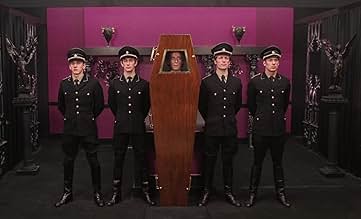
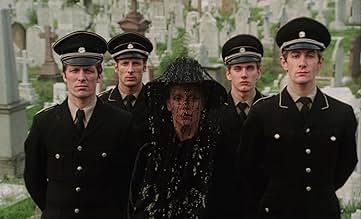
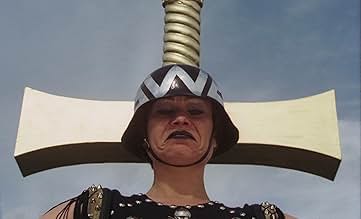
But worse than the scattered presentation is the undercurrent of silliness running through the movie. If you are going to do a movie about Mahler, then present your subject matter in an intelligent and serious way. But Russell does not do that. He has this tendency of getting carried away. At best, Russell's over the top filmmaking could generate incredible laughter. But if the joke does not work, then the result is incredibly embarrassing. Having Gustav Mahler fantasize about his wife Alma as a cocoon is not only strange, but also absurd. If Russell was trying to make a joke out of this sequence, then the joke did not work. Another scene has Alma Mahler playing a topless stripper for several Nazis, one of whom is her lover. I guess no one told Ken Russell that the Nazi party did not exist in 1911. But perhaps the most ridiculous scenes, where Russell goes way overboard, involve Gustav Mahler's conversion to Catholicism. First Gustav lowers his trousers to Emperor Franz Joseph after the latter asked him to do so. This scene was inserted to bring up the composer's Jewish identity. Then Gustav Mahler has this fantasy encounter with Cosima Wagner who is dressed -- get this! -- as a dominatrix with a swastika on her leather pants. Was this scene necessary? Apparently, Gustav has to become Cosima's submissive to convert to Catholicism and get a job at the Vienna Opera House. When watching this scene, I could not help but think that Russell was portraying not Mahler's fantasies, but his own, and that his inspiration came not from the early 20th century, but the sleaziest strip clubs and dominatrix clubs of London.
The result is a film that has some interesting scenes, but is otherwise dragged down by silly fantasies. This film is filled from beginning to end with Mahler's compositions, and yet we are given no insight into his genius or his humanity. Mahler was probably one of the finest composers in the late 19th and early 20th centuries. But Russell makes Mahler the subject of a freak show, in which the protagonist is put on display and humiliated. Perhaps the director is trying to make a joke or maybe he is trying to tweak the noses of professional film directors who take their craft seriously. Maybe Russell is even making fun of Mahler and his obsession with conformity. Whatever Russell is trying to do, "Mahler" plays like a joke in poor taste.
But worse than the scattered presentation is the undercurrent of silliness running through the movie. If you are going to do a movie about Mahler, then present your subject matter in an intelligent and serious way. But Russell does not do that. He has this tendency of getting carried away. At best, Russell's over the top filmmaking could generate incredible laughter. But if the joke does not work, then the result is incredibly embarrassing. Having Gustav Mahler fantasize about his wife Alma as a cocoon is not only strange, but also absurd. If Russell was trying to make a joke out of this sequence, then the joke did not work. Another scene has Alma Mahler playing a topless stripper for several Nazis, one of whom is her lover. I guess no one told Ken Russell that the Nazi party did not exist in 1911. But perhaps the most ridiculous scenes, where Russell goes way overboard, involve Gustav Mahler's conversion to Catholicism. First Gustav lowers his trousers to Emperor Franz Joseph after the latter asked him to do so. This scene was inserted to bring up the composer's Jewish identity. Then Gustav Mahler has this fantasy encounter with Cosima Wagner who is dressed -- get this! -- as a dominatrix with a swastika on her leather pants. Was this scene necessary? Apparently, Gustav has to become Cosima's submissive to convert to Catholicism and get a job at the Vienna Opera House. When watching this scene, I could not help but think that Russell was portraying not Mahler's fantasies, but his own, and that his inspiration came not from the early 20th century, but the sleaziest strip clubs and dominatrix clubs of London.
The result is a film that has some interesting scenes, but is otherwise dragged down by silly fantasies. This film is filled from beginning to end with Mahler's compositions, and yet we are given no insight into his genius or his humanity. Mahler was probably one of the finest composers in the late 19th and early 20th centuries. But Russell makes Mahler the subject of a freak show, in which the protagonist is put on display and humiliated. Perhaps the director is trying to make a joke or maybe he is trying to tweak the noses of professional film directors who take their craft seriously. Maybe Russell is even making fun of Mahler and his obsession with conformity. Whatever Russell is trying to do, "Mahler" plays like a joke in poor taste.
So confused how you can walk into a Ken Russell film and not know what to expect
If you are in the camp of liking Ken Russell, you are going to love this movie. If you like Mahler's compositions and think you're going to get a straightforward biopic (more on this later), you're in the wrong place.
This film is beautifully shot, the acting is over the top in many cases, the imagery will at times be disturbing, the metaphors will run deep, like all Russell's movies.
I just heard of Georgina Hale's passing in January of this year (2024) so was drawn to watch this film again because she was fantastic. I know she won a BAFTA for it, but she should have been given more recognition outside of the UK for this role.
I want to return to the term "straightforward biopic" now. By that I mean the cookie cutter, sanitized tripe that moviegoers normally eat up like Bohemian Rhapsody, Rocket Man, A Beautiful Mind, etc., that take real people who had very interesting lives and then manipulate, fabricate, and distort to give us our feels but no substance. You're better off just watching a documentary in most cases.
If you're going to do a biopic, I say go all in like Ken Russell does. While you may get his version of the story, at least you're going to be in for a beautiful and wild ride that will also make you think.
This film is beautifully shot, the acting is over the top in many cases, the imagery will at times be disturbing, the metaphors will run deep, like all Russell's movies.
I just heard of Georgina Hale's passing in January of this year (2024) so was drawn to watch this film again because she was fantastic. I know she won a BAFTA for it, but she should have been given more recognition outside of the UK for this role.
I want to return to the term "straightforward biopic" now. By that I mean the cookie cutter, sanitized tripe that moviegoers normally eat up like Bohemian Rhapsody, Rocket Man, A Beautiful Mind, etc., that take real people who had very interesting lives and then manipulate, fabricate, and distort to give us our feels but no substance. You're better off just watching a documentary in most cases.
If you're going to do a biopic, I say go all in like Ken Russell does. While you may get his version of the story, at least you're going to be in for a beautiful and wild ride that will also make you think.
Boy oh Boy oh Boy
This movie, while beautifully shot, grows completely out of control as is moves along. The once over of Gustav Mahler by Ken Russell falls into the trap that all the other Russell films do--over excess. The shot of Mahler biting into a pig snout is one of the most disgusting and offensive images I have ever seen.
Off The Rails
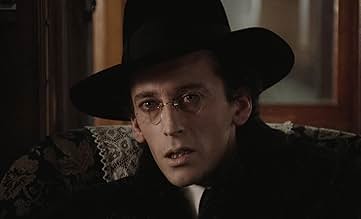
Ken Russell's composer biographies hit their apex with his stylized take on Tchaikovsky in "The Music Lovers." Three years later, Russell began his descent with "Mahler." Structured as a series of flashbacks, it may be hard to follow for anyone unfamiliar with the events and chronology of Mahler's life. The conversion sequence sets a new standard for poor taste, even for Russell. Robert Powell gives a fine performance, aided by a close resemblance to the real deal. Georgina Hale failed to make an impression in her appearance in Russell's "The Boy Friend," and is tentative, at best, here in a leading role as wife Alma. Antonia Ellis, another alumna of "The Boy Friend" is game for anything Russell throws at her. Even with a taste for the Russell treatment, "Mahler" may be a little hard to swallow.
Great film about artistry and creativity
Mahler is an interesting case. Whereas Ken Russell's films are either just over the top (his theatrical films), or maybe even too subtle (his television work), Mahler is both. Its closest companion may be always the simple but exquisite Song of Summer, but there is that usual kitsch and excess you can find without a magnifier from Lisztomania and other Russell classics.
What I'm trying to say is that if you find Russell's television work too tame, and The Devils and Tommy are just too much, Mahler might be your film. It's not Russell's best, but in this film he found a balance which is rare to him. It may be a slow and long film, but in the end game is wonderfully rich and profound in explaining the essence of artistry and creativity. And much like Michael Powell did to ballet dance in The Red Shoes, Russell doesn't just explain his subject matter in Mahler: he brings it alive. It's like the romantic Gustav Mahler himself made this film.
And, of course, there is the music! Much recommended to everybody.
What I'm trying to say is that if you find Russell's television work too tame, and The Devils and Tommy are just too much, Mahler might be your film. It's not Russell's best, but in this film he found a balance which is rare to him. It may be a slow and long film, but in the end game is wonderfully rich and profound in explaining the essence of artistry and creativity. And much like Michael Powell did to ballet dance in The Red Shoes, Russell doesn't just explain his subject matter in Mahler: he brings it alive. It's like the romantic Gustav Mahler himself made this film.
And, of course, there is the music! Much recommended to everybody.


Did you know
- TriviaKen Russell was inspired to make his film about composer Gustav Mahler after greatly disliking Death in Venice (1971). In a segment of his autobiography about this film, Russell said that he thought that the other "so-called Mahler film," "Death in Venice," was rubbish. "People think it's about Mahler, all because his music is part of the soundtrack! The director, Luchino Visconti, never said it was about him, though." So he mocked the film in his movie. He had a satirical moment when Mahler looks out of the train and sees his dying lookalike. In Visconti's movie, the young actor playing Tadzio was 15, but in this film, as in Thomas Mann's book, the boy being ogled is only a child.
- Goofs70 minutes in, as Wolfe leans against the fountain while talking to Mahler, he folds his arms, then in the next shot they're open and he folds them again.
- Quotes
[last lines]
Gustav Mahler: [reminded of some medications he should take] They won't be needed! We're going to live forever!
- ConnectionsFeatured in A British Picture (1989)
- SoundtracksIn Stormy Weather
Sung by Carol Mudie
Performed by The National Philharmonia Orchestra
Conducted by John Forsyth
- How long is Mahler?Powered by Alexa
Details
- Release date
- Country of origin
- Languages
- Also known as
- Mahler, una sombra en el pasado
- Filming locations
- Borrowdale, Keswick, Cumbria, England, UK(on location)
- Production companies
- See more company credits at IMDbPro
Contribute to this page
Suggest an edit or add missing content