IMDb RATING
6.6/10
2.8K
YOUR RATING
After being tormented by dreams about astronauts on the moon, a translator visits a deserted seaside town whose inhabitants know her, although she does not know them.After being tormented by dreams about astronauts on the moon, a translator visits a deserted seaside town whose inhabitants know her, although she does not know them.After being tormented by dreams about astronauts on the moon, a translator visits a deserted seaside town whose inhabitants know her, although she does not know them.
- Directors
- Writers
- Stars
John Karlsen
- Alfredo Laurenti
- (as John Carlsen)
- …
Miriam Acevedo
- Alice's Supervisor
- (as Myriam Acevedo)
Rosita Torosh
- Marie Leblanche
- (as Rosita Toros)
Feridun Çölgeçen
- Hotel Concierge
- (uncredited)
Bruno Degni
- Member of the International Congress
- (uncredited)
Franco Magno
- Member of the International Congress
- (uncredited)
- Directors
- Writers
- All cast & crew
- Production, box office & more at IMDbPro
6.62.8K
1
2
3
4
5
6
7
8
9
10
Featured reviews
The dark side of the moon
A slow-moving film which retains a certain cult ; it seems it's all in a dream ,or a nightmare more like ; few special effects,no gore, but a great sense of mystery,with an open ending which will make all viewers interpreting the meaning of this bewildering story according to their own sensitivity .
With its deja vu feeling, its bizarre characters (Lila Kedrova) , its strange experiments on the moon , one can wonder whether the heroine is losing her mind, or is it a recurrent nightmare ? Its atmosphere sometimes recall "carnival of souls" ,probably the first important indie in the history of cinema .The beauty of Florinda Bolkan and the threatening face of Klaus Kinski add to the fascinating and deadly charm of this offbeat work.
Very Good Surreal Mystery
This is actually a very good surreal mystery movie, despite the description that tries to sell it as a Sci-Fi movie. Balkan stars as a woman haunted by mysterious visions and lost memories that she is trying to piece together. She spends the majority of the movie trying to make sense of her visions. Very atmospheric and effective. It is true that Kinski does not appear very much in this film, but the staring actors are very good. There is only an English dubbed version available in the US, and the dubbing leaves something to be desired, but the actors do a very good job. The cinematography, by Academy Award winner Vittorio Storaro is excellent. An earlier Giallo by director Bazzoni, THE FIFTH CORD, is also excellent, and also lensed by Storarro.
Trance-missions
Unable to cope with mounting pressures at work and haunted by visions of a lone astronaut abandoned on the surface of the moon, Alice travels to the exotic sea side town of Garma to get away from it all.
She encounters a number of people there who claim to know her from earlier as Nicole, even though she insists this is her first time there. Brazillian born Florinda Bolkan turns in a solid performance as the elusive Portugese translator caught in the grips of a fugue.
A strange but oddly compelling existential mystery about dual identities and self-fulfilling prophecies, Footprints on the moon is more reminiscent of art-house favorites such as Antonioni's L'aventura and Passenger and Resnais' Last Year at Marienbad, than say other Mystery/Thriller Genre fare so popular at the time in Italy.
The story unfolds at a languorous pace and things get redundant after a while, but it does allow Cinematographer extraordinaire Vittorio Storaro to really explore the unique locations and dazzle with his wonderfully dexterous camera-work. He furthers the style he pioneered in The Conformist.
Also, watch out for Klaus Kinski in a small role as a sinister Space Commander on the lookout for guinea pigs to conduct his secret experiments for a shadowy Government agency. Yes, I'm talking about the same movie.
She encounters a number of people there who claim to know her from earlier as Nicole, even though she insists this is her first time there. Brazillian born Florinda Bolkan turns in a solid performance as the elusive Portugese translator caught in the grips of a fugue.
A strange but oddly compelling existential mystery about dual identities and self-fulfilling prophecies, Footprints on the moon is more reminiscent of art-house favorites such as Antonioni's L'aventura and Passenger and Resnais' Last Year at Marienbad, than say other Mystery/Thriller Genre fare so popular at the time in Italy.
The story unfolds at a languorous pace and things get redundant after a while, but it does allow Cinematographer extraordinaire Vittorio Storaro to really explore the unique locations and dazzle with his wonderfully dexterous camera-work. He furthers the style he pioneered in The Conformist.
Also, watch out for Klaus Kinski in a small role as a sinister Space Commander on the lookout for guinea pigs to conduct his secret experiments for a shadowy Government agency. Yes, I'm talking about the same movie.
Very interesting psychological thriller
Footprints is a very interesting movie that is somewhat difficult to categorize. "Psychological thriller" is the most appropriate description I can think of. The female protagonist, Alice Cespi, discovers that she doesn't remember anything of the last three days. The only clue she has is a torn photo of a hotel. She is also haunted by a recurring, very vivid, dream about a science fiction movie that she believes she saw many years ago. In her pursuit of the truth behind her amnesia she doesn't trust anyone, but little by little it becomes obvious that she has visited the town where the hotel is located before. This is an exciting flick whose main virtue is that it is virtually impossible to predict how the events will unfold, and particularly, how it will end. The unusual loneliness of the main character and the unreliability of everyone else ensure that the good old paranoid feeling is present throughout the film, whereas beautiful colors and some spectacularly filmed sequences make this a visually attractive movie as well. The important part of the one and only Nicoletta Elmi, everyone's all time favorite redheaded obnoxious child star of Italian horror, is an extra bonus.
Footprints traveled
I consider this a missed opportunity. I have very fond memories of the filmmaker's debut, an interesting psychosexual oddity called La Donna Del Lago, and watching this I'm inclined to think that earlier film worked so well because the giallo had not been mapped down yet; so he was free to travel where it was novel at the time. Polanski got there that same year, but he was already a name and had Deneuve with him and so made the bigger splash. Film history has noted Repulsion.
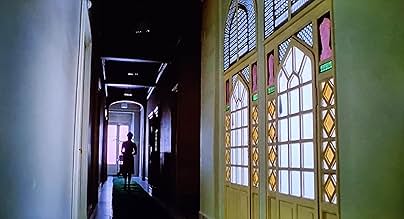
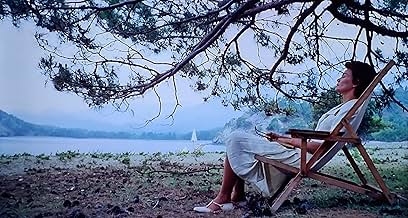
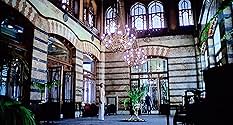
This could have been even better. He has brought ambitious imagination with him, a visual palette of bright golden hues and relaxing blues, a sense of place and folded mysterious time with memory from Marienbad. He has Vittorio Storaro's eye behind the lens.
The opening is more than promising. A woman wakes up with no memory of three days past. She has just seen a dream, a feverish vision of astronauts staggering on blasted moonscapes, which she remembers is from a movie called the same as the one we're watching; but a movie she left without watching the ending. She goes to Italy to investigate, in an effort to bring these images into focus.
There it falls apart, in Italy incidentally. In the ten years since that first film that was in some ways a giallo ancestor the genre had come and was already on its way out. Between these two films Bazzoni had worked where it was the trend in the Italian industry, making a western and another giallo called The Fifth Chord. So when the more ambitious material for this came together, there were already footsteps he was expected to walk and had been trained to. The circumstances of a commercial movie industry were just so.
So for the middle part of the film we get a giallo worked from convention. The convoluted plot where each character withholds crucial information until the time is right, and the protagonist has to cobble together a puzzle from clues and red herrings. Much ado.
It comes full circle in the finale; the agents which she has imagined to be controlling her illusion return to pull her back into the fiction of the dream. It happens with extraordinary images of a stretch of empty cosmic beachside.
Bazzoni never made another film after this. In the meantime, Polanski had rocketed into Hollywood orbit and was already on his way out. I reckon that Bazzoni was one of our sad losses, but alas he never made it to France where money didn't always expect to fill a double-bill.
This could have been even better. He has brought ambitious imagination with him, a visual palette of bright golden hues and relaxing blues, a sense of place and folded mysterious time with memory from Marienbad. He has Vittorio Storaro's eye behind the lens.
The opening is more than promising. A woman wakes up with no memory of three days past. She has just seen a dream, a feverish vision of astronauts staggering on blasted moonscapes, which she remembers is from a movie called the same as the one we're watching; but a movie she left without watching the ending. She goes to Italy to investigate, in an effort to bring these images into focus.
There it falls apart, in Italy incidentally. In the ten years since that first film that was in some ways a giallo ancestor the genre had come and was already on its way out. Between these two films Bazzoni had worked where it was the trend in the Italian industry, making a western and another giallo called The Fifth Chord. So when the more ambitious material for this came together, there were already footsteps he was expected to walk and had been trained to. The circumstances of a commercial movie industry were just so.
So for the middle part of the film we get a giallo worked from convention. The convoluted plot where each character withholds crucial information until the time is right, and the protagonist has to cobble together a puzzle from clues and red herrings. Much ado.
It comes full circle in the finale; the agents which she has imagined to be controlling her illusion return to pull her back into the fiction of the dream. It happens with extraordinary images of a stretch of empty cosmic beachside.
Bazzoni never made another film after this. In the meantime, Polanski had rocketed into Hollywood orbit and was already on his way out. I reckon that Bazzoni was one of our sad losses, but alas he never made it to France where money didn't always expect to fill a double-bill.
Did you know
- TriviaOn Mill Creek's 50 movies set "Sci-Fi Invasion", the movie is available under its alternate title "Primal Impulse".
- GoofsCrew member visible reflected in mirror when Alice wakes up in the Peacock Room.
- Quotes
Alice Campos: I'm not crazy!
- How long is Footprints on the Moon?Powered by Alexa
Details
- Release date
- Countries of origin
- Language
- Also known as
- Primal Impulse
- Filming locations
- Production company
- See more company credits at IMDbPro
- Runtime
- 1h 30m(90 min)
- Sound mix
- Aspect ratio
- 1.85 : 1
Contribute to this page
Suggest an edit or add missing content