IMDb RATING
6.1/10
3.4K
YOUR RATING

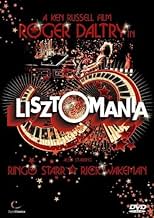
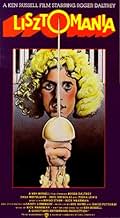
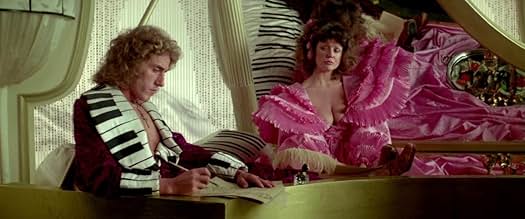
Composer and pianist Franz Liszt (Roger Daltrey) attempts to overcome his hedonistic life-style while repeatedly being drawn back into it by the many women in his life and fellow composer Ri... Read allComposer and pianist Franz Liszt (Roger Daltrey) attempts to overcome his hedonistic life-style while repeatedly being drawn back into it by the many women in his life and fellow composer Richard Wagner (Paul Nicholas).Composer and pianist Franz Liszt (Roger Daltrey) attempts to overcome his hedonistic life-style while repeatedly being drawn back into it by the many women in his life and fellow composer Richard Wagner (Paul Nicholas).



- Director
- Writer
- All cast & crew
- Production, box office & more at IMDbPro
6.13.3K
1
2
3
4
5
6
7
8
9
10
Featured reviews
Love it or hate it, a film like nothing we've ever seen before
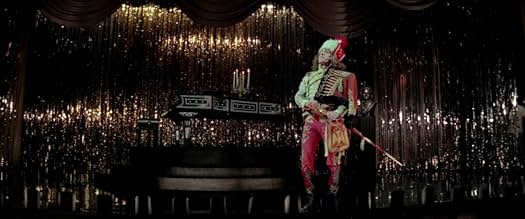
A wild, surreal, profane, provocative, bawdy, debauched, baroque, rock n' roll pop musical fantasy with anachronistic abstractions, Chaplin references and a depiction of the Golem as a lumbering Nazi Frankenstein wreaking havoc amidst a soundtrack of Wagnerian dread. Suffice to say, Lisztomania (1975) is as far from conventional cinema as you could possible get, illustrating Russell's further shift into more self-indulgent territory and away from his more sensitive earlier work with films such Elgar (1962), The Debussy Film (1965), Delius; Song of Summer (1968) and the controversial Women in Love (1969). The seeds of Lisztomania can be seen in many of these films, in particular, in Russell's fairly unique way of seeing the past by way of the present; investigating historical figures, writers, artists and composers as if modern-day pop icons. Here, Russell takes that notion and applies it to an incredibly distinctive visual perspective that attempts to underpin the spiralling confusion of the artist's life and work in such a way as to be just as stimulating and sensory for the audience as it is for the character himself.
The style that Russell employs on Lisztomania is characteristic of the mid-to-late period of his career, featuring cluttered cinemascope compositions, a juxtaposition of various film speeds, colours and textures, a general mix of established actors, pop-stars and amateurs, a complete disrespect for the artist and their work, for the period in which the film is set and for the general accepted conventions of traditional, biographical film-making. Personally, I welcome the sense of anarchy; with Russell getting away from the clichés that ultimately lead to films like Ray (2004) and Walk the Line (2005) and presenting a film that is - for better or worse - completely unique. Once again, the approach that Russell adopts for Lisztomania can be seen in many of his preceding films, going as far back as his ultimate masterpiece The Devils (1971); a gloriously over-the-top, pop-art inspired political horror story with a fitting subversion of various religious iconography. This led on to his film about the artist and sculptor Henri Gaudier, which featured the same depiction of a historical figure as an almost Bob Dylan like revolutionary amidst scenes of perverse invention and screaming, pop-art expression.
Subsequent music-based features like the underrated Mahler (1974) and the financially successful version of The Who's celebrated "rock opera" Tommy (1975) continued the evolution of Russell from sensitive young provocateur to grand purveyor of lurid, over-the-top kitsch. Tommy is really the definite precursor to Lisztomania, not least because of the return of Roger Daltrey in the lead role, but in the almost kaleidoscopic fantasia of scenes within scenes creating miniature vignettes that propel the story in such a way as to suggest a compilation of music videos. The scenes of Liszt giving his first musical performance are reminiscent of the "Pinball Wizard" segment of the aforementioned film, whilst also showing the attempt by Russell to turn the composer into a 19th century Marc Bolan type figure, with inventive stage shows, manic energy, wild charisma and a packed stadium filled with screaming teenage girls waving scarves and blowing whistles. There's also some subtle comment on the music industry and the relationship between the artist and the press; reminding us that Lisztomania is, above all else, an absurdist satire.
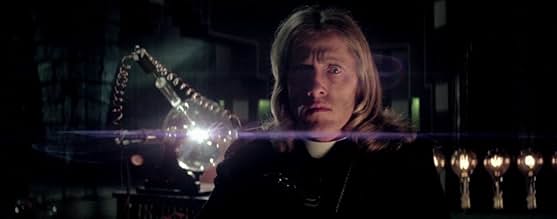
Nonetheless, attempts to pigeonhole the film to a single genre will only lead to failure. If you approach Russell's work with a definite idea of what to expect you'll most probably be bitterly disappointed; with the film confounding all expectations and going against every pre-conceived notion of character, narrative, theme and subject to present a film that is part drug-induced hallucination, part schoolboy w*nk-fantasy. There are elements of science fiction, sex comedy, fantasy and war, and all tied together by Rick Wakeman's bold and subversive treatment of the music. The elements are blended together with a complete disregard for subtly, with outlandish Nazi iconography and apocalyptic despair juxtaposed against the recognisable conventions of the Universal horror movies of the 30's and 40's, alongside a continual reliance on mechanical phalluses, vaginal symbolism, high-speed sex scenes and Daltrey breaking the forth-wall like Timothy Lee in the "Confessions of..." series. If you can appreciate the idea of Fellini directing from a script by Benny Hill, then Lisztomania has a lot to offer. However, it is imperative that you approach Lisztomania on a visual level, as the aspects of script and performance are the factors that ultimately let the whole film down.
Playing a death, dumb and blind kid in Tommy was probably less of a stretch for Daltrey - who was already more than familiar with the subject matter of that particular film - however, as Liszt he's really unable to convey the dynamics of the character or indeed the ability to, well... act! It's clear that Russell's use of pop-stars in the lead roles was an ironic choice - leading into the actual presentation of the text - but the film desperately needed a more experienced and talented actor in the lead to really pull these separate elements together. With Daltrey the film becomes incredibly flawed, which is a shame, as it is obviously a bold, unique and energetic work; maybe even like nothing we've ever seen before! If you can overcome the poor performances, the reliance on visuals over text, and the flippant treatment of the actual historical elements presented by both the characters and the overall theme, then Lisztomania should offer a once in a lifetime, visual experience. If not, it will no doubt remain an unmitigated failure on all counts.
The style that Russell employs on Lisztomania is characteristic of the mid-to-late period of his career, featuring cluttered cinemascope compositions, a juxtaposition of various film speeds, colours and textures, a general mix of established actors, pop-stars and amateurs, a complete disrespect for the artist and their work, for the period in which the film is set and for the general accepted conventions of traditional, biographical film-making. Personally, I welcome the sense of anarchy; with Russell getting away from the clichés that ultimately lead to films like Ray (2004) and Walk the Line (2005) and presenting a film that is - for better or worse - completely unique. Once again, the approach that Russell adopts for Lisztomania can be seen in many of his preceding films, going as far back as his ultimate masterpiece The Devils (1971); a gloriously over-the-top, pop-art inspired political horror story with a fitting subversion of various religious iconography. This led on to his film about the artist and sculptor Henri Gaudier, which featured the same depiction of a historical figure as an almost Bob Dylan like revolutionary amidst scenes of perverse invention and screaming, pop-art expression.
Subsequent music-based features like the underrated Mahler (1974) and the financially successful version of The Who's celebrated "rock opera" Tommy (1975) continued the evolution of Russell from sensitive young provocateur to grand purveyor of lurid, over-the-top kitsch. Tommy is really the definite precursor to Lisztomania, not least because of the return of Roger Daltrey in the lead role, but in the almost kaleidoscopic fantasia of scenes within scenes creating miniature vignettes that propel the story in such a way as to suggest a compilation of music videos. The scenes of Liszt giving his first musical performance are reminiscent of the "Pinball Wizard" segment of the aforementioned film, whilst also showing the attempt by Russell to turn the composer into a 19th century Marc Bolan type figure, with inventive stage shows, manic energy, wild charisma and a packed stadium filled with screaming teenage girls waving scarves and blowing whistles. There's also some subtle comment on the music industry and the relationship between the artist and the press; reminding us that Lisztomania is, above all else, an absurdist satire.
Nonetheless, attempts to pigeonhole the film to a single genre will only lead to failure. If you approach Russell's work with a definite idea of what to expect you'll most probably be bitterly disappointed; with the film confounding all expectations and going against every pre-conceived notion of character, narrative, theme and subject to present a film that is part drug-induced hallucination, part schoolboy w*nk-fantasy. There are elements of science fiction, sex comedy, fantasy and war, and all tied together by Rick Wakeman's bold and subversive treatment of the music. The elements are blended together with a complete disregard for subtly, with outlandish Nazi iconography and apocalyptic despair juxtaposed against the recognisable conventions of the Universal horror movies of the 30's and 40's, alongside a continual reliance on mechanical phalluses, vaginal symbolism, high-speed sex scenes and Daltrey breaking the forth-wall like Timothy Lee in the "Confessions of..." series. If you can appreciate the idea of Fellini directing from a script by Benny Hill, then Lisztomania has a lot to offer. However, it is imperative that you approach Lisztomania on a visual level, as the aspects of script and performance are the factors that ultimately let the whole film down.
Playing a death, dumb and blind kid in Tommy was probably less of a stretch for Daltrey - who was already more than familiar with the subject matter of that particular film - however, as Liszt he's really unable to convey the dynamics of the character or indeed the ability to, well... act! It's clear that Russell's use of pop-stars in the lead roles was an ironic choice - leading into the actual presentation of the text - but the film desperately needed a more experienced and talented actor in the lead to really pull these separate elements together. With Daltrey the film becomes incredibly flawed, which is a shame, as it is obviously a bold, unique and energetic work; maybe even like nothing we've ever seen before! If you can overcome the poor performances, the reliance on visuals over text, and the flippant treatment of the actual historical elements presented by both the characters and the overall theme, then Lisztomania should offer a once in a lifetime, visual experience. If not, it will no doubt remain an unmitigated failure on all counts.
collector's of The Who will love it!
As a collector of Who memorabilia, I found this movie to be quite interesting and entertaining, what's more, if one pays attention they can see that this truly is the work of Ken Russell. Though it could also fit into the category of "soft porn" and is in no way to be taken as strict fact of Franz Liszt's life it is a great movie for those who like the bizarre (Who fan's will note cameo appearance by Townshend) If you like this movie, check out Ken Russell's Mahler, starring Robert Powell (Capt. Walker in Tommy) thank you
surreal biopic
Franz Liszt (Roger Daltrey) is a hedonistic composer in old Europe. In real life, the Hungarian musician lived from 1811 to 1886. Richard Wagner is a music associate. Ringo Starr plays The Pope.
This is surrealistic biopic. It can be seen as a mess, self-indulgent, and undecipherable. It can also be seen as intriguing and challenging. I choose to see it as the later. It's definitively not safe. I prefer a mess more than an uninteresting bland biopic. As an actor, Daltrey is not that great but his rock star personality is undeniable. Ken Russell is throwing a lot into this. It's a lot and it runs a bit long. I wish it wraps up a little sooner. Wagner needs to have more scenes as the antagonist. I would also like a bigger better actor playing him. He doesn't have to be a real musician. All in all, this is at least interesting.
This is surrealistic biopic. It can be seen as a mess, self-indulgent, and undecipherable. It can also be seen as intriguing and challenging. I choose to see it as the later. It's definitively not safe. I prefer a mess more than an uninteresting bland biopic. As an actor, Daltrey is not that great but his rock star personality is undeniable. Ken Russell is throwing a lot into this. It's a lot and it runs a bit long. I wish it wraps up a little sooner. Wagner needs to have more scenes as the antagonist. I would also like a bigger better actor playing him. He doesn't have to be a real musician. All in all, this is at least interesting.
Wow!
Remember seeing this when I was just 16 years old! Wow! I can't believe they let us young girls into the theater! But Roger Daltrey is dazzling, and we swooned, watching him swing half naked on a curtain! Now at 63, I still was swooning! The film if fun, indulgent and kinda trashy! It was enjoyable to see the cameos of Ringo and Rick Wakeman. The ending reminds one of the ending in Grease, terrible, where they take off in some rocket contraption! The part with Wagner being a Hitleresque, monster shooting the town, reminds me of tRump( sorry, couldn't help it) . The craziest part was the giant penis scene. Like I said, I can't believe the theater let our little group of girls (aged 13-15) in to see this film. I still enjoyed watching it, even though it was all over the place, at times.
Grotesque effort at musical character assassination of Liszt and Wagner
The film suffers from atrocious vulgarization in very bad style and taste throughout, which is a pity, because the idea is not bad at all. Liszt and Wagner are portrayed in gross caricature, which they were already while they were alive and kicking, and just like the 19th century caricatures even these modern ones do not miss their target and actually pinpoint some obvious truths about these the greatest divas among composers in monstrous vanity and atrocious hubris. Liszt was the more sympathetic and actually fell a prey and victim to the ruthlessness of Wagner ending up as a trophy in his graveyard, while the depicting of Wagner as a vampire and prelude to Hitler, his Frankenstein monster, is not altogether maladroit. In certain aspects it actually hits the nail. The unnecessary hooliganism of the film is the corruption of the music, which really is very little Liszt and Wagner but the more Rick Wakeman in horrible disfigurement in pop and rock versions. This is not a music film or any kind of biography or documentation of great composers but rather a twisted parasitic phantasmagoria tearing classical music apart and more or less destroying it. Ringo Starr as a pope with Liverpool accent doesn't make things any better. It isn't even funny but only stupid and disgusting. although a few laughs must out. Still, because of the idea, the imagination, the great camera work and the brilliant fireworks entertainment, I have to give it 5, which is the lowest I ever rated a film here, and I am very doubtful whether I will see any other of Ken Russell's films on music, no matter how much I appreciated his "Valentino".


Did you know
- TriviaFirst movie to be encoded with a Dolby Stereo optical soundtrack.
- GoofsDuring the flashback when Liszt is notating the music for Dream of Love; on the second page in the first measure there is the note E-Flat written as an E with the flat symbol next to it. However, since the song is already in the key of A-Flat which includes E-Flat in the scale, it is not necessary to notate the Flat symbol next to the E note. This is only done if the previous E-note was notated as an E-Natural and even then the flat symbol would be placed in parenthesis.
- ConnectionsFeatured in Hollywood Singing & Dancing: A Musical History - 1970's (2009)
- SoundtracksRienzi/ Chopsticks Fantasia
Composed by Richard Wagner and Franz Liszt
- How long is Lisztomania?Powered by Alexa
Details
- Release date
- Country of origin
- Language
- Also known as
- Lisztomanía
- Filming locations
- New Wimbledon Theatre, The Broadway, Wimbledon, London, England, UK(Theatre interiors)
- Production companies
- See more company credits at IMDbPro
- Runtime
- 1h 43m(103 min)
- Sound mix
- Aspect ratio
- 2.35 : 1
Contribute to this page
Suggest an edit or add missing content