IMDb RATING
7.3/10
2.6K
YOUR RATING
An unstable former French Sergeant commits many atrocities. A judge considers how this case could benefit or damage his career.An unstable former French Sergeant commits many atrocities. A judge considers how this case could benefit or damage his career.An unstable former French Sergeant commits many atrocities. A judge considers how this case could benefit or damage his career.
- Director
- Writers
- Stars
- Awards
- 3 wins & 4 nominations total
Jean-Claude de Goros
- Dr. Dutourd
- (as Jean-Claude de Gorros)
- Director
- Writers
- All cast & crew
- Production, box office & more at IMDbPro
7.32.5K
1
2
3
4
5
6
7
8
9
10
Featured reviews
Histoire de la Francais dans affaire Dreyfus par despotisme
The judge and the assassin is a strange and ironic title for this film. It does not represent what your mind immediately leads you to believe. It is about the arrest and trial of a psychopath, alas French auteur style. It bears in odd-about way a resemblance to Lacombe Lucien which was released two years earlier. Featuring a bravura performance by Michel Galabru ( he worn the Cesar, the French Oscar) as the serial killer, his trial becomes a study into the mind and evil of nation at the turn of the last century. Dealing with anti-semitism, civil unrest, disobedience and the tyranny of the France and the Church can make anyone crazy and an assassin. With strong performances by Tavernier favorite actor Philippe Noiret and a young Isabelle Huppert, it is a fine film in the tradition of French cinema prior to the advent of the New Wave.
Political wit.
A French provincial town in the late 1890's where a Judge attempts to advance his political power by trying to prove that a soldier was not insane at the time of committing murder, which means soilder gets the guillotine and not the mad house. A movie that is more about the social turmoil in France.
A film I have always wanted to see
I can't make a real judgment on this film, although the other reviews are rave ones. I just want to add that the story is based on an actual case of the 1890s in France. Joseph Vacher was the real life murderer who is the basis for Michel Galabrue's Joseph Bouvier. Like Vacher he was a former soldier, and he went about the countryside slaughtering young boy shepherds and young girl servants. His destruction of these victims (in terms of mutilations) rivaled his contemporary Jack the Ripper (Vacher was known as Vacher the Ripper). Although he was quite insane the public demanded a death penalty - he was guillotined in 1898. His crimes briefly took public attention off the matter of Captain Alfred Dreyfus.
The Philippe Noiret character is partly based on the noted criminologist Professor Alexander Lacassagne, who (despite considerable evidence of insanity) determined that Vacher was sane, and deserved the death penalty.
Fabuleux Galabru!
Michel Galabru got the highest french award for his role in this movie, the "Cesar du meilleur acteur". Galabru became then one of the greatest actor in France.
Either in comedy or in tragedy (see "Le gendarme" and "L'été meurtrier".
a serial killer story in the time of Dreyfuss
Director Bertrand Tavernier and actor Philippe Noiret collaborated in 9 films. The 1976 'Le juge et l'assassin' is the third film they made together and is a remarkable film in many ways. The story takes place in the last decade of the 19th century, in a France that is still living through the trauma of the Paris Commune and the defeat in the Franco-Prussian war, a country deeply divided by the Dreyfuss case, crushed by social inequalities that gave impetus to the socialist movement but also encouraged anarchist groups and terrorist attacks. Against this background, Bertrand Tavernier together with Pierre Bost and Jean Aurenche wrote the screenplay of a film describing the case of a serial killer, a kind of French Jack the Ripper, focusing on the characters of the criminal and of the judge who does everything to catch and condemn him.
Sergeant Joseph Bouvier is a veteran of the wars of France. He loves a young woman who rejects him, and in desperation he decides to kill her and commit suicide. Neither the assassination nor the suicide succeed, he is declared irresponsible, but after a few years the doctors consider him cured and release him. Adopting a vagabond life, prey to chronic physical and mental suffering and a morbid mysticism, he crosses France from North to South, killing and raping 12 victims on his way, most of them children or teenagers. Judge Emile Rousseau leads a typical bourgeois life in a provincial town, with a possessive mother and a mistress of lower social status. The Bouvier case gives him an opportunity to stand out, but to do so he must secure a conviction, prevent the serial killer from being declared insane, and turn him into a symbol of all that is rotten in France. Sort of a serial killer Dreyfuss. The confrontation between the two is not just a meeting between an accuser and a criminal. Rousseau has on his side not only the intelligence and cunning that will enable him to win Bouvier's confidence, but also a whole legal and political machine at the service of a social class that fears the changes that will sooner or later take place . In the end it is a confrontation between two faces of France, both corrupt and destructive.
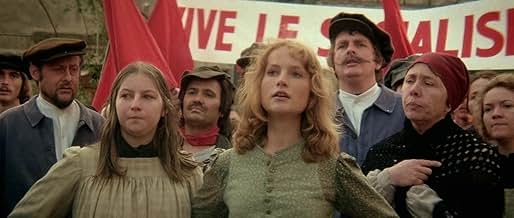
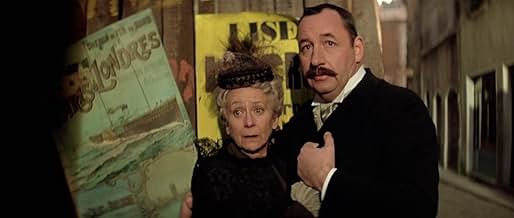
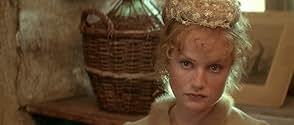
Philippe Noiret is, of course, formidable as always. The role of the cunning, ariviste and morally corrupt judge suits him perfectly. The most remarkable acting performance, however, belongs to Michel Galabru, an actor who until then had only made himself known on screens in comic roles (among them a gendarme from Louis de Funès' troupe in Saint-Tropez). The role of Bouvier allows Galabru to create a complex character, in which madness mixes with passion, mystical fervor with intellectual poetry. The cast also features Isabelle Huppert, who at 23, in the secondary role of Rose, the judge's mistress, was beautiful and already master of that mysterious expression that would mark her great roles to come. Bertrand Tavernier has always known how to collaborate with classy professionals. Pierre-William Glenn's cinematography is impressive, especially in the nature scenes. Philippe Sarde's music plays a very important role. There are several sung scenes in the film - by an officer declaiming a patriotic song about lost Alsace and Lorraine, by a troubadour singing a ballad to the murderer-turned-folk-hero, by working women demonstrating for their rights in the final scene. These, together with the very carefully designed sets and costumes, make 'Le juge et l'assassin' an extremely expressive film in rendering the atmosphere of the era. The biggest problem with the script is the overly obvious rhetoric, which doesn't want to leave any doubt about the political views of the screenwriters and of the director. I didn't think that was necessary. The story itself is quite strong and speaks for itself, and the level of acting plus the Noiret - Galabru duel are expressive enough without being explicit. Bertrand Tavernier could have let the cinema art that he mastered so well tell the whole story. It would have been sufficient.
Sergeant Joseph Bouvier is a veteran of the wars of France. He loves a young woman who rejects him, and in desperation he decides to kill her and commit suicide. Neither the assassination nor the suicide succeed, he is declared irresponsible, but after a few years the doctors consider him cured and release him. Adopting a vagabond life, prey to chronic physical and mental suffering and a morbid mysticism, he crosses France from North to South, killing and raping 12 victims on his way, most of them children or teenagers. Judge Emile Rousseau leads a typical bourgeois life in a provincial town, with a possessive mother and a mistress of lower social status. The Bouvier case gives him an opportunity to stand out, but to do so he must secure a conviction, prevent the serial killer from being declared insane, and turn him into a symbol of all that is rotten in France. Sort of a serial killer Dreyfuss. The confrontation between the two is not just a meeting between an accuser and a criminal. Rousseau has on his side not only the intelligence and cunning that will enable him to win Bouvier's confidence, but also a whole legal and political machine at the service of a social class that fears the changes that will sooner or later take place . In the end it is a confrontation between two faces of France, both corrupt and destructive.
Philippe Noiret is, of course, formidable as always. The role of the cunning, ariviste and morally corrupt judge suits him perfectly. The most remarkable acting performance, however, belongs to Michel Galabru, an actor who until then had only made himself known on screens in comic roles (among them a gendarme from Louis de Funès' troupe in Saint-Tropez). The role of Bouvier allows Galabru to create a complex character, in which madness mixes with passion, mystical fervor with intellectual poetry. The cast also features Isabelle Huppert, who at 23, in the secondary role of Rose, the judge's mistress, was beautiful and already master of that mysterious expression that would mark her great roles to come. Bertrand Tavernier has always known how to collaborate with classy professionals. Pierre-William Glenn's cinematography is impressive, especially in the nature scenes. Philippe Sarde's music plays a very important role. There are several sung scenes in the film - by an officer declaiming a patriotic song about lost Alsace and Lorraine, by a troubadour singing a ballad to the murderer-turned-folk-hero, by working women demonstrating for their rights in the final scene. These, together with the very carefully designed sets and costumes, make 'Le juge et l'assassin' an extremely expressive film in rendering the atmosphere of the era. The biggest problem with the script is the overly obvious rhetoric, which doesn't want to leave any doubt about the political views of the screenwriters and of the director. I didn't think that was necessary. The story itself is quite strong and speaks for itself, and the level of acting plus the Noiret - Galabru duel are expressive enough without being explicit. Bertrand Tavernier could have let the cinema art that he mastered so well tell the whole story. It would have been sufficient.
Did you know
- TriviaThis is a fairly straight-forward account of the crimes of Joseph Vacher. "Vacher" and "Bouvier" both mean "cowherd" in French. The names of many of the characters - like Lacassagne - have not been changed.
- GoofsYou can see the shadow of the microphone and the boom moving across the wall of the chapel where the priest is giving his sermon about five minutes after the beginning.
- ConnectionsFeatured in Keskiyön auringon kuvat (1987)
- SoundtracksLa Complainte de Bouvier l'Éventreur
Music by Philippe Sarde
Lyrics by Jean-Roger Caussimon
Performed by Jean-Roger Caussimon
- How long is The Judge and the Assassin?Powered by Alexa
Details
- Runtime
- 2h 8m(128 min)
- Sound mix
- Aspect ratio
- 2.35 : 1
Contribute to this page
Suggest an edit or add missing content