In this avant-garde classic, protagonist Louise deals with a change in her lifestyle in which she must learn to negotiate domestic life and motherhood.In this avant-garde classic, protagonist Louise deals with a change in her lifestyle in which she must learn to negotiate domestic life and motherhood.In this avant-garde classic, protagonist Louise deals with a change in her lifestyle in which she must learn to negotiate domestic life and motherhood.
- Directors
- Writers
- Stars
Rhiannon Tise
- Anna
- (as Riannon Tise)
- Directors
- Writers
- All cast & crew
- Production, box office & more at IMDbPro
6.1357
1
2
3
4
5
6
7
8
9
10
Featured reviews
A classic of avant-garde feminist cinema
Mulvey's Riddles of the Sphinx is as haunting as its title would suggest, a dizzy philosopher of a film, completely unique then and now.
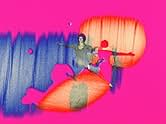
The short consists of a number of short tableaux, each filmed "in the round", so to speak, by a 360 degree camera turn. Also short snippets of Mulvey herself wrestling with these "riddles" are interspersed in a few places.
The effect of these simple elements is striking--as are the colors of the cinematography. The 16mm film is as rich and deep as I've seen.
Her intent was to create an entirely new form of cinema, one made by women (hence the 360 degree shots instead of the very male, penetrating, zoom, for example). What she did create is ineffable and difficult, and important.
The short consists of a number of short tableaux, each filmed "in the round", so to speak, by a 360 degree camera turn. Also short snippets of Mulvey herself wrestling with these "riddles" are interspersed in a few places.
The effect of these simple elements is striking--as are the colors of the cinematography. The 16mm film is as rich and deep as I've seen.
Her intent was to create an entirely new form of cinema, one made by women (hence the 360 degree shots instead of the very male, penetrating, zoom, for example). What she did create is ineffable and difficult, and important.
Riddles of the Sphinx
As Laura Mulvey's lasting legacy has been her theorization of a feminist avant-garde that eschews visual pleasure, it's hardly surprising that her famous 1977 experiment Riddles of the Sphinx is a bit difficult to digest. I certainly had a hard time watching it. But even though the film consistently tried my attention and nerves, I cannot deny that it's a wholly original work. And the more I think about it, the more I respect it, and the more--this is a bit crazy--the more I think I might like to watch it again.
The most immediately intriguing stylistic component is the slow, rotating cinematography of the film's fourth chapter. By placing a camera in an environment and confining it to a mechanical 360 degree rotation, Mulvey and Wollen offer a deliberate point of view that maintains visual interest without conforming to any traditional understanding of the filmic "gaze." This technique is most effectively employed in a scene that takes place in moving traffic, to a distinctly Children of Menesque effect; its a compelling demonstration of the spectatorial pleasure to be derived from cinematic skill as opposed to voyeurism and scopophilia.
Elsewhere, Mulvey and Wollen continue to push the boundaries of how we engage with cinema--I can say truthfully that I was far more invested in seeing two water drops reach the end of a maze than I would have been in characters chasing MacGuffins. I can't promise that you'll enjoy Riddles of the Sphinx in any traditional sense, but I can wholeheartedly recommend it to any filmmakers or artists interested in exploring new forms of expression. -TK 9/23/10
The most immediately intriguing stylistic component is the slow, rotating cinematography of the film's fourth chapter. By placing a camera in an environment and confining it to a mechanical 360 degree rotation, Mulvey and Wollen offer a deliberate point of view that maintains visual interest without conforming to any traditional understanding of the filmic "gaze." This technique is most effectively employed in a scene that takes place in moving traffic, to a distinctly Children of Menesque effect; its a compelling demonstration of the spectatorial pleasure to be derived from cinematic skill as opposed to voyeurism and scopophilia.
Elsewhere, Mulvey and Wollen continue to push the boundaries of how we engage with cinema--I can say truthfully that I was far more invested in seeing two water drops reach the end of a maze than I would have been in characters chasing MacGuffins. I can't promise that you'll enjoy Riddles of the Sphinx in any traditional sense, but I can wholeheartedly recommend it to any filmmakers or artists interested in exploring new forms of expression. -TK 9/23/10
Going round in circles in a world where 'anatomy is no longer destiny'.
Writer/producer/directors Laura Mulvey and Peter Wollen's 1977 experimental feature film is like their previous film 'Penthesilea Queen of the Amazons' an example of an essay film (although not as complex as 'Penthesilea') and like their previous film divided into chapters and referencing (and questioning) ancient mythology (the female Greek Sphinx and the male Egyptian Sphinx), and ideas of the conscious mind (the male Oedipus) and the unconscious mind (the female Sphinx). Featuring shots of the Sphinx, and Mulvey addressing the camera about mythology, patriarchy and gender roles, the film develops into a series of circular pans (clockwise then anti-clockwise) round various spaces - domestic, work and public (including the Wandsworth Arndale Centre) - that Louise (Dinah Stabb) occupies, and which serves the role of a visual meditation on her world of domestic exploitation (and workplace exploitation). As cinema this is not particularly effective, or as a women's liberation polemic.
No Scopophilia Here
Laura is one of the most famous film theorists in history and deservedly so for her "Visual Pleasures..." paper. This film is, to my mind, a direct result of her criticism. It is a critique of visual pleasure in narrative film, and man does it feel that way. Granted, I haven't seen this film for years, but I remember it as being two of the most excruciating hours of my life. Read her work, it's brilliant, but see this film at your own risk. You have to REALLY like theory to see the whole thing, if you can even find it. First try watching Peter Greenaway's "The Falls", if you enjoy that, you might be ready for the beating that is "Riddles of the Sphinx". I excluded discussing Peter Wollen just to streamline my thoughts, he's brilliant in his own right.
The daily life of a woman with a child.
The movie starts with an intro of a woman telling the mythical story of Oedipus and the Sphinx. The movie then goes into showing a woman fixing breakfast for her child. A womans voice is heard saying one word at a time that relates to the current scene being shown. The woman in the film puts her child in bed. The camera slowly moves horizontally while loud synthetic music plays in the background. This occurs throughout the whole film.
I have seen many experimental and "art" films but during this film I became so bored that after about 45 minutes and more than half the viewing audience had left I finally got up and walked out also.
I don't recommend this movie unless you need a place to take a nap.
I have seen many experimental and "art" films but during this film I became so bored that after about 45 minutes and more than half the viewing audience had left I finally got up and walked out also.
I don't recommend this movie unless you need a place to take a nap.
Did you know
- ConnectionsFeatured in Hooray for Holyrood (1986)
Details
- Runtime
- 1h 32m(92 min)
- Color
- Aspect ratio
- 1.37 : 1
Contribute to this page
Suggest an edit or add missing content