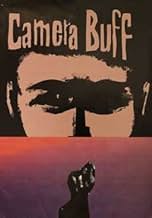
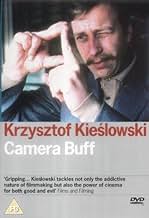
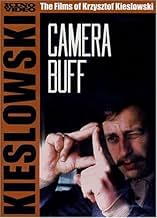
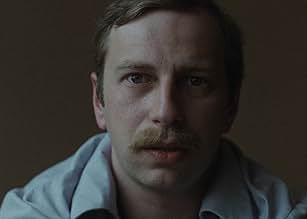
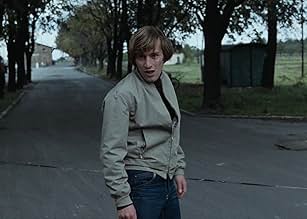
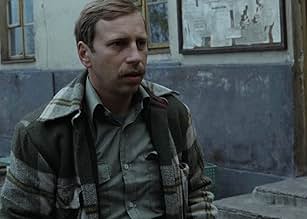
Krzyszof Kieslowksi begun his career as a documentary film-maker. From the start, he seemed to know two things: that in the shabby, feudal bureaucracy that was communist Poland, everything was political; and that the camera is never truly neutral. It was the second concern that saw him shift into telling fictional, constructed stories; while the first, and his own struggles as a young director, inspired the subject of 'Camera Buff', his first feature. As well as its immediate subject, the film is also a fascinating portrayal of an unfashionable subject, namely the class system, alive and well in the supposed socialist utopia (Kieslowski was a great admirer of Ken Loach, so perhaps we should not be too surprised). The film starts as a black comedy in the manner of the tenth part of his later 'Dekalog', and is both very funny and immediately true to life; as it progresses, it becomes more serious but there isn't quite the emotional intensity that marks his greatest works. The score is also less remarkable than those in the films he made with Zbigniew Priesner, his permanent collaborator from the mid 1980s. But his skill at composing images that are simultaneously profoundly ordinary and starkly arresting is very much in evidence, as is the characteristic sense of an all-pervasive greyness in the lives of his characters, punctured only by shafts of colour when his hapless hero comes into contact with the affluent metropolitan elite. In Dennis Potter's 'The Singing Detective', a central theme is the way that the artist will stop at nothing in using their own life as material, and this is also a theme here, growing in importance as the movie progresses. It's an unusual subject for a debut, and can perhaps be seen as Kieslowski laying his cards on the table before he begun the game. Greatness lay just around the corner.