IMDb RATING
7.7/10
4.8K
YOUR RATING


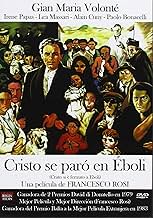
A doctor in Fascist Italy is exiled to a remote village for his political views.A doctor in Fascist Italy is exiled to a remote village for his political views.A doctor in Fascist Italy is exiled to a remote village for his political views.
- Won 1 BAFTA Award
- 7 wins & 1 nomination total



Enzo Vitale
- Dottore Milillo
- (as Vincenzo Vitale)

7.74.7K
1
2
3
4
5
6
7
8
9
10
Featured reviews
Christ stopped in eboli
this movie did more than any other Italian film i've seen to interest me in italy itself--the people, the land, the culture. it also opened my mind to the intelligence of the uneducated among us--i loved that guilia was so real and right-n and so full of peasant superstition that in no way interfered with her ability to "get it." i have begun to travel in italy and having seen this film i am driven to see the south and visit the carlo levi house and museum. his paintings see into the object, to me, like a quality black and white study which i find the most expressive medium. as soon as i see the faces in the beginning of this film, i am drawn in. i found the melancholy music somewhat sentimental (like the music in truffaut's films) but a necessary comfort.
So good, I bought the book.
This long TV film was very influential (on my younger self) which has remained at the forefront of my memory since it was shown on the BBC over forty years ago.
Some people might find this a bit slow and there's not a lot of action. It is deliberately slow and long (3 hours) to give you a similar immerse experience to Carlo Levi himself has as he is thrusted into that strange alien world. As you'll know, it's a true story of a doctor from northern Italy exiled to a southern backwater, a place not just separated by miles from civilisation but by centuries. The film is about how this learned 20th century man copes with and leans to love the harsh medieval world he is forced to be part of. We share this journey with him, we feel we are there. It's a beautiful, thoughtful and fascinating film.
Some people might find this a bit slow and there's not a lot of action. It is deliberately slow and long (3 hours) to give you a similar immerse experience to Carlo Levi himself has as he is thrusted into that strange alien world. As you'll know, it's a true story of a doctor from northern Italy exiled to a southern backwater, a place not just separated by miles from civilisation but by centuries. The film is about how this learned 20th century man copes with and leans to love the harsh medieval world he is forced to be part of. We share this journey with him, we feel we are there. It's a beautiful, thoughtful and fascinating film.
loyal to his tradition
Christ Stopped at Eboli is one of the best movies by Rossi, loyal to his tradition of neorealism. The movie depicts isolated rural-peasant life as an account of an urban intellectual doctor, painter and a political activist who has been exiled to this remote area due to his political dissent during the Fascist rule in Italy. Not like similar movies in lenght, Crist Stopped at Eboli constantly absorbs audience, probably due to its realist description and selective representation of peasant life which is "frozen in time". The film pushes the audience to contemplate on philosophical aspects of the concept of time and it is heavily imbued with the display of social and political problems.
Rosi beautifully describes the destitute of the peasant settlers of this remote and isolated land, their ignorance and apolitical life, the deep rift between these people and state, and the irrelevance of the quasi-comic "victories" of the Il Duce to these people among many other social and political issues. Like Rosi's other movies here again neorealist representation goes along with the combination of documentary techniques and fictional context. Rosi lets the images to speak for themselves rather than the Gian Maria Volente who is in the central role in the movie.
In the movie (as it is in the book), the peasant life and urbanity are represented as two alien civilizations and antithesis of each other. These peasants have their own way of life, own customs, own aspirations and means of joy. What is going on Rome or the war in Abyssinia for "regaining the glory of the Rome" does not capture their interest. They are aware of the state through the taxes collected or men called for military service. In his letter, Levi describes the urban civilization as an antithesis of this peasant life which aspired throughout the history to "colonize" it.
The Christ Stopped at Eboli also pushes the audience to ponder on the philosophical meaning of history, its relevance nature and meaning. It describes this peasant life as "frozen in history", cut from outside life and lacking the understanding of time that we have. History as we understand is the history of "urban civilization". As peasants are alien to this civilization they are alien to this concept of time as well. In the village you stop counting days, hours as they become more and more irrelevant, there you return and base your life on the natural cycle of life which is based on seasons. In this sense the movie challenges our notion of history which is the history of the "city".
In this sense Christ Stopped at Eboli is very analogous to Y. K. Karaosmanoğlu's Yaban. Yaban is also the story of a Turkish intellectual war veteran who abandons amenities of Istanbul for the Central Anatolian village with the hope of finding his roots and alleviating the torments of his memoirs. However, to his disappointment he finds himself in an alien peasant "civilization" where he can not communicate to those people, can not be similar to them and can not understand their aspirations. What makes Yaban and Christ stopped at Eboli similar is their approach to dichotomous nature of human civilization and the concept of time. In both novels there is a representation of antagonist peasant and urban civilizations, and a relative concept of time. In both novels there is description of life which is "frozen in time" and alien to urbanity. Indeed the study of Yaban from this perspective can be insightful for the discussions of continuity and change in the History of Mediterranean, as Turkey is widely excluded from such studies. However when you read Christ stopped at Eboli and Yaban what strikes you first is the patterns of similarity in peasant life and experience of the intellectuals visiting these places. They can back both the universality of "two civilizations" argument and lounge duree approach in the Mediterranean area.
Rosi beautifully describes the destitute of the peasant settlers of this remote and isolated land, their ignorance and apolitical life, the deep rift between these people and state, and the irrelevance of the quasi-comic "victories" of the Il Duce to these people among many other social and political issues. Like Rosi's other movies here again neorealist representation goes along with the combination of documentary techniques and fictional context. Rosi lets the images to speak for themselves rather than the Gian Maria Volente who is in the central role in the movie.
In the movie (as it is in the book), the peasant life and urbanity are represented as two alien civilizations and antithesis of each other. These peasants have their own way of life, own customs, own aspirations and means of joy. What is going on Rome or the war in Abyssinia for "regaining the glory of the Rome" does not capture their interest. They are aware of the state through the taxes collected or men called for military service. In his letter, Levi describes the urban civilization as an antithesis of this peasant life which aspired throughout the history to "colonize" it.
The Christ Stopped at Eboli also pushes the audience to ponder on the philosophical meaning of history, its relevance nature and meaning. It describes this peasant life as "frozen in history", cut from outside life and lacking the understanding of time that we have. History as we understand is the history of "urban civilization". As peasants are alien to this civilization they are alien to this concept of time as well. In the village you stop counting days, hours as they become more and more irrelevant, there you return and base your life on the natural cycle of life which is based on seasons. In this sense the movie challenges our notion of history which is the history of the "city".
In this sense Christ Stopped at Eboli is very analogous to Y. K. Karaosmanoğlu's Yaban. Yaban is also the story of a Turkish intellectual war veteran who abandons amenities of Istanbul for the Central Anatolian village with the hope of finding his roots and alleviating the torments of his memoirs. However, to his disappointment he finds himself in an alien peasant "civilization" where he can not communicate to those people, can not be similar to them and can not understand their aspirations. What makes Yaban and Christ stopped at Eboli similar is their approach to dichotomous nature of human civilization and the concept of time. In both novels there is a representation of antagonist peasant and urban civilizations, and a relative concept of time. In both novels there is description of life which is "frozen in time" and alien to urbanity. Indeed the study of Yaban from this perspective can be insightful for the discussions of continuity and change in the History of Mediterranean, as Turkey is widely excluded from such studies. However when you read Christ stopped at Eboli and Yaban what strikes you first is the patterns of similarity in peasant life and experience of the intellectuals visiting these places. They can back both the universality of "two civilizations" argument and lounge duree approach in the Mediterranean area.
A slow movie, in the good sense of the word
"Christ stopped at Eboli" (or in Italian "Cristo si e fermato a Eboli") is a rather hard to find movie. The theatrical release is about 2,5 hours long, but I saw the TV movie, that is nearly an hour longer.
The movie is about the banishment of narrator Carlo Levi in 1935 - 1936. Levi was a left wing intellectual and critic of Italian dictator Benito Mussolini.
The story is situated during the war between Italy and Abyssinia (todays Ethiopia), so before the Second World War.
In spite of the title, the movie is neither about Christ nor about Eboli.
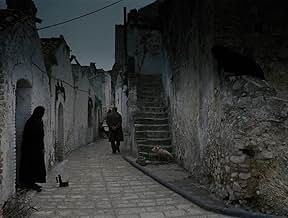
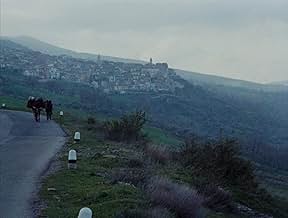
Not about Eboli because the train station of Eboli is only a stopover in the journey of Levi to his banishment location of Grassano and Luciano, two small villages in the Southern region of Lucania (today Basilicata).
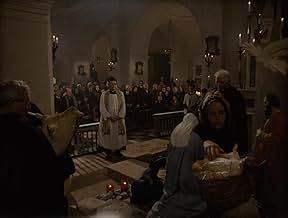
Not about Christ because in the remote villages of Grassano and Lucania the Roman Catholic faith is only a surface below which ancient pagan beliefs still lives on.
In his banishment location Levi enjoys a great deal of freedom. Mussolini is more concerned with getting rid of him in the political discourse than to punish him. At the beginning Levi is first of all an observing outsider but gradually he integrates with the local community, in no small measure thanks to his medical knowledge.
"Christ stopped at Eboli" is a film about the wealth difference between North- and South Italy. Levi encounters instances of malaria in his banishment location. Many citizens try to flee the poverty by emigrating to the United States. The "emotional distance" to New York seems almost shorter than to Rome.
But "Christ stopped at Eboli" is in particular a film about the mixture of Christianity and pagan beliefs. In many instances we see this combination in horror like movies (compare "The wicker man", 1973, Robin Hardy) but in "Christ stopped at Eboli" it is used to full effect in a social drama.
The film is above all a slow movie, in the good sense of the word. The central theme is the gradual integration of he main character in the local community, "gradual" being the essential word in this sentence.
Francesco Rosi is not a very well known director. He is of the same generation as the more popular Taviani brothers. "Christ stopped at Eboli" has also some resemblance with some Taviani movies, situated as it is in the poor South. I am thinking of "Padre Padrone" (1977) in particular. Compared with "Christ stopped at Eboli" "Padre Padrone" is however nearly an action movie.
The movie is about the banishment of narrator Carlo Levi in 1935 - 1936. Levi was a left wing intellectual and critic of Italian dictator Benito Mussolini.
The story is situated during the war between Italy and Abyssinia (todays Ethiopia), so before the Second World War.
In spite of the title, the movie is neither about Christ nor about Eboli.
Not about Eboli because the train station of Eboli is only a stopover in the journey of Levi to his banishment location of Grassano and Luciano, two small villages in the Southern region of Lucania (today Basilicata).
Not about Christ because in the remote villages of Grassano and Lucania the Roman Catholic faith is only a surface below which ancient pagan beliefs still lives on.
In his banishment location Levi enjoys a great deal of freedom. Mussolini is more concerned with getting rid of him in the political discourse than to punish him. At the beginning Levi is first of all an observing outsider but gradually he integrates with the local community, in no small measure thanks to his medical knowledge.
"Christ stopped at Eboli" is a film about the wealth difference between North- and South Italy. Levi encounters instances of malaria in his banishment location. Many citizens try to flee the poverty by emigrating to the United States. The "emotional distance" to New York seems almost shorter than to Rome.
But "Christ stopped at Eboli" is in particular a film about the mixture of Christianity and pagan beliefs. In many instances we see this combination in horror like movies (compare "The wicker man", 1973, Robin Hardy) but in "Christ stopped at Eboli" it is used to full effect in a social drama.
The film is above all a slow movie, in the good sense of the word. The central theme is the gradual integration of he main character in the local community, "gradual" being the essential word in this sentence.
Francesco Rosi is not a very well known director. He is of the same generation as the more popular Taviani brothers. "Christ stopped at Eboli" has also some resemblance with some Taviani movies, situated as it is in the poor South. I am thinking of "Padre Padrone" (1977) in particular. Compared with "Christ stopped at Eboli" "Padre Padrone" is however nearly an action movie.
Two (or more) Italies
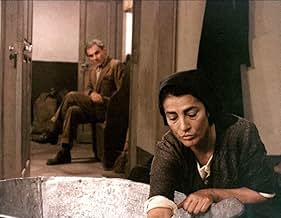
The transposition of Levi's autobiographical novel can recreate with effectiveness the atmosphere of absolute immobilism out of the history on which the novel really insists. Basilicata's and Southern Italy's setting helps to find a place absolutely uncontaminated by the modernity and the recent history. We wear the dresses of main character that works as a modern sonde in an anti-modern world: in this dimension we see all the contradictions of fascist Italy (of Italy tout court), divided by languages and geographies, where fight the fascism's rhetoric paroxysm against a world deaf to every modern rhythm. The farmer's world is a world based on the slow and circular rhythm of the nature, still impregnated with the sense of the superstitious of the events and of a mythology more ingrained than every fascist super-action.
The sedate interpretation of Volonté contributes to the assumption of a point of view curious, sensible, that can find the deep reasons of the presence of two (or more) Italies and reveal so easy and silent abuses that the potestà and others can carry on on farmers' shoulder. But the main strength of the movie is in a luminous and montalian photography, in a sensual and no overload pittoricism that makes a chromatic and geometric spectacle every single frame.
The sedate interpretation of Volonté contributes to the assumption of a point of view curious, sensible, that can find the deep reasons of the presence of two (or more) Italies and reveal so easy and silent abuses that the potestà and others can carry on on farmers' shoulder. But the main strength of the movie is in a luminous and montalian photography, in a sensual and no overload pittoricism that makes a chromatic and geometric spectacle every single frame.


Did you know
- TriviaThe title of the film and its source novel comes from an expression by the people of Gagliano who say of themselves, "Christ stopped short of here, at Eboli" which means, in effect, that they feel they have been bypassed by Christianity, by morality, by history itself-that they have somehow been excluded from the full human experience.
- GoofsOn the bus, the way Carlo holds the dog changes.
- Quotes
Luisa Levi: You'd need a woman here.
Carlo Levi: Yes, I would. But it's not easy.
Luisa Levi: Come on, don't exaggerate. Don't tell me that here even finding a cleaning lady is impossible.
Carlo Levi: Here a woman wouldn't go in the house of a single man. Just spending time together implies sleeping together.
Luisa Levi: You can't be serious.
Carlo Levi: Oh, yes I am.
- Alternate versionsThere are many versions ranging from 120 minutes to 222 minutes. The longest version available in the U.S. is 222 minutes and is available from the Criterion Collection on Blu-ray.
- ConnectionsFeatured in Il cineasta e il labirinto (2004)
- SoundtracksMaara Ca pi Ttia
Sung by Muzzi Loffredo
- How long is Christ Stopped at Eboli?Powered by Alexa
Details
- Release date
- Countries of origin
- Official site
- Language
- Also known as
- Christus kam nur bis Eboli
- Filming locations
- Aliano, Matera, Basilicata, Italy(second house where Levi lives)
- Production companies
- See more company credits at IMDbPro
Box office
- Gross US & Canada
- $78,736
- Opening weekend US & Canada
- $9,006
- Apr 7, 2019
- Gross worldwide
- $78,736
Contribute to this page
Suggest an edit or add missing content