

The life of a divorced television writer dating a teenage girl is further complicated when he falls in love with his best friend's mistress.The life of a divorced television writer dating a teenage girl is further complicated when he falls in love with his best friend's mistress.The life of a divorced television writer dating a teenage girl is further complicated when he falls in love with his best friend's mistress.
- Nominated for 2 Oscars
- 16 wins & 24 nominations total


Anne Byrne Hoffman
- Emily
- (as Anne Byrne)


- Director
- Writers
- All cast & crew
- Production, box office & more at IMDbPro
Featured reviews
10tvspace
Manhattan is an exhilarating American romance set against the backdrop of New York of the late 70's: my favorite New York, the New York of painters, poets, punks, and Pauline Kael. Three great, very American talents -- Woody Allen, Gordon Willis, and George Gershwin -- intertwine their respective gifts to create a comedy that manages to satisfy both the brain and the heart, and even, perhaps, the lower regions.
Allen is so brainy and such a nebbish that he can get away with gestures that would be painfully sentimental in the hands of any other director: when he begins the movie with fireworks cut to Gershwin, it isn't to soften you up for a soap opera, but to remind you that however much his neuroses may seem to drive the scenes, its the love of New York that drives the movie.
The entire cast is note perfect: Meryl Streep as his caustic bisexual ex-wife, Diane Keaton as a nervous journalist from Philadelphia, and especially Mariel Hemingway, whose performance as Allen's 17-year old girlfriend is charming, heartbreaking, and wise.
Allen's comedy here is at its absolute finest. The fact that it is interwoven with a genuinely moving love story told with a subtlety and indirection that is unheard of in today's mainstream cinema only makes the laughs that much richer.
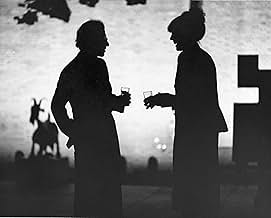
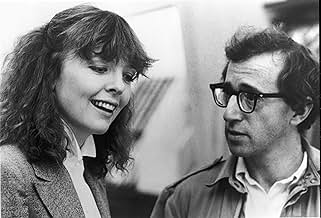
Gordon Willis' cinematography is good enough for the Museum of Modern Art. Scene after scene leaves a grin on your face as his moving (in both senses) black and white photography floats across the screen.
And finally underlying everything is the music of George Gershwin, whose exubertant melodies propel the movie forward at every turn.
This is Woody Allen's best movie, a great movie, and an American movie in the best sense. As an homage to the city of New York it will surely remain unsurpassed.
Allen is so brainy and such a nebbish that he can get away with gestures that would be painfully sentimental in the hands of any other director: when he begins the movie with fireworks cut to Gershwin, it isn't to soften you up for a soap opera, but to remind you that however much his neuroses may seem to drive the scenes, its the love of New York that drives the movie.
The entire cast is note perfect: Meryl Streep as his caustic bisexual ex-wife, Diane Keaton as a nervous journalist from Philadelphia, and especially Mariel Hemingway, whose performance as Allen's 17-year old girlfriend is charming, heartbreaking, and wise.
Allen's comedy here is at its absolute finest. The fact that it is interwoven with a genuinely moving love story told with a subtlety and indirection that is unheard of in today's mainstream cinema only makes the laughs that much richer.
Gordon Willis' cinematography is good enough for the Museum of Modern Art. Scene after scene leaves a grin on your face as his moving (in both senses) black and white photography floats across the screen.
And finally underlying everything is the music of George Gershwin, whose exubertant melodies propel the movie forward at every turn.
This is Woody Allen's best movie, a great movie, and an American movie in the best sense. As an homage to the city of New York it will surely remain unsurpassed.
Woody Allen has been churning out mediocre films for so long now that it's easy to forget how good some of his older films were. "Manhattan" is the product of Allen's "mature" 1970s phase, the phase that also produced "Annie Hall" and "Interiors," and it's a wonderful film. It's not the plot that makes it singular -- it's typical upper-crust New York Allen, full of neurotic people in therapy cheating on one another and making mistake after mistake in their pursuit of what they think will make them happy. No, what makes "Manhattan" so effective is its style. Filmed in black and white (because, as Allen's character says in an opening voice over, New York is a city that has always and will always exist in black and white), the film is a love letter to NYC, and it suggests that the neuroses that fill its denizens are as much a part of the city's character as its architecture, culture and diversity. I would instantly be annoyed by the people that populate Allen's films if I met them in any other context. As it is, I can't imagine any Allen film (at least not one set in New York) without them.
Grade: A
Grade: A
From a technical standpoint, this film is top-notch - the acting is brilliant, the cinematography is beautiful, and the George Gershwin soundtrack is excellent.
But the content of the film is another thing. Basically, Woody Allen comes across as an egomaniacal creep who writes parts for himself in order to make him look like he's God's gift to women (there are so many references to his sexual prowess one could start a group drinking game based off it).
And anybody with even a beginner's understanding of adolescent psychological development knows that men who pursue teenage girls are sick and sadistic bastards who find joy in ruining promising young lives.
So my summary is: Like the film for its craft, but loathe the creator for his statement.
But the content of the film is another thing. Basically, Woody Allen comes across as an egomaniacal creep who writes parts for himself in order to make him look like he's God's gift to women (there are so many references to his sexual prowess one could start a group drinking game based off it).
And anybody with even a beginner's understanding of adolescent psychological development knows that men who pursue teenage girls are sick and sadistic bastards who find joy in ruining promising young lives.
So my summary is: Like the film for its craft, but loathe the creator for his statement.
I watched Manhattan recently because i had never seen Woody Allen's films and heard this was one of his best.
I can see why people love this film, it certainly is quite original and a convincing snapshot of a group of friends in New York, but I found Woody's character just too excruciating self-possessed and irritating to enjoy the film overall.
I guess you either love him or hate him, but he reminded me of George Costanza on Seinfeld - i just wanted to shake him and say 'get over yourself!'.
As for the humor, there were a lot of attempted wit there but nothing that made me laugh out loud. I won't be a hurry to see any of his other films.
I can see why people love this film, it certainly is quite original and a convincing snapshot of a group of friends in New York, but I found Woody's character just too excruciating self-possessed and irritating to enjoy the film overall.
I guess you either love him or hate him, but he reminded me of George Costanza on Seinfeld - i just wanted to shake him and say 'get over yourself!'.
As for the humor, there were a lot of attempted wit there but nothing that made me laugh out loud. I won't be a hurry to see any of his other films.
I used to hold this film as somewhat of a sacred cow when I first saw it in 1979. I was a proscribed Woody fan and
although I still like a few of his movies, this is no longer one of them, on recent review.
I recently purchased copies of Manhattan and Annie Hall.
I watched the latter first and it charmed my socks off again. One classic scene after another signals the height of Allen's art in this hilarious masterwork. Manhattan is a different story.
Perhaps my recent viewing of Wild Man Blues has hipped
me to what an whining, pampered egomaniac Mr. Allen is.
Perhaps it's the irony of his Chaplin-like dalliances with young women that have set me against him. But I now watch Manhattan
and see a pathetic, overblown Allen literally feeding lines to his
fellow actors to give him some smarmy comeback that never fails to show how intellectually superior he is. Different from Annie Hall, Allen is no longer the underdog but an ugly, obnoxious
over-lord...
His characters in Manhattan, are cardboard. They are not real and
the situations are not real. I have no feeling for anyone in this
movie, except Woody, who I feel contempt for, given his massive
and unfunny self-indulgence. It's pathetic to see Allen set up
Hemingway with lines that a teenager would never say in a million
years, just to trump up his flaccid ego. Everyone in this movie actually feeds him lines to trump up his ego.
Like Stardust Memories, this one shows Woody at his self- indulgent worst. This movie looks wonderful and sounds wonderful with the Gershwin score, but on further review, this
one's hollow and ultimately a maddening tribute to an egomaniac.
although I still like a few of his movies, this is no longer one of them, on recent review.
I recently purchased copies of Manhattan and Annie Hall.
I watched the latter first and it charmed my socks off again. One classic scene after another signals the height of Allen's art in this hilarious masterwork. Manhattan is a different story.
Perhaps my recent viewing of Wild Man Blues has hipped
me to what an whining, pampered egomaniac Mr. Allen is.
Perhaps it's the irony of his Chaplin-like dalliances with young women that have set me against him. But I now watch Manhattan
and see a pathetic, overblown Allen literally feeding lines to his
fellow actors to give him some smarmy comeback that never fails to show how intellectually superior he is. Different from Annie Hall, Allen is no longer the underdog but an ugly, obnoxious
over-lord...
His characters in Manhattan, are cardboard. They are not real and
the situations are not real. I have no feeling for anyone in this
movie, except Woody, who I feel contempt for, given his massive
and unfunny self-indulgence. It's pathetic to see Allen set up
Hemingway with lines that a teenager would never say in a million
years, just to trump up his flaccid ego. Everyone in this movie actually feeds him lines to trump up his ego.
Like Stardust Memories, this one shows Woody at his self- indulgent worst. This movie looks wonderful and sounds wonderful with the Gershwin score, but on further review, this
one's hollow and ultimately a maddening tribute to an egomaniac.


Did you know
- TriviaMeryl Streep shot her scenes during breaks in filming Kramer vs. Kramer (1979).
- GoofsWhen Isaac asks Tracy how old he will be when she is thirty-six, she says "sixty-three," and he agrees. Earlier Isaac says that she is seventeen and he is forty-two, which means he is 25 years older than her, and would therefore be sixty-one, not sixty-three.
- Quotes
Isaac Davis: All the times I come over here, I can't understand how you can prefer her to me.
Jill: You can't understand that?
Isaac Davis: No. It's a mystery to me.
Jill: Well, you knew my history when you married me.
Isaac Davis: I know. My analyst warned me, but you were so beautiful that I got another analyst.
- Crazy creditsOne of the very few Woody Allen films to not have traditional opening credits, save the production company bumper (United Artists), and the film title MANHATTAN is seen as a long vertical flashing bright neon sign, located on the side of a New York City building, and is seen for under seven seconds just before Woody Allen narrates his first line.
- ConnectionsEdited into Intimate Portrait: Diane Keaton (2001)
- SoundtracksRhapsody in Blue
(1924)
Music by George Gershwin
Performed by The New York Philharmonic
Conducted by Zubin Mehta
Piano soloist: Paul Jacobs
Music director: Zubin Mehta
Details
Box office
- Budget
- $9,000,000 (estimated)
- Gross US & Canada
- $39,946,780
- Opening weekend US & Canada
- $485,734
- Apr 29, 1979
- Gross worldwide
- $40,196,866
- Runtime
- 1h 36m(96 min)
- Color
- Sound mix
- Aspect ratio
- 2.39 : 1
Contribute to this page
Suggest an edit or add missing content