IMDb RATING
7.4/10
49K
YOUR RATING


Count Dracula moves from Transylvania to Wismar, spreading the Black Plague across the land. Only a woman pure of heart can bring an end to his reign of horror.Count Dracula moves from Transylvania to Wismar, spreading the Black Plague across the land. Only a woman pure of heart can bring an end to his reign of horror.Count Dracula moves from Transylvania to Wismar, spreading the Black Plague across the land. Only a woman pure of heart can bring an end to his reign of horror.
- Awards
- 5 wins & 8 nominations total




Rijk de Gooyer
- Town official
- (as Ryk de Gooyer)


Attila Árpa
- Violinist Boy
- (uncredited)
Michael Edols
- Lord of the Manor
- (uncredited)
7.448.5K
1
2
3
4
5
6
7
8
9
10
Featured reviews
10mstomaso
Atmospheric, creepy and gorgeous
Another classic collaboration of Werner Herzog and Klaus Kinski, Nosferatu is not just a remake of the F. W. Murnau silent classic, but an extension of it. Herzog not only develops the Stoker story more directly than the original did, but even reintroduces the original characters - Orlok becomes Dracula, and the Hutters become the Harkers.
Like many of the films involving Herzog and Kinski, Nosferatu is a period piece and creates the context of its plot through beautiful cinematography and a relentless but unhasty pace, not through the script. ThoughKinski dominates the screen just as he always does in these collaborations, the performances of fellow greats Isabelle Adjani and Bruno Ganz are also worthy of mention. Ganz's Jonathan Harker is certainly the most sympathetic character in the film, and Adjani's Lucy is beautiful, spooky, and just odd enough to fit the role perfectly.
Nosferatu is a retelling of the Dracula tale. Unlike its generally inferior competitors, Nosferatu - both the 1922 and 1979 versions - sticks very close to Bram Stoker's text - neither elaborating the focus on bloodsucking (obsessed upon by most American interpretations of Dracula), nor revising Jonathan Harker and Dr. Van Helsing as heroic characters, nor adding erotic or romantic elements to the depravity of the original concept. If you know what Stoker was about, you will thrill to the often forgotten aspects of Stoker's novel which are redeemed here - the plague rats, the gypsies, etc.
Kinki's intensity allows him to become a perfect Dracula. He understands his role perfectly and never once slips out of 'the hunter'. This is another very important aspect of the Stoker legend which has been sadly contorted by the popularization of the Dracula legend. Nosferatu's Count Dracula is not a charming eastern European gentleman with a quirky bloodsucking habit and a lovesick soul, he is a wily, terrifying, soulless, inhuman, obsessive, predator. And he has absolutely no concern for the affairs of Homo sapiens sapiens.
The film is mostly shot in Amsterdam's old city, which fits the mood of the film well. Other locations are in Germany, and Dracula's castle, for once, is an actual castle - even the interior shots! The wonderfully eerie and disorienting Popul Vuh soundtrack compliments the typically Herzogian picture-perfect visuals.
This is a great film for those seeking an accessible introduction to film-as-art, and the legendary collaborations of Herzog and Kinski. It will likely annoy those who think of Dracula as a good looking romantic guy with a nasty habit, but is highly recommended for fans of Stoker's original work.
.
Like many of the films involving Herzog and Kinski, Nosferatu is a period piece and creates the context of its plot through beautiful cinematography and a relentless but unhasty pace, not through the script. ThoughKinski dominates the screen just as he always does in these collaborations, the performances of fellow greats Isabelle Adjani and Bruno Ganz are also worthy of mention. Ganz's Jonathan Harker is certainly the most sympathetic character in the film, and Adjani's Lucy is beautiful, spooky, and just odd enough to fit the role perfectly.
Nosferatu is a retelling of the Dracula tale. Unlike its generally inferior competitors, Nosferatu - both the 1922 and 1979 versions - sticks very close to Bram Stoker's text - neither elaborating the focus on bloodsucking (obsessed upon by most American interpretations of Dracula), nor revising Jonathan Harker and Dr. Van Helsing as heroic characters, nor adding erotic or romantic elements to the depravity of the original concept. If you know what Stoker was about, you will thrill to the often forgotten aspects of Stoker's novel which are redeemed here - the plague rats, the gypsies, etc.
Kinki's intensity allows him to become a perfect Dracula. He understands his role perfectly and never once slips out of 'the hunter'. This is another very important aspect of the Stoker legend which has been sadly contorted by the popularization of the Dracula legend. Nosferatu's Count Dracula is not a charming eastern European gentleman with a quirky bloodsucking habit and a lovesick soul, he is a wily, terrifying, soulless, inhuman, obsessive, predator. And he has absolutely no concern for the affairs of Homo sapiens sapiens.
The film is mostly shot in Amsterdam's old city, which fits the mood of the film well. Other locations are in Germany, and Dracula's castle, for once, is an actual castle - even the interior shots! The wonderfully eerie and disorienting Popul Vuh soundtrack compliments the typically Herzogian picture-perfect visuals.
This is a great film for those seeking an accessible introduction to film-as-art, and the legendary collaborations of Herzog and Kinski. It will likely annoy those who think of Dracula as a good looking romantic guy with a nasty habit, but is highly recommended for fans of Stoker's original work.
.
the real standout is the cinematography...but it's painfully slow.
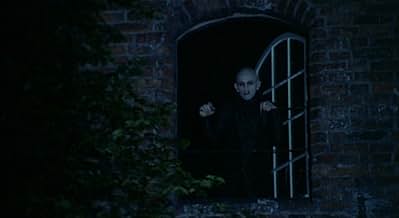
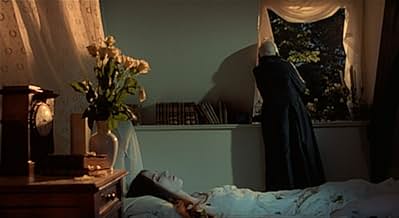
I would like to heap strong praise on the cinematographer in his ability to make a color film that looks almost black and white. These muted colors and use of dull blues and lots of grays REALLY enhance the film and give it a beautiful moodiness and creepiness. This is by far the best aspect of the movie.
As for the acting and writing, I was less enthusiastic. In addition to the stark lighting and cinematography, the acting itself was VERY stark and way too subdued. The moody scenery was good--the moodiness of the acting was NOT. While the movie should not have been high energy, at times it felt like it had almost none and tended to bore me from time to time. With a SMALL does of adrenaline, it would have been a lot better. The slowness of the film just seemed too much and the film would have improved by just speeding up the filming, as there are just too many long and deliberate scenes. Some see this as artistry--I see it as just too over-indulgent.
Although very dated, I still think the original is the better movie of the two. Unlike NOSFERATU (1979), it was unique and not just some come lately remake. And, and many ways, the original silent version is more haunting and terrifying.
As for the acting and writing, I was less enthusiastic. In addition to the stark lighting and cinematography, the acting itself was VERY stark and way too subdued. The moody scenery was good--the moodiness of the acting was NOT. While the movie should not have been high energy, at times it felt like it had almost none and tended to bore me from time to time. With a SMALL does of adrenaline, it would have been a lot better. The slowness of the film just seemed too much and the film would have improved by just speeding up the filming, as there are just too many long and deliberate scenes. Some see this as artistry--I see it as just too over-indulgent.
Although very dated, I still think the original is the better movie of the two. Unlike NOSFERATU (1979), it was unique and not just some come lately remake. And, and many ways, the original silent version is more haunting and terrifying.
Hypnotic and exquisitely photographed
Werner Herzog's version of Murnau's classic NOSFERATU is a captivating experience. Klaus Kinski is perfect as Count Dracula. He brilliantly conveys the loneliness and sadness of a creature who longs to be human. Count Dracula is the victim in this film, he does not enjoy his immortality and wants only to live, love and die like a human. Isabelle Adjani's ethereal beauty punctuates her ghostlike performance as Lucy, and Bruno Ganz turns in another solid performance as Jonathan.
Like other Herzog films, NOSFERATU THE VAMPYRE is exquisitely photographed, eliciting an almost transcendental experience. Jonathan's journey to Dracula's castle, the dancing of the plague-ridden townsfolk, and the final scene are prime examples.
Once again, using the compositions of Popol Vuh and Wagner, Herzog creates an effective amalgamation of images an music.
One drawback to the film is that it is so beautiful to look at, it is not especially frightening. This may discourage some Dracula fans, but to those who want a hypnotic, smart vampire film, this is the one to see.
Like other Herzog films, NOSFERATU THE VAMPYRE is exquisitely photographed, eliciting an almost transcendental experience. Jonathan's journey to Dracula's castle, the dancing of the plague-ridden townsfolk, and the final scene are prime examples.
Once again, using the compositions of Popol Vuh and Wagner, Herzog creates an effective amalgamation of images an music.
One drawback to the film is that it is so beautiful to look at, it is not especially frightening. This may discourage some Dracula fans, but to those who want a hypnotic, smart vampire film, this is the one to see.
A pretty fine go at "Dracula"
This Herzog adaptation of the Dracula story, filtered through the memory in particular of Murnau's "Nosferatu: A Symphony of Horrors", is largely a successful film. It is great in parts and in aspects, but doesn't quite amount to a whole that approaches superlative status. Klaus Kinski is rather good, but not quite spellbinding, in the much-donned cape of the old Count. He is not quite up to the vastly contrasting interpretations I have seen - Schreck and Lugosi. Isabelle Adjani? Hers is far from a terrible performance, as one commentator has said; she is, indeed, reasonable in a role often lacking embellishment in other adaptations. Of course, her striking good looks are certainly far from unwelcome. The chap playing Renfield (the madman, so amusingly and vividly portrayed by Dwight Frye in the 1931 Universal "Dracula") is effective in portraying an outright giggling madman - his laugh is one of *the* most absurd and insane sounds I have heard in film...! The use of music is wonderful, as is Herzog's visual direction - the plague scenes leave quite an impression on the mind, and most scenes are accorded impressive backdrops and appropriate visual textures. Popol Vuh's musical textures are dreamily beguiling, setting just the right tone for Herzog's imagery. The film's downside has to be in the dramatics really; the dialogue and subsequent delivery of, are far from great, perhaps owing to the fact that most of the performers' native tongues are not English, and here they have to speak just that language. There is never quite enough dramatic tension induced by the script or the acting; at times the Renfield chap and Kinski are compelling, but only fitfully.
Having said all this, it is a fine rendition on film of a rather old and, frankly, enduring story. Herzog must take the credit for its effective atmosphere, but perhaps also the blame for the lacking dramatics. Certainly an enjoyable, generally impressive film.
Rating:- ****/*****
Having said all this, it is a fine rendition on film of a rather old and, frankly, enduring story. Herzog must take the credit for its effective atmosphere, but perhaps also the blame for the lacking dramatics. Certainly an enjoyable, generally impressive film.
Rating:- ****/*****
Atmospheric Remake of a Classic
In Wismar, Germany, Lucy (Isabelle Adjani) and the real state agent Jonathan Harker (Bruno Ganz) is a happily married couple. Jonathan's boss Renfield (Roland Topor) sends him to Transylvania to sell an old house in Wismar to Count Dracula (Klaus Kinski). Jonathan is advised by the locals of a village to return since the count is a vampire, but he does not give up of his intent.
Jonathan visits Count Dracula and when he sees the photograph of Lucy, he immediately buys the real estate. He drinks the blood of Jonathan and navigates to Wismar, carrying coffins with the soil of his land, rats and plague in the ship. Along the voyage, Count Dracula kills the crew-members and a ghost vessel arrives in Wismar. Meanwhile Jonathan rides to his homeland to save Lucy from the vampire.
"Nosferatu: Phantom der Nacht" is a wonderful and atmospheric remake of F. W. Murnau's classic film based on Bram Stoker's novel (but uncredited). Herzog has also changed the ending of the novel and uses wonderful cinematography supported by magnificent performances in his version. Klaus Kinski is one of the scariest Dracula of cinema history. My vote is eight.
Title (Brazil): "Nosferatu - O Vampiro da Noite" ("Nosferatu – The Vampire of the Night")
Jonathan visits Count Dracula and when he sees the photograph of Lucy, he immediately buys the real estate. He drinks the blood of Jonathan and navigates to Wismar, carrying coffins with the soil of his land, rats and plague in the ship. Along the voyage, Count Dracula kills the crew-members and a ghost vessel arrives in Wismar. Meanwhile Jonathan rides to his homeland to save Lucy from the vampire.
"Nosferatu: Phantom der Nacht" is a wonderful and atmospheric remake of F. W. Murnau's classic film based on Bram Stoker's novel (but uncredited). Herzog has also changed the ending of the novel and uses wonderful cinematography supported by magnificent performances in his version. Klaus Kinski is one of the scariest Dracula of cinema history. My vote is eight.
Title (Brazil): "Nosferatu - O Vampiro da Noite" ("Nosferatu – The Vampire of the Night")


Did you know
- TriviaWerner Herzog decided to restore the original names of the characters the day the copyright of the original "Dracula" expired, while still following the movie blueprint laid out by F.W. Murnau's Nosferatu: A Symphony of Horror (1922).
- Goofs(at around 58 mins) When the captain of the ship is writing in his log he says they left the Caspian Sea, which is landlocked and nearly 1000 miles away from the port in Bulgaria where the voyage started. Bulgaria is on the Black Sea.
- Quotes
Count Dracula: [subtitled version] Time is an abyss... profound as a thousand nights... Centuries come and go... To be unable to grow old is terrible... Death is not the worst... Can you imagine enduring centuries, experiencing each day the same futilities...
- Alternate versionsThe English-language version was only available in a shorter cut until 2000, which was about 10 minutes shorter.
- ConnectionsEdited into Catalogue of Ships (2008)
- SoundtracksRheingold
Written by Richard Wagner
Performed by Wiener Philharmoniker
Conducted by Georg Solti (as Sir Georg Solti)
Decca LC 0171
Details
- Release date
- Countries of origin
- Languages
- Also known as
- Nosferatu, vampiro de la noche
- Filming locations
- Delft, Zuid-Holland, Netherlands(many exteriors)
- Production companies
- See more company credits at IMDbPro
Box office
- Gross worldwide
- $3,451
Contribute to this page
Suggest an edit or add missing content