IMDb RATING
7.1/10
5.5K
YOUR RATING

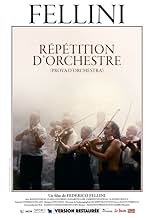
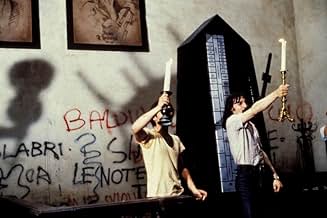
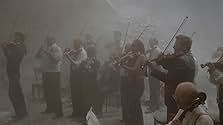
An orchestra assembles for a rehearsal in an ancient chapel under the inquisitive eyes of a TV documentary crew, but an uprising breaks out.An orchestra assembles for a rehearsal in an ancient chapel under the inquisitive eyes of a TV documentary crew, but an uprising breaks out.An orchestra assembles for a rehearsal in an ancient chapel under the inquisitive eyes of a TV documentary crew, but an uprising breaks out.
- Director
- Writers
- Stars
- Awards
- 1 win & 2 nominations total




Nando Villella
- Cello player
- (as Ferdinando Villella)

Franco Javarone
- Bass tuba player
- (as Giovanni Javarone)

Andrew Lord Miller
- Oboe player
- (as Andy MIller)


Cesare Martignoni
- Clarinet player
- (as Cesare Martignon)


Filippo Trincia
- Head of orchestra
- (as Filippo Trincaia)
- Director
- Writers
- All cast & crew
- Production, box office & more at IMDbPro
7.15.4K
1
2
3
4
5
6
7
8
9
10
Featured reviews
appears to be a parable
This miniature movie's tempo builds, stops and starts in that comical, jerky way characteristic of Fellini. It's one of the things I like.
The interviews are a riot!
It appears to be a parable of the last few hundred years of European history.
The interviews are a riot!
It appears to be a parable of the last few hundred years of European history.
amusing piece that perhaps loses a fair bit without awareness of the considerable turmoil within Italy at the time
Perhaps not your usual Fellini film, if there is such a thing, but, made between his Casanova (1976) and City of Women (1980), this is an intriguing if rather short and enigmatic piece. Ostensibly a documentary but almost as soon as the musicians begin turning up, all does not seem to be quite as expected. Has the director really found an orchestra with so many oddball characters? Is the German conductor a fascist dictator in disguise? Are the proceedings really to be monitored by a trade union shop steward? Is this more a comment upon Italian politics of the time than a showcase for music? All may be revealed to each upon his or her own viewing and interpretation but for me it is a brave and amusing piece that perhaps loses a fair bit without awareness of the considerable turmoil within Italy at the time. One of the most interesting elements happens to be that Nino Rota wrote the music that is rehearsed and then performed within the film and that it was one of the last things he did before dying the following year, having scored around 150 films including almost every single one for Federico Fellini.
the Orchestra as a microcosm of society, or a small Fellini exercise, you decide- I think it's both
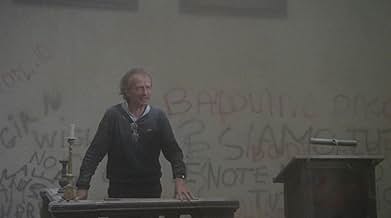
In most of Federico Fellini's best films, he made big statements about the way we live and socialize with each other and deal with ourselves as much as the past, all within exciting, tragic-comic film-making style. Orchestra Rehearsal does the same, though in a shorter amount of time. We are given a (union) orchestra in Italy, who's members vary from young adults to the old timers, women, introverts, trouble makers, and so forth, who each have their own music of choice (or sometimes of necessity). The conductor is frustrated- he can barely get the orchestra to concentrate much less really practice, and the union problems get things caught in the way as they rip through the ironically happy and (typically) carnival-like pieces. There's a break taken, which is when everything starts to slowly, but surely, wind down and breakdown among the musicians. In the meantime a television crew stands by taking 'interviews' of the musicians, their opinions, their little 'off' moments, signaling the anarchy that will soon ensue.
The interviews themselves are some of the strongest, funniest parts of the film- the interviewers get (sometimes begrudgingly) words on their instruments, why they play, how they play, and what role their music has in the world. These interviews can also be hit-or-miss sometimes, and because of the constant dialog (there's sometimes barely a breath to be had, as is the beautiful claustrophobic style in Fellini's characters), there's almost too much information going on. There's also the tendency for the character(s), whom are mostly portrayed by un-professionals (to acting, not to music of course), to not be very convincing, or even a little boring (the conductor's monologue in his room, for example, is one of the weaker parts of the film for me). But then it does start to pick up in insane, trademark Fellini fashion as the musicians rebel, and an unexpected surprise comes heading their way.
It's likely that Orchestra Rehearsal isn't one of Fellini's very best films, but it is one that captivates as it bemuses, brings laughs as it does thought, and it isn't necessarily a wasteful experience (some may not like it much at all, at least in comparison to his masterpieces). Not to forget the incalculable, lasting power of Nina Rota's music, which drives the film's bombastic, heart-racing rehearsing scenes (there is also humor underneath much of the music, like when the musicians have their own little solos as jokes). There's something always satisfying when a composer is on the same page as the director he's writing for, and few were ever so in tune as Fellini and Rota. And even during some parts that don't add up, their combination helps out a lot. As mentioned before, one could even think deeper into the ideas and thoughts and characters in the film as almost a microcosm of society itself, its easy-going people, its hard-nosed people, its incendiaries, its nostalgics, and its normals and eccentrics. Or, one can just take the Fellini ride, so to speak, and enjoy some 70 minutes with Fellini & company.
The interviews themselves are some of the strongest, funniest parts of the film- the interviewers get (sometimes begrudgingly) words on their instruments, why they play, how they play, and what role their music has in the world. These interviews can also be hit-or-miss sometimes, and because of the constant dialog (there's sometimes barely a breath to be had, as is the beautiful claustrophobic style in Fellini's characters), there's almost too much information going on. There's also the tendency for the character(s), whom are mostly portrayed by un-professionals (to acting, not to music of course), to not be very convincing, or even a little boring (the conductor's monologue in his room, for example, is one of the weaker parts of the film for me). But then it does start to pick up in insane, trademark Fellini fashion as the musicians rebel, and an unexpected surprise comes heading their way.
It's likely that Orchestra Rehearsal isn't one of Fellini's very best films, but it is one that captivates as it bemuses, brings laughs as it does thought, and it isn't necessarily a wasteful experience (some may not like it much at all, at least in comparison to his masterpieces). Not to forget the incalculable, lasting power of Nina Rota's music, which drives the film's bombastic, heart-racing rehearsing scenes (there is also humor underneath much of the music, like when the musicians have their own little solos as jokes). There's something always satisfying when a composer is on the same page as the director he's writing for, and few were ever so in tune as Fellini and Rota. And even during some parts that don't add up, their combination helps out a lot. As mentioned before, one could even think deeper into the ideas and thoughts and characters in the film as almost a microcosm of society itself, its easy-going people, its hard-nosed people, its incendiaries, its nostalgics, and its normals and eccentrics. Or, one can just take the Fellini ride, so to speak, and enjoy some 70 minutes with Fellini & company.
Awesome
I read some people saying that this film made no sense, and that it's just a orchestra rehearsal; it hurst how wrong they are. As any other Fellini, you have to scratch the surface, and you will find a great meaning. That's what I love about his films, they make you think! If you think nothing happened in this movie, go watch a Transformers film, you'll probably thing that there's a lot going on while there's nothing at all. While it may lack Fellini's characteristic powerful visuals, it has a very powerful meaning about politics, society and life. Awesome movie, and great for it's lenght
Unique, hyper-significant, Fellini over himself
Some fully creditable critics deemed "Prova d'orchestra" as being Fellini's main masterpiece. Although recognizing their slight exaggeration, I still can fully empathize with their point. The movie is one of the most intelligent, stylish and personal instances of the much used (and abused) recipe of the "social microcosm". Of course, Fellini's trick to build up a parable of society by using the orchestra parallel is not only original, but also very efficient: the metaphors and symbols resulting from this are both powerful and humorous, in an atrociously satyric vein.
Also, it's very interesting to note the gradual glissando from realism to hyperbole, and from cold detachment to paranoid hysteria; as such, what started as a pseudo-documentary, impartial and technical, gradually turns into a major pandemonium, to culminate with the hallucinatory profiling of the demolition iron ball, as an omen of doom - that being the point where the artist really meets the divine, both as meaning, and as means.
One should also notice the masterfully style of shooting the orchestra, the people and the instruments, to build up the cinematographic symphony layered over the musical one, and to create that irresistibly fast-paced narrative in images, that makes the movie so exciting and captivating - it's literally to be watched on the edge on your seat, although nothing more spectacular happens than an orchestra rehearsing in a disaffected church... all being the result of Fellini's skillful cinematography.
At last, one couldn't depart any reference to this masterpiece without mentioning at least in passing the haunting finale. Although I always regarded with political objectivity and historical honesty the national-socialist ideology, goals and means, I must confess that I fully assimilate Fellini's powerful warning about any dictatorial excesses. Balduin Bass' voice rising in a Hitlerian monologue is an efficient and pointed mean of expression and style - and his last line after fade out, "Signori... Da capo!", indeed MAKES A POINT!
Also, it's very interesting to note the gradual glissando from realism to hyperbole, and from cold detachment to paranoid hysteria; as such, what started as a pseudo-documentary, impartial and technical, gradually turns into a major pandemonium, to culminate with the hallucinatory profiling of the demolition iron ball, as an omen of doom - that being the point where the artist really meets the divine, both as meaning, and as means.
One should also notice the masterfully style of shooting the orchestra, the people and the instruments, to build up the cinematographic symphony layered over the musical one, and to create that irresistibly fast-paced narrative in images, that makes the movie so exciting and captivating - it's literally to be watched on the edge on your seat, although nothing more spectacular happens than an orchestra rehearsing in a disaffected church... all being the result of Fellini's skillful cinematography.
At last, one couldn't depart any reference to this masterpiece without mentioning at least in passing the haunting finale. Although I always regarded with political objectivity and historical honesty the national-socialist ideology, goals and means, I must confess that I fully assimilate Fellini's powerful warning about any dictatorial excesses. Balduin Bass' voice rising in a Hitlerian monologue is an efficient and pointed mean of expression and style - and his last line after fade out, "Signori... Da capo!", indeed MAKES A POINT!


Did you know
- GoofsWhen they are interviewing the first violinists, the harpist in the background is clearly not playing but harp music is audible.
- ConnectionsFeatured in In Search of Fellini (2017)
- How long is Orchestra Rehearsal?Powered by Alexa
Details
- Release date
- Countries of origin
- Languages
- Also known as
- Federico Fellini's Orchestra Rehearsal
- Filming locations
- Production companies
- See more company credits at IMDbPro
- Runtime
- 1h 12m(72 min)
- Sound mix
- Aspect ratio
- 1.37 : 1
Contribute to this page
Suggest an edit or add missing content