Radio On
- 1979
- 1h 44m
IMDb RATING
6.5/10
1.3K
YOUR RATING


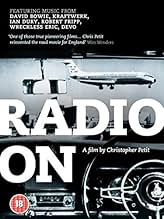
In 1970s Britain, a man drives from London to Bristol to investigate his brother's death, and the purpose of his trip is offset by his encounters with a series of odd people.In 1970s Britain, a man drives from London to Bristol to investigate his brother's death, and the purpose of his trip is offset by his encounters with a series of odd people.In 1970s Britain, a man drives from London to Bristol to investigate his brother's death, and the purpose of his trip is offset by his encounters with a series of odd people.
- Director
- Writers
- Stars
- Awards
- 1 win & 1 nomination total




- Director
- Writers
- All cast & crew
- Production, box office & more at IMDbPro
6.51.3K
1
2
3
4
5
6
7
8
9
10
Featured reviews
Looking differently, deeper...
"Why do the English want to live by the sea?"
"Last resort...? (silence) It's never as good as they think it will be..."
Saw this last evening at the local arts cinema in Newcastle. And what a magnificent British art film this is; ex-Time Out film critic Christopher Petit, spurred by the twin influences of the road movies of Wim Wenders (co-producer) and the incipient post-punk scene. There are scenes, glimmers and furrows which sometimes only later come through to haunt the mind; the whole stands as a brilliantly paced and sustained aesthetic reflection of decay and despondency. The Britain of 1979 is often simultaneously beguiling and deadening; great symbolic tower-blocks on the way out of London, desolate countryside heading west... so much that you feel could give root to extensive, restlessly ruminative Iain Sinclair or Paul Morley annotation.
This film is indeed about more than 'plot', though it hangs on the path of a man who is shown going about his typical, elliptical life in London, where he seems to be a holed-up DJ for some obscure station. His 'show' is jarringly shown playing in an industrial work setting; presumably to those who cannot hear - is this use of music perhaps not so far from the choric Alan Price in "O Lucky Man!"? After a time, he begins a car journey to Bristol in search of 'answers' regarding the unexplained death of his brother; which is possibly, though never definitively, linked with a pornographic movie racket - reported in radio news bulletins - in the West Country. I could make few spoilers that would seem significant, though points do jab out at you; particularly in the sense that expected explanation or fruition occasionally seem on the cards. But, hauntingly, we are left to puzzle things out ourselves; which may well be a pointless task if one is to think in usual, lateral patterns...
The main actor does a wonderfully minimal job, as is best with this sort of project; a face that moves only a certain amount, and when needed; above all, a face that reveals itself as the blank canvas mask that we alone can choose or otherwise to feel the emotions through. He is a guide, but rightfully not one we are encouraged to easily identify with; though at times, I certainly can. The landscape, the lyrically still, gently moving camera, the haunting, 'dehumanized' pop strains of Bowie, Lovich, Kraftwerk; these phenomena bring out our responses... Or rather the cumulative effect does. It is only perhaps broken by the unnecessary interlude with Sting, which shows the man with a good deal of smugness, even back then and within this film. This is unfortunate considering it follows relatively soon after the slow jukebox tableau, the camera tapering around the pub for the whole duration of a Wreckless Eric song on the jukebox. So little happens that the mere act of one figure hitherto seated getting up and leaving the establishment takes on implausibly moving dimensions.
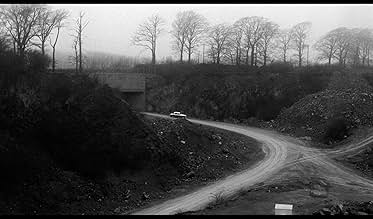
Surely it was not just me who was moved impossibly by the sudden move to a hauntingly wistful bucolic scene? This fairly brief shot is lit and framed magisterially, contrasting with the previous Beckettian Suicide-comedy on the cliff-top, with Kraftwerk's "Ohm Sweet Ohm" spiralling on to heights of tinpot-music box melancholia. This film marks out an approach that sadly was not taken up in British film-making more widely; it takes its time to get precisely nowhere, and yet everywhere, in comparison with so many things we call 'films'.
"Last resort...? (silence) It's never as good as they think it will be..."
Saw this last evening at the local arts cinema in Newcastle. And what a magnificent British art film this is; ex-Time Out film critic Christopher Petit, spurred by the twin influences of the road movies of Wim Wenders (co-producer) and the incipient post-punk scene. There are scenes, glimmers and furrows which sometimes only later come through to haunt the mind; the whole stands as a brilliantly paced and sustained aesthetic reflection of decay and despondency. The Britain of 1979 is often simultaneously beguiling and deadening; great symbolic tower-blocks on the way out of London, desolate countryside heading west... so much that you feel could give root to extensive, restlessly ruminative Iain Sinclair or Paul Morley annotation.
This film is indeed about more than 'plot', though it hangs on the path of a man who is shown going about his typical, elliptical life in London, where he seems to be a holed-up DJ for some obscure station. His 'show' is jarringly shown playing in an industrial work setting; presumably to those who cannot hear - is this use of music perhaps not so far from the choric Alan Price in "O Lucky Man!"? After a time, he begins a car journey to Bristol in search of 'answers' regarding the unexplained death of his brother; which is possibly, though never definitively, linked with a pornographic movie racket - reported in radio news bulletins - in the West Country. I could make few spoilers that would seem significant, though points do jab out at you; particularly in the sense that expected explanation or fruition occasionally seem on the cards. But, hauntingly, we are left to puzzle things out ourselves; which may well be a pointless task if one is to think in usual, lateral patterns...
The main actor does a wonderfully minimal job, as is best with this sort of project; a face that moves only a certain amount, and when needed; above all, a face that reveals itself as the blank canvas mask that we alone can choose or otherwise to feel the emotions through. He is a guide, but rightfully not one we are encouraged to easily identify with; though at times, I certainly can. The landscape, the lyrically still, gently moving camera, the haunting, 'dehumanized' pop strains of Bowie, Lovich, Kraftwerk; these phenomena bring out our responses... Or rather the cumulative effect does. It is only perhaps broken by the unnecessary interlude with Sting, which shows the man with a good deal of smugness, even back then and within this film. This is unfortunate considering it follows relatively soon after the slow jukebox tableau, the camera tapering around the pub for the whole duration of a Wreckless Eric song on the jukebox. So little happens that the mere act of one figure hitherto seated getting up and leaving the establishment takes on implausibly moving dimensions.
Surely it was not just me who was moved impossibly by the sudden move to a hauntingly wistful bucolic scene? This fairly brief shot is lit and framed magisterially, contrasting with the previous Beckettian Suicide-comedy on the cliff-top, with Kraftwerk's "Ohm Sweet Ohm" spiralling on to heights of tinpot-music box melancholia. This film marks out an approach that sadly was not taken up in British film-making more widely; it takes its time to get precisely nowhere, and yet everywhere, in comparison with so many things we call 'films'.
Step One
It comes as no surprise to see Wim Wenders name in the credits. As in most road movies much of this simply consists of a loner staring into space. But former critic Christopher Petit has taken the message "We are the children of Fritz Lang and Werner von Braun" to heart.
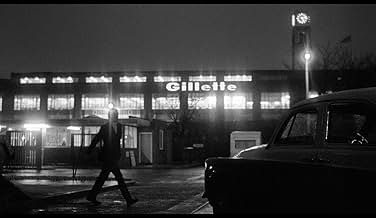
As benefits a film that's half-German half the dialogue is in German and the credits are bi-lingual (we even hear David Bowie singing 'We Can Be Heroes' in German), and Petit employs black & white photography to transform North London into an alien environment combining 'Metropolis' and 'Alphaville' (complete with a sinister voice like Alpha-60 emanating from a radio).
Like the earlier films by Lang and Godard it all seemed very modern at the time, but the references to Northern Ireland like Godard's to Algeria and a cameo by Sting make it today look just as much of a period piece as the earlier film. The charmingly archaic computer game seen in a pub is also evocative of an era long ago.
As benefits a film that's half-German half the dialogue is in German and the credits are bi-lingual (we even hear David Bowie singing 'We Can Be Heroes' in German), and Petit employs black & white photography to transform North London into an alien environment combining 'Metropolis' and 'Alphaville' (complete with a sinister voice like Alpha-60 emanating from a radio).
Like the earlier films by Lang and Godard it all seemed very modern at the time, but the references to Northern Ireland like Godard's to Algeria and a cameo by Sting make it today look just as much of a period piece as the earlier film. The charmingly archaic computer game seen in a pub is also evocative of an era long ago.
Gently stirring road movie
I had the pleasure of attending a screening of 'Radio On 'presented by its director Chris Petit.
Often described as "austere", and rightly so, the influence of Wim Wenders is immediately clear, but unlike Wenders' which films try to hide a sense of self importance behind lengthy banality it is this film's very understatedness that is the key to its (limited) success.
Halliwell's described this as a film "barely able to summon up any interest in its characters" although it is the very detached and unemotional stance of Petit towards his lead that makes this such an unbearably real portrayal of disenchantment, we begin to feel disenfranchised with humanity itself.
Pointless Trivia: At the premiere screening of this film no one recognised the lead actor amongst the crowd as he has a shock of orange hair undetectable in a black and white movie).
Often described as "austere", and rightly so, the influence of Wim Wenders is immediately clear, but unlike Wenders' which films try to hide a sense of self importance behind lengthy banality it is this film's very understatedness that is the key to its (limited) success.
Halliwell's described this as a film "barely able to summon up any interest in its characters" although it is the very detached and unemotional stance of Petit towards his lead that makes this such an unbearably real portrayal of disenchantment, we begin to feel disenfranchised with humanity itself.
Pointless Trivia: At the premiere screening of this film no one recognised the lead actor amongst the crowd as he has a shock of orange hair undetectable in a black and white movie).
One of the great road movies
The road movie is among my favorite genres, and "Radio On" ranks with the best of them. Co-produced by Wim Wenders, the master of the existential road movie (whose production company is called "Road Movies," no less), it was made in 1979 by Christopher Petit, who had been a film critic for London's "Time Out" and received funding from Wenders and the British Film Institute to make this film. One very clearly sees an admiration here for Wenders' road trilogy, particularly "Kings of the Road," but "Radio On" extracts the essence of Wenders' style and the soul of the road movie and forms a sort of concentrate from it. This is a meditation *on* the road movie, but on lots of other things, too.
In a film with very long shots and many lonesome scenes with no dialogue, nothing feels superfluous. Lengthy, lingering shots from behind the driver's seat of a moving car with music from Kraftwerk's "Radio-Activity" could very well come across as empty, but in this movie, they don't. Each shot is given ample time to sink in, and they do. Petit has made a movie, rich in its sparseness, that depicts alienation and inward-seeking as effectively as any Wenders film, and like Wenders, there are echoes of Edward Hopper's paintings here in the evening streets lit by streetlights, and in the beautiful moment where we see two characters, British man and German woman, each standing behind separate hotel room windows, staring out pensively as we pass by from a motorway bridge.
The man in the window is Robert, the film's central character, and he is traveling from Camden to Bristol to seek information about the death of his brother. That his name is Robert will likely slip the viewer's mind, as what's important about "Radio On" and the road movies of Wim Wenders is that the central characters are not too sharply drawn, and only a vague set of circumstances are established to give their journey the semblance of purpose. This way, the characters are ciphers, blank slates, and we take this journey with them by inhabiting them, by projecting our own sensibilities onto them, and to that extent, films like "Kings of the Road," "Radio On," and Wenders' later and similar "Until the End of the World" are as purging as a road trip itself.
All of the characters in "Radio On" look like they are brooding, but they don't talk about why, they simply brood and they keep moving while doing so.
Angst and alienation are both factors, but so is the fact that the world is changing. From a small, wintry spot on the globe, change is just around the corner and the characters feel it in their bones, if not yet in their heads.
The energy of the music of David Bowie, Wreckless Eric, Devo and others penetrates the meditative pace and makes these imminent changes palpable in the film's ambiance, or more accurately, in its aura. The movie's calm is an eerie and temporary one, like when the shoreline recedes prior to a tidal wave.
As the title would suggest, the music is one of the principal elements here.
I will indelibly associate Bowie's "Heroes" and Wreckless Eric's "Whole Wide World" with this film. Here, they are like the sun of a new decade rising to melt the snow of the 1970s. Or like a curtain call for an age.
And there is genuine poetry in the dialogue.
The German tourist explains to Robert that her friend hates men. Robert observes, "There's no word for that in English. The only word is for a man who hates women," and we understand that there is sadness in this fact, even if we can't articulate why.
The movie is beautifully conceived and structured, and it is structured both loosely and mindfully. It moves slowly, but it's spontaneous. Sting appears briefly as a filling station attendant, in a wonderful scene where he talks about the death of Eddie Cochran, strums his guitar, and sings "Three Steps to Heaven" from the back of his camper. The film ends as we hear Kraftwerk's "Ohm Sweet Ohm" beaming out from a car radio on the edge of a cliff, and home sweet home is precisely nowhere. This movie is quiet, slow, low-key, but it gets under the skin and is ultimately quite stirring.
In a film with very long shots and many lonesome scenes with no dialogue, nothing feels superfluous. Lengthy, lingering shots from behind the driver's seat of a moving car with music from Kraftwerk's "Radio-Activity" could very well come across as empty, but in this movie, they don't. Each shot is given ample time to sink in, and they do. Petit has made a movie, rich in its sparseness, that depicts alienation and inward-seeking as effectively as any Wenders film, and like Wenders, there are echoes of Edward Hopper's paintings here in the evening streets lit by streetlights, and in the beautiful moment where we see two characters, British man and German woman, each standing behind separate hotel room windows, staring out pensively as we pass by from a motorway bridge.
The man in the window is Robert, the film's central character, and he is traveling from Camden to Bristol to seek information about the death of his brother. That his name is Robert will likely slip the viewer's mind, as what's important about "Radio On" and the road movies of Wim Wenders is that the central characters are not too sharply drawn, and only a vague set of circumstances are established to give their journey the semblance of purpose. This way, the characters are ciphers, blank slates, and we take this journey with them by inhabiting them, by projecting our own sensibilities onto them, and to that extent, films like "Kings of the Road," "Radio On," and Wenders' later and similar "Until the End of the World" are as purging as a road trip itself.
All of the characters in "Radio On" look like they are brooding, but they don't talk about why, they simply brood and they keep moving while doing so.
Angst and alienation are both factors, but so is the fact that the world is changing. From a small, wintry spot on the globe, change is just around the corner and the characters feel it in their bones, if not yet in their heads.
The energy of the music of David Bowie, Wreckless Eric, Devo and others penetrates the meditative pace and makes these imminent changes palpable in the film's ambiance, or more accurately, in its aura. The movie's calm is an eerie and temporary one, like when the shoreline recedes prior to a tidal wave.
As the title would suggest, the music is one of the principal elements here.
I will indelibly associate Bowie's "Heroes" and Wreckless Eric's "Whole Wide World" with this film. Here, they are like the sun of a new decade rising to melt the snow of the 1970s. Or like a curtain call for an age.
And there is genuine poetry in the dialogue.
The German tourist explains to Robert that her friend hates men. Robert observes, "There's no word for that in English. The only word is for a man who hates women," and we understand that there is sadness in this fact, even if we can't articulate why.
The movie is beautifully conceived and structured, and it is structured both loosely and mindfully. It moves slowly, but it's spontaneous. Sting appears briefly as a filling station attendant, in a wonderful scene where he talks about the death of Eddie Cochran, strums his guitar, and sings "Three Steps to Heaven" from the back of his camper. The film ends as we hear Kraftwerk's "Ohm Sweet Ohm" beaming out from a car radio on the edge of a cliff, and home sweet home is precisely nowhere. This movie is quiet, slow, low-key, but it gets under the skin and is ultimately quite stirring.
Why we hated the 1970s
This is one of Britain's forgotten films (only 4 IMDb reviews at the time of writing these comments, nearly 30 years after it was made). The first film by the then film critic Chris Petit, made in 1979, it conveys accurately the bleakness - and the depressing music - of the late 1970s.
The plot is minimal. A morose, alienated man learns of his brother's death and travels from London to Bristol to find out more. The 'quest' is half-hearted and his encounters on the road and in Bristol are unsatisfactory and unfulfilled. Nothing seems worthwhile following through. whether it is his investigation into his brother's life and death, his encounter with a German woman or even his relationship with his antique Rover car.
The B/W photography is splendid, matching perfectly the mood of alienation and the bleak picture of a part of England in the winter of 1979. The influence of Wim Wenders (the producer) is clear but it is very distinctively an English film, worth seeing and listening to if only to remind us of the dismal '70s - but having seen it, that's enough. Interesting, but not a classic.
The plot is minimal. A morose, alienated man learns of his brother's death and travels from London to Bristol to find out more. The 'quest' is half-hearted and his encounters on the road and in Bristol are unsatisfactory and unfulfilled. Nothing seems worthwhile following through. whether it is his investigation into his brother's life and death, his encounter with a German woman or even his relationship with his antique Rover car.
The B/W photography is splendid, matching perfectly the mood of alienation and the bleak picture of a part of England in the winter of 1979. The influence of Wim Wenders (the producer) is clear but it is very distinctively an English film, worth seeing and listening to if only to remind us of the dismal '70s - but having seen it, that's enough. Interesting, but not a classic.


Did you know
- TriviaIn Britain, this film had a limited release on the art-house circuit in 1980 in a double-bill with a famous film made half-a-century earlier, Luis Bunuel's "L'Age D'Or", which had only recently come off the censor's banned list. One critic remarked that this double-billing meant that he had had both his best and his worst cinema-going experience of 1980 on the same evening.
- ConnectionsFeatured in Radio On Remix (1998)
- How long is Radio On?Powered by Alexa
Details
- Release date
- Countries of origin
- Languages
- Also known as
- Radio on
- Filming locations
- M4, London, England, UK(6 High-rise Flats on Green Dragon Lane)
- Production companies
- See more company credits at IMDbPro
- Runtime
- 1h 44m(104 min)
- Color
- Sound mix
- Aspect ratio
- 1.85 : 1
Contribute to this page
Suggest an edit or add missing content