

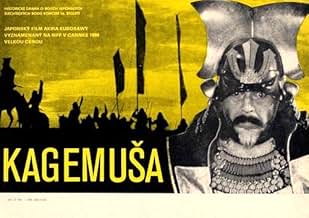
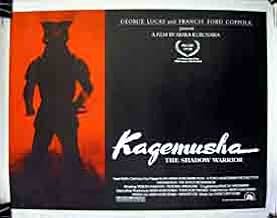
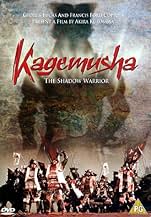
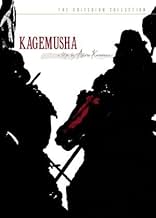
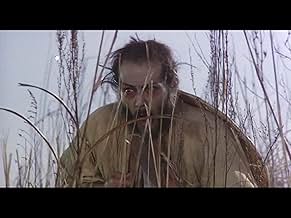
A petty thief with an utter resemblance to a samurai warlord is hired as the lord's double. When the warlord later dies the thief is forced to take up arms in his place.A petty thief with an utter resemblance to a samurai warlord is hired as the lord's double. When the warlord later dies the thief is forced to take up arms in his place.A petty thief with an utter resemblance to a samurai warlord is hired as the lord's double. When the warlord later dies the thief is forced to take up arms in his place.
- Director
- Writers
- Stars
- Nominated for 2 Oscars
- 20 wins & 5 nominations total


- Director
- Writers
- All cast & crew
- Production, box office & more at IMDbPro
7.940.4K
1
2
3
4
5
6
7
8
9
10
Featured reviews
10Hitchcoc
Another Brilliant Epic
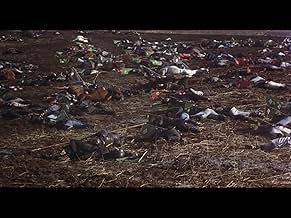
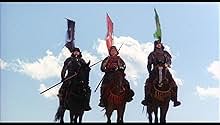
This is a great epic of war and a film of great emotion. At the center is a man who has nothing. He is thrust into a world he didn't create. He is a petty thief and really would like to just get on with his life. What he also has is great loyalty to his now deceased lord, and despite his great concern for his ability to carry it off, he agrees to the position. He has to know that at some point this will all come crashing down. The Samurai code makes it so that he has few options. He runs the war the best he can but occasionally falls victim to who he is. Even with advisers watching his every move, he becomes so much a part of the entire picture that he is left to destroy himself, and, in the process, the clan that he represents. The battle scenes are remindful of the other huge films like "Ran" and "Throne of Blood." They sweep across the screen with the flag carrying horsemen and the infantry fighting until there is nothing left but total carnage. Because of the complexity of the story and the wonderful acting, I would put this at or near the top of my Kurosawa list.
8ccwf
some knowledge of Japanese history is useful in appreciating this film
This film is set at the beginning of the Warring States era of Japanese history, which most Japanese film viewers would have studied extensively in school. Unfortunately for Western viewers, these historical aspects are therefore given little exposition, making some aspects of the film hard to follow for those without such schooling.
Here are some attempts at "liner notes" to help in understanding and appreciating the film (warning: I'm not Japanese and have not had Japanese schooling):
* Shingen Takeda is a warlord vying for power with Oda Nobunaga and his ally Ieyasu.
* Takeda had a reputation for the military prowess of their cavalry. Thus, you see lots and lots of horses featured in the film. Horses were important to the clan. Takeda's symbol is the four diamonds (the exact symbolism is explained in the film). Just as in the West, use of such heraldic symbols in war banners and clothing was very useful in figuring out who is who. So, keep in mind that when you see the four diamonds, whatever their color, those are Takeda forces.
* Nobunaga was known for his adoption of many Western ways. This is why he wears European-influenced clothing and doesn't have the standard samurai haircut (basically, shaved head, topknot). Nobunaga was also known for his use of rifles in battles. So, one of the themes of the film is the struggle of tradition against the influence of the West (in the film, mostly shown through the use of guns although their is also a brief shot of some clerics). Nobunaga's symbol is the five-sectioned flower. Nobunaga is also known for his love of Noh dramas, a dramatic form incorporating difficult-to-understand archaic language and restrained, careful action, somewhat like the film "Kagemusha" itself. Nobunaga launches into a bit of Noh at one point in the film.
* At this early time, Ieyasu was mostly known for his political survival skills. Ieyasu is probably best known to American viewers as the basis for James Clavell's Toranaga character in "Shogun". (Nobunaga is also in "Shogun" albeit as a minor character and under a different name.) The events in this film take place roughly two decades prior to those in "Shogun".
* Takeda's generals each also have their own symbols to help you track them. One of Ieyasu's generals also has a "symbol" (actually, the character "hon", which IMDb will not display).
* Haircuts are a sign of rank. This is why all the lords (except Nobunaga) have a certain haircut, all the pages have the same hairstyle, and so forth. The haircut~rank connection figures even more strongly and explicitly in Kurosawa's "Throne of Blood".
* Japanese men during this period often changed their names as their status changed. For example, in "Toshie to Matsu", Toshie, who is one of Nobunaga's (and, later, Hideyoshi's and Ieyasu's) generals/lords is granted the honor of changing his name to one which incorporates part of his lord's name into his own. Keep this in mind as Takeda's son discusses the use of his father's name and symbol.
* Miltary success and bravery in battle were key means of advancement. Thus, military leaders of this time are often depicted as ever-volunteering to do brave (even stupidly brave) things in hopes of gaining greater status. In "Kagemusha", Takeda's son is desperate for such advancement.
Here are some attempts at "liner notes" to help in understanding and appreciating the film (warning: I'm not Japanese and have not had Japanese schooling):
* Shingen Takeda is a warlord vying for power with Oda Nobunaga and his ally Ieyasu.
* Takeda had a reputation for the military prowess of their cavalry. Thus, you see lots and lots of horses featured in the film. Horses were important to the clan. Takeda's symbol is the four diamonds (the exact symbolism is explained in the film). Just as in the West, use of such heraldic symbols in war banners and clothing was very useful in figuring out who is who. So, keep in mind that when you see the four diamonds, whatever their color, those are Takeda forces.
* Nobunaga was known for his adoption of many Western ways. This is why he wears European-influenced clothing and doesn't have the standard samurai haircut (basically, shaved head, topknot). Nobunaga was also known for his use of rifles in battles. So, one of the themes of the film is the struggle of tradition against the influence of the West (in the film, mostly shown through the use of guns although their is also a brief shot of some clerics). Nobunaga's symbol is the five-sectioned flower. Nobunaga is also known for his love of Noh dramas, a dramatic form incorporating difficult-to-understand archaic language and restrained, careful action, somewhat like the film "Kagemusha" itself. Nobunaga launches into a bit of Noh at one point in the film.
* At this early time, Ieyasu was mostly known for his political survival skills. Ieyasu is probably best known to American viewers as the basis for James Clavell's Toranaga character in "Shogun". (Nobunaga is also in "Shogun" albeit as a minor character and under a different name.) The events in this film take place roughly two decades prior to those in "Shogun".
* Takeda's generals each also have their own symbols to help you track them. One of Ieyasu's generals also has a "symbol" (actually, the character "hon", which IMDb will not display).
* Haircuts are a sign of rank. This is why all the lords (except Nobunaga) have a certain haircut, all the pages have the same hairstyle, and so forth. The haircut~rank connection figures even more strongly and explicitly in Kurosawa's "Throne of Blood".
* Japanese men during this period often changed their names as their status changed. For example, in "Toshie to Matsu", Toshie, who is one of Nobunaga's (and, later, Hideyoshi's and Ieyasu's) generals/lords is granted the honor of changing his name to one which incorporates part of his lord's name into his own. Keep this in mind as Takeda's son discusses the use of his father's name and symbol.
* Miltary success and bravery in battle were key means of advancement. Thus, military leaders of this time are often depicted as ever-volunteering to do brave (even stupidly brave) things in hopes of gaining greater status. In "Kagemusha", Takeda's son is desperate for such advancement.
One of the best serious samurai-movies
This film is one of Kurosawa's masterpieces and gives an profound insight in the pre-Tokugawa period of Japan. Especially remarkable is the very elaborated atmosphere of this film to which contribute the pure and simple dialogues and the use of very well-made sceneries. Kurosawa's favorite actor Tatsuya Nakadai is here at his best. Although the atmosphere is very elaborated and almost perfectly historic; tension of the viewer is heightened by the simplicity of the scenes. Kurosawa leaves certain parts to the viewer's imagination rather than showing it. The movie is highly philosophical as well as emotionally touching and presents the soul of the way of samurai and Japan's old samurai system much better and more serious than countless cheap- and bad-made martial arts movies about samurai. This is a warning to all who expect fast martial arts action and blood covered katana. This film is a Kurosawa-style mixture between opulent costume- drama, a philosophic and tragic story and the sensitivity only Kurosawa has displaying Japan's traditional way-of-life.
incredibly BIG and beautiful but also very sterile
I have seen nearly all of Akira Kurosawa's films, so my opinion shouldn't be completely ignored. Although I am in the distinct minority, I didn't particularly like KAGEMUSHA. Yes, it was big and beautiful and had great scope but it was also emotionally sterile and bore little resemblance to Kurosawa's earlier, more famous works. The same, by the way, can be said about RAN. Both films had relatively HUGE budgets but the dialog and connectedness between the characters was lacking. As a result, I felt pretty bored when I watched both of them--especially this film.
So, if you compare these two movies with THE 7 SAMURAI or YOJIMBO, for example, they seem VERY different. These older films, though not filmed in color, had a greater sense of humanity about them--great importance was placed on the INTERRELATIONSHIPS between the characters AND the camera work was very different, with more closeups and a more intimate feel. So, while RAN and KAGEMUSHA were pretty to look at, I felt much more detached from them and cared much less about the characters. I really think the problem with these two movies, and the reason I like them less than the average Kurosawa film, was that the big budget in these later films actually HURT them, as too much emphasis was placed on effects and dialog was purely secondary.
So, in summary, I am the odd-ball that didn't love this film. You will probably disagree and might be tempted to mark my review as "not helpful", as the reviews on IMDb are generally glowing. But having seen many Japanese films, I can't help but feel there are better films out there waiting to be seen. Most any other Kurosawa film, and films by other great directors (such as THE SAMURAI TRILOGY, the films of Yasujiro Ozu) are more appealing to me. I think the popularity of this film is in part due to its having been seen in theaters by more Westerners than any other of Kurosawa's films--SEEK OUT HIS EARLIER AND MID-CAREER FILMS--they are better and far more emotionally involving.
So, if you compare these two movies with THE 7 SAMURAI or YOJIMBO, for example, they seem VERY different. These older films, though not filmed in color, had a greater sense of humanity about them--great importance was placed on the INTERRELATIONSHIPS between the characters AND the camera work was very different, with more closeups and a more intimate feel. So, while RAN and KAGEMUSHA were pretty to look at, I felt much more detached from them and cared much less about the characters. I really think the problem with these two movies, and the reason I like them less than the average Kurosawa film, was that the big budget in these later films actually HURT them, as too much emphasis was placed on effects and dialog was purely secondary.
So, in summary, I am the odd-ball that didn't love this film. You will probably disagree and might be tempted to mark my review as "not helpful", as the reviews on IMDb are generally glowing. But having seen many Japanese films, I can't help but feel there are better films out there waiting to be seen. Most any other Kurosawa film, and films by other great directors (such as THE SAMURAI TRILOGY, the films of Yasujiro Ozu) are more appealing to me. I think the popularity of this film is in part due to its having been seen in theaters by more Westerners than any other of Kurosawa's films--SEEK OUT HIS EARLIER AND MID-CAREER FILMS--they are better and far more emotionally involving.
10george-b
A Great Mature Kurosawa Film
I am a fan of Kurosawa and have seen many of his films many times. There is a sweep and an ache to Kagemusha that is genuine and has remained in my heart's memory. Unlike Ran, it is not Shakespearean. Unlike Seven Samurai, my favorite all-time film and I believe the best film ever made, it is not a western.
Although epic, it is about a sweet and rueful soul swallowed by karma and history. It is redemptive without overt sentiment, and the lead performance by Tatsuya Nakadai is nuanced and unforgettable.
I will always remember this film, not for its complexity or savagery, but for the simplest moments between Lord and subject, between the highest self and the lowest self, and most particularly, the very real pain of a man caught in the vise of his own life and death.
Although epic, it is about a sweet and rueful soul swallowed by karma and history. It is redemptive without overt sentiment, and the lead performance by Tatsuya Nakadai is nuanced and unforgettable.
I will always remember this film, not for its complexity or savagery, but for the simplest moments between Lord and subject, between the highest self and the lowest self, and most particularly, the very real pain of a man caught in the vise of his own life and death.


Did you know
- TriviaMuch of the film recounts actual historical events, including Shingen's death and the two-year secret, and the climactic Battle of Nagashino in 1575. Those scenes are also modeled closely on detailed accounts of the battle.
- GoofsIn the final battle there are at least 100 riflemen shown firing their matchlock rifles in volleys. The smoke generated by the matchlocks almost immediately dissipates. This indicates a more modern gunpowder was used in the matchlocks as the historically correct black powder load would blanket the battlefield with thick smoke after a handful of volleys.
- Quotes
Nobukado Takeda: The shadow of a man can never stand up and walk on its own.
- Alternate versionsIn the original Japanese version, there are 20 minutes featuring Kenshin Uesugi. For some reason, these scenes were cut out of the USA version.
- ConnectionsFeatured in A.K. (1985)
Details
- Release date
- Countries of origin
- Language
- Also known as
- Kagemusha, sjena jena ratnika
- Filming locations
- Himeji Castle, Himeji, Japan(Nobunaga's castle)
- Production companies
- See more company credits at IMDbPro
Box office
- Budget
- $6,000,000 (estimated)
- Gross US & Canada
- $4,000,000
- Gross worldwide
- $4,018,532
- Runtime
- 2h 42m(162 min)
- Color
- Sound mix
- 4-Track Stereo(original version)
- Aspect ratio
- 1.85 : 1
Contribute to this page
Suggest an edit or add missing content