IMDb RATING
6.6/10
1.7K
YOUR RATING


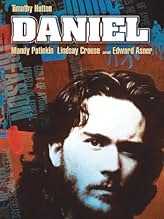
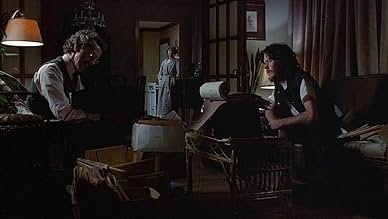
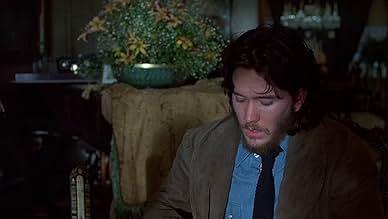
Daniel Isaacson attempts to determine the true complicity of his parents Paul and Rochelle Isaacson, who were executed for espionage in the 1950s.Daniel Isaacson attempts to determine the true complicity of his parents Paul and Rochelle Isaacson, who were executed for espionage in the 1950s.Daniel Isaacson attempts to determine the true complicity of his parents Paul and Rochelle Isaacson, who were executed for espionage in the 1950s.
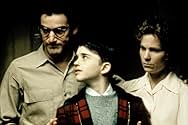


Ilan Mitchell-Smith
- Young Daniel
- (as Ilan M. Mitchell-Smith)
- Director
- Writer
- All cast & crew
- Production, box office & more at IMDbPro
6.61.7K
1
2
3
4
5
6
7
8
9
10
Featured reviews
a thought provoking movie
This movie,impressively directed and played by both the main and supporting actors,poses to us a question:do parents have the right to sacrifice the future of their children on the altar of their ideology? That their ideology and practice,Communism and its world wide tentacles,was seriously flawed and misguided,is more clear today than it was at the time the movie was made, before the collapse of the Soviet Union and its underpinning ideology. The plot centers over the attempts of convicted spies(for the Soviet Union)son to uncover a truth he believes exists,only to find a different reality,very perplexing. The message one may take from the plot is that evaluating one's parent from the perspective of an adult is both difficult and painful,truly entering a lions den.
10devinyl
One of the best movies I've ever seen
Excellent, fictionalized account of the Rosenberg story. Looked at from all perspectives from the early 1950's to the late 60's. We come away not caring if they did it or not! Lindsay Crouse stands out in her role as Rochelle. Mandy Patinkin is excellent. as always. They seem to steal the show from Hutton. The Paul Robeson (Monitor label) recordings also add to the picture's stunning realism. This is certainly one of the better movies of the early 1980's. The E.L. Doctorow screenplay is better than the novel, "The Book of Daniel" which I thought was rather strange. If I hadn't seen the movie first, I would have been lost just reading the book.
Performances Solid, But Didn't Move Me
Daniel (Timothy Hutton) is the son of two radical parents. I don't mean radical like it was used in the 80's, but radical as it was used in the 60's and earlier. They were heavily active in the Communist Party as it was represented in America. Their involvement and even their lives came to an end when they were accused of selling atomic secrets to the Russians.
You can imagine the effects on a child when his/her parents are executed. And in this case Daniel had a sister, so two children were negatively affected. The movie bounces back and forth between the late 30's/early 40's and the 60's which was pre and post Daniel's parents' death. Susan (Amanda Plummer), Daniel's sister, has taken her parents' death a lot harder than Daniel. She's convinced that the government executed them unjustly whereas Daniel needs more proof.
"Daniel" is politically charged with the politics of 1940's America. The acting performances were good even if the script was a bit lacking. I like Sidney Lumet as a director which is why I even watched. It's a dense topic, but nothing Lumet can't handle. I think the movie's biggest failure was to move me. There was a little bit of mystery and a lot of drama, but none of that truly drew me in.
You can imagine the effects on a child when his/her parents are executed. And in this case Daniel had a sister, so two children were negatively affected. The movie bounces back and forth between the late 30's/early 40's and the 60's which was pre and post Daniel's parents' death. Susan (Amanda Plummer), Daniel's sister, has taken her parents' death a lot harder than Daniel. She's convinced that the government executed them unjustly whereas Daniel needs more proof.
"Daniel" is politically charged with the politics of 1940's America. The acting performances were good even if the script was a bit lacking. I like Sidney Lumet as a director which is why I even watched. It's a dense topic, but nothing Lumet can't handle. I think the movie's biggest failure was to move me. There was a little bit of mystery and a lot of drama, but none of that truly drew me in.
Deserves a lot more attention.
Daniel is one of Sidney Lumet's favourites of his own films. He cites it even before Dog Day Afternoon, Network and 12 Angry Men. I guess when a film isn't as assimilated into pop culture as they are you can keep it closer to your heart. It's a shame, the film deserves so much more attention. This is no half hearted venture. It's emotionally charged and meticulous in all its details. From the textured cinematography (great use of colour changes for past and present), slick editing and rousing performances, you can feel the heat of the passion poured into it. And it hits some real movie magic moments, especially with Mandy Patinkin. Perhaps the problem is that it lacks a real hook to real you in. Its purpose is clear, the activism is justified, but it feels quite specific to its two time periods and struggles to resonate the same way now. It's a film that really needed to strike its chord when it was released. But that doesn't hold it back from being a deeply poignant experience, the highlight being Timothy Hutton's powerful performance as the titular protagonist.
8/10
8/10
An underestimated masterpiece (**** out of ****)
DANIEL
"Some day I shall understand"
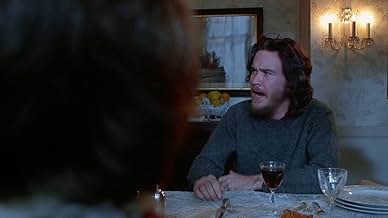
Some words abouts the complex story. Paul and Rochelle Isaacson (Mandy Patinkin, Lindsay Crouse) were executed in the early 1950s for alleged espionage. Their children Daniel and Susan can't get over this. In the late 1960s, after an attempted suicide of his politically active sister Susan (Amanda Plummer), the rather unpolitical Daniel (Timothy Hutton) tries to find out what exactly happened in the past, tries to understand his parents' lives, tries to help his sister and to get along with his own life...
Sidney Lumet's film "Daniel" (1983) and E.L. Doctorow's novel "The Book of Daniel", which it is based upon, are inspired by the controversial Rosenberg case.
The film shows how children can be affected by the lives of their parents. And it is about the search of one's place in life. Lumet treated these themes again later in his fascinating "Running on Empty" (1988), starring River Phoenix, Christine Lahti and Judd Hirsch. Another theme of "Daniel" is the wish of human beings to understand their parents. Lumet described the movie in a Village Voice interview in the following way: "To me, "Daniel" is the story of a boy who buries himself with his parents, and spends the rest of his life trying to climb out of the grave." The film uses a complex flashback structure to tell its story. "Daniel" illuminates from Daniel Isaacson's view the history of the American left from the 1930s to the late 1960s, including the different left movements. In its criticism of death penalty and McCarthyism, "Daniel" is also a political statement.
Sidney Lumet is one of the great directors of the American cinema. Lumet himself is politically left-leaning, and "Daniel" is probably one of his most personal works. It was about seven years before he got the chance to realize this project. Many people worked on the film for the minimum salary set by the union. Timothy Hutton turned down a million-dollar offer on a film and played Daniel instead for about 25000 dollars.
And Lumet is right when he writes in his informative book "Making Movies": "Despite its critical and financial failure, I think it's one of the best pictures I've ever done." The film proves again Lumet's ability to tell complex, emotionally absorbing, unsentimental stories. Everything works in this uncompromising picture. A few of Lumet's films were marred by their scripts ("The Appointment", "Power", "Family Business", "A Stranger Among Us"). But Doctorow's screenplay for "Daniel" is excellent and extraordinarily multi-layered. Lumet's direction is sensitive and fascinating. Timothy Hutton (who later starred with Nick Nolte and Armand Assante in "Q & A"), Edward Asner (who plays the Isaacson's attorney), Lindsay Crouse (who also appeared in "Prince of the City" and "The Verdict"), Mandy Patinkin, Amanda Plummer and Ilan M. Mitchell-Smith (in the role of the young Daniel in the early 1950s) stand out in a fine cast. The impressive cinematography, which supports the flashback structure by a careful use of color filters, is by Andrzej Bartkowiak, who has worked on 11 Lumet pictures up to now. The rich soundtrack, mainly consisting of songs interpreted by Paul Robeson, perfectly fits and illustrates the film's themes. The editing is excellent as well (a good example is the brilliantly filmed end sequence).
There are many great moments in this film. For instance, there is a powerful rally scene in which you can feel that the Isaacson's children are afraid of the world around them. Another moving scene is a sequence in which young Daniel and young Susan (played by Ilan M. Mitchell-Smith and Jena Greco) walk through New York in search of their home. This scene, also showing Lumet's typically great use of the city of New York, reminded me of Michelangelo Antonioni.
I'm an admirer of Sidney Lumet's cinema. "Daniel" is one of his most underestimated motion pictures, really a must-see. Of course, don't expect standard Hollywood entertainment, but a serious work.
"Some day I shall understand"
Some words abouts the complex story. Paul and Rochelle Isaacson (Mandy Patinkin, Lindsay Crouse) were executed in the early 1950s for alleged espionage. Their children Daniel and Susan can't get over this. In the late 1960s, after an attempted suicide of his politically active sister Susan (Amanda Plummer), the rather unpolitical Daniel (Timothy Hutton) tries to find out what exactly happened in the past, tries to understand his parents' lives, tries to help his sister and to get along with his own life...
Sidney Lumet's film "Daniel" (1983) and E.L. Doctorow's novel "The Book of Daniel", which it is based upon, are inspired by the controversial Rosenberg case.
The film shows how children can be affected by the lives of their parents. And it is about the search of one's place in life. Lumet treated these themes again later in his fascinating "Running on Empty" (1988), starring River Phoenix, Christine Lahti and Judd Hirsch. Another theme of "Daniel" is the wish of human beings to understand their parents. Lumet described the movie in a Village Voice interview in the following way: "To me, "Daniel" is the story of a boy who buries himself with his parents, and spends the rest of his life trying to climb out of the grave." The film uses a complex flashback structure to tell its story. "Daniel" illuminates from Daniel Isaacson's view the history of the American left from the 1930s to the late 1960s, including the different left movements. In its criticism of death penalty and McCarthyism, "Daniel" is also a political statement.
Sidney Lumet is one of the great directors of the American cinema. Lumet himself is politically left-leaning, and "Daniel" is probably one of his most personal works. It was about seven years before he got the chance to realize this project. Many people worked on the film for the minimum salary set by the union. Timothy Hutton turned down a million-dollar offer on a film and played Daniel instead for about 25000 dollars.
And Lumet is right when he writes in his informative book "Making Movies": "Despite its critical and financial failure, I think it's one of the best pictures I've ever done." The film proves again Lumet's ability to tell complex, emotionally absorbing, unsentimental stories. Everything works in this uncompromising picture. A few of Lumet's films were marred by their scripts ("The Appointment", "Power", "Family Business", "A Stranger Among Us"). But Doctorow's screenplay for "Daniel" is excellent and extraordinarily multi-layered. Lumet's direction is sensitive and fascinating. Timothy Hutton (who later starred with Nick Nolte and Armand Assante in "Q & A"), Edward Asner (who plays the Isaacson's attorney), Lindsay Crouse (who also appeared in "Prince of the City" and "The Verdict"), Mandy Patinkin, Amanda Plummer and Ilan M. Mitchell-Smith (in the role of the young Daniel in the early 1950s) stand out in a fine cast. The impressive cinematography, which supports the flashback structure by a careful use of color filters, is by Andrzej Bartkowiak, who has worked on 11 Lumet pictures up to now. The rich soundtrack, mainly consisting of songs interpreted by Paul Robeson, perfectly fits and illustrates the film's themes. The editing is excellent as well (a good example is the brilliantly filmed end sequence).
There are many great moments in this film. For instance, there is a powerful rally scene in which you can feel that the Isaacson's children are afraid of the world around them. Another moving scene is a sequence in which young Daniel and young Susan (played by Ilan M. Mitchell-Smith and Jena Greco) walk through New York in search of their home. This scene, also showing Lumet's typically great use of the city of New York, reminded me of Michelangelo Antonioni.
I'm an admirer of Sidney Lumet's cinema. "Daniel" is one of his most underestimated motion pictures, really a must-see. Of course, don't expect standard Hollywood entertainment, but a serious work.


Did you know
- TriviaReportedly, actor Timothy Hutton wanted his part so much he had his agent constantly telephone director Sidney Lumet to organize an interview. Later, Hutton flew to New York at his own cost, met with Lumet, and within twenty minutes had secured the role.
- Quotes
Paul Isaacson: If they didn't arrest people, they'd have nothing to do.
- Alternate versionsNBC edited 33 minutes from this film for its 1987 network television premiere.
- ConnectionsFeatured in By Sidney Lumet (2015)
- How long is Daniel?Powered by Alexa
Details
- Release date
- Countries of origin
- Languages
- Also known as
- Дэниел
- Filming locations
- Production companies
- See more company credits at IMDbPro
Box office
- Gross US & Canada
- $687,475
- Gross worldwide
- $687,475
Contribute to this page
Suggest an edit or add missing content