IMDb RATING
6.7/10
1.4K
YOUR RATING
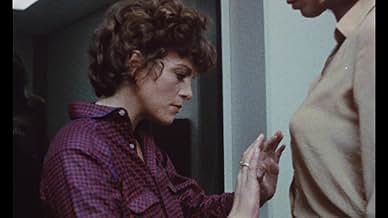
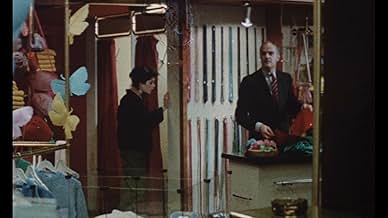
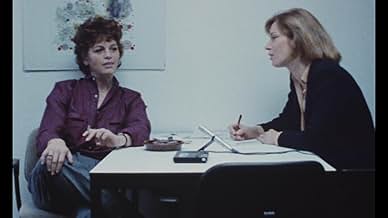
Three women of no previous acquaintance suddenly kill a male shopkeeper in the middle of the day. The female psychiatrist assigned to the case sets out to understand why.Three women of no previous acquaintance suddenly kill a male shopkeeper in the middle of the day. The female psychiatrist assigned to the case sets out to understand why.Three women of no previous acquaintance suddenly kill a male shopkeeper in the middle of the day. The female psychiatrist assigned to the case sets out to understand why.
- Awards
- 3 wins & 2 nominations total
Eddie Brugman
- Echtgenoot
- (as Eddy Brugman)
- Director
- Writer
- All cast & crew
- Production, box office & more at IMDbPro
6.71.3K
1
2
3
4
5
6
7
8
9
10
Featured reviews
A question of intent...
After watching this film, I was forced to come search for what others had taken from it. I was shocked and jarred, however, at the heteroglossia present. SM-4 from Alabama wrote that, "Everyone assumes they must be insane, because to admit otherwise is to admit that the world is a very bad place for women, indeed." While it may be possible to interpret the film in this way and it may even be the intended interpretation, it strikes me as disingenuous. Though the court and justice system's appearing inability to imagine these women as competent is a form of sexism, it does not point to a "world (that) is a very bad place for women." Indeed, three white men not too long ago in America might have met in a store with a black man and beat him to death. According to SM-4's logic, the world would be a very bad place for white men also.
Just because one racial group, religious group, or gender strikes out at those whom they feel oppressed, threatened, or harmed by, that does not prove that those feeling of oppression, injury, or injustice are valid. In some cases, mitigating evidence may exist. In A Question of Silence, however, I found none.
thought provoking film
I just watched this film for a law class and wanted to briefly defend it, in light of the previously posted comment by another user.
I think the comparison of feminist reaction to male dominance in this movie, with anti-Semitism of the Nazi era, is inappropriate and not logically founded. Anti-Semitism and Jewish persecution in Nazi Germany was an example of social/religious bigotry, intolerance, and violence perpetrated by the political majority against a political and religious minority. It was based on a history of escalating persecution spanning centuries. By contrast, this movie concerns the emergent hostile sentiments of a social/political minority group, to their perceived oppression by the social/political majority.
The movie dates from the 1980's and perhaps both suffers and benefits from this fact -- it looks somewhat dated, but the social climate of that era is important to understanding the movie. Europe of the 1970s and 1980s, much like the US, was still very resistant to even the idea that sexism really existed or was a problem. The courts were actively fleshing out the parameters of sexual rights and protections -- legally carving out the nuances of sexual harassment, sex discrimination, and reproductive choice law.
The film is basically an extended commentary, arguably controversial, on the repression of women in a male dominated society. In this regard, the message is possibly too strongly stated -- three women, having finally had enough of silently accepting sexism and male domination, suddenly snap and brutally murder a male sales clerk in cold blood. They feel no remorse, and no men in the movie can even begin to comprehend the very idea of sexism or its effect on women. However, to compare the feminist sentiments of the film to Nazi-ism, is not only unfair, but is an offensive and reactionary over-statement of disagreement with these same feminist sentiments.
I think the comparison of feminist reaction to male dominance in this movie, with anti-Semitism of the Nazi era, is inappropriate and not logically founded. Anti-Semitism and Jewish persecution in Nazi Germany was an example of social/religious bigotry, intolerance, and violence perpetrated by the political majority against a political and religious minority. It was based on a history of escalating persecution spanning centuries. By contrast, this movie concerns the emergent hostile sentiments of a social/political minority group, to their perceived oppression by the social/political majority.
The movie dates from the 1980's and perhaps both suffers and benefits from this fact -- it looks somewhat dated, but the social climate of that era is important to understanding the movie. Europe of the 1970s and 1980s, much like the US, was still very resistant to even the idea that sexism really existed or was a problem. The courts were actively fleshing out the parameters of sexual rights and protections -- legally carving out the nuances of sexual harassment, sex discrimination, and reproductive choice law.
The film is basically an extended commentary, arguably controversial, on the repression of women in a male dominated society. In this regard, the message is possibly too strongly stated -- three women, having finally had enough of silently accepting sexism and male domination, suddenly snap and brutally murder a male sales clerk in cold blood. They feel no remorse, and no men in the movie can even begin to comprehend the very idea of sexism or its effect on women. However, to compare the feminist sentiments of the film to Nazi-ism, is not only unfair, but is an offensive and reactionary over-statement of disagreement with these same feminist sentiments.

9SM-4
Categories do not suffice
A Question of Silence is a moving film about three women who commit a horrible, violent crime and about the establishment's attempts to understand their motive. Without forethought and without knowing one another, they attack and kill a boutique owner in cold blood. The film follows the psychiatrist (played by Cox Habbema) as she interviews the incarcerated women. The major conflict comes from the women's refusal to state their motive, whence the title. Everyone assumes they must be insane, because to admit otherwise (and this is the conclusion to which the psychiatrist finally comes) is to admit that the world is a very bad place for women, indeed.
The film is hard to watch, especially, I would imagine, for men. But it by no means glorifies the murder or the murderers. Nor do the murderers find "overwhelming public support" at their trial. What they find is willful incomprehension on the part of the men who arrest them, try them and testify against them. Because what they have done cannot be understood in the context of any existing cultural system, including language, the women can only laugh as their sentence is pronounced. Their laughter is frightening, irrational and yet somehow gives shape to a different kind of logic.
This is a film about power, domination and oppression.
To call this movie hate literature is one thing, but the analogy used referencing Jews and Nazis is completely not applicable here. This is a film about power, domination, and oppression, all three of which men exercise over women in our society. One would have to live in a bubble to say that Jews hold the same position over non-Jews or Nazis (or did pre-WWII)! As a Jew, I find your comment mildly offensive, and as a man (while it is always difficult to recognize one's privilege), I find this film to be an amazing critique of patriarchy. While murder may not be the solution, this film shows the extraordinary way in which 3 women who have been beaten down their whole lives (and have nothing to lose) attempt to fight back against an enemy that is unbeatable. The laughter at the end of this film proves just who gets it and who doesn't. PS- I've heard that in some places during the initial screenings of this film, women in the theaters actually broke out in laughter with the women on screen during the court scene....
A darn-near masterpiece
I'm not even sure if a DVD is available in North America, and if it isn't it would be a tremendous shame. "A Question of Silence" is a tough, rigorous, unsentimental and unblinking examination of justice and is, as another comment observed, a far less mainstream and safe film than Goriss's "Antonia's Line."
For anyone who has even a passing interest in dark, uncompromising work, go out of your way to find this film. It's a little wonky technically and there are perhaps 5 minutes or so of didactic twaddle one wishes the director has discarded in the cutting room- but none of this diminishes from the towering overall achievement.
For anyone whose taste runs to the safe and predictable and who doesn't like being provoked by the films they watch, avoid this one. It's not for you.
For anyone who has even a passing interest in dark, uncompromising work, go out of your way to find this film. It's a little wonky technically and there are perhaps 5 minutes or so of didactic twaddle one wishes the director has discarded in the cutting room- but none of this diminishes from the towering overall achievement.
For anyone whose taste runs to the safe and predictable and who doesn't like being provoked by the films they watch, avoid this one. It's not for you.
Did you know
- TriviaIncluded among the "1001 Movies You Must See Before You Die", edited by Steven Schneider.
- How long is A Question of Silence?Powered by Alexa
Details
- Release date
- Country of origin
- Languages
- Also known as
- Die Stille um Christine M.
- Production company
- See more company credits at IMDbPro
Box office
- Budget
- NLG 300,000 (estimated)
Contribute to this page
Suggest an edit or add missing content