IMDb RATING
7.1/10
7.7K
YOUR RATING


An erratic young woman's family desperately tries to prevent her increasingly erotic ways.An erratic young woman's family desperately tries to prevent her increasingly erotic ways.An erratic young woman's family desperately tries to prevent her increasingly erotic ways.
- Director
- Writers
- Stars
- Awards
- 4 wins & 3 nominations total






- Director
- Writers
- All cast & crew
- Production, box office & more at IMDbPro
7.17.6K
1
2
3
4
5
6
7
8
9
10
Featured reviews
This character study about a troubled, confused teenager follows her life into adulthood where she continues to have trouble with her relationships, as well as with her own identity.
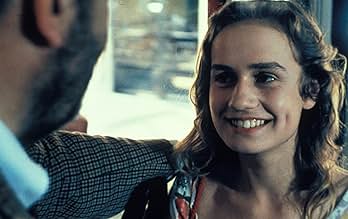
"The only time I'm happy is when I'm with a guy," says Suzanne, (Sandrine Bonnaire) a promiscuous and directionless teenager. Suzanne's parents are splitting up; her brother beats her as a disciplinary gesture in her father's absence; and her mother has control over nothing. Suzanne hangs out with her friends; sleeps with anyone she is attracted to (except the boy that loves her); and returns home for knock down, drag out fights with her older brother and mother. The last 30 minutes of the film skips quickly into Suzanne's life after marriage and jumps yet again to her life after divorce. The only person Suzanne loves is her father; perhaps because he is the only person who understands and unconditionally loves her. Fine direction from Maurice Pialat who also plays Suzanne's father. Excellent acting from most of the cast saves a somewhat meandering and overwrought script.
10bob998
Greatest French film of last thirty years
Let me get it off my chest now: I'm very disappointed in the lack of notice given Pialat's films. Why am I only the fifth person to review À nos amours, and not the 500th? This is the sixth feature by Pialat, and it is a masterpiece. The travails of Suzanne and her family have universal implications; if you think only of her relations with her brother Robert--violent at times, yet often tender and half-incestuous--that's enough material for a film in itself. Some people are bothered by the promiscuous nature of Suzanne's love life, how she just doesn't behave like a regular teenage girl should. I have met a girl like her.
About two-thirds of the way through, we are confronted with a scene of astonishing virtuosity: the party at the family home, into which erupts the absent father, played by Pialat himself. The script the actors had been given gave no notice of this plot turn; it is fascinating to watch eight actors dealing with this incredible event--no one blows the scene, no matter how dumbfounded they must have been. For about ten minutes, we get pure acting, or reacting, however you want to put it. This is the kind of film event that makes movies worthwhile.
Bonnaire is tremendous, it's one of the greatest debuts in film history. Pialat as the father is great, all the more remarkable in that he had never acted before. The dimple scene is wonderful. Dominique Besnehard has to bring off an unsympathetic role as the brother, and he performs very well.
About two-thirds of the way through, we are confronted with a scene of astonishing virtuosity: the party at the family home, into which erupts the absent father, played by Pialat himself. The script the actors had been given gave no notice of this plot turn; it is fascinating to watch eight actors dealing with this incredible event--no one blows the scene, no matter how dumbfounded they must have been. For about ten minutes, we get pure acting, or reacting, however you want to put it. This is the kind of film event that makes movies worthwhile.
Bonnaire is tremendous, it's one of the greatest debuts in film history. Pialat as the father is great, all the more remarkable in that he had never acted before. The dimple scene is wonderful. Dominique Besnehard has to bring off an unsympathetic role as the brother, and he performs very well.
How can anybody get bored watching a film like this?
Others have already said that "À nos amours" is a great film, even more have said that Sandrine Bonnaire was a knockout in her demanding rôle as Suzanne. There is a sort of timeline, a beginning and an end, but this is really a film about a personal journey through a part of Suzanne's late adolescence. Young people who have watched the film recently are sometimes very annoyed with Suzanne, but this only proves that Miss Bonnaire has made them care about her character even to the point that they perhaps want to shake her, to take her into a corner and tell her what mistakes she is making. There is also a conflict which some pretend had disappeared by the end of the "swinging sixties" - the generation gap between the sexual mores of parents and adolescents, which was of course still real in the early eighties and remains so in many cultures. Unpredictable behaviour (by Suzanne's brother, for example) is also a real part of family life for many young people. Every time I watch the film (and I have seen it very often, as I used it in my French classes more than once) I notice details which had escaped me or which I had forgotten. Pialat made other great films, but "À nos amours" remains my favourite. If possible watch it in French, with subtitles if necessary - but see it before you die!
Domestic Violence!
I saw this film when it came out in the 80s (probably in the fondly-remembered Chelsea Cinema on the Kings Road...) and remember quite enjoying it - but little else as to why. Thus, when it popped up on MUBI I thought I'd give it a revisit...
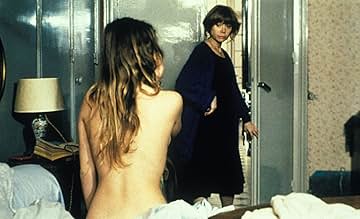
Again, I quite enjoyed it, but the most shocking element this time was the amount of physical fighting among the family - Suzanne, her brother, her mother - after the sudden departure of the father. Clearly the mother was struggling to cope but the brother's violence just came across as unnecessarily over-the-top - presumably he doesn't know any other way to try and assert his "authority"?
Meanwhile, Suzanne gets on with her romantic adventures with a roster of partners in a fairly engaging way.
Worth a look.
Again, I quite enjoyed it, but the most shocking element this time was the amount of physical fighting among the family - Suzanne, her brother, her mother - after the sudden departure of the father. Clearly the mother was struggling to cope but the brother's violence just came across as unnecessarily over-the-top - presumably he doesn't know any other way to try and assert his "authority"?
Meanwhile, Suzanne gets on with her romantic adventures with a roster of partners in a fairly engaging way.
Worth a look.
Life's not much fun when you don't love anyone.
France dubbed this the best film of 1983, and named the love Sandrine Bonnaire, in her first credited role, as it's most promising actress for that year. It is easy to see why as she was a joy to watch as she flitted from bed to bed trying to find happiness. I am sure there are many who will shirk at the thought of admiring the 15-year-old's body.
Those not in the loop on French films will not appreciate the style and grace of her life as she deals with a family that fights all the time, and can only find an outlet for emotions in the arms of willing lovers. But, she avoids the one who loves her Luc (Cyr Boitard), treating him like dirt when he says he loves her.
Excellent film with great performances by Maurice Pialat as the father and Evelyne Ker as the mother, as well as a knockout job by Bonnaire.
Those not in the loop on French films will not appreciate the style and grace of her life as she deals with a family that fights all the time, and can only find an outlet for emotions in the arms of willing lovers. But, she avoids the one who loves her Luc (Cyr Boitard), treating him like dirt when he says he loves her.
Excellent film with great performances by Maurice Pialat as the father and Evelyne Ker as the mother, as well as a knockout job by Bonnaire.


Did you know
- TriviaIn the original script, the father was due to die and was not scheduled to return at the time of the dinner scene. Maurice Pialat walked into the scene and left the actors to improvise in a situation they hadn't planned for.
- GoofsIn the sequence with the American, Suzanne's outfit changes from a one-shoulder black dress with white stripes trimming just the top of the bodice, to a one-shoulder black&white striped top with a black skirt, and back again.
- ConnectionsFeatured in Sebastian (2024)
- How long is To Our Loves?Powered by Alexa
Details
- Release date
- Country of origin
- Official sites
- Languages
- Also known as
- Auf das, was wir lieben
- Filming locations
- Cité Bergère, Paris 9, Paris, France(Suzanne and Jean-Pierre looking for a hotel)
- Production companies
- See more company credits at IMDbPro
Box office
- Gross worldwide
- $2,575
Contribute to this page
Suggest an edit or add missing content