IMDb RATING
7.3/10
6.2K
YOUR RATING

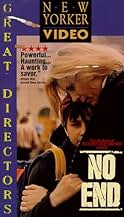
The wife of the recently deceased lawyer tries to cope with grief after his loss and to keep his last case going in court.The wife of the recently deceased lawyer tries to cope with grief after his loss and to keep his last case going in court.The wife of the recently deceased lawyer tries to cope with grief after his loss and to keep his last case going in court.
- Director
- Writers
- Stars
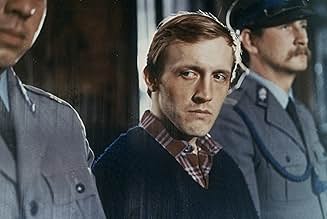

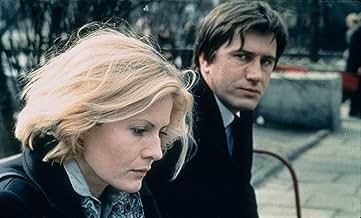



Danny Webb
- American
- (as Daniel Webb)


Jacek Domanski
- Dzialacz opozycji
- (uncredited)
- Director
- Writers
- All cast & crew
- Production, box office & more at IMDbPro
7.36.1K
1
2
3
4
5
6
7
8
9
10
Featured reviews
Another (relatively) early Kieslowski deserving of more love
What has been seen of Krzysztof Kieslowski (almost all his films and 'Dekalog' in its entirety) all ranges between very good (the 8th episode of 'Dekalog') to masterpiece ('Three Colors: Red' and 'Blue' and the whole 'Dekalog' series). To me, he was an immensely gifted director, who died far too early.
'No End' is not one of Kieslowski's best, but like 'Camera Buff' it is another early film of his that deserves more love and attention. It may be alienating and strange to some viewers (its, as reasoned, pro-solidarity sentiments must have been reason enough for it to not be released internationally for over a year) and his more international work is somewhat more accessible. However, while some of the political story could have had more clarity in places, 'No End' is great in many ways with all the typical Kieslowski strengths that make his films so good.
As was always the case in Kieslowski's work, 'No End' is made exceptionally. As well as being beautifully shot with atmospheric use of colour to match the mood, it is gritty yet beautiful with many thoughtful and emotionally powerful images and little things lingering long into the memory. Kieslowski's direction is quietly unobtrusive, intelligently paced and never too heavy. The music is suitably intricate.
It's a thought-provoking film in writing, as ever thematically rich and with complex characters, and resists the trap of rambling. The 3-part story is intriguingly told, and while the political story could have done with more clarity the emotional story is harrowing and affecting and the metaphysical story fascinating. 'No End' is always engaging and suitably challenging. The acting is as always from Kieslowski marvellously nuanced and natural, especially from heart-wrenching Grazyna Szapolowska.
Summing up, not among the best work of Kieslowski but deserves more love as a result of being overshadowed by his later stuff from 'Dekalog' onward. 9/10 Bethany Cox
'No End' is not one of Kieslowski's best, but like 'Camera Buff' it is another early film of his that deserves more love and attention. It may be alienating and strange to some viewers (its, as reasoned, pro-solidarity sentiments must have been reason enough for it to not be released internationally for over a year) and his more international work is somewhat more accessible. However, while some of the political story could have had more clarity in places, 'No End' is great in many ways with all the typical Kieslowski strengths that make his films so good.
As was always the case in Kieslowski's work, 'No End' is made exceptionally. As well as being beautifully shot with atmospheric use of colour to match the mood, it is gritty yet beautiful with many thoughtful and emotionally powerful images and little things lingering long into the memory. Kieslowski's direction is quietly unobtrusive, intelligently paced and never too heavy. The music is suitably intricate.
It's a thought-provoking film in writing, as ever thematically rich and with complex characters, and resists the trap of rambling. The 3-part story is intriguingly told, and while the political story could have done with more clarity the emotional story is harrowing and affecting and the metaphysical story fascinating. 'No End' is always engaging and suitably challenging. The acting is as always from Kieslowski marvellously nuanced and natural, especially from heart-wrenching Grazyna Szapolowska.
Summing up, not among the best work of Kieslowski but deserves more love as a result of being overshadowed by his later stuff from 'Dekalog' onward. 9/10 Bethany Cox
Mezmerising
I state for the record that I did not understand this film fully. The second plot with Solidarnost protester imprisoned and released by the court is not completely clear to me. Yet it has little to do with politics and more with human condition (ideals, expectation, compromise). Prisoner's family doesn't react happily upon his immediate release in a court room. There is awkwardness and embarrassment in that scene, as if some unforgivable compromise has been made and it tainted all of their relationship. Accident scene with a death of motorist seems random but reoccurring theme in Kieslowskij movies. Randomness of death, randomness of existence. Movie is wonderfully shot , music (as always) is haunting. I just cannot put it all together in my mind like I could with Veronique.
Bewildered epiphany
I've began to follow Kieslowski over the past days, hoping to finally encounter his color films which I've seen for years pop up among the brilliant works. I watched this as background glimpse into his formative period. Interestingly he does two things:
One is he presents a world that has come undone and carries the past. A woman, her husband has died as the film begins, life has broken down and she has to go out and face it. Everything that she encounters is an echo from the past. Two instances that involve photos exemplify it; nude photos of her that her husband had found but he's now gone before she had a chance to explain, the other shows an idyllic summer that he possibly spent with another woman (before they met?). But also an old friend who now vies for her, a night of prostituting herself because he reminds her of her husband, being hypnotized to forget him conjures his presence, and round it goes from bewilderment to epiphany.
The other thing they do here is look to frame a response to bewilderment felt by Poles who had just been through strikes and martial law. A man is awaiting trial, different narratives are offered up by lawyers. Should he be pragmatic or protest? It's one of the threads that were left undone at the time of the husband's death who was a lawyer on the case. His own advice, which I perceive to be Kieslowski's, is for everyone to remove the distortions that prevent them from seeing each other.
Viewers who are content to encounter a life of episodic confusion will be happy with what he does. I miss a more penetratingly visual way of threading these events and, already from my brief glimpses into Dekalog, I believe it's this ability to surround and submerge causality that he's going to cultivate, a way of dreaming in advance. Here, tellingly, we have the husband announcing his own death in the very first shot whereas it could have been threaded as discovery and glimpsed in a haze (he already tries this by the first episode of Dekalog).
One is he presents a world that has come undone and carries the past. A woman, her husband has died as the film begins, life has broken down and she has to go out and face it. Everything that she encounters is an echo from the past. Two instances that involve photos exemplify it; nude photos of her that her husband had found but he's now gone before she had a chance to explain, the other shows an idyllic summer that he possibly spent with another woman (before they met?). But also an old friend who now vies for her, a night of prostituting herself because he reminds her of her husband, being hypnotized to forget him conjures his presence, and round it goes from bewilderment to epiphany.
The other thing they do here is look to frame a response to bewilderment felt by Poles who had just been through strikes and martial law. A man is awaiting trial, different narratives are offered up by lawyers. Should he be pragmatic or protest? It's one of the threads that were left undone at the time of the husband's death who was a lawyer on the case. His own advice, which I perceive to be Kieslowski's, is for everyone to remove the distortions that prevent them from seeing each other.
Viewers who are content to encounter a life of episodic confusion will be happy with what he does. I miss a more penetratingly visual way of threading these events and, already from my brief glimpses into Dekalog, I believe it's this ability to surround and submerge causality that he's going to cultivate, a way of dreaming in advance. Here, tellingly, we have the husband announcing his own death in the very first shot whereas it could have been threaded as discovery and glimpsed in a haze (he already tries this by the first episode of Dekalog).
Weak script, but very good acting
The narrative in this film is far too flawed. There are two intertwining halves of it, one good, one poor. The good one involves a woman, Ulla, whose husband died suddenly and unexpectedly one morning while he waited in his car to take their son to school. Now he gently haunts his family as they deal with the pain. The acting is magnificent here. Kieslowski is masterful at directing his actors in material like this, as he would show a million different times in The Decalogue, made a few years later. There are a few outrageously and subtly powerful scenes. Most memorable is the one where Ulla decides to prostitute herself to a British tourist. This happens about a month after her husband has died. After the man has sex with her, she asks him if he speaks Polish. He says no, and then she begins to talk about her problems in Polish. The other half of the plot is utterly weak in comparison. The husband was a lawyer, and the defendant in the case he was working on is screwed because of the death. The defendant's wife comes to Ulla for help, and though she is refused help at first, Ulla eventually introduces her to her husband's mentor, a cynical old man about to be kicked out of the business. Perhaps it's just my aversion to lawyer and courtroom dramas, but I just didn't care a lick what happened in this part of the plot. Supposedly it's meant as a criticism against the Communist law at the time. I don't know. It's dull whatever it is. But the film is slightly worth watching, especially for the acting. Even in the parts that I didn't care for, the acting is exquisite. 7/10.
There's more to Kieslowski than the Colours trilogy
Written by Kieslowski and Piesiewicz, NO END stars the beautiful and beguiling Grazyna Szapolowska as the widow of a lawyer who suddenly died of a heart attack. Her late husband, Antek (Jerzy Radziwilowicz) was in the middle of defending a man arrested for his part in a strike at a factory. His widow, Ursula, suggests that the arrested man be represented by Antek's teacher, an old lawyer named Labrador (Aleksander Bardini), and becomes peripherally involved in the case as she works through her grief. Antek's ghost makes his presence felt in surprising ways.
No End has been compared to the later French movie BLEU, starring Juliette Binoche, but it's a much more sober offering, more enigmatic. One has a feeling of lives interrupted, like being stuck in an elevator, fearful that the cable could break or the doors open upon something horrible. Not that the film is scary or suspenseful, but simply that the characters, people generally, are at the mercy of forces they cannot understand, beyond their control.
Fans of the Colours Trilogy and of the Double Life of Veronique will probably enjoy this. It has all Kieslowski's magic, his special way with light and shadow.
No End has been compared to the later French movie BLEU, starring Juliette Binoche, but it's a much more sober offering, more enigmatic. One has a feeling of lives interrupted, like being stuck in an elevator, fearful that the cable could break or the doors open upon something horrible. Not that the film is scary or suspenseful, but simply that the characters, people generally, are at the mercy of forces they cannot understand, beyond their control.
Fans of the Colours Trilogy and of the Double Life of Veronique will probably enjoy this. It has all Kieslowski's magic, his special way with light and shadow.


Did you know
- TriviaThe film takes place in 1982.
- Quotes
[First lines]
Antek Zyro: [speaking directly to the camera] I died - four days ago.
- How long is No End?Powered by Alexa
Details
- Release date
- Country of origin
- Languages
- Also known as
- Ohne Ende
- Filming locations
- Bródno, Targówek, Warsaw, Mazowieckie, Poland(car accident scene)
- Production company
- See more company credits at IMDbPro
Contribute to this page
Suggest an edit or add missing content