

In Medieval Japan, an elderly warlord retires, handing over his empire to his three sons. However, he vastly underestimates how the new-found power will corrupt them and cause them to turn o... Read allIn Medieval Japan, an elderly warlord retires, handing over his empire to his three sons. However, he vastly underestimates how the new-found power will corrupt them and cause them to turn on each other...and him.In Medieval Japan, an elderly warlord retires, handing over his empire to his three sons. However, he vastly underestimates how the new-found power will corrupt them and cause them to turn on each other...and him.
- Won 1 Oscar
- 30 wins & 23 nominations total


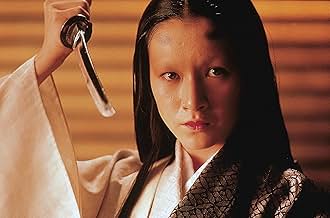






Mansai Nomura
- Tsurumaru
- (as Takeshi Nomura)


8.2149K
1
2
3
4
5
6
7
8
9
10
Summary
Reviewers say 'Ran' is celebrated for its epic scale, masterful direction, and stunning visuals. Adapted from Shakespeare's 'King Lear,' it is lauded for its intricate narrative, powerful performances by Tatsuya Nakadai and Mieko Harada, and deep exploration of power, corruption, and betrayal. The cinematography and battle scenes are noted for their grandeur. Some find its slow pace and long runtime challenging, yet it is often hailed as one of Kurosawa's finest works.
Featured reviews
The Best Film based on one of Shakespeare Best Works. This Masterpiece is recommended for anyone that loves movies . Truly one of the Greatest Films of all time!
Akira Kurosawa's 1985, Ran, is based one of Shakespeare's greatest works, King's Lear. The Film proudly stands along with his other classic such as Seven Samurai, Yojimbo, Roshomon, Sanjuro and the Hidden Fortress. He is a master in the art of filmmaking, no one can film an epic battle scene quite like Kurosawa. This is recognized as the most expensive film ever made by Akira Kurosawa, it was at that time, Japan's most expensive film ever. Being at the age of 75, he still showed us, he's one of the best in the business.
This movie is about an aging lord, head of the Ichimonji family, decides to retire and to pass the power to Taro, the eldest of his three sons. He will however have to banish Saburo, the youngest one, who dared to speak the truth to him. Soon, the former lord is chased away from the castles of his sons and becomes mad when he understands that one of his sons is trying to kill him. The three brothers are fighting for control of the Kingdom, as their lust for power grows every day. Four armies are facing each other on the prairie. Lord Ichimonji's former peaceful kingdom is nothing but a distant memory.
Akira Kurosawa redefines what an epic film is, with astonishing story telling, entirely believable characters and real life battle scenes without the use of Special effects/CGI. He retells the story of King Lear in his own way and no one would recognize that it was actually a adaptation beforehand. But just like Shakespeare, there is humor, irony, death and not a happy ending. Everyone who played a part in the production of this film, deserves some kind of recognition. The acting is pretty much excellent and certainly believable.
10/10 Kurosawa is a Genius
This movie is about an aging lord, head of the Ichimonji family, decides to retire and to pass the power to Taro, the eldest of his three sons. He will however have to banish Saburo, the youngest one, who dared to speak the truth to him. Soon, the former lord is chased away from the castles of his sons and becomes mad when he understands that one of his sons is trying to kill him. The three brothers are fighting for control of the Kingdom, as their lust for power grows every day. Four armies are facing each other on the prairie. Lord Ichimonji's former peaceful kingdom is nothing but a distant memory.
Akira Kurosawa redefines what an epic film is, with astonishing story telling, entirely believable characters and real life battle scenes without the use of Special effects/CGI. He retells the story of King Lear in his own way and no one would recognize that it was actually a adaptation beforehand. But just like Shakespeare, there is humor, irony, death and not a happy ending. Everyone who played a part in the production of this film, deserves some kind of recognition. The acting is pretty much excellent and certainly believable.
10/10 Kurosawa is a Genius
Jester and Warlord
'Ran' is the Japanese word for chaos, riot, dissension. Akira Kurosawa's masterpiece is indeed a feast of destruction and perdition, charged with symbols and powerful in pictures like it is found very rarely in today's cinema.
The dusky story is based on Shakespeare's 'King Lear'. In the film a Japanese warlord celebrates his own downfall. Kurosawa devised this with a radical film language which works with certain imageries of colors, rapid cut sequences and a sophisticated sound design. When the colorful flags of the different armies get intermixed in a battle, when the peacefully quiet wind (which carries the soundtrack) swells to a raving storm or when long wide shots suddenly segue into shots of details that follow hot on each other's heels then you realize Kurosawa's incredible style which deeply influenced the cinema worldwide.
The drawings of the characters are equally terrific. Hidetora's jester is for a certain reason always at the side of the warlord. Their relationship alters as the film continues: Jester and warlord change their roles which makes it hard to distinguish both. Just as the sky turns from blue to grey with dark clouds, the violent past of Hidetora is catching up the aging lord. His trail of murder and predation is not forgotten, the brutally conquered land still carries the old scarves of war and exploitation which now burst out again.
The viewer can take this monumental work as a warning to the destructive power of war, which is even decades later at present and beset those who seed the violence.
The dusky story is based on Shakespeare's 'King Lear'. In the film a Japanese warlord celebrates his own downfall. Kurosawa devised this with a radical film language which works with certain imageries of colors, rapid cut sequences and a sophisticated sound design. When the colorful flags of the different armies get intermixed in a battle, when the peacefully quiet wind (which carries the soundtrack) swells to a raving storm or when long wide shots suddenly segue into shots of details that follow hot on each other's heels then you realize Kurosawa's incredible style which deeply influenced the cinema worldwide.
The drawings of the characters are equally terrific. Hidetora's jester is for a certain reason always at the side of the warlord. Their relationship alters as the film continues: Jester and warlord change their roles which makes it hard to distinguish both. Just as the sky turns from blue to grey with dark clouds, the violent past of Hidetora is catching up the aging lord. His trail of murder and predation is not forgotten, the brutally conquered land still carries the old scarves of war and exploitation which now burst out again.
The viewer can take this monumental work as a warning to the destructive power of war, which is even decades later at present and beset those who seed the violence.
Very well made
One of the last great films directed by Akira Kurosawa. A father gives his land and his power to his three sons. They turn against each other and against their father.
Based on Shakespeare's King Lear 'Ran' is a very good film. It was very expensive and you can see that. Over ten years Kurosawa was busy on this project and in 1985 it was finally there. Very well made, with beautiful costumes, music and cinematography, a great direction and some good performances. Although I think Kurosawa has done better ('Rashomon', 'Ikiru', 'Yojimbo' and of course 'Shichinin no Samurai') 'Ran' definitely belongs to his best.
Based on Shakespeare's King Lear 'Ran' is a very good film. It was very expensive and you can see that. Over ten years Kurosawa was busy on this project and in 1985 it was finally there. Very well made, with beautiful costumes, music and cinematography, a great direction and some good performances. Although I think Kurosawa has done better ('Rashomon', 'Ikiru', 'Yojimbo' and of course 'Shichinin no Samurai') 'Ran' definitely belongs to his best.
A film requiring patience with huge rewards for the viewer!
The 'Kurosawa' adaptation of King Lear in his film 'Ran' is a tremendous memorable film.
It is a very dramatic film with many soliloquies and dialogue, but if you are patient with it, you are treated to some of the most epic scenes of cinematic brilliance that Kurosawa made. After all it is Shakespeare and one must be patient with it if they are not a fan of the old school theatre.
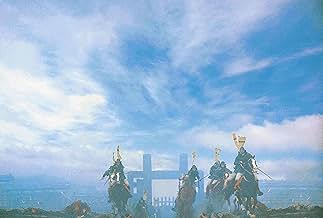
Colourfull clashing armies, The lord awaiting his fate in a burning castle, a brilliant execution scene (I consider the BEST I have ever seen film ever), and the blind being left in the hands of Buddha?
While Seven Samurai will always be his perfection, Ran is more than an enjoyable movie that should be seen. Just stick with it and you'll never forget it.
Rating 9 out of 10.
It is a very dramatic film with many soliloquies and dialogue, but if you are patient with it, you are treated to some of the most epic scenes of cinematic brilliance that Kurosawa made. After all it is Shakespeare and one must be patient with it if they are not a fan of the old school theatre.
Colourfull clashing armies, The lord awaiting his fate in a burning castle, a brilliant execution scene (I consider the BEST I have ever seen film ever), and the blind being left in the hands of Buddha?
While Seven Samurai will always be his perfection, Ran is more than an enjoyable movie that should be seen. Just stick with it and you'll never forget it.
Rating 9 out of 10.
Noh Lear This is Noh Lear This is Noh Lear
What a wonderfully varied medium film can be! Here we have a film that is both truly great and in a different way a clumsy mistake.
By now you know that this was made by a master filmmaker at the end of his life -- in preparation for ten years and Asia's most expensive film. He intended it to be his last, his masterpiece.
The Good: This work of art is a sequence of masterfully composed images. The camera remains stationary or virtually so, and each scene is richly rewarding in all the visual dimensions, including motion. The costumes are the most cinematic I have seen. There is a use of grasshopper sounds that is the best example I know of amplifying an image by sound. The frame of the picture is the landscape -- little takes place indoors, and that action always refers to some larger, exterior motion. In my experience, this is the best complement of Wells' Othello, the most masterful use of interior space I know.
I give it a ten because it is a masterpiece in this area of cinematic communication, one that seems exceptionally underaddressed.
The Bad: The Master attempted too much in trying to match his cinematic virtuosity by swallowing Shakespeare's Lear to produce an equally rich story. In this he fails -- so many problems here. First, Shakespeare wrote plays for a barren stage where the images grow from the mind, supported by super-rich language and interwoven visual metaphor. The scene grows from our understanding of the character and what that character says. Kurosawa tries it backwards here by placing characters is a vast scheme that came from his own mind, off-screen as it were, and it doesn't quite work.
As it happens, Ran's emphasis is on grand motion. Little time is spent on character development, except with the scheming wife of the first son (a story element that has little Shakespearean counterpart). Lear is a play about demons and leaves the question open as to how many are from opportunistic devilment and which are internally generated. All this is discarded here, as well as the Gloucester counterplot. Among the great losses from the source are the continuous examinations of what sight means and what it can conceive. How fertile that would have been as dramatic scaffolding for Kurosawa's vision.
There's a problem with language as well. Not knowing Japanese, I cannot judge how rich or intricate in metaphor is the film's dialogue. But the sound and dramatic utility of the speech is about as far from Shakespeare as you can get. Shakespeare uses his actors' speech to simultaneously move the dramatic action and to serve as a surrogate for the viewer's mind. Both the story and your own ruminations on the story are contained therein. This depends on a continuous, predictable assumed rythmic base which is articulated by a rich consonant based, cheating rubato. Japanese consists of staccato vowels that I suspect are overly dramatized in the short blasts we get from these characters. Could hardly be more unShakespearean. I assume there is a Noh legacy being mined here instead, which is not available to this western viewer.
A side note: after seeing these battle scenes you'll never appreciate Speilberg's blatant ripoff in the first part of Sgt Ryan.
By now you know that this was made by a master filmmaker at the end of his life -- in preparation for ten years and Asia's most expensive film. He intended it to be his last, his masterpiece.
The Good: This work of art is a sequence of masterfully composed images. The camera remains stationary or virtually so, and each scene is richly rewarding in all the visual dimensions, including motion. The costumes are the most cinematic I have seen. There is a use of grasshopper sounds that is the best example I know of amplifying an image by sound. The frame of the picture is the landscape -- little takes place indoors, and that action always refers to some larger, exterior motion. In my experience, this is the best complement of Wells' Othello, the most masterful use of interior space I know.
I give it a ten because it is a masterpiece in this area of cinematic communication, one that seems exceptionally underaddressed.
The Bad: The Master attempted too much in trying to match his cinematic virtuosity by swallowing Shakespeare's Lear to produce an equally rich story. In this he fails -- so many problems here. First, Shakespeare wrote plays for a barren stage where the images grow from the mind, supported by super-rich language and interwoven visual metaphor. The scene grows from our understanding of the character and what that character says. Kurosawa tries it backwards here by placing characters is a vast scheme that came from his own mind, off-screen as it were, and it doesn't quite work.
As it happens, Ran's emphasis is on grand motion. Little time is spent on character development, except with the scheming wife of the first son (a story element that has little Shakespearean counterpart). Lear is a play about demons and leaves the question open as to how many are from opportunistic devilment and which are internally generated. All this is discarded here, as well as the Gloucester counterplot. Among the great losses from the source are the continuous examinations of what sight means and what it can conceive. How fertile that would have been as dramatic scaffolding for Kurosawa's vision.
There's a problem with language as well. Not knowing Japanese, I cannot judge how rich or intricate in metaphor is the film's dialogue. But the sound and dramatic utility of the speech is about as far from Shakespeare as you can get. Shakespeare uses his actors' speech to simultaneously move the dramatic action and to serve as a surrogate for the viewer's mind. Both the story and your own ruminations on the story are contained therein. This depends on a continuous, predictable assumed rythmic base which is articulated by a rich consonant based, cheating rubato. Japanese consists of staccato vowels that I suspect are overly dramatized in the short blasts we get from these characters. Could hardly be more unShakespearean. I assume there is a Noh legacy being mined here instead, which is not available to this western viewer.
A side note: after seeing these battle scenes you'll never appreciate Speilberg's blatant ripoff in the first part of Sgt Ryan.


Did you know
- TriviaAkira Kurosawa's wife of 39 years, Yôko Yaguchi, died during the production of this film. Kurosawa halted filming for just one day to mourn before resuming work on the picture.
- GoofsDuring the battle at the third castle, there is a sequence where Hidetora emerges from the castle at the top of a flight of stairs and confronts enemy soldiers ascending the stairs. When he retreats, his bodyguards suddenly appear and retreat with him, even though they were not present moments earlier.
- ConnectionsFeatured in A.K. (1985)
Details
Box office
- Budget
- $11,500,000 (estimated)
- Gross US & Canada
- $4,314,927
- Opening weekend US & Canada
- $3,567
- Jul 2, 2000
- Gross worldwide
- $4,423,071
- Runtime
- 2h 40m(160 min)
- Color
- Aspect ratio
- 1.85 : 1
Contribute to this page
Suggest an edit or add missing content