IMDb RATING
7.2/10
8.1K
YOUR RATING

Twin zoologists lose their wives in a car accident and become obsessed with decomposing animals.Twin zoologists lose their wives in a car accident and become obsessed with decomposing animals.Twin zoologists lose their wives in a car accident and become obsessed with decomposing animals.
- Director
- Writers
- Stars





- Director
- Writers
- All cast & crew
- Production, box office & more at IMDbPro
7.28K
1
2
3
4
5
6
7
8
9
10
Featured reviews
Highly visual post modern film
A rewarding post modern film about life and decay and the effects of a single moment on a person's life. Great sets and photography by the legendary cinematographer Sacha Vierny, this film makes you ultra aware that you are watching a film, or a sort of theatrical filmed piece. Greenaway is an aquired but very rewarding taste, and no other director makes films as he does. A disturbing somber film for serious fans of modern cinema. Greenaway is a must in your education of film.
Symmetries, broken and renewed
All you need to make cinema is a point of view (and of course the view to which it points). Or a frame of reference and the reference which it frames. In Greenaway all these exist together, knowingly, as forms within forms.
A story of twins looking to overcome grief by studying the decay of death is the reference here. Zebras, lizards, swans, we see the empty shells of body decay before the camera. Kept under the scrutiny of our gaze in life, inside cages, they remain under it once dead. At what point do all these symmetries which conjoined together make up the miracle of life stop being the sum of their parts, and by which process; how much of these parts that we understand as the self can be taken out before the self is no longer recognized; and the symmetry once broken, what mystery renews it.
These obscure ruminations are framed against the question of existence, which implies god and pattern. How come that something so systemised, so perfectly designed and evolved from nothing, from amoeba and algea, can come to pass by the whim of chance? Having taken millions of years for creation to unravel its complexity, why does it take a second to destroy it? Which is to ask, at what point does the system, which in hindsight appears ordained and patterned, become random and meaningless.
Various eccentricities are enacted in this process, all pointing to some kind of symbolic nakedness.
When the legless woman gives birth to new life, twins again, the old twins, the blueprint for them, must step aside. The film ends with an poignant thought. Having carefully staged their own death so that the decay that follows may be captured on film, we see how nature intrudes upon this scene and foils the effort.
An atheist himself, Greenaway here gives us a pessimism that cuts deep; no consciousness survives this.
A story of twins looking to overcome grief by studying the decay of death is the reference here. Zebras, lizards, swans, we see the empty shells of body decay before the camera. Kept under the scrutiny of our gaze in life, inside cages, they remain under it once dead. At what point do all these symmetries which conjoined together make up the miracle of life stop being the sum of their parts, and by which process; how much of these parts that we understand as the self can be taken out before the self is no longer recognized; and the symmetry once broken, what mystery renews it.
These obscure ruminations are framed against the question of existence, which implies god and pattern. How come that something so systemised, so perfectly designed and evolved from nothing, from amoeba and algea, can come to pass by the whim of chance? Having taken millions of years for creation to unravel its complexity, why does it take a second to destroy it? Which is to ask, at what point does the system, which in hindsight appears ordained and patterned, become random and meaningless.
Various eccentricities are enacted in this process, all pointing to some kind of symbolic nakedness.
When the legless woman gives birth to new life, twins again, the old twins, the blueprint for them, must step aside. The film ends with an poignant thought. Having carefully staged their own death so that the decay that follows may be captured on film, we see how nature intrudes upon this scene and foils the effort.
An atheist himself, Greenaway here gives us a pessimism that cuts deep; no consciousness survives this.
The most intelligent film I've seen in years
This fine film is written in an intelligent, multilayered way of such a degree and quality as I have only seen in top-notch theatre. Greenaway delivers a dark but intoxicating tale of decay, evolution and the crucial importance of symmetry.
The themes of this film emerge not only through Greenaway's script, but also through the images produced by his tight, clear directing. The choice of images and ability to linger on single shots suggests a creative mind as focused and obsessed as the characters he portrays.
As with many of Greenaway's works, this certainly isn't a film for anyone wanting a cheap thrill and easy satisfaction. Its particularly dark humour and images of accelerated decay and death are more likely to please those who prefer to view film as a medium of art than those seeking mere entertainment.
It is a very long time since a film has impressed me quite as much as this.
The themes of this film emerge not only through Greenaway's script, but also through the images produced by his tight, clear directing. The choice of images and ability to linger on single shots suggests a creative mind as focused and obsessed as the characters he portrays.
As with many of Greenaway's works, this certainly isn't a film for anyone wanting a cheap thrill and easy satisfaction. Its particularly dark humour and images of accelerated decay and death are more likely to please those who prefer to view film as a medium of art than those seeking mere entertainment.
It is a very long time since a film has impressed me quite as much as this.
Buick, Bewick...Twins born to Twins - Get it?
Greenaway's obsessions with lists, wordplay, coincidence, sexuality, the surreal, and the explicit (not to mention the "conventionally used" ones like men and women, birth and eating and death, physiology (formal and psychological), and abstraction) come to a head in this film. A bizarre mileau of fancy digressions and focused narrativity create a film which is perhaps too obtuse for first time viewers but is, as far as I'm concerned, the best way to initiate oneself into the "world" of Greenaway.
Greenaway best movie - though still not for every one
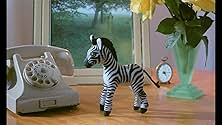
A Zed and Two Noughts (or Zoo) is Greenaway's best film. Made during the transition between his early experimental short films and his later more narrative (and more celebrated) ones, his free flowing structure is at its best here, fresh, witty and cerebral (some would also say pedantic). In later films, one has the feeling that Greenaway has try to go back to the style set by Zoo, but the results (like in 8 1/2 women) are almost unwatchable. The plot: two biologists twins working in a zoo, specialized in studying the putrefaction of animals, lose their wives in a car accident. They hook up with a strange woman who lost her leg in that accident. Meanwhile, there are references to Vermeer throughout (what does this has to do with zoology, only Greenaway knows), speeded up shots of real rotting animals, Michael Nyman's hypnotic score, and also a girl who learns the alphabet through giant letters that are linked with live animals (for example, z is for zebra, as in a children's book). Deliberately non naturalistic, Greenaway makes from this strange melange a very compelling movie, though undoubtedly very hard to take for some.


Did you know
- TriviaThis film was Peter Greenaway's first collaboration with cinematographer Sacha Vierny, who went on to shoot virtually all of Greenaway's work in the 1980s and 1990s, until Vierny's death in 2001. Greenaway referred to Vierny as his "most important collaborator".
- Quotes
Alba Bewick: In the land of the legless the one-legged woman is queen.
- ConnectionsFeatured in Peter Greenaway: A Documentary (1992)
- SoundtracksThe Teddy Bears' Picnic
Music by John W. Bratton
Lyrics by Jimmy Kennedy
Performed by The BBC Dance Orchestra
Directed by Henry Hall
Courtesy of EMI MUSIC PUBLISHING LTD and EMI RECORDS LTD
Also sung by Venus De Milo (Frances Barber)
- How long is A Zed & Two Noughts?Powered by Alexa
Details
- Release date
- Countries of origin
- Languages
- Also known as
- A Zed and Two Noughts
- Filming locations
- Production companies
- See more company credits at IMDbPro
Contribute to this page
Suggest an edit or add missing content