
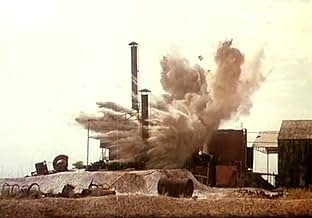
Because of a severe drought in Kenya in 1984, ninety thousand starving baboons go on a murderous rampage, killing humans and animals alike.Because of a severe drought in Kenya in 1984, ninety thousand starving baboons go on a murderous rampage, killing humans and animals alike.Because of a severe drought in Kenya in 1984, ninety thousand starving baboons go on a murderous rampage, killing humans and animals alike.
- Director
- Writers
- Stars






Carl Vundla
- District Officer Tshombe
- (uncredited)
- Director
- Writers
- All cast & crew
- Production, box office & more at IMDbPro
5.1590
1
2
3
4
5
6
7
8
9
10
Featured reviews
90,000 Baboons? True Story?
This movie is suppose to tell the true tale about how 90,000 baboons went on a killing spree because of a severe drought in 1984. This movie bombed badly at the theaters. And it bombs badly as a movie itself. Did this really happen, I don't know. This movie is good for a laugh.
Don't Feed the Monkey!
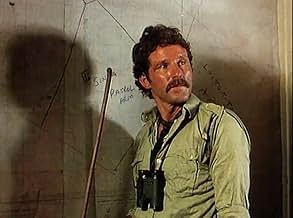
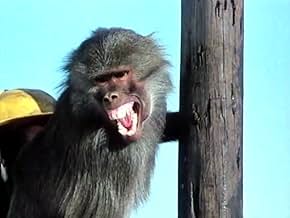
Some of the reviews I encountered on "In the Shadow of Kilimanjaro" complain that baboons aren't convincing and not nearly menacing enough to pass for murderous animals. Well, this is a false impression in general. During a recent trip to South Africa I made a couple of excursions and the first thing the tour guides always warn you for are wild baboons. They are extremely aggressive animals and if they spot people with food in their hands, they will relentlessly attack and steal it from them. I'm not familiar with the supposedly true event this movie is based on, but I find it to be quite plausible and – even in case it never happened – it's a terrific plot outline for a mature and intellectual eco-horror movie anyway. The year is 1984 and Kenya, as well as the majority of the African continent, slowly cringes under a severe drought. It hasn't rained in months, the wildlife deteriorates, the animals are dying and a local community of mine workers do whatever they can to survive. They suddenly face an even more overpowering ordeal when all the baboons in the area, approximately 90.000, herd together and launch spontaneous attacks against the humans in their quest for food. "In the Shadow of Kilimanjaro" is a fairly odd and unusual 80's horror movie, since it doesn't aim for mindless shocks or bloody set-pieces, but merely thrives on atmosphere and educational values. The first half hour is really slow and moody, but this is mostly done to illustrate the atmosphere of drought and despair they characters find themselves trapped in. Once the baboons go on their virulent murder sprees, the film becomes more adventurous and horrific (with images of ripped off limbs and half-eaten faces) but still the violence never becomes gratuitous or overly exploitative. The make-up effects are effective and big kudos to the animal trainers, because a lot of footage was filmed using real animals. The mechanical baboons, used during the more complicated attack scenes, are definitely convincing as well. This mainly African-produced film features two international stars delivering more than adequate performances, namely Timothy Bottoms as a park supervisor (and kind of looking like a big ape himself, what with the ferocious beard) and John Rhys-Davies as the demanding mine owner. "In the Shadow of Kilimanjaro" is a good and original film, naturally benefiting the most of the wonderful scenery and exterior filming locations, but also boosting a unique storyline and multiple moments of great suspense.
Hungry baboons attack
My review was written in April 1986 after watching the film at a Times Square screening room.
Filmed over two years ago in Kenya, "In the Shadow of Kilimanjaro" is an old-fashioned adventure thriller in the borderline horror genre of a last-stand-at-the-house against predators, previously essayed in such films as "Kingdom of the Spiders", "Savage Harvest" and "Roar". Box office outlook is weak.
A famine has caused the 90,000 baboons on a Kenya wildlife reservation to begin banding together an preying on humans (film claims on-screen to be base on a true story, but the 1984 date given is impossible). Wildlife ranger John (Jack to his friends) Ringtree -played by Timothy Bottoms, wants to evacuate the area of about 200 people but the government and manager of the local mine Chris Tucker (John Rhys-Davies) view him as an alarmist and oppose his efforts. As usual in corny horror films like this one, the cast (especially female) is given to wandering alone in the bush long after word of animal attacks has been announced, making them easy prey.
Eventually the danger comes close to home and all survivors huddle together in a hotel run by Michele Carey. The last stand against the marauding animals is successful and a convenient rainstorm spells the end of the drought and the problem.
Hokey film benefits from atmospheric location photography, but suffers from sometimes inaudible dialog recorded in direct sound. Rhys-Davies uses a prop-cigar and a new accent in a fun job as a villain, but by the final reels he has become a true-blue good guy, with only the baboons as hissable targets. Bottoms is merely okay as the bland hero, Irene Miracle is extremely glamorous as his "please come home with met to America" nagging wife (in a role reserved decades ago in these films for Elsa Martinelli) and it's fun to see 1960s starlet Michele Carey again, as the friendly neighborhood hotelier. Leonard Trolley is so hammy as an old British colonial type recalling the good old days that one wishes he had been fed to the baboons early on.
Director Raju Patel substitutes gore effects for suspense in an episodic presentation that fails to knit individual scenes together. Unconvincing matte shots are used to show hundreds of baboons storming down from the hills, while more manageable stagings of a dozen or o animals are used to enact the attacks on humans. Situation inevitably conjures up memories of Cy Endfield's minor 1965 classic "Sands of the Kalahari", but instead of that film's genuinely chilling climax of the baboons descending in long shot on the surviving protagonist (which left the horror to one's imagination), we now get severed limbs, half-eaten faces and torsos and other ineffective gimmicks.
Filmed over two years ago in Kenya, "In the Shadow of Kilimanjaro" is an old-fashioned adventure thriller in the borderline horror genre of a last-stand-at-the-house against predators, previously essayed in such films as "Kingdom of the Spiders", "Savage Harvest" and "Roar". Box office outlook is weak.
A famine has caused the 90,000 baboons on a Kenya wildlife reservation to begin banding together an preying on humans (film claims on-screen to be base on a true story, but the 1984 date given is impossible). Wildlife ranger John (Jack to his friends) Ringtree -played by Timothy Bottoms, wants to evacuate the area of about 200 people but the government and manager of the local mine Chris Tucker (John Rhys-Davies) view him as an alarmist and oppose his efforts. As usual in corny horror films like this one, the cast (especially female) is given to wandering alone in the bush long after word of animal attacks has been announced, making them easy prey.
Eventually the danger comes close to home and all survivors huddle together in a hotel run by Michele Carey. The last stand against the marauding animals is successful and a convenient rainstorm spells the end of the drought and the problem.
Hokey film benefits from atmospheric location photography, but suffers from sometimes inaudible dialog recorded in direct sound. Rhys-Davies uses a prop-cigar and a new accent in a fun job as a villain, but by the final reels he has become a true-blue good guy, with only the baboons as hissable targets. Bottoms is merely okay as the bland hero, Irene Miracle is extremely glamorous as his "please come home with met to America" nagging wife (in a role reserved decades ago in these films for Elsa Martinelli) and it's fun to see 1960s starlet Michele Carey again, as the friendly neighborhood hotelier. Leonard Trolley is so hammy as an old British colonial type recalling the good old days that one wishes he had been fed to the baboons early on.
Director Raju Patel substitutes gore effects for suspense in an episodic presentation that fails to knit individual scenes together. Unconvincing matte shots are used to show hundreds of baboons storming down from the hills, while more manageable stagings of a dozen or o animals are used to enact the attacks on humans. Situation inevitably conjures up memories of Cy Endfield's minor 1965 classic "Sands of the Kalahari", but instead of that film's genuinely chilling climax of the baboons descending in long shot on the surviving protagonist (which left the horror to one's imagination), we now get severed limbs, half-eaten faces and torsos and other ineffective gimmicks.
Fans of rampaging animal movies....don't bother!
A ridiculous story of a drought in Africa which results in 90,000 baboons deciding to attack humans as their only way of getting food. Yes, that's right, 90,000 red-assed baboons munch their way through the cast during this silly 97 minute horror flick. There's a fair bit of needless gore, which doesn't help, and lots of build ups which peter out without delivering an exciting or frightening pay-off. The only decent thing about this movie is John Rhys-Davies (who was so great in Raiders of the Lost Ark), who injects a bit of interest in a somewhat underwritten role.
A cool twist on a zombie movie... with monkeys! Also based on true events.
"In The Shadow of Kilimanjaro" has a lot of good things going for it. The story, like every script that is based on true events, has some facts embellished but is convincing and flows well. The basic premise is that in Kenya in 1984, there was this "perfect storm" of events that lead to a terrifying spectacle. A severe drought killed off much of the vegetation and small animals in the country. What it didn't kill were thousands of baboons, which eventually turned into hungry mobs, devouring anything in their path, including humans.
The animal training and the shots of wildlife are really amazing, lending a lot of credibility to the story. There are literally hundreds of animals on the screen and you think to yourself that the shots of these apes all running in one direction must have been stock footage or computer effects but no. There was extensive work when the film was made to train all of these animals to perform for some key scenes in the movie that are quite impressive.
The film almost plays like a zombie film, with hordes of man-eating creatures who can't be reasoned with just waiting for the time to strike and in that aspect the film can be quite effective. Where it doesn't quite work is that the film doesn't go far enough into the horror genre, with many shots of potentially shocking attacks being abruptly cut. This might have been done for budgetary reasons, but nonetheless they leave you wanting so much more than they deliver. The ending also comes very abruptly and isn't quite as satisfying as it should be. The film is nevertheless quite good and if you're a fan of zombie films, this is one of those stories that didn't want to be a variation on the genre, but ended up being on. If you've ever wanted to see a good animal-based horror story, look no further. (On VHS, October 5, 2012)
The animal training and the shots of wildlife are really amazing, lending a lot of credibility to the story. There are literally hundreds of animals on the screen and you think to yourself that the shots of these apes all running in one direction must have been stock footage or computer effects but no. There was extensive work when the film was made to train all of these animals to perform for some key scenes in the movie that are quite impressive.
The film almost plays like a zombie film, with hordes of man-eating creatures who can't be reasoned with just waiting for the time to strike and in that aspect the film can be quite effective. Where it doesn't quite work is that the film doesn't go far enough into the horror genre, with many shots of potentially shocking attacks being abruptly cut. This might have been done for budgetary reasons, but nonetheless they leave you wanting so much more than they deliver. The ending also comes very abruptly and isn't quite as satisfying as it should be. The film is nevertheless quite good and if you're a fan of zombie films, this is one of those stories that didn't want to be a variation on the genre, but ended up being on. If you've ever wanted to see a good animal-based horror story, look no further. (On VHS, October 5, 2012)


Did you know
- Trivia[Postscript] The film you have just seen is a fictionalized account of a true incident which took place in Africa during the serious drought in 1984. The producers wish to make it known that not a single animal was mistreated during the making of this motion picture. On completion of filming the Baboons were rehabilitated to their natural surroundings. The Baboons were captured under the supervision of the Kenyan Ministry of Tourism and Wildlife from the areas where they had been a nuisance to the local population.
- Crazy credits[Postscript] The film you have just seen is a fictionalized account of a true incident which took place in Africa during the serious drought in 1984. The producers wish to make it known that not a single animal was mistreated during the making of this motion picture. On completion of filming, the Baboons were rehabilitated to their natural surroundings. The Baboons were captured under the supervision of the Kenyan Ministry of Tourism and Wildlife from the areas where they had been a nuisance to the local population.
- ConnectionsFeatured in Trailer Trauma 3: 80s Horrorthon (2017)
- SoundtracksIn the Shadow of the Kilimanjaro
Words and Music by Chieli Minucci & Allan Smallwood
- How long is In the Shadow of Kilimanjaro?Powered by Alexa
Details
- Release date
- Countries of origin
- Language
- Also known as
- Im Schatten des Kilimandscharo
- Filming locations
- Production companies
- See more company credits at IMDbPro
Box office
- Gross US & Canada
- $181,410
- Opening weekend US & Canada
- $181,410
- May 11, 1986
Contribute to this page
Suggest an edit or add missing content