

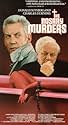
A priest is put in a dilemma when the serial killer who has been murdering priests and nuns confesses to him.A priest is put in a dilemma when the serial killer who has been murdering priests and nuns confesses to him.A priest is put in a dilemma when the serial killer who has been murdering priests and nuns confesses to him.
- Director
- Writers
- Stars
- Awards
- 2 wins total



- Director
- Writers
- All cast & crew
- Production, box office & more at IMDbPro
5.92K
1
2
3
4
5
6
7
8
9
10
Featured reviews
Would Have Been Better in a More Talented Director's Hands
I like religious horror and giallos. For example one of my favorite horror films is Alice Sweet Alice, I think The Exorcist is a well-written drama, and I lean towards the Italian films with spiritual or religious imagery. The Rosary Murders deals with a lot of complex issues in the Catholic church, someone might argue the plot of this film is absurd, but it's not. A priest cannot tell on a child rapist or a serial killer even if they confess. One of the reasons I am giving this flick a solid six is because it attempted to confront these kinds of issues head-on, as well as other problems like overly focusing on sexuality in the American conservative churches to the point of insanity, and the mandatory celibacy of priests.
But to see Donald Sutherland in this film a scant fifteen years after the epic supernatural giallo, Don't Look Now, is a little sad. The Rosary Murders would have been so much better handled by a director with a better eye, who actually understood lighting and atmosphere and editing techniques. Instead, this movie looks like it could have been made for tv, and I consider it a stylistic flaw when handling this kind of subject matter. No one wants to watch a movie about religious murders that looks like an episode of Hill Street Blues.
But to see Donald Sutherland in this film a scant fifteen years after the epic supernatural giallo, Don't Look Now, is a little sad. The Rosary Murders would have been so much better handled by a director with a better eye, who actually understood lighting and atmosphere and editing techniques. Instead, this movie looks like it could have been made for tv, and I consider it a stylistic flaw when handling this kind of subject matter. No one wants to watch a movie about religious murders that looks like an episode of Hill Street Blues.
Why did he kill them?
I grew up in Detroit, so it's surprising that I've never seen this film. I played college baseball, and one of the guys on our team went to high school at Holy Redeemer (the church in this movie), so it was interesting to me in that way, as I'd never seen this church before.
The thing that bothered me as the movie ended is why the killer was killing Catholic priests and nuns. Maybe it was there and I missed it, but the end of the movie left me thinking "why?". After watching the whole movie, I felt let down at the ending.
Father Koesler (Sutherland) seemed to me to be less than devoted to his calling. Why did he break Catholic rules and baptize a baby born out of wedlock? Whether or not that's a good rule, he is required to abide by it, not pick and choose which he'll obey and which he'll ignore. And why did he break into someone's house? Why would a priest commit a felony?
I'm considering re-watching this film to see if I missed a few things.
The thing that bothered me as the movie ended is why the killer was killing Catholic priests and nuns. Maybe it was there and I missed it, but the end of the movie left me thinking "why?". After watching the whole movie, I felt let down at the ending.
Father Koesler (Sutherland) seemed to me to be less than devoted to his calling. Why did he break Catholic rules and baptize a baby born out of wedlock? Whether or not that's a good rule, he is required to abide by it, not pick and choose which he'll obey and which he'll ignore. And why did he break into someone's house? Why would a priest commit a felony?
I'm considering re-watching this film to see if I missed a few things.
Well-intentioned, but nothing special.
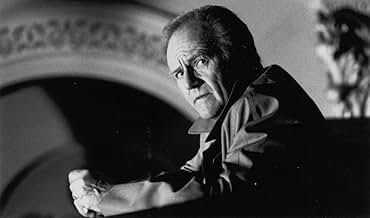
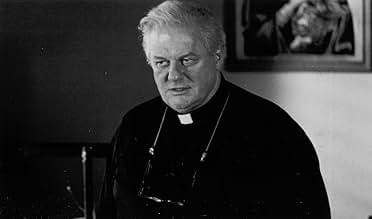
Donald Sutherland plays Father Robert Koesler, a priest in Detroit who hears the confession of a murderer who is going around offing various priests and nuns. After doing some amateur sleuthing, Koesler figures out who the killer is. But he's bound by church law to say nothing. His superiors - among them, the hard nosed, conservative Ted Nabors (Charles Durning) - believe that nothing can violate the sanctity of the confessional. So, as you can guess, Koesler is a very troubled man. Koznicki (Josef Sommer), the detective on the case, is not as concerned with the rules of the Catholic church, aiming to catch himself a killer.
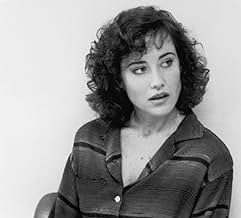
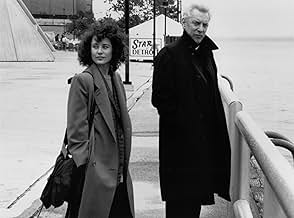
This sure sounds like a neat premise for a thriller, but on the whole the story isn't told in a particularly interesting way. The subplot of a potential romance, between Koesler and Pat Lennon (a reasonably appealing Belinda Bauer), really doesn't add anything to the material. Fred Walton ("When a Stranger Calls" '79, "April Fool's Day" '86) directs with competence and gives the proceedings a very somber quality. On location shooting ("The Rosary Murders" was actually filmed in Detroit) helps a bit, although the story doesn't exactly hold any surprises. (The killer turns out to be a truly disgusting piece of work.) That's too bad, considering that the two credited screenwriters are director Walton and the great author Elmore Leonard. There is a moment around the one hour mark that struck this viewer as simply too hard to swallow.
There are some solid actors and familiar faces among the cast: Anita Barone, Rex Everhart, Stefan Gierasch, Tom Mardirosian, Mark Margolis, James Murtaugh, Lupe Ontiveros, Addison Powell. But the movie is anchored the most by Sutherland, who plays Koesler as an easygoing, likable chap with a fairly progressive and compassionate attitude.
He and Durning manage to make this worth seeing.
Six out of 10.
This sure sounds like a neat premise for a thriller, but on the whole the story isn't told in a particularly interesting way. The subplot of a potential romance, between Koesler and Pat Lennon (a reasonably appealing Belinda Bauer), really doesn't add anything to the material. Fred Walton ("When a Stranger Calls" '79, "April Fool's Day" '86) directs with competence and gives the proceedings a very somber quality. On location shooting ("The Rosary Murders" was actually filmed in Detroit) helps a bit, although the story doesn't exactly hold any surprises. (The killer turns out to be a truly disgusting piece of work.) That's too bad, considering that the two credited screenwriters are director Walton and the great author Elmore Leonard. There is a moment around the one hour mark that struck this viewer as simply too hard to swallow.
There are some solid actors and familiar faces among the cast: Anita Barone, Rex Everhart, Stefan Gierasch, Tom Mardirosian, Mark Margolis, James Murtaugh, Lupe Ontiveros, Addison Powell. But the movie is anchored the most by Sutherland, who plays Koesler as an easygoing, likable chap with a fairly progressive and compassionate attitude.
He and Durning manage to make this worth seeing.
Six out of 10.
This film rises above its major flaw.
The author has relied heavily upon the literary device of COINCIDENCE in constructing his plot; i.e., he expects you to believe that several people living in the same part of the country would have certain proper names. I'd love to explain that in detail, but doing so would ruin part of the ending. Rent this movie and see if you agree. But this flaw will not diminish your enjoyment of the film, as there is enough action to keep the murder mystery fan happy. I was never bored during any of the times I watched this film. I recommend this any day of the week.
Moody, austere Catholic serial killer drama
"The Rosary Murders" follows a Catholic parish in Detroit that is plagued by a series of brutal murders. One of the priests (Donald Sutherland) is joined by a journalist (Belinda Bauer) attempting to cover the story; both aim to stop the killer before he dispatches more nuns, monks, and members of the Holy Order.
This is a downbeat and gloomy affair from Fred Walton, who, the year prior, directed the playful, joke-filled slasher "April Fool's Day." "The Rosary Murders" is more a return to Walton's style as seen in "When a Stranger Calls" (1979) in that it is a much more austere, dour take on the genre. This film gives no reprieve, and the subject matter is relentlessly grim. It has a similar taste to other Catholic-themed slasher films, such as "Alice, Sweet Alice" (1976), or even "The Exorcist III" (1990), both of which set a serial killer narrative against the stark backdrop of the Catholic Church. There is something inherently transfixing (and sinister) about this formula that evokes a creep factor that is hard to shake (especially if you were brought up Catholic). "The Rosary Murders" also has a late-'80s flair about it that at times feels redolent of a number of "Unsolved Mysteries" episodes.
What works best about the film perhaps is the atmosphere: the wintry Detroit setting only adds to the ambiance, and the gothic cathedral and parish buildings are moodily photographed throughout. Donald Sutherland gives a muted but solid performance as the central priest, while Charles Durning has a smaller part as one of Sutherland's superiors. Belinda Bauer is great as the spunky reporter and has good chemistry with Sutherland, but it is ultimately wasted as her character is given little to do before altogether disappearing for the last quarter of the film (which is one of its main faults). Another instance where the film falters is that it has an even-keeled tone from beginning to end that drains the proceedings of any high suspense; the identity and motive of the killer is also unveiled too early, leaving little surprises to be had, and where the film feels like it should reach a fever pitch, it simply doesn't.
All that being said, I still found "The Rosary Murders" absorbing and extremely watchable. It is a dour, gloomy affair that works better as a mood piece than it does a thriller or mystery. Its narrative issues aside, the shadowy halls of the parish and the chilly Detroit exteriors impress a somberness on the viewer that is unusually stirring. 7/10.
This is a downbeat and gloomy affair from Fred Walton, who, the year prior, directed the playful, joke-filled slasher "April Fool's Day." "The Rosary Murders" is more a return to Walton's style as seen in "When a Stranger Calls" (1979) in that it is a much more austere, dour take on the genre. This film gives no reprieve, and the subject matter is relentlessly grim. It has a similar taste to other Catholic-themed slasher films, such as "Alice, Sweet Alice" (1976), or even "The Exorcist III" (1990), both of which set a serial killer narrative against the stark backdrop of the Catholic Church. There is something inherently transfixing (and sinister) about this formula that evokes a creep factor that is hard to shake (especially if you were brought up Catholic). "The Rosary Murders" also has a late-'80s flair about it that at times feels redolent of a number of "Unsolved Mysteries" episodes.
What works best about the film perhaps is the atmosphere: the wintry Detroit setting only adds to the ambiance, and the gothic cathedral and parish buildings are moodily photographed throughout. Donald Sutherland gives a muted but solid performance as the central priest, while Charles Durning has a smaller part as one of Sutherland's superiors. Belinda Bauer is great as the spunky reporter and has good chemistry with Sutherland, but it is ultimately wasted as her character is given little to do before altogether disappearing for the last quarter of the film (which is one of its main faults). Another instance where the film falters is that it has an even-keeled tone from beginning to end that drains the proceedings of any high suspense; the identity and motive of the killer is also unveiled too early, leaving little surprises to be had, and where the film feels like it should reach a fever pitch, it simply doesn't.
All that being said, I still found "The Rosary Murders" absorbing and extremely watchable. It is a dour, gloomy affair that works better as a mood piece than it does a thriller or mystery. Its narrative issues aside, the shadowy halls of the parish and the chilly Detroit exteriors impress a somberness on the viewer that is unusually stirring. 7/10.


Did you know
- TriviaFilmed in part on location at Most Holy Redeemer Catholic Church in Southwest Detroit.
- GoofsFr. Ted Nabors (Charles Durning) claims that Church law precludes baptizing children born out of wedlock. The Catholic Church has never had a prohibition on baptizing children born out of wedlock.
- Quotes
Father Edward Killeen: Break the seal of confession, and you destroy the Church.
Father Robert Koesler: People are going to die.
Father Edward Killeen: You're saving souls Bob, not lives.
- ConnectionsReferenced in Jersey Girl (2004)
- SoundtracksIN YOUR EYES
Recorded & Sung by Nancy Wood
Composed by Bobby Laurel
Lyrics by Bobby Laurel & Dennis Leahy
Based on an adaptation of the Third Symphony written by Johannes Brahms
- How long is The Rosary Murders?Powered by Alexa
Details
- Release date
- Country of origin
- Language
- Also known as
- Der Mörder mit dem Rosenkranz
- Filming locations
- Dearborn, Michigan, USA(scenic overview of the industrial area)
- Production companies
- See more company credits at IMDbPro
Box office
- Gross US & Canada
- $1,730,337
- Gross worldwide
- $1,730,337
- Runtime
- 1h 45m(105 min)
- Color
- Sound mix
- Aspect ratio
- 1.85 : 1
Contribute to this page
Suggest an edit or add missing content