Dekalog, dziewiec
- Episode aired Jun 29, 1990
- TV-MA
- 1h
IMDb RATING
8.0/10
3.9K
YOUR RATING

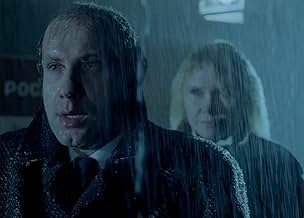
Following the discovery of his sexual impotence, a man urges his wife to take a lover.Following the discovery of his sexual impotence, a man urges his wife to take a lover.Following the discovery of his sexual impotence, a man urges his wife to take a lover.
- Director
- Writers
- Stars





- Director
- Writers
- All cast & crew
- Production, box office & more at IMDbPro
8.03.8K
1
2
3
4
5
6
7
8
9
10
Featured reviews
The finest piece of cinema in the Decalogue
I notice that not too many people have commented on Decalogue Nine. I find this remarkable, but I think it might be because not too many people get this far in the series. From a writing standpoint, the best of the series are in the middle (I would say, maybe, 3, 5, and 6), but from a cinematic standpoint, Nine is the best. It predicts a lot of the trick film-making he would go on to do in Trois Couleurs: Bleu. Take note particularly of the shots through glass and the on the elevator in which the characters act in a scene somewhere between strobe light and slide show. All of this is not to say, however, that the writing or acting in this one are sub-par. In fact, the man who plays the doctor is remarkable and, like all of the films, there is a powerful ambiguity in which Kieslowski and Piesiewicz seem to, at once, take the commandments with a grain of salt and look upon them with the utmost seriousness.
the atmosphere
An episod about its viewers. Doubts and generosity, fear and trust. And the impecable mannonesty. And about the structure of vulnerability. All - simple and clear and powerfull. er to show an ordinary story defining its basic traits. A husband and his wife. A good advice and a secret. The appearences. And the cold truth. But, more important, the right choice. The atmosphere is the lead pillar. Sure, each episode is defined but atmosphere but in this case , it represents the key for define attitudes, thoughts, gestures and decisions. A film about the roots of h
A compressed domestic tragedy founded on impotence
Eventually, this episode from the DEKALOG series will take on a life of its own. Beginning with a melodramatic premise-- a successful young doctor afflicted with irremediable impotence instructs his loving wife to take a lover-- Kieslowski constructs a 50 minute drama of extraordinary impact, the end of which is an affirmation of their marriage as a spiritual state these partners only half-perceive themselves. I called the film tragic above, but its arc parallels Shakespeare's late romance, THE WINTER'S TALE, right down to a near-miraculous conclusion. A lovely piece of work.
The Tragedy of Errors...
Decalogue 9 - "Thou shalt not covet thy neighbor's wife" is a story of the words misinterpreted, the important phone calls missed by a second. The loving couple has to deal with the serious problems that include the husband's impotence and the wife's infidelity. She loves her husband and does not want to leave him even after she learns the sad truth about his condition. She wants to end a strictly physical affair with a younger boyfriend. Her husband does not know that and the tragedy of errors just about to happen
Decalogue 9 is also interesting because in it we first meet the main character of Kieslowski's later film, "Double Life of Veronique." Roman, the hero of Decalogue 9 is a heart surgeon and works in the hospital. One of his patients is a young, full of life girl who loves to sing and has a heart condition. Her favorite composers are Bach, Mozart, and Van den Budenmayer (a fictitious Dutch composer whose music is written by the regular Kieslowski's associate, Zbigniew Preisner).
9/10
Decalogue 9 is also interesting because in it we first meet the main character of Kieslowski's later film, "Double Life of Veronique." Roman, the hero of Decalogue 9 is a heart surgeon and works in the hospital. One of his patients is a young, full of life girl who loves to sing and has a heart condition. Her favorite composers are Bach, Mozart, and Van den Budenmayer (a fictitious Dutch composer whose music is written by the regular Kieslowski's associate, Zbigniew Preisner).
9/10
'Dekalog': Part 9- Sex, jealousy and faithfulness and the sanctity of contentment
'Dekalog' is a towering achievement and a televisual masterpiece that puts many feature films to shame, also pulling off a concept of great ambition brilliantly. Although a big admirer of Krzysztof Kieślowski (a gifted director taken from us too early), and who has yet to be disappointed by him, to me 'Dekalog' and 'Three Colours: Red' sees him at his best.
All of 'Dekalog's' episodes have so many great things, and it is an example of none of the lesser episodes (my least favourite being the still very good Episode 8) being bad. This is testament to the high quality of 'Dekalog' as an overall whole and how brilliant the best episodes are.
Episode 9 is yet another great one from 'Dekalog'. The story is one of the slighter ones of the series, but that is by no means a flaw. My only complaint is the middle act dragging a little bit, otherwise Episode 9 is great stuff while falling short of being one of the best 'Dekalog' stories like Episodes 1, 4, 5 and 6.
As per usual, it is exceptionally well made. The production values in Episode 9 are as ever atmosphere-enhancing, beautiful and haunting to look at and fascinating, definitely cannot be faulted on the technical front. The direction is quietly unobtrusive, intelligently paced and never too heavy, and the music is suitably intricate.
Characters are interesting, well-developed and feel like real people in a compelling sense. The story is thematically rich with much to say about its central conflict of sexuality and love. They are explored intelligently without descending into heavy-handedness, and the episode is powerfully moving, thought-provoking and life-affirming. The acting is superb as to be expected, with complexity and nuances by the bucket-load.
All in all, great 'Dekalog' episode but not one of the series' finest. 9/10 Bethany Cox
All of 'Dekalog's' episodes have so many great things, and it is an example of none of the lesser episodes (my least favourite being the still very good Episode 8) being bad. This is testament to the high quality of 'Dekalog' as an overall whole and how brilliant the best episodes are.
Episode 9 is yet another great one from 'Dekalog'. The story is one of the slighter ones of the series, but that is by no means a flaw. My only complaint is the middle act dragging a little bit, otherwise Episode 9 is great stuff while falling short of being one of the best 'Dekalog' stories like Episodes 1, 4, 5 and 6.
As per usual, it is exceptionally well made. The production values in Episode 9 are as ever atmosphere-enhancing, beautiful and haunting to look at and fascinating, definitely cannot be faulted on the technical front. The direction is quietly unobtrusive, intelligently paced and never too heavy, and the music is suitably intricate.
Characters are interesting, well-developed and feel like real people in a compelling sense. The story is thematically rich with much to say about its central conflict of sexuality and love. They are explored intelligently without descending into heavy-handedness, and the episode is powerfully moving, thought-provoking and life-affirming. The acting is superb as to be expected, with complexity and nuances by the bucket-load.
All in all, great 'Dekalog' episode but not one of the series' finest. 9/10 Bethany Cox

Did you know
- TriviaKieslowski and co-screenwriter Krzysztof Piesiewicz expressed an affection for the character of the young singer who contemplates surgery, and they lamented the fact that there was little for her to do in this story. When they began writing "The Double Life of Veronique", they remembered the plight of the singer in Dekalog--how her passion was limited by her sickness--and transferred this storyline to the characters of Veronique and Weronika.
- ConnectionsReferenced in Three Colors: Red (1994)
Details
Contribute to this page
Suggest an edit or add missing content