IMDb RATING
7.5/10
6.3K
YOUR RATING
A housewife in Nazi-occupied France struggles to make ends meet when her husband returns home after being wounded in the war.A housewife in Nazi-occupied France struggles to make ends meet when her husband returns home after being wounded in the war.A housewife in Nazi-occupied France struggles to make ends meet when her husband returns home after being wounded in the war.
- Director
- Writers
- Stars
- Awards
- 14 wins & 8 nominations total
- Director
- Writers
- All cast & crew
- Production, box office & more at IMDbPro
7.56.2K
1
2
3
4
5
6
7
8
9
10
Featured reviews
An amazing film loosely based on the last woman in France to be guillotined. Her crime is performing abortions.
I'd like to focus on this film as a French film, not of the United States. If one has seen "La Chagrin et la Pitie," then one knows the legacy of this film. France was not perfect during WWII. Not everyone in France was part of the resistance, mainly, they were trying to survive. I think its an amazing film that sheds light on a crucial point in French history. Yes, it's about abortion and Chabrol does a great job ensuring his abortionist is less than perfect. That's a wonderful point he makes, that no one is perfect, not even the moral majority of the government. But, I come away from this film with the same questions that I get from "Lacombe, Lucien," which are: 'what would I have done?' And, please, don't Monday morning quarterback World War II.
Double morality
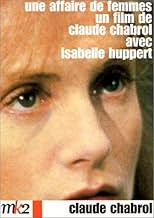
Claude Chabrol's "Une affaire de femmes" takes us back to the challenging times of World War II, exploring the life of Marie, portrayed with depth and complexity by Isabelle Huppert. Set against the backdrop of a war-torn France, the film delves into the moral intricacies of survival, collaboration, and the consequences of one woman's choices.
The narrative unfolds as Marie, left alone with her two children during the wartime, faces the grim reality of a defeated nation. Huppert's performance brings a nuanced portrayal of Marie as she navigates through a tumultuous period, discovering her unexpected skill in performing abortions, a secret source of income during these dire times.
The film refrains from passing moral judgment on Marie's actions, leaving room for the audience to grapple with the ethical complexities of her decisions. François Cluzet complements Huppert's portrayal with his role as Marie's husband, whose jealousy and actions set the stage for the unfolding tragedy.
Chabrol, a master of suspense and a seasoned storyteller, weaves a narrative that transcends the specifics of its wartime setting. The movie serves as a poignant commentary on the broader themes of collaboration, morality, and the resilience of the human spirit in the face of adversity.
"Une affaire de femmes" captures the essence of Claude Chabrol's ability to dissect societal norms and individual choices. The film, although set against the backdrop of WWII, resonates with timeless themes, leaving the audience with much to contemplate. Huppert's compelling performance, supported by a strong cast, makes this film a standout in Chabrol's body of work.
The narrative unfolds as Marie, left alone with her two children during the wartime, faces the grim reality of a defeated nation. Huppert's performance brings a nuanced portrayal of Marie as she navigates through a tumultuous period, discovering her unexpected skill in performing abortions, a secret source of income during these dire times.
The film refrains from passing moral judgment on Marie's actions, leaving room for the audience to grapple with the ethical complexities of her decisions. François Cluzet complements Huppert's portrayal with his role as Marie's husband, whose jealousy and actions set the stage for the unfolding tragedy.
Chabrol, a master of suspense and a seasoned storyteller, weaves a narrative that transcends the specifics of its wartime setting. The movie serves as a poignant commentary on the broader themes of collaboration, morality, and the resilience of the human spirit in the face of adversity.
"Une affaire de femmes" captures the essence of Claude Chabrol's ability to dissect societal norms and individual choices. The film, although set against the backdrop of WWII, resonates with timeless themes, leaving the audience with much to contemplate. Huppert's compelling performance, supported by a strong cast, makes this film a standout in Chabrol's body of work.
An intense drama based on a true story
Marie (Isabelle Huppert) helps women have abortions in Nazi-occupied France, which turns out to be an unexpected income. However, she was arrested and sentenced to death by the time's reactionary government, looking for public examples to give to the nation.
Marie Latour (in reality her real name was Marie-Louise Giraud), was the last woman to be guillotined in France. The film tells this tragic story with dry realism, both in terms of the dialogues and the era's accurate reconstruction.
The film was in competion at the Italian 1988 Venice Film Festival. Isabelle Huppert won the Coppa Volpi award for best female interpretation, while outside conservative Catholic associations clamoured for the film to be withdrawn from distribution, for Marie's desperate prayer before being beheaded, accused by them fanatic groups to be 'blasphemous'. The film was released anyway.
Marie Latour (in reality her real name was Marie-Louise Giraud), was the last woman to be guillotined in France. The film tells this tragic story with dry realism, both in terms of the dialogues and the era's accurate reconstruction.
The film was in competion at the Italian 1988 Venice Film Festival. Isabelle Huppert won the Coppa Volpi award for best female interpretation, while outside conservative Catholic associations clamoured for the film to be withdrawn from distribution, for Marie's desperate prayer before being beheaded, accused by them fanatic groups to be 'blasphemous'. The film was released anyway.
If we ask for forgiveness, we might not go to hell.
Definitely one of director Claude Chabrol's best films, if not his best.
It is based upon a true story out of Nazi occupied France, and stars the incredible Isabelle Huppert (The Piano Teacher, 8 Women). She is supported by Marie Trintignant (Harrison's Flowers), who had her career cut short by an untimely death.
Huppert finds a way to feed her family. She performs abortions and rents out rooms to prostitutes. Everything seems to be going well for her, but her husband is not happy about the fact that he hasn't had any in 10 years, and she now has a lover - he turns her in.
France is now rid of the Germans and is trying to restore her morality. Unfortunately, Marie to be made an example.
Huppert was great, and Trintigant was also very good.
It is based upon a true story out of Nazi occupied France, and stars the incredible Isabelle Huppert (The Piano Teacher, 8 Women). She is supported by Marie Trintignant (Harrison's Flowers), who had her career cut short by an untimely death.
Huppert finds a way to feed her family. She performs abortions and rents out rooms to prostitutes. Everything seems to be going well for her, but her husband is not happy about the fact that he hasn't had any in 10 years, and she now has a lover - he turns her in.
France is now rid of the Germans and is trying to restore her morality. Unfortunately, Marie to be made an example.
Huppert was great, and Trintigant was also very good.
A Sad Affair
With cool detachment and a subtle touch of horror, Claude Chabrol dissects the story of a woman who was guillotined during the Nazi occupation of France. One of his strengths as a director is that he allows the movie goer to form his/her own thoughts and opinions about the issues at hand. He is not a proselytizer.
The film covers a lot of ground: illegal abortion, collaborating with the enemy, parenting, marital communication, greed and a slew of other human weaknesses. All of this against the backdrop of an occupied France, a country who witnessed the horrors of WWI and never fully recovered, and whose WWII soul (what is left of it) has been torn apart.
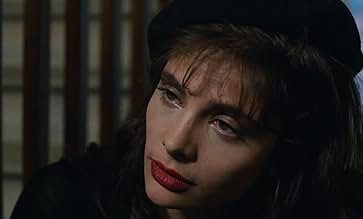
Isabelle Huppert does a fine job interpreting Marie LaTour, the woman in question. Marie is not the most sympathetic of characters. In fact, most of the major characters are not "sympathique".(My favorite character is the prostitute Lulu, acted by Marie Trintignant.)
All in all a well directed, well structured film about a tragic period in the lives of the French people. But you be the judge.
Trivia: "Vera Drake" and "L'Affaire de Femmes" both begin in apartments which have the the same god awful green walls.
The film covers a lot of ground: illegal abortion, collaborating with the enemy, parenting, marital communication, greed and a slew of other human weaknesses. All of this against the backdrop of an occupied France, a country who witnessed the horrors of WWI and never fully recovered, and whose WWII soul (what is left of it) has been torn apart.
Isabelle Huppert does a fine job interpreting Marie LaTour, the woman in question. Marie is not the most sympathetic of characters. In fact, most of the major characters are not "sympathique".(My favorite character is the prostitute Lulu, acted by Marie Trintignant.)
All in all a well directed, well structured film about a tragic period in the lives of the French people. But you be the judge.
Trivia: "Vera Drake" and "L'Affaire de Femmes" both begin in apartments which have the the same god awful green walls.
Did you know
- TriviaBased upon the true story of Marie-Louise Giraud, with character names changed.
- SoundtracksLe Poème de l'Amour et de la Mer
Written by Ernest Chausson
- How long is Story of Women?Powered by Alexa
Details
- Release date
- Country of origin
- Official site
- Languages
- Also known as
- Eine Frauensache
- Filming locations
- Coulommiers, Seine-et-Marne, France(interiors: women's prison)
- Production companies
- See more company credits at IMDbPro
Box office
- Gross US & Canada
- $438,483
- Runtime
- 1h 48m(108 min)
- Sound mix
- Aspect ratio
- 1.66 : 1
Contribute to this page
Suggest an edit or add missing content