

A disillusioned assassin accepts one last hit in hopes of using his earnings to restore the vision of a singer he accidentally blinded.A disillusioned assassin accepts one last hit in hopes of using his earnings to restore the vision of a singer he accidentally blinded.A disillusioned assassin accepts one last hit in hopes of using his earnings to restore the vision of a singer he accidentally blinded.
- Awards
- 2 wins & 6 nominations total

Chow Yun-Fat
- Ah Jong
- (as Chow Yun Fat)


Kong Chu
- Sydney Fung
- (as Chu Kong)
- …

Kenneth Tsang
- Sgt. Tsang Yeh
- (as Tsang Kong)
- …

Shing Fui-On
- Wong Hoi
- (as Shing Fui On)


Ricky Chun-Tong Wong
- Frankie Fung
- (as Fan Wei Yee)


Chuen Chiang
- Shooter at beach
- (uncredited)
Chin-Hung Fan
- Shooter at beach
- (uncredited)

Woon-Ling Hau
- Trash lady
- (uncredited)
- Director
- Writer
- All cast & crew
- Production, box office & more at IMDbPro
7.754.2K
1
2
3
4
5
6
7
8
9
10
Featured reviews
"Easy to pick up, hard to put down."
Chow Yun Fat and John Woo strike again. The Killer is not your run of the mill action flick. It features characters you care about, jaw-dropping action sequences, and , best of all, Chow Yun Fat. He's always supercool. Chow and co-star Danny Lee play very similar characters but are on opposite sides of the law. It makes the film work very well. The heroes can relate to one another because they have both injured the innocent while doing their jobs. Another great actor in the film is Kong Chu in the role of Sydney, the one handed hitman. Being in the middle of the fray, he makes for an interesting character. There is a great scene involving Sydney's betrayal. Chow is so amazing with his emotions in this scene. He's not just an international action superstar, he's an underrated and incredible actor as well. That's what makes The Killer more than just another action movie. Woo's direction always helps too. The Killer boasts one of the best and most epic shootouts in film history. Woo's older films are as stylistic as they get, I mean stylistic as hell. Chow Yun Fat and John Woo make an incredible duo. Nicholas Cage is no replacement, it's high time they work together again.
10Anardil
John Woo is the master
Before seeing a genuine Hong-Kong produced John Woo movie, I thought I knew what action was, and what the action-movie genre was capable of. I was wrong. The Killer was the single most impressive, awe-inspiring, jaw-dropping action movie I had seen in years, and is now one of my favourite movies of any genre. It is #2 on my all-time list.
Why? First of all, the well-known poetic violence of the super-charged action scenes make for a tremendously exciting film. These combine choreographed bloodshed (there is an almost constant stream of bullets) with raw emotion that puts even the best Hollywood actioners to shame. Look at Hollywood action movies today; almost all Hollywood action is inspired (not to mention plagiarised) from the "heroic bloodshed films," the best of which is The Killer.
Quentin Tarantino and Robert Rodriguez are only the most obvious examples of American directors to put Woo's trademark stylized violence to use, and neither handle it as well as Woo.
But beyond this, the characters and the story are what drive this movie and what truly set it apart. The story of the relentless cop and the vicious killer is only the latest in a long line of detective stories, starting with Arthur Conan Doyle and Edgar Allan Poe in the 19th century, and continuing in every cop show on TV today. The hero and the villain are practically the same; they are only divided by an almost arbitrary line called the law. In The Killer, both "Mickey Mouse" and "Dumbo" are unrelenting, capable, though misunderstood, professionals. Their motivations differ, but they both have the killer instinct. The classic storyline of the interaction of the two characters who eventually realize their similarities and end up working together has been seen before, but never has it been used to such effect as in The Killer.
Woo's familiar themes of brotherhood, betrayal and loyalty also reach their cinematic peak in this movie. The viewer not only wants to see the next pyrotechnic action scene, but is actually concerned with the lives of the characters, an element that is almost always lacking in typical Hollywood fare.
Finally, the gun-battle scenes, when they come, are simply the most spectacular, mind-blowingly violent, yet strangely beautiful, action scenes ever imagined or filmed. And last but not least, is the unbelievably powerful screen presence of Chow Yun-Fat, as always cool incarnate. His effortless lead and the tension created by his playing off of co-star Danny Lee make The Killer as close as I have yet seen to the perfect action movie. I recommend it to any hard-core action fan and also suggest Hard-Boiled, though Woo's American efforts thus far have not been up to his Hong Kong works.
Rating: 10
Why? First of all, the well-known poetic violence of the super-charged action scenes make for a tremendously exciting film. These combine choreographed bloodshed (there is an almost constant stream of bullets) with raw emotion that puts even the best Hollywood actioners to shame. Look at Hollywood action movies today; almost all Hollywood action is inspired (not to mention plagiarised) from the "heroic bloodshed films," the best of which is The Killer.
Quentin Tarantino and Robert Rodriguez are only the most obvious examples of American directors to put Woo's trademark stylized violence to use, and neither handle it as well as Woo.
But beyond this, the characters and the story are what drive this movie and what truly set it apart. The story of the relentless cop and the vicious killer is only the latest in a long line of detective stories, starting with Arthur Conan Doyle and Edgar Allan Poe in the 19th century, and continuing in every cop show on TV today. The hero and the villain are practically the same; they are only divided by an almost arbitrary line called the law. In The Killer, both "Mickey Mouse" and "Dumbo" are unrelenting, capable, though misunderstood, professionals. Their motivations differ, but they both have the killer instinct. The classic storyline of the interaction of the two characters who eventually realize their similarities and end up working together has been seen before, but never has it been used to such effect as in The Killer.
Woo's familiar themes of brotherhood, betrayal and loyalty also reach their cinematic peak in this movie. The viewer not only wants to see the next pyrotechnic action scene, but is actually concerned with the lives of the characters, an element that is almost always lacking in typical Hollywood fare.
Finally, the gun-battle scenes, when they come, are simply the most spectacular, mind-blowingly violent, yet strangely beautiful, action scenes ever imagined or filmed. And last but not least, is the unbelievably powerful screen presence of Chow Yun-Fat, as always cool incarnate. His effortless lead and the tension created by his playing off of co-star Danny Lee make The Killer as close as I have yet seen to the perfect action movie. I recommend it to any hard-core action fan and also suggest Hard-Boiled, though Woo's American efforts thus far have not been up to his Hong Kong works.
Rating: 10
Must see movie within the action genre
The Killer has memorable character moments and action scenes.
The premise is a strong example of filmmakers having their cake and eat it, by showing you characters brutally killing multiple others, as you simultaneously admire their moral code. It takes a certain level of creative manipulation to do it and John Woo does it well, thanks to the slick action scenes and performances of Chow Yun-fat, Danny Lee, and Paul Chu Kong.
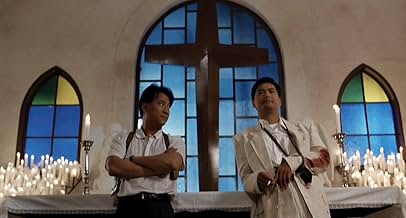
All action scenes are technically excellent and hit hard, but the standouts are the beach house fight and the siege at the church. If you like gun battles you will love The Killer and see the influence it had on the Hollywood action genre.
Characters can be fairly one note in action movies, but the likes of Ah Jong, Li Ying, Jennie, and Fung Sei are made memorable by the visual storytelling and performances. The chemistry two characters in particular works very well. It shouldn't, as they have just met on screen for a short period of time. You can accept their mutual respect, but I need to suspend my disbelief of the melodrama that comes from their eventual friendship.
I admire the ending, which feels perfect, given the history associated with the lead character. It makes the impact of the overall story much stronger.
The premise is a strong example of filmmakers having their cake and eat it, by showing you characters brutally killing multiple others, as you simultaneously admire their moral code. It takes a certain level of creative manipulation to do it and John Woo does it well, thanks to the slick action scenes and performances of Chow Yun-fat, Danny Lee, and Paul Chu Kong.
All action scenes are technically excellent and hit hard, but the standouts are the beach house fight and the siege at the church. If you like gun battles you will love The Killer and see the influence it had on the Hollywood action genre.
Characters can be fairly one note in action movies, but the likes of Ah Jong, Li Ying, Jennie, and Fung Sei are made memorable by the visual storytelling and performances. The chemistry two characters in particular works very well. It shouldn't, as they have just met on screen for a short period of time. You can accept their mutual respect, but I need to suspend my disbelief of the melodrama that comes from their eventual friendship.
I admire the ending, which feels perfect, given the history associated with the lead character. It makes the impact of the overall story much stronger.
Incredible action thriller
Some films focus on action to draw their thrills, others put the emphasis on drama and character interaction to draw theirs; The Killer manages to do both, seemingly effortlessly. You would think that in a pure action movie, the drama would come off as a little forced and out of place, but in The Killer it doesn't; John Woo fuses the two together magnificently.
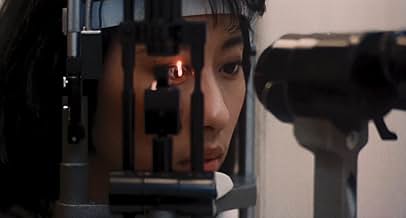
The story of the movie is most certainly secondary to the amazing visuals and the adrenaline fueled shootouts, which is, of course, no bad thing. The movie, however does have a plot which strings the gunfights together, and it follows the story of Jeffrey, an assassin that, while on a job, accidentally blinds a young singer, Jennie. However, this assassin is different from most assassins in that he has a heart; and he decides to fix his mistake by doing one last job in order to earn the money needed for a cornea transplant. However, things are never that easy as after his last job, his employer refuses to pay and, because he revealed his identity on the job, he also has a cop, Inspector Li, on his tail who is played by Danny Lee.
The character of Jeffrey is brought to the screen by Chow Jun Fat, a man that has a great screen presence. Fat portrays his character with great emotion, which makes his character different to the usual, cold image that is normally upheld when we think of a assassin. This is epitomized by one point in the movie in which the policeman tells Fat that he is not the usual assassin, and he isn't. The other central character in the movie that of Inspector Li is also portrayed by a good actor in Danny Lee. The two create a good chemistry on screen as we see their developing relationship, which is born as a result of a mutual admiration and the men's respective professions, which has similarities which are touched upon in the movie, despite them being on opposite ends of the law
Throughout the film, John Woo is able to deliver incredibly crisp visuals that are made more beautiful by his use of music and bright colours. This gives the movie a very vibrant feel, and that's a feel that works incredibly with John Woo's brilliant action sequences. John Woo indulges in all kinds of trickery with the camera and the editing suite; slow motion, fast editing and music all feature greatly in this movie, and unlike a lot of movies that experiment with such things; it works every time here. Nobody can deny the thrills and excitement that ensue where Woo fast edits, or the way the music blends with the slow motion to create a haunting atmosphere to the overly action filled gun sequences. John Woo is a master behind the camera, and it is clearly shown in this film. There is also an amount of strange humour in the film, shown best by the standoff between the assassin and the police while the doctor's work to save a young girl that has been injured in one of the earlier gun battles. This sense of humour would later be instilled in other Woo films such as Hard-Boiled (with it's hospital ending)
After Woo has taken us on an adrenaline fueled action roller coaster ride, he obviously knew it was going to take something special to end the movie effectively, and the movie certainly does end effectively. The last gunfight is, simply, perfect. The action is choreographed to perfection and not a single move is out of place; it's also very thrilling and will be sure to get anyone's heart pumping. This end action sequence has never been topped in the 15 years since The Killer was released, and it is unlikely to ever be bettered. Woo also manages to end on a poetic note that the film has been building up to throughout. In an action movie you don't expect a tear-inducing finale, but here John Woo delivers one, and best of all; it works.
Overall, if action is your thing, then The Killer is your movie. The perfect blend of adrenaline and emotion is given to the audience in this film and with it John Woo has proved that action is more than just gunfights and cool characters; this film is art.
The story of the movie is most certainly secondary to the amazing visuals and the adrenaline fueled shootouts, which is, of course, no bad thing. The movie, however does have a plot which strings the gunfights together, and it follows the story of Jeffrey, an assassin that, while on a job, accidentally blinds a young singer, Jennie. However, this assassin is different from most assassins in that he has a heart; and he decides to fix his mistake by doing one last job in order to earn the money needed for a cornea transplant. However, things are never that easy as after his last job, his employer refuses to pay and, because he revealed his identity on the job, he also has a cop, Inspector Li, on his tail who is played by Danny Lee.
The character of Jeffrey is brought to the screen by Chow Jun Fat, a man that has a great screen presence. Fat portrays his character with great emotion, which makes his character different to the usual, cold image that is normally upheld when we think of a assassin. This is epitomized by one point in the movie in which the policeman tells Fat that he is not the usual assassin, and he isn't. The other central character in the movie that of Inspector Li is also portrayed by a good actor in Danny Lee. The two create a good chemistry on screen as we see their developing relationship, which is born as a result of a mutual admiration and the men's respective professions, which has similarities which are touched upon in the movie, despite them being on opposite ends of the law
Throughout the film, John Woo is able to deliver incredibly crisp visuals that are made more beautiful by his use of music and bright colours. This gives the movie a very vibrant feel, and that's a feel that works incredibly with John Woo's brilliant action sequences. John Woo indulges in all kinds of trickery with the camera and the editing suite; slow motion, fast editing and music all feature greatly in this movie, and unlike a lot of movies that experiment with such things; it works every time here. Nobody can deny the thrills and excitement that ensue where Woo fast edits, or the way the music blends with the slow motion to create a haunting atmosphere to the overly action filled gun sequences. John Woo is a master behind the camera, and it is clearly shown in this film. There is also an amount of strange humour in the film, shown best by the standoff between the assassin and the police while the doctor's work to save a young girl that has been injured in one of the earlier gun battles. This sense of humour would later be instilled in other Woo films such as Hard-Boiled (with it's hospital ending)
After Woo has taken us on an adrenaline fueled action roller coaster ride, he obviously knew it was going to take something special to end the movie effectively, and the movie certainly does end effectively. The last gunfight is, simply, perfect. The action is choreographed to perfection and not a single move is out of place; it's also very thrilling and will be sure to get anyone's heart pumping. This end action sequence has never been topped in the 15 years since The Killer was released, and it is unlikely to ever be bettered. Woo also manages to end on a poetic note that the film has been building up to throughout. In an action movie you don't expect a tear-inducing finale, but here John Woo delivers one, and best of all; it works.
Overall, if action is your thing, then The Killer is your movie. The perfect blend of adrenaline and emotion is given to the audience in this film and with it John Woo has proved that action is more than just gunfights and cool characters; this film is art.
Among Revenge and Forgiveness, Among Bullets and Faithfulness
Chow Yun Fat and John Woo teams up together with strong commitment to this highly melodramatic action film. The Killer was so ahead of its time especially with its signature shootout scenes and fast paced action sequences in its time of production in Hong-Kong. Without any special, visual or sound effects; it's a high achievement on both sound and vision. It's high on thematic values, but low on production values.
Woo benefited a lot from a team of action-coordinators as part of the production crew he assigned with. 20 years from its screen release, today still there are not many action films in which the sequences are coordinated as good as in The Killer. The rest of the production was standing by its plot, which becomes unbearable due to extremely melodramatic events. Woo tries to hurt our feelings as much as he can by killing and injuring innocents so ruthlessly: Passengers on a train, children on a beach, singers at a night club etc.
Lowell Lo's heart-wrenching theme and background music was one of the finest of the thematic values. Story development is also very effective that everything seems going fine at the beginning of Jong(the hit-man)'s last mission, then for he wasn't paid for his successful assassination he decides to show up back from underground with his alias: "Jeffrey". When he did, a stage singer ends up losing her sight and becomes blind from shot blasting. Jong helps her get well; she falls in love with him. He introduces himself as Jeffrey to her. No matter what romance they share together, no matter how close they are to each other; there is absolutely no accordance no chemistry between Sally Yeh and Chow Yun-Fat. Sally Yeh acts so poorly, especially while she keeps screaming needlessly every other scene.
For whoever likes this film, I strongly advise Léon to them. The same idea also works in Luc Besson's film, too: In a hit-man's life; there is no certain way to go, there is nobody to trust, there is no repentance. In Luc Besson's film of 1994, Jean Reno and Natalie Portman builds up a better harmony using emotions but not melodrama.
Additionally in John Woo's film, even though Chow Yun-Fat is not fast enough he just stands by the bullets by running, or guards himself with armchairs and seats of the cathedral which are vulnerable to bullets with the gaps between backrests. So many bullets are used... Were they shot by children or blind hitmans? How could you explain not getting shot while 4 hitmans are aiming at you running inside the cathedral and running on the beach? On the other hand, every single bullet that's used in Léon, hurts one person or another; or leaves marks, tracks and holes on walls, and in the texture of the floor. It's not an acquirement to waste 10 thousand bullets in a movie; but it's really an achievement when you configure a sub-production plan just to preview and review the bullets in both pre-production and production.
Woo benefited a lot from a team of action-coordinators as part of the production crew he assigned with. 20 years from its screen release, today still there are not many action films in which the sequences are coordinated as good as in The Killer. The rest of the production was standing by its plot, which becomes unbearable due to extremely melodramatic events. Woo tries to hurt our feelings as much as he can by killing and injuring innocents so ruthlessly: Passengers on a train, children on a beach, singers at a night club etc.
Lowell Lo's heart-wrenching theme and background music was one of the finest of the thematic values. Story development is also very effective that everything seems going fine at the beginning of Jong(the hit-man)'s last mission, then for he wasn't paid for his successful assassination he decides to show up back from underground with his alias: "Jeffrey". When he did, a stage singer ends up losing her sight and becomes blind from shot blasting. Jong helps her get well; she falls in love with him. He introduces himself as Jeffrey to her. No matter what romance they share together, no matter how close they are to each other; there is absolutely no accordance no chemistry between Sally Yeh and Chow Yun-Fat. Sally Yeh acts so poorly, especially while she keeps screaming needlessly every other scene.
For whoever likes this film, I strongly advise Léon to them. The same idea also works in Luc Besson's film, too: In a hit-man's life; there is no certain way to go, there is nobody to trust, there is no repentance. In Luc Besson's film of 1994, Jean Reno and Natalie Portman builds up a better harmony using emotions but not melodrama.
Additionally in John Woo's film, even though Chow Yun-Fat is not fast enough he just stands by the bullets by running, or guards himself with armchairs and seats of the cathedral which are vulnerable to bullets with the gaps between backrests. So many bullets are used... Were they shot by children or blind hitmans? How could you explain not getting shot while 4 hitmans are aiming at you running inside the cathedral and running on the beach? On the other hand, every single bullet that's used in Léon, hurts one person or another; or leaves marks, tracks and holes on walls, and in the texture of the floor. It's not an acquirement to waste 10 thousand bullets in a movie; but it's really an achievement when you configure a sub-production plan just to preview and review the bullets in both pre-production and production.


Did you know
- TriviaJohn Woo dedicated this film to Martin Scorsese.
- GoofsThe road sign board pointing to the hospital says "SCARED HEART HOSPITAL".
- Alternate versionsThe Taiwan version has a scene where it shows Jenny sitting in her dressing room while hearing the gunshots around 5 minutes into the movie.
- ConnectionsFeatured in Century of Cinema: Naamsaang-neuiseung (1996)
Details
Box office
- Gross worldwide
- $2,340,425
- Runtime
- 1h 51m(111 min)
- Color
- Aspect ratio
- 1.85 : 1
Contribute to this page
Suggest an edit or add missing content