IMDb RATING
7.6/10
7.5K
YOUR RATING
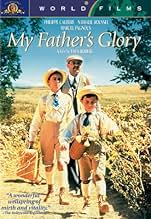
At the end of the nineteenth century, little Marcel lives with his parents in the Provence countryside. During his holiday, Marcel meets Lili, a local boy who knows all the secrets of the hi... Read allAt the end of the nineteenth century, little Marcel lives with his parents in the Provence countryside. During his holiday, Marcel meets Lili, a local boy who knows all the secrets of the hills, and the two become fast friends.At the end of the nineteenth century, little Marcel lives with his parents in the Provence countryside. During his holiday, Marcel meets Lili, a local boy who knows all the secrets of the hills, and the two become fast friends.
- Awards
- 2 wins & 5 nominations total
7.67.4K
1
2
3
4
5
6
7
8
9
10
Featured reviews
Don't Forget The Companion Piece
This, like "Jean de Florette" and "Manon Of The Spring" is the first of two French films that go together. The second part of this story is the film, "My Mother's Castle." See them both, but if you can only see one, my recommendation is "My Mother's Castle."
As in many French films, this offers very little action and not much that is noteworthy but is filled with interesting characters and excellent storytelling. The French still offer that great storytelling, something that has slowly faded among filmmakers in other countries.
This story is based on the memoirs of Marcel Pagnol, a very Liberal educator and atheist. His views are probably the main reason critics all loved this movie. They could identify.
Despite the father's shortcomings, there is a nice appeal here as all the characters are interesting to varying degrees. I love the way they all express themselves, certainly different than we do here in North America. As with most of these French stories, there is very little profanity, too.
As in many French films, this offers very little action and not much that is noteworthy but is filled with interesting characters and excellent storytelling. The French still offer that great storytelling, something that has slowly faded among filmmakers in other countries.
This story is based on the memoirs of Marcel Pagnol, a very Liberal educator and atheist. His views are probably the main reason critics all loved this movie. They could identify.
Despite the father's shortcomings, there is a nice appeal here as all the characters are interesting to varying degrees. I love the way they all express themselves, certainly different than we do here in North America. As with most of these French stories, there is very little profanity, too.
Exquisite pastoral odyssey
This beautiful, charming work (and its companion MY MOTHER'S CASTLE) is lifted from the memoirs of filmmaker/screenwriter Marcel Pagnol.
It is a loving, romanticized recreation of Pagnol's childhood trips to the south of France.
Director Yves Robert ices every scene with sweet affection and a seemingly effortless attention to detail.
There are so many moving, heart-tugging scenes.
Describing them all would spoil the confection.
I'll mention one. Young Marcel accompanies his father, Joseph, a school teacher, to school one day. Not believing that Marcel can read already, Joseph writes a simple declaration of his love for Marcel on the blackboard. Marcel then surprises his father by reading out loud what his father wrote. It is such a touching, affecting scene.
MY FATHER'S GLORY is bursting to the seams with such magic.
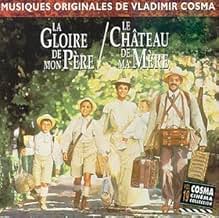
Vladimir Cosma's score perfectly captures the period and tone of Pagnol's memories.
Simply exquisite.
It is a loving, romanticized recreation of Pagnol's childhood trips to the south of France.
Director Yves Robert ices every scene with sweet affection and a seemingly effortless attention to detail.
There are so many moving, heart-tugging scenes.
Describing them all would spoil the confection.
I'll mention one. Young Marcel accompanies his father, Joseph, a school teacher, to school one day. Not believing that Marcel can read already, Joseph writes a simple declaration of his love for Marcel on the blackboard. Marcel then surprises his father by reading out loud what his father wrote. It is such a touching, affecting scene.
MY FATHER'S GLORY is bursting to the seams with such magic.
Vladimir Cosma's score perfectly captures the period and tone of Pagnol's memories.
Simply exquisite.
childhood memories where everything was as fresh as the bright blue sky
Marcel Pagnol always wanted to adapt for the screen his childhood memories that he related in 4 novels. Unfortunately, he died without he made his plan. So, it was one of his friends, Yves Robert who undertook to make the coveted movie and the result turns out to be very convincing. Yves Robert's movie restitutes perfectly the atmosphere of Pagnol's book and he made a tender, hearty movie, lulled by Vladimir Cosma's nonchalant music where the shiny sun and sky of Provence reply to the wild beauty of the hills. These hills will make the little Marcel's enchantment. Thanks to a fluid making, Robert films the happiness and the naïvety of childhood with a certain impishness. Besides, Robert always enjoyed filming childhood like Truffaut and we particularly rediscover the quoted impishness in one of his movies: "la guerre des boutons". Robert introduces us the Pagnol's family and shows liking towards his characters. More than Marcel's character, these are his feelings towards his family which Robert tries to define, especially the pride towards his lucid and ambitious father (excellent Philippe Caubère) after his hunting achievement. Moreover, he loves tenderly his mother but tends to despise his uncle. He blames him for being a liar and a conceited person. At the end, a limpid movie that remembers with nostalgia of a past era. Pagnol would certainly have appreciated the result. If the movie introduces a bitter end, it depicts the last picture as something symbolic: " the glory of Marcel's father".
Just beautiful!
This film is simply beautiful. Loaded with emotion. Marcel Pagnol's story as a kid growing up in Southern France.
This is a film I saw for the first time about 10 years ago. 10 years later, I enjoyed it even more. Yves Robert makes you care for characters. Philippe Caubère is brilliant as the father, who's a teacher. The truly beautiful Nathalie Roussel: the caring mother and wife. Young Julien Ciamaca gives a strong performance as Marcel. And what about Didier Pain: I just love his way of playing Oncle Jules.
Perhaps the greatest accomplishment of this movie is to make you travel to this part of the world, to make you feel that you're there when the story unfolds.
87/100 (***½)
Seen at home, in Toronto, on June 16th, 2002.
This is a film I saw for the first time about 10 years ago. 10 years later, I enjoyed it even more. Yves Robert makes you care for characters. Philippe Caubère is brilliant as the father, who's a teacher. The truly beautiful Nathalie Roussel: the caring mother and wife. Young Julien Ciamaca gives a strong performance as Marcel. And what about Didier Pain: I just love his way of playing Oncle Jules.
Perhaps the greatest accomplishment of this movie is to make you travel to this part of the world, to make you feel that you're there when the story unfolds.
87/100 (***½)
Seen at home, in Toronto, on June 16th, 2002.
My favorite film
This is one film I would recommend to everybody. I remember when I saw that film in the theatre in france in 1990, I fell in love with it,the acting is great ,the locations are beautiful,the story is very touching,this film is a winner for sure.I probably saw this film in is follow up a thousand time and after each viewing it's just getting better. I would also say that the music of Vladimir Costa is fantastique it fits the scenery like a pair of gloves. The best french film ever in my opinion.
Did you know
- Trivia'La Gloire de mon père', published in France in 1957, is the first volume of four autobiographical novels by Marcel Pagnol. The second volume, 'Le château de ma mere', was published in 1958. In the novels, Marcel's meeting Lili takes place in volume two, as does Marcel's decision to stay at Provence as a hermit. The two novels were translated into English and published by Doubleday (in the U.S) as a single book in 1960 under the title 'The Days Were Too Short', This translation was reprinted by North Point Press as a single book titled 'My Father's Glory / and / My Mother's Castle' in 1986.
- GoofsOn the family's holiday, each time that it is raining the sky is bright and without a cloud (except the scene with the storm).
- Quotes
Augustine: You need your gun to go shopping?
Joseph Pagnol: You never know.
- How long is My Father's Glory?Powered by Alexa
Details
- Release date
- Country of origin
- Languages
- Also known as
- Der Ruhm meines Vaters
- Filming locations
- Signes, Var, France(bird hunting party)
- Production companies
- See more company credits at IMDbPro
Box office
- Gross US & Canada
- $1,730,856
- Gross worldwide
- $1,730,856
- Runtime
- 1h 45m(105 min)
- Color
- Aspect ratio
- 1.85 : 1
Contribute to this page
Suggest an edit or add missing content