IMDb RATING
7.0/10
1.6K
YOUR RATING

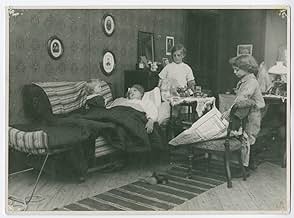
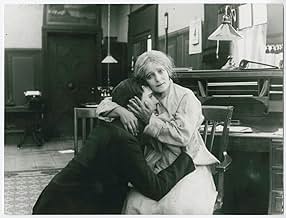
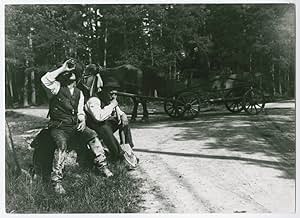
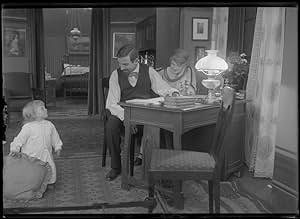
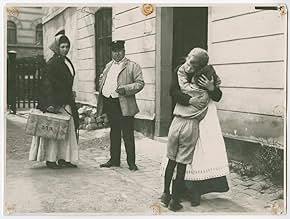
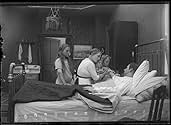
Financial struggles separate a single mother from her children.Financial struggles separate a single mother from her children.Financial struggles separate a single mother from her children.
- Director
- Writers
- Stars


- Director
- Writers
- All cast & crew
- Production, box office & more at IMDbPro
7.01.5K
1
2
3
4
5
6
7
8
9
10
Featured reviews
Bravo netflix
I dont know if netflix got involved before or after the restoration .but this a great achievement for1913 may be I'm a wimp but the end made me cry. More like this netflix please
This Is Where The Full Narrative Plots In Movies Began
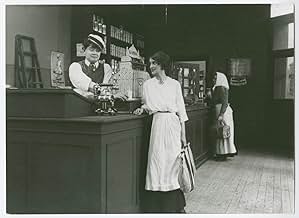
The classic narrative films so familiar in "The Golden Age of Hollywood" movies had its beginning in October 1913 with Sweden's "Ingeborg Holm." Writer/director Victor Sjostrom adapted the Nils Krok 1906 play about a family who sinks to the depths of poverty after the father dies just as he assumes ownership of a store.
What sets "Ingeborg Holm" apart from the movies produced previously to the autumn of 1913 was the breath of its plot. Instead of taking a slice of a full-scale biography of the characters and producing a film on one particular stand alone event, here Sjostrom portrays an entire family's history, beginning when the head of the household receives bank funding to begin his enterprise. He continues the plot until years later, concluding in an emotional reunion with the mother and her long-absent son.
"Ingeborg Holm" fits all the criteria in cinema's full narrative definitions. A classic narrative begins by introducing all the characters who will propel the plot forward, just as Sjostrom illustrated with the comfortable middle-class family embarking on its new enterprise. Narratives contain a triggering event which shakes things up. Here, the father dies and his assistant at the store rips off the family's profits. Sjostrom continues the narrative plot by showing the mother-led family sinking into poverty, with the kids shunt off to the poor house. Events lead up to the conclusion, where the director visually reveals Sweden's lack of a safety net for the country's poor caused by, through no fault of themselves, their hardships.
Hollywood would follow Sjostrom's pattern of full narrative movies, especially during its classic 1930's--1950's golden age. There are variations of the narrative pattern in movies today, but the Swedes were the first to put into practice on film what literature and drama had been delivering for centuries.
Today's movie viewers may be familiar with Sjostrom by his last appearance on the screen in Ingmar Bergman's 1957's "Wild Strawberries," where he had the leading role of an aging professor who rediscovers his past through a journey to receive a honorarium.
What sets "Ingeborg Holm" apart from the movies produced previously to the autumn of 1913 was the breath of its plot. Instead of taking a slice of a full-scale biography of the characters and producing a film on one particular stand alone event, here Sjostrom portrays an entire family's history, beginning when the head of the household receives bank funding to begin his enterprise. He continues the plot until years later, concluding in an emotional reunion with the mother and her long-absent son.
"Ingeborg Holm" fits all the criteria in cinema's full narrative definitions. A classic narrative begins by introducing all the characters who will propel the plot forward, just as Sjostrom illustrated with the comfortable middle-class family embarking on its new enterprise. Narratives contain a triggering event which shakes things up. Here, the father dies and his assistant at the store rips off the family's profits. Sjostrom continues the narrative plot by showing the mother-led family sinking into poverty, with the kids shunt off to the poor house. Events lead up to the conclusion, where the director visually reveals Sweden's lack of a safety net for the country's poor caused by, through no fault of themselves, their hardships.
Hollywood would follow Sjostrom's pattern of full narrative movies, especially during its classic 1930's--1950's golden age. There are variations of the narrative pattern in movies today, but the Swedes were the first to put into practice on film what literature and drama had been delivering for centuries.
Today's movie viewers may be familiar with Sjostrom by his last appearance on the screen in Ingmar Bergman's 1957's "Wild Strawberries," where he had the leading role of an aging professor who rediscovers his past through a journey to receive a honorarium.
Remarkable Early Features From The Godfather Of Swedish Silent Cinema
In conjunction with its release of THE OUTLAW AND HIS WIFE, Kino has also given us this splendid double bill from Victor Sjostrom (Seastrom in America) who was truly one of the world's great directors. His influence on other Scandinavian filmmakers (Ingmar Bergman and Carl Theodor Dreyer to name two of the best known) is clearly evident although with INGEBORG HOLM (1913) you could say he influenced many others as well. This film is incredibly well made for a film of its vintage. Although the camerawork is first rate it's the restrained naturalistic style of the acting by star Hilda Borgstrom along with the seriousness of the thematic material that really makes you sit up and take notice.
D. W. Griffith had explored social themes in his Biograph shorts before this but never in a feature length film and similar socially concious movies like TRAFFIC IN SOULS (also 1913) were not as dramatically sophisticated. The story of a widow whose husband leaves her bankrupt and is forced to live in a workhouse where she must give up her children to foster parents, works as both social indictment and dramatic tragedy. It's hard to watch this film and not become emotionally involved in the plight of the title character. The score by David Drazin is simple but effective using primarily piano with a few synthesized strings.
The other film on the disc, A MAN THERE WAS, dates from 1917 and is based on an epic poem (TERJE VIGEN) from the great Norwegian dramatist Henrik Ibsen (PEER GYNT). The English title cards are even an approximation of his poetic writing style which may be tough going for some but they add quite a bit to the visual narrative. Full of lots of natural location shooting including the open sea, MAN explores a variety of powerful emotions as a fisherman during the Napoleonic Wars is wrongfully imprisoned which results in the death of his family.
Many years after his release he is presented with the opportunity of saving the family of the man who sent him to prison. Donald Sosin's piano score is very effective especially during the sea sequences but it would have been nice to have a chamber or orchestral score to accompany the film. Nevertheless this is an important set from one of the great early film pioneers and as such should not be missed...For more reviews visit The Capsule Critic.
D. W. Griffith had explored social themes in his Biograph shorts before this but never in a feature length film and similar socially concious movies like TRAFFIC IN SOULS (also 1913) were not as dramatically sophisticated. The story of a widow whose husband leaves her bankrupt and is forced to live in a workhouse where she must give up her children to foster parents, works as both social indictment and dramatic tragedy. It's hard to watch this film and not become emotionally involved in the plight of the title character. The score by David Drazin is simple but effective using primarily piano with a few synthesized strings.
The other film on the disc, A MAN THERE WAS, dates from 1917 and is based on an epic poem (TERJE VIGEN) from the great Norwegian dramatist Henrik Ibsen (PEER GYNT). The English title cards are even an approximation of his poetic writing style which may be tough going for some but they add quite a bit to the visual narrative. Full of lots of natural location shooting including the open sea, MAN explores a variety of powerful emotions as a fisherman during the Napoleonic Wars is wrongfully imprisoned which results in the death of his family.
Many years after his release he is presented with the opportunity of saving the family of the man who sent him to prison. Donald Sosin's piano score is very effective especially during the sea sequences but it would have been nice to have a chamber or orchestral score to accompany the film. Nevertheless this is an important set from one of the great early film pioneers and as such should not be missed...For more reviews visit The Capsule Critic.
Master Victor Sjöström's Swedish Melodrama is one of the earliest notable works about a mother's Tragedy in the cinema world.
Ingeborg Holm / Margaret Day (1913) :
Brief Review -
Master Victor Sjöström's Swedish Melodrama is one of the earliest notable works about a mother's Tragedy in the cinema world. I am a big fan of Victor Sjöström and his prominent classics from the 1920s decade. It gives me an immense pleasure to view his early films, which were made on basic formulas as per the requirements and understanding of the era. Ingeborg Holm forced me to think about all the films based on Mother's tale, and I quickly realised how influential it was. It was much before Chinese cinema made "SheNu" / "The Goddess" (1934) and Indian cinema made the classic "Aurat" (1940). However, Holm's story is not that broad. It sticks to the basics while dealing with a relatable and emotional topic like motherhood. When I tried to find out the similarities between this film and other ones, I found the Marathi film "Chimni Pakhare" close to it, but then the main character had to go through different conflicts. The best close answer was the Telugu flick, "Jeevana Jyothi" (1975), which also had a double role boost. Imagine, a film from the 1910s decade influencing modern well-known films. The film is about a mother with three children who had to send her children to foster homes due to the financial crisis after her husband's death. The insanity angle is also used well by mixing it with high-end melodrama. I remember Hilda Borgström from Victor's "The Phantom Carriage" (1921), but today I noticed that her face and expressions are familiar with those of Lillian Gish. Her face kept reminding me of Gish, who also happened to work during the same period of time. Victor Sjöström's film has everything to make a classy watch, but it missed the classic tag by just an inch, in my opinion. Nevertheless, a great work from the early stages of movies that set many iconic formulas once and for all.
RATING - 7.5/10*
By - #samthebestest.
Master Victor Sjöström's Swedish Melodrama is one of the earliest notable works about a mother's Tragedy in the cinema world. I am a big fan of Victor Sjöström and his prominent classics from the 1920s decade. It gives me an immense pleasure to view his early films, which were made on basic formulas as per the requirements and understanding of the era. Ingeborg Holm forced me to think about all the films based on Mother's tale, and I quickly realised how influential it was. It was much before Chinese cinema made "SheNu" / "The Goddess" (1934) and Indian cinema made the classic "Aurat" (1940). However, Holm's story is not that broad. It sticks to the basics while dealing with a relatable and emotional topic like motherhood. When I tried to find out the similarities between this film and other ones, I found the Marathi film "Chimni Pakhare" close to it, but then the main character had to go through different conflicts. The best close answer was the Telugu flick, "Jeevana Jyothi" (1975), which also had a double role boost. Imagine, a film from the 1910s decade influencing modern well-known films. The film is about a mother with three children who had to send her children to foster homes due to the financial crisis after her husband's death. The insanity angle is also used well by mixing it with high-end melodrama. I remember Hilda Borgström from Victor's "The Phantom Carriage" (1921), but today I noticed that her face and expressions are familiar with those of Lillian Gish. Her face kept reminding me of Gish, who also happened to work during the same period of time. Victor Sjöström's film has everything to make a classy watch, but it missed the classic tag by just an inch, in my opinion. Nevertheless, a great work from the early stages of movies that set many iconic formulas once and for all.
RATING - 7.5/10*
By - #samthebestest.
Well Done and Moving Realist Drama
A woman loses her husband and children in quick succession as the hand of fate lands her a tragic blow. Good direction, cinematography and acting for the time make this one of the essential silents and a standout in Scandinavian and world cinema. A must for fans of film history and movies in general.


Did you know
- TriviaFor its British release, the name of the main character was changed to the more English sounding "Margaret Day."
- ConnectionsFeatured in Victor Seastrom (1981)
Details
- Runtime
- 1h 36m(96 min)
- Sound mix
- Aspect ratio
- 1.33 : 1
Contribute to this page
Suggest an edit or add missing content