IMDb RATING
4.9/10
1.3K
YOUR RATING

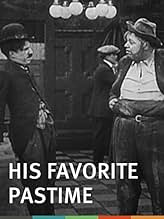
A very plastered fella follows a pretty woman home, and proceeds to make a nuisance of himself.A very plastered fella follows a pretty woman home, and proceeds to make a nuisance of himself.A very plastered fella follows a pretty woman home, and proceeds to make a nuisance of himself.
- Director
- Writers
- Stars




Peggy Pearce
- Wife
- (as Velma Pearce)
Helen Carruthers
- Servant
- (uncredited)
Jess Dandy
- Minor Role
- (uncredited)
Hampton Del Ruth
- Drinker with Moustache
- (uncredited)
Billy Gilbert
- Shoeshine Boy
- (uncredited)
William Hauber
- Shoeshine Customer
- (uncredited)
- …

George Jeske
- Servant
- (uncredited)

Edgar Kennedy
- Tough Guy in Bar
- (uncredited)

Harry McCoy
- Bar Patron
- (uncredited)

Rube Miller
- Bar Patron
- (uncredited)
- Director
- Writers
- All cast & crew
- Production, box office & more at IMDbPro
4.91.3K
1
2
3
4
5
6
7
8
9
10
Featured reviews
A very early Chaplin short that doesn't wear well
Just as Babe Ruth struck out now and then, and George Gershwin hit the occasional sour note, Charlie Chaplin made a few comedies during his apprenticeship at Keystone that don't hold up all that well. In the better efforts we can detect a great talent struggling to emerge from the chaos, and there are good moments scattered about, while a couple of them (I'm thinking of The New Janitor and Caught in a Cabaret) are quite satisfying: nicely constructed films with funny gags and a story to tell. However, several of the Keystones -- and I say this as a lifelong Chaplin fan -- are a chore to sit through. Too many of them are burdened with an overload of silly histrionics and painful-looking slapstick violence, and those good moments are hard to find.
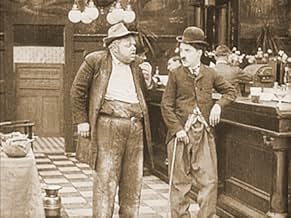
Well, I'd say the good moments are scarce indeed in His Favorite Pastime. The main problem is that Chaplin's character is so obnoxious: he looks like the Little Tramp, but sure doesn't act like him. Most of this film is set in a pub, and once Charlie's had a few shots he turns into a mean drunk. There's a vigorous workout involving a swinging door, and it's mildly amusing, but the routine lacks the finesse Chaplin would bring to such business later on, in far better comedies such as The Cure. Moreover, in his later work the characters taking the brunt of the violence usually deserved it. Here, by contrast, when an inoffensive washroom attendant (a white actor wearing black-face makeup) holds out his hand for a tip, Charlie drops a lighted match instead of a coin and burns the man's hand. Ouch! Later, thoroughly blotto, Charlie follows a pretty woman home, walks right into her house, and makes a pass at her. Actually, on his first attempt, he accidentally makes the pass at her 'colored' maid (again a white performer in black-face), and is horrified when he realizes his mistake -- a very unusual racial gag in Chaplin's work, and another strike against this film. Really the only worthwhile moment is a nice demonstration of physical dexterity, when Charlie falls over a banister, lands on a sofa, and then casually lights a cigarette.
There are a couple points of minor interest in His Favorite Pastime concerning the cast: the opening sequence in the saloon features Chaplin's Keystone colleague Roscoe Arbuckle, so heavily disguised as a shabby drunk that he's barely recognizable. Where laughs are concerned nothing much comes of the scene, but it's interesting to note Arbuckle's resemblance to Orson Welles in his grizzled makeup for A Touch of Evil, made many years later. Also, the society lady Charlie follows home is played by an actress variously known as Peggy Pearce and Viola Barry, who reportedly was romantically involved with Chaplin for a brief time during his stint at Keystone. Here she isn't given much to do, but she can be seen to better advantage opposite Lillian Gish in D. W. Griffith's Biograph drama of 1913, The Mothering Heart. That short drama, by the way, holds up considerably better than this comedy.
Well, I'd say the good moments are scarce indeed in His Favorite Pastime. The main problem is that Chaplin's character is so obnoxious: he looks like the Little Tramp, but sure doesn't act like him. Most of this film is set in a pub, and once Charlie's had a few shots he turns into a mean drunk. There's a vigorous workout involving a swinging door, and it's mildly amusing, but the routine lacks the finesse Chaplin would bring to such business later on, in far better comedies such as The Cure. Moreover, in his later work the characters taking the brunt of the violence usually deserved it. Here, by contrast, when an inoffensive washroom attendant (a white actor wearing black-face makeup) holds out his hand for a tip, Charlie drops a lighted match instead of a coin and burns the man's hand. Ouch! Later, thoroughly blotto, Charlie follows a pretty woman home, walks right into her house, and makes a pass at her. Actually, on his first attempt, he accidentally makes the pass at her 'colored' maid (again a white performer in black-face), and is horrified when he realizes his mistake -- a very unusual racial gag in Chaplin's work, and another strike against this film. Really the only worthwhile moment is a nice demonstration of physical dexterity, when Charlie falls over a banister, lands on a sofa, and then casually lights a cigarette.
There are a couple points of minor interest in His Favorite Pastime concerning the cast: the opening sequence in the saloon features Chaplin's Keystone colleague Roscoe Arbuckle, so heavily disguised as a shabby drunk that he's barely recognizable. Where laughs are concerned nothing much comes of the scene, but it's interesting to note Arbuckle's resemblance to Orson Welles in his grizzled makeup for A Touch of Evil, made many years later. Also, the society lady Charlie follows home is played by an actress variously known as Peggy Pearce and Viola Barry, who reportedly was romantically involved with Chaplin for a brief time during his stint at Keystone. Here she isn't given much to do, but she can be seen to better advantage opposite Lillian Gish in D. W. Griffith's Biograph drama of 1913, The Mothering Heart. That short drama, by the way, holds up considerably better than this comedy.
Gets continuous laughter
One of the few farcical comedies in photoplays that gets continuous laughter. The comedian, whose favorite pastime is drinking highballs, is clever, ia fact the best one Mack Sennett has sprung on the public. He is a new one and deserves mention. The situations in this offering are finely handled. This is a real comedy. - The Moving Picture World, March 21, 1914
Drunken excuses for slapstick.
In another disappointing short comedy, Charlie Chaplin once again plays the standard, belligerent drunk, drinking himself into oblivion and then stumbling around this run-of-the-mill slapstick comedy. There are some mildly interesting items, such as the fact that the altogether unamusing but watchable opening scene features Chaplin and Keystone colleague Fatty Arbuckle as fellow drinkers in the pub, taking beers away from each other and gradually getting drunker and drunker, as well as the fact that this is one of the earliest, maybe even the origin, of one of Chaplin's gags that he would later perfect and use with great success, the lighting of the match on the seat of his pants. Other than that, there is not much else of note here.
The comedy of the film is really nonexistent, which is not to say that it is entirely bad, just a failed experiment. The obnoxious drunk has long since lost its appeal, if it ever had any, and I imagine even audiences back in 1914 must have been getting tired of it. The film features some of the most blatant racism of any of his films, although certainly not the last (remember the three minds with but a single thought from A Day's Pleasure?). At one point late in the film, Charlie follows a woman right into her home and hits on her, and is then horrified when he realizes that she is black. He also drops a lighted match into a black man's hand when he holds it out for a tip, which is exactly the kind of thing that makes this drunken character so dislikable.
Most of the rest of the film is composed of people pushing and shoving other people around and hitting each other, and ultimately it seems that Chaplin simply uses drunkenness in the film to serve as a reason to stagger around and hit people and get in fights with swinging doors and fall over stairway banisters and such. The plot outline on the IMDb says "A very plastered fella follows a pretty woman home, and proceeds to make a nuisance of himself." And sadly, there's not much difference between watching the film and reading that one line.
The comedy of the film is really nonexistent, which is not to say that it is entirely bad, just a failed experiment. The obnoxious drunk has long since lost its appeal, if it ever had any, and I imagine even audiences back in 1914 must have been getting tired of it. The film features some of the most blatant racism of any of his films, although certainly not the last (remember the three minds with but a single thought from A Day's Pleasure?). At one point late in the film, Charlie follows a woman right into her home and hits on her, and is then horrified when he realizes that she is black. He also drops a lighted match into a black man's hand when he holds it out for a tip, which is exactly the kind of thing that makes this drunken character so dislikable.
Most of the rest of the film is composed of people pushing and shoving other people around and hitting each other, and ultimately it seems that Chaplin simply uses drunkenness in the film to serve as a reason to stagger around and hit people and get in fights with swinging doors and fall over stairway banisters and such. The plot outline on the IMDb says "A very plastered fella follows a pretty woman home, and proceeds to make a nuisance of himself." And sadly, there's not much difference between watching the film and reading that one line.
7tavm
His Favorite Pastime was quite a funny early Charlie Chaplin short
This Charlie Chaplin short was the first I watched on the 2 DVD collection of his courtesy of the Platinum Disc Corporation. In this one, he's the familiar Tramp character who's drunk the whole time so anything he does here is the result of his inebriation. As a result, I actually found most of it funny especially early on when one of the people he encounters is fellow comic Roscoe "Fatty" Arbuckle as a fellow bar patron who tries to get his drink without Chaplin looking. Since Arbuckle wasn't yet a star, that's all we see of him though he makes a good impression here. Most of the time, it's just Charlie as he stumbles through missing punches or getting punched, going into someone's house and getting the residents' reactions, or scaring some dark-skinned servants (obviously caricatured by Caucasian humans though not as offensively portrayed since there's no white lips or other stereotypical characteristics). Quite funny for an early effort so on that note, I recommend His Favorite Pastime.
A far from favourite pastime
Am a big fan of Charlie Chaplin, have been for over a decade now. Many films and shorts of his are very good to masterpiece, and like many others consider him a comedy genius and one of film's most important and influential directors.
Everybody has to have at least one misfire in their careers, even the best directors and actors have not so good films or films they regret. From his early still evolving period before he properly found his stride and fairly fresh from his vaudeville background, 'His Favourite Pastime' shows that Chaplin is not immune from this. While an important milestone period for him, his Keystone years/films were watchable and interesting enough overall but patchy, none being among his best work.
'His Favourite Pastime' has a few good points. While a little primitive and not exactly audacious, the production values are far from cheap. Fatty Arbuckle does bring some zest to his role.
There are also a few amusing moments, the highlight being Chaplin's saloon toilet door fight which is actually very funny and in a different league to the rest of the material.
Where 'His Favourite Pastime' falls down is that mostly it's not particularly funny. The timing feels limp and there is very little, if any, freshness or originality apart from that aforementioned scene with the saloon toilet door. There is not much charm here and there is not much to be emotionally invested by. The story is flimsy, so much so things feel over-stretched, there are not many Chaplin short films where a short length feels very dull but 'His Favourite Pastime' is one of them.
Found myself uncharacteristically disappointed by Chaplin, which was not expected because generally even in lesser efforts he was one of the better things about them. Here he does not look interested and goes through the motions, there is none of the comedy/directing genius that he is deservedly hailed for. Arbuckle aside, the rest of the cast are not much to write home about.
In conclusion, an early career misfire. 4/10 Bethany Cox
Everybody has to have at least one misfire in their careers, even the best directors and actors have not so good films or films they regret. From his early still evolving period before he properly found his stride and fairly fresh from his vaudeville background, 'His Favourite Pastime' shows that Chaplin is not immune from this. While an important milestone period for him, his Keystone years/films were watchable and interesting enough overall but patchy, none being among his best work.
'His Favourite Pastime' has a few good points. While a little primitive and not exactly audacious, the production values are far from cheap. Fatty Arbuckle does bring some zest to his role.
There are also a few amusing moments, the highlight being Chaplin's saloon toilet door fight which is actually very funny and in a different league to the rest of the material.
Where 'His Favourite Pastime' falls down is that mostly it's not particularly funny. The timing feels limp and there is very little, if any, freshness or originality apart from that aforementioned scene with the saloon toilet door. There is not much charm here and there is not much to be emotionally invested by. The story is flimsy, so much so things feel over-stretched, there are not many Chaplin short films where a short length feels very dull but 'His Favourite Pastime' is one of them.
Found myself uncharacteristically disappointed by Chaplin, which was not expected because generally even in lesser efforts he was one of the better things about them. Here he does not look interested and goes through the motions, there is none of the comedy/directing genius that he is deservedly hailed for. Arbuckle aside, the rest of the cast are not much to write home about.
In conclusion, an early career misfire. 4/10 Bethany Cox


Did you know
- TriviaThis film is among the 34 short films included in the "Chaplin at Keystone" DVD collection.
Details
- Release date
- Country of origin
- Official sites
- Languages
- Also known as
- Charlie Is Thirsty
- Production company
- See more company credits at IMDbPro
- Runtime
- 16m
- Color
- Sound mix
- Aspect ratio
- 1.33 : 1
Contribute to this page
Suggest an edit or add missing content