IMDb RATING
4.9/10
1.3K
YOUR RATING

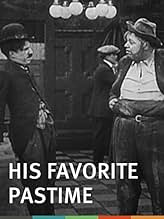
A very plastered fella follows a pretty woman home, and proceeds to make a nuisance of himself.A very plastered fella follows a pretty woman home, and proceeds to make a nuisance of himself.A very plastered fella follows a pretty woman home, and proceeds to make a nuisance of himself.
- Director
- Writers
- Stars




Peggy Pearce
- Wife
- (as Velma Pearce)
Helen Carruthers
- Servant
- (uncredited)
Jess Dandy
- Minor Role
- (uncredited)
Hampton Del Ruth
- Drinker with Moustache
- (uncredited)
Billy Gilbert
- Shoeshine Boy
- (uncredited)
William Hauber
- Shoeshine Customer
- (uncredited)
- …

George Jeske
- Servant
- (uncredited)

Edgar Kennedy
- Tough Guy in Bar
- (uncredited)

Harry McCoy
- Bar Patron
- (uncredited)

Rube Miller
- Bar Patron
- (uncredited)
- Director
- Writers
- All cast & crew
- Production, box office & more at IMDbPro
4.91.3K
1
2
3
4
5
6
7
8
9
10
Featured reviews
Gets continuous laughter
One of the few farcical comedies in photoplays that gets continuous laughter. The comedian, whose favorite pastime is drinking highballs, is clever, ia fact the best one Mack Sennett has sprung on the public. He is a new one and deserves mention. The situations in this offering are finely handled. This is a real comedy. - The Moving Picture World, March 21, 1914
Lesser Chaplin
His Favorite Pastime (1914)
* 1/2 (out of 4)
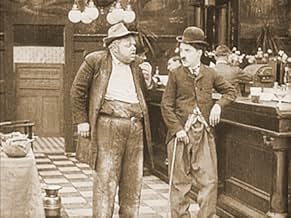
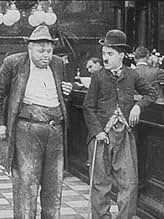
Charles Chaplin plays the town drunk who walks into a local bar and starts throwing them down. Soon he can't walk straight but that doesn't stop him from getting on everyone's nerves. The annoying drunk had been done to death by 1914 and it had been done to death by Chaplin even though this was only his seventh movie. I'm really not sure what Chaplin thought of these films but this one here is pretty darn weak from start to finish with very few laughs. Once again we get to see Chaplin stumble around, pick fights and flirt with women who belong to other men. None of this is funny and what's worse is that it appears Chaplin is just sleepwalking through the film. You certainly can't blame here because I didn't see a single attempt at anything even trying to be funny. Roscoe 'Fatty' Arbuckle has a small role at the start of the film but just stumbles around as another drunk. Even if laughs could come from drunks, this one here features rather mean drunks, which again just isn't funny.
* 1/2 (out of 4)
Charles Chaplin plays the town drunk who walks into a local bar and starts throwing them down. Soon he can't walk straight but that doesn't stop him from getting on everyone's nerves. The annoying drunk had been done to death by 1914 and it had been done to death by Chaplin even though this was only his seventh movie. I'm really not sure what Chaplin thought of these films but this one here is pretty darn weak from start to finish with very few laughs. Once again we get to see Chaplin stumble around, pick fights and flirt with women who belong to other men. None of this is funny and what's worse is that it appears Chaplin is just sleepwalking through the film. You certainly can't blame here because I didn't see a single attempt at anything even trying to be funny. Roscoe 'Fatty' Arbuckle has a small role at the start of the film but just stumbles around as another drunk. Even if laughs could come from drunks, this one here features rather mean drunks, which again just isn't funny.
simply awful
In 1914, Charlie Chaplin began making pictures. These were made for Mack Sennett (also known as "Keystone Studios") and were literally churned out in very rapid succession. The short comedies had very little structure and were completely ad libbed. As a result, the films, though popular in their day, were just awful by today's standards. Many of them bear a strong similarity to home movies featuring obnoxious relatives mugging for the camera. Many others show the characters wander in front of the camera and do pretty much nothing. And, regardless of the outcome, Keystone sent them straight to theaters. My assumption is that all movies at this time must have been pretty bad, as the Keystone films with Chaplin were very successful.
The Charlie Chaplin we know and love today only began to evolve later in Chaplin's career with Keystone. By 1915, he signed a new lucrative contract with Essenay Studios and the films improved dramatically with Chaplin as director. However, at times these films were still very rough and not especially memorable. No, Chaplin as the cute Little Tramp was still evolving. In 1916, when he switched to Mutual Studios, his films once again improved and he became the more recognizable nice guy--in many of the previous films he was just a jerk (either getting drunk a lot, beating up women, provoking fights with innocent people, etc.). The final evolution of his Little Tramp to classic status occurred in the 1920s as a result of his full-length films.
This short featured Chaplin and Fatty Arbuckle. Both were major early comedy stars. Unfortunately, neither comedian looked terribly funny or interesting in this short about jealousy. Too bad, as I had hoped for so much more from these stars.
The Charlie Chaplin we know and love today only began to evolve later in Chaplin's career with Keystone. By 1915, he signed a new lucrative contract with Essenay Studios and the films improved dramatically with Chaplin as director. However, at times these films were still very rough and not especially memorable. No, Chaplin as the cute Little Tramp was still evolving. In 1916, when he switched to Mutual Studios, his films once again improved and he became the more recognizable nice guy--in many of the previous films he was just a jerk (either getting drunk a lot, beating up women, provoking fights with innocent people, etc.). The final evolution of his Little Tramp to classic status occurred in the 1920s as a result of his full-length films.
This short featured Chaplin and Fatty Arbuckle. Both were major early comedy stars. Unfortunately, neither comedian looked terribly funny or interesting in this short about jealousy. Too bad, as I had hoped for so much more from these stars.
An early misfire for Chaplin
His Favorite Pastime is only about 16 minutes long, yet I found it so boring I nearly fell asleep. The plot makes even less sense than usual, and Chaplin seems to be sleepwalking through the comedy.
There are a few interesting gags, such as The Tramp vs. a pair of saloon doors, and later, the Tramp riding the front of a streetcar, but nothing really gels in this early silent Chaplin. His drunk act was starting to get old by this point, and in fact the character he plays here is little different than the character he played in his previous film, Tango Tangles, except that the comedy in the earlier short is far superior.
My advice: unless you have a desire to see every film Chaplin made, good or bad, skip this one.
There are a few interesting gags, such as The Tramp vs. a pair of saloon doors, and later, the Tramp riding the front of a streetcar, but nothing really gels in this early silent Chaplin. His drunk act was starting to get old by this point, and in fact the character he plays here is little different than the character he played in his previous film, Tango Tangles, except that the comedy in the earlier short is far superior.
My advice: unless you have a desire to see every film Chaplin made, good or bad, skip this one.
A very early Chaplin short that doesn't wear well
Just as Babe Ruth struck out now and then, and George Gershwin hit the occasional sour note, Charlie Chaplin made a few comedies during his apprenticeship at Keystone that don't hold up all that well. In the better efforts we can detect a great talent struggling to emerge from the chaos, and there are good moments scattered about, while a couple of them (I'm thinking of The New Janitor and Caught in a Cabaret) are quite satisfying: nicely constructed films with funny gags and a story to tell. However, several of the Keystones -- and I say this as a lifelong Chaplin fan -- are a chore to sit through. Too many of them are burdened with an overload of silly histrionics and painful-looking slapstick violence, and those good moments are hard to find.
Well, I'd say the good moments are scarce indeed in His Favorite Pastime. The main problem is that Chaplin's character is so obnoxious: he looks like the Little Tramp, but sure doesn't act like him. Most of this film is set in a pub, and once Charlie's had a few shots he turns into a mean drunk. There's a vigorous workout involving a swinging door, and it's mildly amusing, but the routine lacks the finesse Chaplin would bring to such business later on, in far better comedies such as The Cure. Moreover, in his later work the characters taking the brunt of the violence usually deserved it. Here, by contrast, when an inoffensive washroom attendant (a white actor wearing black-face makeup) holds out his hand for a tip, Charlie drops a lighted match instead of a coin and burns the man's hand. Ouch! Later, thoroughly blotto, Charlie follows a pretty woman home, walks right into her house, and makes a pass at her. Actually, on his first attempt, he accidentally makes the pass at her 'colored' maid (again a white performer in black-face), and is horrified when he realizes his mistake -- a very unusual racial gag in Chaplin's work, and another strike against this film. Really the only worthwhile moment is a nice demonstration of physical dexterity, when Charlie falls over a banister, lands on a sofa, and then casually lights a cigarette.
There are a couple points of minor interest in His Favorite Pastime concerning the cast: the opening sequence in the saloon features Chaplin's Keystone colleague Roscoe Arbuckle, so heavily disguised as a shabby drunk that he's barely recognizable. Where laughs are concerned nothing much comes of the scene, but it's interesting to note Arbuckle's resemblance to Orson Welles in his grizzled makeup for A Touch of Evil, made many years later. Also, the society lady Charlie follows home is played by an actress variously known as Peggy Pearce and Viola Barry, who reportedly was romantically involved with Chaplin for a brief time during his stint at Keystone. Here she isn't given much to do, but she can be seen to better advantage opposite Lillian Gish in D. W. Griffith's Biograph drama of 1913, The Mothering Heart. That short drama, by the way, holds up considerably better than this comedy.
Well, I'd say the good moments are scarce indeed in His Favorite Pastime. The main problem is that Chaplin's character is so obnoxious: he looks like the Little Tramp, but sure doesn't act like him. Most of this film is set in a pub, and once Charlie's had a few shots he turns into a mean drunk. There's a vigorous workout involving a swinging door, and it's mildly amusing, but the routine lacks the finesse Chaplin would bring to such business later on, in far better comedies such as The Cure. Moreover, in his later work the characters taking the brunt of the violence usually deserved it. Here, by contrast, when an inoffensive washroom attendant (a white actor wearing black-face makeup) holds out his hand for a tip, Charlie drops a lighted match instead of a coin and burns the man's hand. Ouch! Later, thoroughly blotto, Charlie follows a pretty woman home, walks right into her house, and makes a pass at her. Actually, on his first attempt, he accidentally makes the pass at her 'colored' maid (again a white performer in black-face), and is horrified when he realizes his mistake -- a very unusual racial gag in Chaplin's work, and another strike against this film. Really the only worthwhile moment is a nice demonstration of physical dexterity, when Charlie falls over a banister, lands on a sofa, and then casually lights a cigarette.
There are a couple points of minor interest in His Favorite Pastime concerning the cast: the opening sequence in the saloon features Chaplin's Keystone colleague Roscoe Arbuckle, so heavily disguised as a shabby drunk that he's barely recognizable. Where laughs are concerned nothing much comes of the scene, but it's interesting to note Arbuckle's resemblance to Orson Welles in his grizzled makeup for A Touch of Evil, made many years later. Also, the society lady Charlie follows home is played by an actress variously known as Peggy Pearce and Viola Barry, who reportedly was romantically involved with Chaplin for a brief time during his stint at Keystone. Here she isn't given much to do, but she can be seen to better advantage opposite Lillian Gish in D. W. Griffith's Biograph drama of 1913, The Mothering Heart. That short drama, by the way, holds up considerably better than this comedy.


Did you know
- TriviaThis film is among the 34 short films included in the "Chaplin at Keystone" DVD collection.
Details
- Release date
- Country of origin
- Official sites
- Languages
- Also known as
- Charlie Is Thirsty
- Production company
- See more company credits at IMDbPro
- Runtime
- 16m
- Color
- Sound mix
- Aspect ratio
- 1.33 : 1
Contribute to this page
Suggest an edit or add missing content