IMDb RATING
6.1/10
2.2K
YOUR RATING

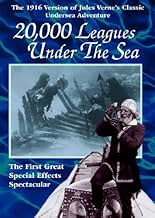
A French professor and his daughter accompany Captain Nemo on an adventure aboard a submarine.A French professor and his daughter accompany Captain Nemo on an adventure aboard a submarine.A French professor and his daughter accompany Captain Nemo on an adventure aboard a submarine.
- Awards
- 1 win total



William Welsh
- Charles Denver
- (as William Welch)

Wallis Clark
- Pencroft
- (as Wallace Clark)

Joseph W. Girard
- Maj. Cameron
- (uncredited)
Ole Jansen
- Undetermined Secondary Role
- (uncredited)

Noble Johnson
- Undetermined Secondary Role
- (uncredited)
Leviticus Jones
- Neb
- (uncredited)
Martin Murphy
- Herbert Brown
- (uncredited)

Jack Tornek
- Undetermined Secondary Role
- (uncredited)
- Director
- Writers
- All cast & crew
- Production, box office & more at IMDbPro
6.12.1K
1
2
3
4
5
6
7
8
9
10
Featured reviews
First Feature Film Using Underwater Footage
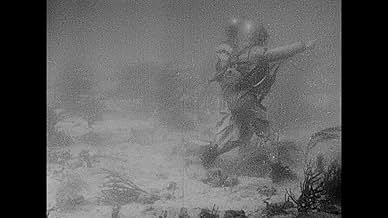
Underwater films are as popular today as ever in movie theaters. These motion pictures lend even the most of us landlubbers an idea how the ocean underneath the waves looks. The first feature movie to contain underwater footage is December 1916's "20,000 Leagues Under The Sea." This Jules Verne-based picture was the cinematic debut of screening submerged film footage, showing divers, a fake octopus, fish, including sharks and seabed scenery to amaze viewers back at a time when no one had ever seen under-the-ocean moving images before.
Brothers George and J. Ernest Williamson in 1914 made their experimental film, "Terrors of the Deep," also named "Thirty Leagues Under The Sea," using their newly-invented camera containing reflector mirrors running down a long tube to shoot underwater footage in the clear, relatively shallow waters of the Bahamas. An illuminating light next to the tube's lower end allowed the film to capture a moving world where no motion picture crew had been able to photograph before. The brothers promised investors who had put money into the project they would show a diver killing a shark. To make that happened, they dangled a dead horse over the side of their boat to attrack the predators. It worked.
Universal FIlm Company loved the Williamson film so much they made plans to base the underwater footage the brothers were assigned to shoot around an 1870 Jules Verne book, "20,000 Leagues Under The Sea," with director/actor Stuart Paton playing Captain Nemo. Actually, the movie was the merging of two Verne novels, "Leagues" and "The Mysterious Island."
The Williamsons returned to the Bahamas to shot scenes dictated by the script. Disney's 1954 film crew for its "20,000 Leagues Under The Sea" returned to the same spot in the Bahamas to shoot its underwater footage. The sprawling 1916 film was expensive to make in its two-year production, which included a flashback sequence towards the end employing hundreds of extras amidst elaborate India-style sets. The movie, although extremely popular, never produced a profit, discouraging Hollywood from making another Verne film for 12 years until ironically the part-talkie, two-color Technicolor MGM's "The Mysterious Island" was released in 1929.
Brothers George and J. Ernest Williamson in 1914 made their experimental film, "Terrors of the Deep," also named "Thirty Leagues Under The Sea," using their newly-invented camera containing reflector mirrors running down a long tube to shoot underwater footage in the clear, relatively shallow waters of the Bahamas. An illuminating light next to the tube's lower end allowed the film to capture a moving world where no motion picture crew had been able to photograph before. The brothers promised investors who had put money into the project they would show a diver killing a shark. To make that happened, they dangled a dead horse over the side of their boat to attrack the predators. It worked.
Universal FIlm Company loved the Williamson film so much they made plans to base the underwater footage the brothers were assigned to shoot around an 1870 Jules Verne book, "20,000 Leagues Under The Sea," with director/actor Stuart Paton playing Captain Nemo. Actually, the movie was the merging of two Verne novels, "Leagues" and "The Mysterious Island."
The Williamsons returned to the Bahamas to shot scenes dictated by the script. Disney's 1954 film crew for its "20,000 Leagues Under The Sea" returned to the same spot in the Bahamas to shoot its underwater footage. The sprawling 1916 film was expensive to make in its two-year production, which included a flashback sequence towards the end employing hundreds of extras amidst elaborate India-style sets. The movie, although extremely popular, never produced a profit, discouraging Hollywood from making another Verne film for 12 years until ironically the part-talkie, two-color Technicolor MGM's "The Mysterious Island" was released in 1929.
The hammy acting styles distract, but the pioneering underwater photography is worth a look.
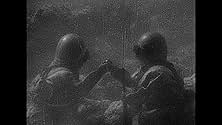
This may have been thrilling in 1916, but today it seems more of a curio. The Williamson brothers invented a camera to take pictures underwater, (the prologue tells us, complete with photos of them) so there's lots of shots of fish swimming, the bottom of the sea, men in diving suits and one battle with an octopus, which was a bit fuzzy. Still, the sense of watching movie history was strong, but don't expect too much in light of more modern techniques. What really bothered me was the hammy acting styles, with lots of arm motions and exaggerated facial features. It's the style that gave silent films a bad name. One who avoided this was Matt Moore, the hero of the film, and the only actor I recognized. Perhaps that is why he was still making movies in the 50's. The film uses plot elements of Verne's "The Mysterious Island" as well as "Twenty Thousand Leagues Under the Sea."
A wonderful and groundbreaking film
This film combines plot elements of Verne's original 20,000 Leagues Under the Sea and Mysterious Island, then adds its own subplot involving the origin of Captain Nemo that ties everything together. I was very impressed by the writing. This was the first major film with underwater photography. The set design was impressive. I found the diving suits to be particularly interesting--essentially early versions of scuba gear. The new score fit very well into the story. All in all, a wonderful and landmark achievement in filmmaking.
Captain Nemo and the Mysterious Island
White-bearded mystery man Allan Holubar (as Captain Nemo) trolls the seas, looking for revenge against William Welch (as Charles Denver). We begin when Mr. Holubar's invention, an underwater ship called a submarine, is mistaken for a sea monster. Commanding the "Nautilus", Holubar wants to avenge the abduction of his wife and find his "child of nature" daughter Jane Gail (as Princess Daaker). He defeats, then compassionately rescues a crew of attackers, and goes near "Mysterious Island". Coincidently, enemy Welch and daughter Gail end up there, the latter falling in love with Matt Moore (as Lieutenant Bond)...
Reportedly, the first submarine photoplay ever filmed, "Twenty Thousand Leagues Under the Sea" begins with a tribute to the Williamson brothers, "who alone have solved the secret of under-the-ocean photography." The brothers Ernest and George Williamson appear in an on screen introduction, tipping their hats (and looking like they could have had careers as actors). The film is mainly notable for their work in pioneering underwater photography; otherwise, this adaptation of Jules Verne's popular novel (with additions from his "The Mysterious Island") is sluggish sailing. It also corrupts the source material.
***** Twenty Thousand Leagues Under the Sea (12/24/16) Stuart Paton ~ Allen Holubar, Jane Gail, Matt Moore, William Welch
Reportedly, the first submarine photoplay ever filmed, "Twenty Thousand Leagues Under the Sea" begins with a tribute to the Williamson brothers, "who alone have solved the secret of under-the-ocean photography." The brothers Ernest and George Williamson appear in an on screen introduction, tipping their hats (and looking like they could have had careers as actors). The film is mainly notable for their work in pioneering underwater photography; otherwise, this adaptation of Jules Verne's popular novel (with additions from his "The Mysterious Island") is sluggish sailing. It also corrupts the source material.
***** Twenty Thousand Leagues Under the Sea (12/24/16) Stuart Paton ~ Allen Holubar, Jane Gail, Matt Moore, William Welch
Interesting & Generally Entertaining, Though Lacking Verne's Depth
This early adaptation of "20,000 Leagues Under the Sea" is interesting, and generally entertaining, though it lacks the depth of the original story. Its strengths are the underwater effects, the settings, and the camera work, which at times are remarkable for the era. On the other hand, it makes little attempt to convey the most important themes of Verne's story, settling instead for straightforward adventure and melodrama, which are much easier to film.
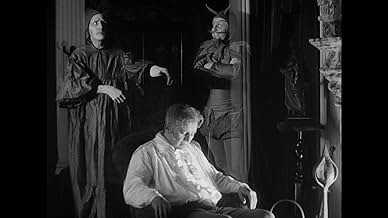
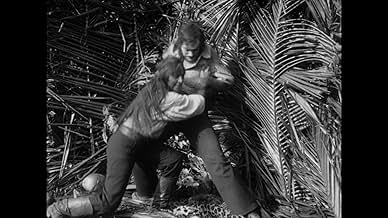
One can only guess how exciting it might have been in 1916 to see some of these images and special effects. Only occasionally does it falter a bit and lose the illusion of reality for a short time; otherwise it is quite convincing. Just seeing the underwater photography alone must have been pretty impressive at the time, and they also managed to get some interesting sea creatures on film. The photography itself is pretty good throughout the movie, and some of the props and settings are nicely done.
The story draws rather freely both from "20,000 Leagues ... " and also from another Verne story, "Mysterious Island". It is a mostly entertaining yarn, full of action and with some unexpected developments. But only a small portion of Verne's scientific vision comes across, and none of the depth of the characters and of their interactions has been preserved. Captain Nemo is one of literature's more complex and thought-provoking characters, but here he becomes more of a stock melodrama figure. Professor Arronax and Ned Land are mostly spectators, rather than providing worthy foils for the mad genius Nemo.
It's by no means a bad movie, and if you are a silent film fan and/or are interested in film history, there should be enough here to make it worth watching. But otherwise, the 1950's Disney version does a much better job of filming the profound vision and philosophical conflict found in Verne's original novel.
One can only guess how exciting it might have been in 1916 to see some of these images and special effects. Only occasionally does it falter a bit and lose the illusion of reality for a short time; otherwise it is quite convincing. Just seeing the underwater photography alone must have been pretty impressive at the time, and they also managed to get some interesting sea creatures on film. The photography itself is pretty good throughout the movie, and some of the props and settings are nicely done.
The story draws rather freely both from "20,000 Leagues ... " and also from another Verne story, "Mysterious Island". It is a mostly entertaining yarn, full of action and with some unexpected developments. But only a small portion of Verne's scientific vision comes across, and none of the depth of the characters and of their interactions has been preserved. Captain Nemo is one of literature's more complex and thought-provoking characters, but here he becomes more of a stock melodrama figure. Professor Arronax and Ned Land are mostly spectators, rather than providing worthy foils for the mad genius Nemo.
It's by no means a bad movie, and if you are a silent film fan and/or are interested in film history, there should be enough here to make it worth watching. But otherwise, the 1950's Disney version does a much better job of filming the profound vision and philosophical conflict found in Verne's original novel.


Did you know
- TriviaUnderwater cameras were not used. The Williamson brothers had developed a system of watertight tubes and mirrors, like an upside-down periscope, and were dependent on the clarity of water and sunshine to provide the necessary light.
- GoofsIn one scene on the island the balloon survivors are at a table and a black servant appears. He never shows up again and is not rescued at the end of the film with the rest of the survivors.
- Quotes
Capt. Nemo: I am Captain Nemo and this is my submarine, 'Nautilus'... It has pleased me to save your lives... You are my prisoners.
- Crazy creditsThe opening titles announce "The First Submarine Photoplay Ever Filmed".
- Alternate versionsKino International released a video with a music soundtrack by Alexander Rannie and Brian Benison (music © 1991). Running time is 101 minutes.
- ConnectionsFeatured in To the Galaxy and Beyond with Mark Hamill (1997)
Details
- Release date
- Country of origin
- Language
- Also known as
- Twenty Thousand Leagues Under the Sea
- Filming locations
- Production company
- See more company credits at IMDbPro
Box office
- Budget
- $200,000 (estimated)
- Runtime
- 1h 45m(105 min)
- Sound mix
- Aspect ratio
- 1.33 : 1
Contribute to this page
Suggest an edit or add missing content