
A District Attorney's outspoken stand on abortion lands him in trouble with the local community.A District Attorney's outspoken stand on abortion lands him in trouble with the local community.A District Attorney's outspoken stand on abortion lands him in trouble with the local community.
- Awards
- 1 win total
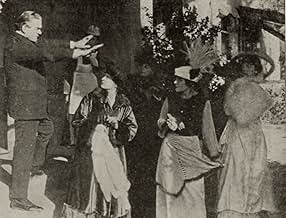

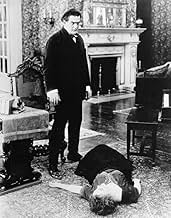
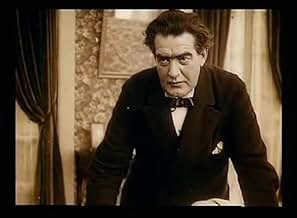

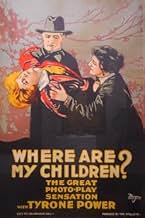


Tyrone Power Sr.
- District Attorney Richard Walton
- (as Mr. Tyrone Power)

Mrs. Tyrone Power
- Mrs. Richard Walton
- (as Helen Riaume)


Alva D. Blake
- Roger - Mrs. Walton's Brother
- (as A.D. Blake)


George Berrell
- Judge
- (uncredited)
Georgia French
- Child
- (uncredited)

Mary MacLaren
- Walton's Maid
- (uncredited)
Andy MacLennan
- Man on Street
- (uncredited)
Anne Power
- Infant
- (uncredited)
6.2926
1
2
3
4
5
6
7
8
9
10
Featured reviews
A Powerful Lois Weber Film
Although one may not agree with the sentiments of Where Are My Children?, nonetheless it is a powerful film dealing with a controversial subject, particularly for its day. Although Weber assumes a pedantic cloak in telling her story, she avoids sensationalizing it. One may disagree with her view of abortion as "perverting" woman's role in parenthood, but to me the focus of the film is the tragedy of Tyrone Power's character not having the children he so desperately wants.
The cast is quite good and from a historical perspective, note that this is the only known film of Helen Riaume, who plays Mrs. Walton. Also worth mentioning is the lovely Rena Rogers (Lillian), whose character serves as the fulcrum for the plot.
The last scene of the film is particularly moving, with Weber superimposing images of people into the picture, one of her favorite cinematic techniques. I highly recommend the film and look forward to viewing it again.
The cast is quite good and from a historical perspective, note that this is the only known film of Helen Riaume, who plays Mrs. Walton. Also worth mentioning is the lovely Rena Rogers (Lillian), whose character serves as the fulcrum for the plot.
The last scene of the film is particularly moving, with Weber superimposing images of people into the picture, one of her favorite cinematic techniques. I highly recommend the film and look forward to viewing it again.
Attitudes Haven't Really Changed That Much a Century Later
This remarkable film provides a rare opportunity to see the celebrated British-born stage actor Tyrone Power (1869-1931), whose son - now far more famous than he - appears in the film as a toddler. The action takes place largely in and around the palatial home of district attorney Richard Walton (played by Power), which in the handsome tinted print currently available considerably helps sugar the pill of the unglamorous and sometimes harrowing detail of this extremely skilfully made film.
Only last week a British Tory MP caused red faces when comments he made five years ago proposing that the jobless have vasectomies became public knowledge; which shows that despite the Nazis' best effort to bring eugenics into disrepute, concern about Homo Sapiens' thinning gene pool continues unabated in the 21st Century, recently well expressed in the movie 'Idiocracy' (2006).
Initially the subject of 'Where Are My Children?' appears to be the advocation of contraceptive birth control as the means to end the misery inflicted upon impoverished women repeatedly bearing children they cannot afford to raise; but even here the implication is the rather heartless one that it would have been better had all the dishevelled and ill cared-for children we see never actually been born in the first place.
However, the focus then shifts to the affluent set, whose womenfolk are depicted as self-centred hedonists shirking their responsibility to future generations by not reproducing; an opinion you'll still hear being expressed today. These women seem to have maintained their state of pristine childlessness through regular abortions - like visits to the dentist - rather than the use of contraception.
Was this really the case a hundred years ago?
Only last week a British Tory MP caused red faces when comments he made five years ago proposing that the jobless have vasectomies became public knowledge; which shows that despite the Nazis' best effort to bring eugenics into disrepute, concern about Homo Sapiens' thinning gene pool continues unabated in the 21st Century, recently well expressed in the movie 'Idiocracy' (2006).
Initially the subject of 'Where Are My Children?' appears to be the advocation of contraceptive birth control as the means to end the misery inflicted upon impoverished women repeatedly bearing children they cannot afford to raise; but even here the implication is the rather heartless one that it would have been better had all the dishevelled and ill cared-for children we see never actually been born in the first place.
However, the focus then shifts to the affluent set, whose womenfolk are depicted as self-centred hedonists shirking their responsibility to future generations by not reproducing; an opinion you'll still hear being expressed today. These women seem to have maintained their state of pristine childlessness through regular abortions - like visits to the dentist - rather than the use of contraception.
Was this really the case a hundred years ago?
Wasn't the wife played by his real wife?
I find it interesting that Mrs. Walton is credited as Helen Riaume (with no IMDb link). This appears to have been the same Helen Riaume who is credited elsewhere as "Mrs. Tyrone Power," and was Tyrone Power Sr.'s wife until the same year this was released. The content of this film is unusual enough, and having a married couple playing the leads and not credited as such adds to the interest.
In particular, the content was of a controversial nature in 1916, and is even more so today, with the sides reversed. The topic of abortion (called simply "birth control" in this movie) was not one that was raised often in films anyway, and moral guardians would have hesitated to let a movie through that favored the practice. The climate of Hollywood being what it is today, there might be no legal impediment to making a similarly anti-abortion film, but it would certainly be frowned upon, and perhaps de facto blacklisted.
In particular, the content was of a controversial nature in 1916, and is even more so today, with the sides reversed. The topic of abortion (called simply "birth control" in this movie) was not one that was raised often in films anyway, and moral guardians would have hesitated to let a movie through that favored the practice. The climate of Hollywood being what it is today, there might be no legal impediment to making a similarly anti-abortion film, but it would certainly be frowned upon, and perhaps de facto blacklisted.
Surpassed my expectations; very powerful and will never forget it.
I saw this silent movie late last evening on Turner Classic Movies. It surpassed my expectations (especially being that there was no sound and that it was made in 1916!); I could not take my eyes away. The interesting concept of "the place where unborn children are" was very powerful. The emotions portrayed in this movie very very strong; excellent acting by all. It is a movie that I will never forget, am still thinking about it today-it was that moving!
Birth of a Baby
Local D. A. desperately wants to be a father. Problem is, his wife has figured out children are completely unnecessary. The couple are childless. One day the D. A. sees a very, um, white patient faint in the street and later die in the local abortion doctor's office so he puts the doctor on trial for manslaughter and gets a conviction (a foregone conclusion in those days). Only afterward does he bother to look at the doctor's log books, where he sees his wife - and all her well-to-do friends - had punched more than one hole in her Pay For 5 Abortions, Get 1 Free card.
Realizing what an unwitting hypocrite he's been, D. A. confronts his wife and her friends. But the D. A. and his wife remain childless. At most, they can only imagine the family they might have raised.
That pro-life theme is about 85 per cent of the movie. It's all earnestly over-acted and ham-fisted. About as subtle as a Michael Moore movie.
The same pro-life D. A. also prosecutes some guy for spreading birth control information. D. A. Believes in big families, so it's logically consistent that he doesn't want abortion or birth control getting in the way of that. Of course today we know that giving women access to birth control, clean water and antibiotics raises life expectancy from ''short, poor and unhappy" to ''roughly 81." Wasn't so clear-cut back then, when birth control was a no-no (and mystifyingly still is for superstitious weirdos in some parts of the world).
The subversive part (well, for today's audiences) of the birth control guy's trial is his reliance on some book about eugenics. For you kids out there, eugenics was early-1900s ''scientism" under the guise of knowing what was best for the huddled masses. The basic idea was that the poorz, ethnics (mostly bl3ks) and ''mental defectives" (to use the repulsive term of the time) were to be encouraged to NOT breed, and if they did (accidentally or immorally, in this movie's terms) they should be able to access abortion. That was the motivation behind Margaret Sanger (funded by Bill Gates Sr) and her Planned Parenthood slaughterhouses. Progressives wanted to keep the world clean, safe and mostly empty for rich white people.
These days, the 99% are asked for forego meat, gasoline-powered vehicles and home heating oil AND have unhindered access to abortion, all in the name of saving the planet. Today's Progressives don't really care about color. As long as the 99 percenters get picked off, leaving more for the Davos crowd. It's a straight line from A to B.
In that way, this movie is at least as insidious as Birth of a Nation. I wouldn't be surprised if racist war-monger and Democrat President Woodrow Wilson showed the two movies as a double bill to his Kay-kay-Kay guests in the White House.
Realizing what an unwitting hypocrite he's been, D. A. confronts his wife and her friends. But the D. A. and his wife remain childless. At most, they can only imagine the family they might have raised.
That pro-life theme is about 85 per cent of the movie. It's all earnestly over-acted and ham-fisted. About as subtle as a Michael Moore movie.
The same pro-life D. A. also prosecutes some guy for spreading birth control information. D. A. Believes in big families, so it's logically consistent that he doesn't want abortion or birth control getting in the way of that. Of course today we know that giving women access to birth control, clean water and antibiotics raises life expectancy from ''short, poor and unhappy" to ''roughly 81." Wasn't so clear-cut back then, when birth control was a no-no (and mystifyingly still is for superstitious weirdos in some parts of the world).
The subversive part (well, for today's audiences) of the birth control guy's trial is his reliance on some book about eugenics. For you kids out there, eugenics was early-1900s ''scientism" under the guise of knowing what was best for the huddled masses. The basic idea was that the poorz, ethnics (mostly bl3ks) and ''mental defectives" (to use the repulsive term of the time) were to be encouraged to NOT breed, and if they did (accidentally or immorally, in this movie's terms) they should be able to access abortion. That was the motivation behind Margaret Sanger (funded by Bill Gates Sr) and her Planned Parenthood slaughterhouses. Progressives wanted to keep the world clean, safe and mostly empty for rich white people.
These days, the 99% are asked for forego meat, gasoline-powered vehicles and home heating oil AND have unhindered access to abortion, all in the name of saving the planet. Today's Progressives don't really care about color. As long as the 99 percenters get picked off, leaving more for the Davos crowd. It's a straight line from A to B.
In that way, this movie is at least as insidious as Birth of a Nation. I wouldn't be surprised if racist war-monger and Democrat President Woodrow Wilson showed the two movies as a double bill to his Kay-kay-Kay guests in the White House.


Did you know
- TriviaThe two children of Tyrone Power Sr. and his co-star and real-life wife Helen Reaume (aka, Mrs. Tyrone Power), appear in this film: their newborn daughter Anne Power and their two-year-old son Tyrone Power, who became a matinee idol from the 1930s to the 1950s. He appears in the last minute and a half of the movie as a "ghost child".
- Quotes
Opening Title Card I: The question of birth control is now being generally discussed. All intelligent people know that birth control is a subject of serious public interest. Newspapers, magazines and books have treated different phases of this question. Can a subject thus dealt with on the printed page be denied careful dramatization on the motion picture screen? The Universal Film Mfg. Company believes not.
- Alternate versionsIn 2000, the Library of Congress Motion Picture Conservation Center copyrighted a preservation print reconstructed from several incomplete prints. Funded by the Women's Film Preservation Fund of New York Women in Film and Television, it was coordinated by Scott Simmon, has a piano score composed and performed by Martin Marks, and runs 62 minutes.
- ConnectionsEdited into Governing Body (2023)
Details
- Release date
- Country of origin
- Languages
- Also known as
- The Illborn
- Filming locations
- Production companies
- See more company credits at IMDbPro
- Runtime
- 1h 2m(62 min)
- Sound mix
- Aspect ratio
- 1.33 : 1
Contribute to this page
Suggest an edit or add missing content