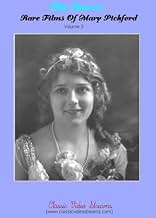
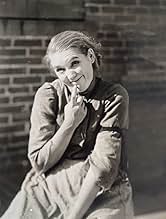
A London laundress attempts to rise above her station in order to capture the love of a wealthy young man, thus missing out on the truer love of one of her own class.A London laundress attempts to rise above her station in order to capture the love of a wealthy young man, thus missing out on the truer love of one of her own class.A London laundress attempts to rise above her station in order to capture the love of a wealthy young man, thus missing out on the truer love of one of her own class.
- Director
- Writers
- Stars
Rose Dione
- Madame Jeanne Gallifilet Didier
- (as Rosa Dione)
Lavender the Horse
- Ex polo pony
- (as Lavendor the Horse)
Taylor N. Duncan
- Undetermined Role
- (uncredited)
Joan Marsh
- Undetermined Role
- (uncredited)
Nadyne Montgomery
- Undetermined Role
- (uncredited)
Theodore Roberts
- Undetermined Role
- (uncredited)
Hal Wilson
- Undetermined Role
- (uncredited)
- Director
- Writers
- All cast & crew
- Production, box office & more at IMDbPro
6.3308
1
2
3
4
5
6
7
8
9
10
Featured reviews
No soap
A not-entirely-successful, offbeat, change-of-pace for America's alleged Sweetheart, Mary Pickford. Playing a Cockney laundress in an excellently re-created London, she is at her best with the comedy: falling in and out of laundry bins, hiding under baskets, keeping a horse in her apartment, etc. As for the pathos, our heroine is less sympathetic here than usual, mainly because most of the character's problems are brought on by herself and her own unhealthy fantasy life (some of which is depicted in a lengthy, but wonderfully loopy, imaginary flashback). There is no real villain to overcome but herself -- and she fails to manage a victory. The ending (or endings -- three different final scenes were filmed) is abrupt and not terribly convincing. The supporting cast, though competent, is unmemorable -- except, perhaps, for Lavender, the horse, who gets a couple of good bits, including a final sight gag in one of the endings: pulling a chair, and the movie, out from under poor Mary.
The best of Pickford, as far as I've seen
A Mary Pickford vehicle. I've seen a small handful of her films, and this is probably my favorite of them so far. It's no great work of art, but it's a cute little comedy and Pickford's performance is quite funny. Here she plays a Cockney laundry girl. She dreams of being wooed by a nobleman, and has even told stories to her teasing co-workers about her dream man being real. A subplot about a horse Pickford saves from the glue factory leads her to find true romance. While that description sounds more like typical silent melodrama, it's really lightly handled and goofy, with a lot of slapstick. It never reaches the kind of brilliant humor of the great silent clowns, but it's quite enjoyable.
Unusual film for Pickford
Amanda Afflick, a poor laundress, works in London, where she is taunted by her co-workers and called "Sudsie." She has all sorts of misadventures. She then makes up a story that she is really the daughter of the "Arch-dook," and is hoping to find a man who will love her for who she is. Benjamin Jones, another commoner, shows fondness for her, but Amanda tries to hold out for the well-off Horace Greensmith, who had left his shirt to be laundered. (Note: in an alternate ending, according to contemporaneous reviews, Amanda cries her heart out on the steps of the laundry. This scene is included in the version I watched, but a more satisfying conclusion is added.)
It took me a while to warm up to this film. For one thing, Pickford is almost unrecognizable in her role; I kept wondering if I was watching the right movie. I was almost jolted during the scene where she imagines she is the daughter of royalty. We get a nice close-up of Pickford, and she appears stunningly beautiful, in contrast to her homely appearance for most of the film.
Some of her early predicaments were not too funny; some seemed downright painful to watch. Eventually, the story did grow on me. There are also some good laughs involving a horse she rescues. For me, Pickford's talent is on full display when she realizes that Albert Austin (as Horace Greensmith), who has just invited her out, is actually ashamed to be seen with her. One can see the pain in her face, even as she smiles at the man who is beyond her station in life.
This is not a classic by any means, but a chance to see Pickford playing an interesting character.
It took me a while to warm up to this film. For one thing, Pickford is almost unrecognizable in her role; I kept wondering if I was watching the right movie. I was almost jolted during the scene where she imagines she is the daughter of royalty. We get a nice close-up of Pickford, and she appears stunningly beautiful, in contrast to her homely appearance for most of the film.
Some of her early predicaments were not too funny; some seemed downright painful to watch. Eventually, the story did grow on me. There are also some good laughs involving a horse she rescues. For me, Pickford's talent is on full display when she realizes that Albert Austin (as Horace Greensmith), who has just invited her out, is actually ashamed to be seen with her. One can see the pain in her face, even as she smiles at the man who is beyond her station in life.
This is not a classic by any means, but a chance to see Pickford playing an interesting character.
Uneven, But Generally Enjoyable
While it's more uneven than usual for a Mary Pickford feature, "Suds" is generally enjoyable, with a mix of material that works often enough to make it worthwhile. Pickford's character was something of a change-of-pace for her, in that many of the character's problems here are simply her own fault, not the result of circumstance. There is also more silly humor than you expect from Mary, but then there are some better comedy sequences that she pulls off as well as ever.
The story has Pickford as Amanda, a day-dreamer working in a hand laundry, where the other employees see her as a ridiculous romantic at best, and an inept nuisance at worst. The plot is carried in part by her far-fetched fantasies, and in part by her efforts to help out the old horse who pulls the laundry's delivery cart. Most of the scenes hold up well enough on their own, but as a whole it never really seems to get off the ground. Fortunately, Mary could make even the most negligible material seem watchable, so most of it works all right, and there are a couple of very good sequences. With a lesser star, it probably would have fallen apart, and overall it probably gets about as much as it could have from the material.
Pickford Returns To Adult Role
Not wanting to be pigeon holed in little girls' roles, Mary Pickford immediately took on the part of a laundress working in a dingy laundry in the January 1920 film "Suds." She's constantly picked on by co-workers because of her fantasies associating with handsome men and members of the upper class. Pickford makes her character, Amanda, look as plain as possible by wearing worn out clothes and hunching her shoulders. Saving an old white work horse from the glue factory by taking it to her apartment opens doors of opportunities for Amanda in potentially realizing her dreams.
The studio was criticized for using the play's original ending and immediately filmed and tacked on an upbeat conclusion that still leaves today's viewers a bit confused.
"Suds," based on the 1904 English play 'Op o' Me Thumb," was revamped into a musical opera in the late 1990's using 1960's songs such as 'Please Mr. Postman' and 'Chapel of Love.'
The studio was criticized for using the play's original ending and immediately filmed and tacked on an upbeat conclusion that still leaves today's viewers a bit confused.
"Suds," based on the 1904 English play 'Op o' Me Thumb," was revamped into a musical opera in the late 1990's using 1960's songs such as 'Please Mr. Postman' and 'Chapel of Love.'
Did you know
- TriviaContemporary sources state that the harsh conclusion generated such widespread criticism that a second, happy ending was filmed in which Amanda lives happily on Lady Burke's estate with Lavender and Ben.
- Quotes
Title card: Imagination is God's greatest gift... Even a hungry flea on a toy dog may be happy - with imagination!
- Alternate versionsAfter audiences complained about the original, unhappy ending, the studio filmed two happy endings, one for the American release and another for foreign audiences. Both are contained on the 2005 DVD.
- ConnectionsEdited into American Experience: Mary Pickford (2005)
Details
Box office
- Gross worldwide
- $772,155
- Runtime
- 1h 15m(75 min)
- Sound mix
- Aspect ratio
- 1.33 : 1
Contribute to this page
Suggest an edit or add missing content