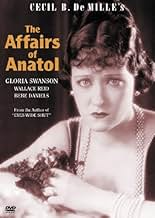
The Affairs of Anatol
- 1h 57m
IMDb RATING
6.6/10
1.4K
YOUR RATING

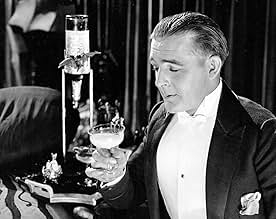
Socialite Anatol Spencer seeks a better relation than he has with his wife. He sets up the friend of his youth Emilie in an apartment and she two-times him; he comforts near-suicidal Annie a... Read allSocialite Anatol Spencer seeks a better relation than he has with his wife. He sets up the friend of his youth Emilie in an apartment and she two-times him; he comforts near-suicidal Annie and she robs him.Socialite Anatol Spencer seeks a better relation than he has with his wife. He sets up the friend of his youth Emilie in an apartment and she two-times him; he comforts near-suicidal Annie and she robs him.
- Director
- Writers
- Stars
- Awards
- 1 win total


Laura Anson
- Vivian's Maid
- (uncredited)

Alma Bennett
- Chorus Girl
- (uncredited)

William Boyd
- Guest
- (uncredited)

Shannon Day
- Chorus Girl
- (uncredited)

Julia Faye
- Tibra
- (uncredited)

Elinor Glyn
- Bridge Player
- (uncredited)

Winter Hall
- Dr. Johnston
- (uncredited)

Raymond Hatton
- Great Blatsky - Violin Teacher
- (uncredited)

Fred Huntley
- Stage Manager
- (uncredited)
- Director
- Writers
- All cast & crew
- Production, box office & more at IMDbPro
6.61.4K
1
2
3
4
5
6
7
8
9
10
Featured reviews
Entertaining though overlong social comedy
The plot and an analysis is elsewhere here well done with Ron Oliver's review. Suffice to say that the hand-tinted titles and the sepia-toned film itself, hinting at reds along with its browns are a real joy to behold. Seeing so many luminaries in one film is also a treat - Reid, Swanson, Moran, Daniels, Ayres.
However, the film could easily have been a half hour shorter with less wear and tear on the viewer and with virtually little loss in the morality tale or sense of the work. It's all enjoyable but it does drag a bit.
Grapevine and Kino both have excellent prints. Important for its director and his non-epic style as well as for the presence of Reid and Swanson, but far from a great or important film.
However, the film could easily have been a half hour shorter with less wear and tear on the viewer and with virtually little loss in the morality tale or sense of the work. It's all enjoyable but it does drag a bit.
Grapevine and Kino both have excellent prints. Important for its director and his non-epic style as well as for the presence of Reid and Swanson, but far from a great or important film.
Tempted by the Fruit of Another
Wallace Reid (as Anatol Spencer) is a wealthy newlywed who is oddly attracted to various women other than his wife - specifically: Wanda Hawley (as Emilie), Agnes Ayres (as Annie), and Bebe Daniels (as Satan Synne!). Gloria Swanson (as Vivian) is the wife who seems to develop a roving eye of her own as the running time progresses. BUT, are "The Affairs of Anatol" really affairs, or just a series of titillating temptations?
DeMille's work with mirrors is on display, with the director inserting a skeleton image of Mr. Reid in one scene. Reid was a very big star when this film was released (one of the most popular actors in the world); and, though this isn't really representative, it's nice to see him. Of the leading ladies, I enjoyed Ms. Ayres over the others, because her simple scenes with Monte Blue seem so ORDINARY when contrasted with the rest of the goings-on.
DeMille's unlikely mix of titillation, religiosity, and heavy-handed message is obviously in full flower. While there are no performances for the ages, the scenes with Swanson being hypnotized by Theodore Kosloff are fun. Elliott Dexter (as Max Runyon) is the film's best supporting actor; keep a sharp eye on his closing scenes as he'll reveal, through his performance, the affair you might not have been expecting
****** The Affairs of Anatol (9/25/21) Cecil B. DeMille ~ Wallace Reid, Gloria Swanson, Bebe Daniels, Elliott Dexter
DeMille's work with mirrors is on display, with the director inserting a skeleton image of Mr. Reid in one scene. Reid was a very big star when this film was released (one of the most popular actors in the world); and, though this isn't really representative, it's nice to see him. Of the leading ladies, I enjoyed Ms. Ayres over the others, because her simple scenes with Monte Blue seem so ORDINARY when contrasted with the rest of the goings-on.
DeMille's unlikely mix of titillation, religiosity, and heavy-handed message is obviously in full flower. While there are no performances for the ages, the scenes with Swanson being hypnotized by Theodore Kosloff are fun. Elliott Dexter (as Max Runyon) is the film's best supporting actor; keep a sharp eye on his closing scenes as he'll reveal, through his performance, the affair you might not have been expecting
****** The Affairs of Anatol (9/25/21) Cecil B. DeMille ~ Wallace Reid, Gloria Swanson, Bebe Daniels, Elliott Dexter
Exceptional Film with Wallace Reid and Gloria Swanson
The usual DeMille mix of sex, sin, and moralizing but with tongue firmly in place. Poor Anatol (Wallace Reid) is always "rescuing" women, much to the consternation of his wife Vivian (Gloria Swanson) who always has Max (Elliott Dexter) hanging around her.
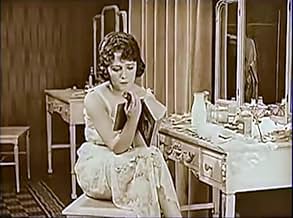
The first rescue is of "a bubble-head jazz girl" named Emilie (Wanda Hawley) who is clearly a gold digger, She has poor old Gordon (Theodore Roberts) in her pocket but decides to go after Anatol who thinks he can redeem the poor girl. Meanwhile all she wants is a new victim. There's a great scene of redemption when Anatol tells Emilie she must throw away all her jewels in order to be cleansed. She immediately empties her jewel boxes and puts the empty boxes in a valise. They drive to the river where she throws away the empty boxes. Foolish Anatol believes her but learns the sad truth when he interrupts a wild dinner party Emilie is throwing.
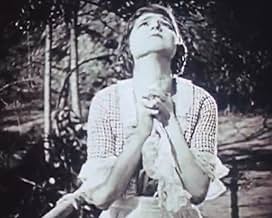
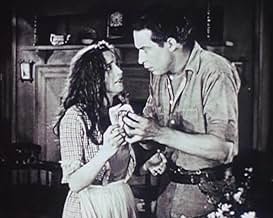
Off to the country for purity and clean air, Anatol and Vivian are rowing in a river when a simple country girl Annie (Agnes Ayres) throws herself off a bridge. They dredge her out and revive her but Annie finds Anatol's wallet on the ground and steals it. After she is "saved" she runs home to husband Abner (Monte Blue) and replaces the money she stole from his church collection box. So much for country purity.
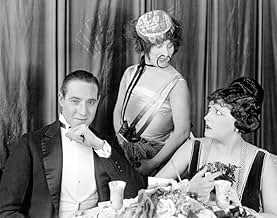
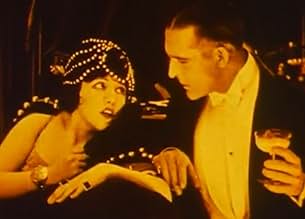
Back in the city Anatol decides to go out on the town, so Vivian decides to wear her :lowest gown" and "highest heals" and go out as well. Anatol falls into the clutches of the notorious nightclub star Satan Synne (Bebe Daniels) who lures Anatol into her den called "the Devil's Cloister." In the middle of vamping him, she gets a couple phone calls. It seems her husband is undergoing an operation for wounds suffered during the World War. When Anatol learns the truth, he gives Satan the money she needs to save her husband.
But back home, he finds Vivian has not come home from her night of clubbing. When she and Max finally come in a 9 AM he demands to know if she's be unfaithful. She refuses to answer. At that moment, a famous hypnotist (Theodore Kosloff) arrives and is compelled by Anatol to secretly put her in a trance and answer his questions. He does, but Max pleads with Anatol that to do this will forever ruin his marriage no matter what the answer is. Will Anatol force the issue? Reid and Swanson are terrific here as the stars, but the fallen women, Hawley, Ayres, and Daniels, all come off well also. Dexter and Blue have little to do. Roberts fumes and Kosloff looks mysterious. And yes that's Polly Moran as the nightclub entertainer.
The film has beautifully colored title cards and boasts nice tinting throughout. This is a must for silent film fans and was an important film for superstars Gloria Swanson, Wallace Reid, and Bebe Daniels.
The first rescue is of "a bubble-head jazz girl" named Emilie (Wanda Hawley) who is clearly a gold digger, She has poor old Gordon (Theodore Roberts) in her pocket but decides to go after Anatol who thinks he can redeem the poor girl. Meanwhile all she wants is a new victim. There's a great scene of redemption when Anatol tells Emilie she must throw away all her jewels in order to be cleansed. She immediately empties her jewel boxes and puts the empty boxes in a valise. They drive to the river where she throws away the empty boxes. Foolish Anatol believes her but learns the sad truth when he interrupts a wild dinner party Emilie is throwing.
Off to the country for purity and clean air, Anatol and Vivian are rowing in a river when a simple country girl Annie (Agnes Ayres) throws herself off a bridge. They dredge her out and revive her but Annie finds Anatol's wallet on the ground and steals it. After she is "saved" she runs home to husband Abner (Monte Blue) and replaces the money she stole from his church collection box. So much for country purity.
Back in the city Anatol decides to go out on the town, so Vivian decides to wear her :lowest gown" and "highest heals" and go out as well. Anatol falls into the clutches of the notorious nightclub star Satan Synne (Bebe Daniels) who lures Anatol into her den called "the Devil's Cloister." In the middle of vamping him, she gets a couple phone calls. It seems her husband is undergoing an operation for wounds suffered during the World War. When Anatol learns the truth, he gives Satan the money she needs to save her husband.
But back home, he finds Vivian has not come home from her night of clubbing. When she and Max finally come in a 9 AM he demands to know if she's be unfaithful. She refuses to answer. At that moment, a famous hypnotist (Theodore Kosloff) arrives and is compelled by Anatol to secretly put her in a trance and answer his questions. He does, but Max pleads with Anatol that to do this will forever ruin his marriage no matter what the answer is. Will Anatol force the issue? Reid and Swanson are terrific here as the stars, but the fallen women, Hawley, Ayres, and Daniels, all come off well also. Dexter and Blue have little to do. Roberts fumes and Kosloff looks mysterious. And yes that's Polly Moran as the nightclub entertainer.
The film has beautifully colored title cards and boasts nice tinting throughout. This is a must for silent film fans and was an important film for superstars Gloria Swanson, Wallace Reid, and Bebe Daniels.
A man, blinded by his need to be good, he can't help but get in trouble
The Affairs of Anatol (1921)
A long, involved, romantic and slightly moralizing movie about a really good hearted man caught between two women. That's the reason to watch it, that and Gloria Swanson in the lead as the wife. The other woman (Wanda Hawley) is a bit of a siren, and our good fellow is trying to be a charitable fellow with her, and only gets himself in trouble. She plays him like a child.
The year, 1921, is just at the point where the silent film is solidifying and getting sophisticated in a modern sense. There is still a lot of static (fixed) camera in this one (even though one of the photographers was the legendary Karl Struss). This puts the emphasis on the acting, which rises to the occasion. The copy I saw had some great hand colored title cards and some scenes that were toned in rich yellows or other colors, which made it all quite fun. The conflict between the two women, and the intrusion of another man or two, make this a classic soap opera kind of drama, well done and clear enough to follow once you get the basic flow. There are sort of two halves, and the second part out in the country is a nice shift even though the theme remains similar.
Of interest? The director, Cecil B. De Mille, had a hugely influential and long career, and this is toward the beginning, and it shows his tendency to find the popular themes that audiences would connect with, rather than push technical or aesthetic boundaries. Some might call him a populist, interest above all in success, but he was an expert director who knew how to make a movie really coherent, handling the story and actors with precision and a sympathetic feel. And the subject matter here is actually a bit edgy--a married man hanging out with a woman in her most intimate spaces. The play of the "bad" woman against the "good" one is a little expected, of course, but it's such a heartwrenching problem for this nice guy who just wants to help (or so he says), it's painfully enjoyable to watch.
A long, involved, romantic and slightly moralizing movie about a really good hearted man caught between two women. That's the reason to watch it, that and Gloria Swanson in the lead as the wife. The other woman (Wanda Hawley) is a bit of a siren, and our good fellow is trying to be a charitable fellow with her, and only gets himself in trouble. She plays him like a child.
The year, 1921, is just at the point where the silent film is solidifying and getting sophisticated in a modern sense. There is still a lot of static (fixed) camera in this one (even though one of the photographers was the legendary Karl Struss). This puts the emphasis on the acting, which rises to the occasion. The copy I saw had some great hand colored title cards and some scenes that were toned in rich yellows or other colors, which made it all quite fun. The conflict between the two women, and the intrusion of another man or two, make this a classic soap opera kind of drama, well done and clear enough to follow once you get the basic flow. There are sort of two halves, and the second part out in the country is a nice shift even though the theme remains similar.
Of interest? The director, Cecil B. De Mille, had a hugely influential and long career, and this is toward the beginning, and it shows his tendency to find the popular themes that audiences would connect with, rather than push technical or aesthetic boundaries. Some might call him a populist, interest above all in success, but he was an expert director who knew how to make a movie really coherent, handling the story and actors with precision and a sympathetic feel. And the subject matter here is actually a bit edgy--a married man hanging out with a woman in her most intimate spaces. The play of the "bad" woman against the "good" one is a little expected, of course, but it's such a heartwrenching problem for this nice guy who just wants to help (or so he says), it's painfully enjoyable to watch.
Well worth seeing
This film is great fun, and often -- and I think intentionally, as in the 'Satan Synne' segment -- very funny: "an extravagant story that never by any chance could be taken seriously," as one contemporary reviewer approves. It's hard to sympathise with spoiled wife Vivian at first (a hard-edged performance by Gloria Swanson), but as the film goes on we start to realise that she does have a point.
This being a de Mille film, the costumes are of course fantastic; although it's actually not Swanson, the famous 'clothes-horse', who gets the best dresses here. Production values are elsewhere very high, as well, extending into beautifully-drawn title cards (in one case, with a live-action car actually driving across it!) and a lot of sacrificed furniture, while frankly, those jewelled flowers look almost worth losing a lover over...
But it's not all gloss and enjoyable silliness. There's some fine acting on display as well, not least from Wallace Reid as the well-meaning 'Tony' whose halo begins progressively to slip -- and, in a couple of telling little scenes, from Elliott Dexter as the overlooked best friend. (The little scene over the chessboard is a perfect illustration of the power of the silent screen: everything made explicit without a word.)
The picture's stage heritage shows up mainly in a few over-long title cards, where plot points are conveyed in one long 'speech'; at almost two hours in duration, it's also unbalanced in the direction of the first half, which could almost stand as a film on its own without its briefer 'sequels'. If Emilie is not to have a film of her own, there is perhaps a little too much time devoted to her.
But "The Affairs of Anatol" is well worth seeing -- not least, as an eye-opener for those like myself who associate C.B. de Mille with vast Biblical epics. This piece of froth and frivolity has more of the charm of a Harold Lloyd movie minus the slapstick; one can really see why 'handsome Wallace Reid' was a star; and there are just enough well-judged moments of genuine feeling among the spectacle and satire to make us care about the various minor players.
This being a de Mille film, the costumes are of course fantastic; although it's actually not Swanson, the famous 'clothes-horse', who gets the best dresses here. Production values are elsewhere very high, as well, extending into beautifully-drawn title cards (in one case, with a live-action car actually driving across it!) and a lot of sacrificed furniture, while frankly, those jewelled flowers look almost worth losing a lover over...
But it's not all gloss and enjoyable silliness. There's some fine acting on display as well, not least from Wallace Reid as the well-meaning 'Tony' whose halo begins progressively to slip -- and, in a couple of telling little scenes, from Elliott Dexter as the overlooked best friend. (The little scene over the chessboard is a perfect illustration of the power of the silent screen: everything made explicit without a word.)
The picture's stage heritage shows up mainly in a few over-long title cards, where plot points are conveyed in one long 'speech'; at almost two hours in duration, it's also unbalanced in the direction of the first half, which could almost stand as a film on its own without its briefer 'sequels'. If Emilie is not to have a film of her own, there is perhaps a little too much time devoted to her.
But "The Affairs of Anatol" is well worth seeing -- not least, as an eye-opener for those like myself who associate C.B. de Mille with vast Biblical epics. This piece of froth and frivolity has more of the charm of a Harold Lloyd movie minus the slapstick; one can really see why 'handsome Wallace Reid' was a star; and there are just enough well-judged moments of genuine feeling among the spectacle and satire to make us care about the various minor players.


Did you know
- TriviaGloria Swanson admitted in an interview decades later that Wallace Reid's drug addiction scared her while they were making this film, and she avoided socializing with him because of it.
- GoofsIn the flashback sequence where Emilie is on a swing and two mirrors are set up to give repeated reflections of the action, the cameraman bending over his camera is visible a few times when the swing moves out of the way.
- Quotes
Anatol Spencer: Let's not kiss any more, dear, until after breakfast.
- Alternate versionsFilm Preservation Associates copyrighted a version in 1999 with a music score compiled and performed by Brian Benison. It was produced for video by David Shepard and ran 117 minutes.
- ConnectionsEdited into Don't Tell Everything (1921)
Details
- Release date
- Country of origin
- Language
- Also known as
- Anatol: Five Kisses
- Production company
- See more company credits at IMDbPro
- Runtime
- 1h 57m(117 min)
- Sound mix
- Aspect ratio
- 1.33 : 1
Contribute to this page
Suggest an edit or add missing content