IMDb RATING
7.9/10
64K
YOUR RATING


In the midst of the Russian Revolution of 1905, the crew of the battleship Potemkin mutiny against the brutal, tyrannical regime of the vessel's officers. The resulting street demonstration ... Read allIn the midst of the Russian Revolution of 1905, the crew of the battleship Potemkin mutiny against the brutal, tyrannical regime of the vessel's officers. The resulting street demonstration in Odessa brings on a police massacre.In the midst of the Russian Revolution of 1905, the crew of the battleship Potemkin mutiny against the brutal, tyrannical regime of the vessel's officers. The resulting street demonstration in Odessa brings on a police massacre.
- Awards
- 1 win total
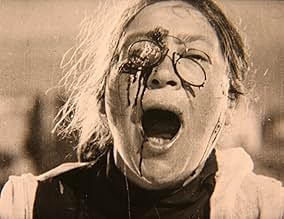
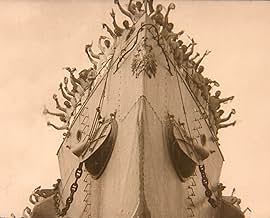


Ivan Bobrov
- Young Sailor Flogged While Sleeping
- (as I. Bobrov)

Nina Poltavtseva
- Woman With Pince-nez
- (as N. Poltavtseva)


Iona Biy-Brodskiy
- Student
- (as Brodsky)

Sergei Eisenstein
- Odessa Citizen
- (as Sergei M. Eisenstein)

Andrey Fayt
- Recruit
- (as A. Fait)
7.964.4K
1
2
3
4
5
6
7
8
9
10
Summary
Reviewers say 'Battleship Potemkin' is acclaimed for its pioneering montage and editing, significantly impacting cinema. The 1905 Russian Revolution portrayal, especially the Odessa Steps scene, is lauded for its potent visuals and emotional resonance. Many praise its technical innovations and contribution to filmmaking. However, some criticize its political propaganda and shallow character development. Nonetheless, 'Battleship Potemkin' is widely recognized as a cinematic masterpiece and a vital historical film.
Featured reviews
Like Citizen Kane it's almost been TOO analyzed and cherished as a landmark, but still not without good reason
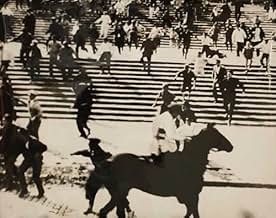
If you're a film student, or were one, or are thinking of becoming one, the name Battleship Potemkin has or will have a resonance. Sergei Eistenstein, like other silent-film pioneers like Griffith (although Eisenstein's innovations are not as commonplace as Griffith's) and Murnau, has had such an impact on the history of cinema it's of course taken for granted. The reason I bring up the film student part is because at some point, whether you'd like it or not, your film professor 9 times out of 10 will show the "Odessa Stairs" sequence of this film. It's hard to say if it's even the 'best' part of the film's several sequences dealing with the (at the time current) times of the Russian revolution. But it does leave the most impact, and it can be seen in many films showcasing suspense, or just plain montage (The Untouchables' climax comes to mind).
Montage, which was not just Eistenstein's knack but also his life's blood early in his career, is often misused in the present cinema, or if not misused then in an improper context for the story. Sometimes montage is used now as just another device to get from point A to point B. Montage was something else for Eisenstein; he was trying to communicate in the most direct way that he could the urgency, the passion(s), and the ultimate tragedies that were in the Russian people at the time and place. Even if one doesn't see all of Eisenstein's narrative or traditional 'story' ideas to have much grounding (Kubrick has said this), one can't deny the power of seeing the ships arriving at the harbor, the people on the stairs, and the soldiers coming at them every which way with guns. Some may find it hard to believe this was done in the 20's; it has that power like the Passion of Joan of Arc to over-pass its time and remain in importance if only in terms of technique and emotion.
Of course, one could go on for books (which have been written hundreds of times over, not the least of which by Eisenstein himself). On the film in and of itself, Battleship Potemkin is really more like a dramatized newsreel than a specific story in a movie. The first segment is also one of the great sequences in film, as a mutiny is plotted against the Captain and other head-ups of a certain Ship. This is detailed almost in a manipulative way, but somehow extremely effective; montage is used here as well, but in spurts of energy that capture the eye. Other times Eisenstein is more content to just let the images speak for themselves, as the soldiers grow weary without food and water. He isn't one of those directors who will try to get all sides to the story; he is, of course, very much early 20th century Russian, but he is nothing else but honest with how he sees his themes and style, and that is what wins over in the end.
Some may want to check it outside of film-school, as the 'Stairs' sequence is like one of those landmarks of severe tragedy on film, displaying the ugly side of revolution. Eisenstein may not be one of the more 'accessible' silent-film directors, but if montage, detail in the frame, non-actors, and Bolshevik themes are your cup of tea, it's truly one of the must sees of a lifetime.
Montage, which was not just Eistenstein's knack but also his life's blood early in his career, is often misused in the present cinema, or if not misused then in an improper context for the story. Sometimes montage is used now as just another device to get from point A to point B. Montage was something else for Eisenstein; he was trying to communicate in the most direct way that he could the urgency, the passion(s), and the ultimate tragedies that were in the Russian people at the time and place. Even if one doesn't see all of Eisenstein's narrative or traditional 'story' ideas to have much grounding (Kubrick has said this), one can't deny the power of seeing the ships arriving at the harbor, the people on the stairs, and the soldiers coming at them every which way with guns. Some may find it hard to believe this was done in the 20's; it has that power like the Passion of Joan of Arc to over-pass its time and remain in importance if only in terms of technique and emotion.
Of course, one could go on for books (which have been written hundreds of times over, not the least of which by Eisenstein himself). On the film in and of itself, Battleship Potemkin is really more like a dramatized newsreel than a specific story in a movie. The first segment is also one of the great sequences in film, as a mutiny is plotted against the Captain and other head-ups of a certain Ship. This is detailed almost in a manipulative way, but somehow extremely effective; montage is used here as well, but in spurts of energy that capture the eye. Other times Eisenstein is more content to just let the images speak for themselves, as the soldiers grow weary without food and water. He isn't one of those directors who will try to get all sides to the story; he is, of course, very much early 20th century Russian, but he is nothing else but honest with how he sees his themes and style, and that is what wins over in the end.
Some may want to check it outside of film-school, as the 'Stairs' sequence is like one of those landmarks of severe tragedy on film, displaying the ugly side of revolution. Eisenstein may not be one of the more 'accessible' silent-film directors, but if montage, detail in the frame, non-actors, and Bolshevik themes are your cup of tea, it's truly one of the must sees of a lifetime.
This is a cinematic masterpiece, way ahead of its time.
There are only a handful of movies that were made on such a grand scale and made such a difference in the art of movie making.
"Bronenosets Potyomkin" is one of these movies, and it should be on anyone's list looking to learn more about the history of cinema.
Grigori Aleksandrov & Sergei M. Eisenstein directed this groundbreaking film that documents the horrors taking place on a Russian battleship. When the sailors finally retaliate against their superiors, the locals embrace the them, and support them. Things get ugly when a group of soldiers are sent to the small town to take care of business. What follows is one of the most imitated scenes in the history of cinema. Anyone who has seen "The Untouchables", and "Bronenosets Potyomkin" knows exactly what I mean.
Overall I think this movie raised the bar for film making just as "Intolerance" did a few years earlier. If you do not mind silent films, do yourself a favor, and see "Bronenosets Potyomkin".
If you don't like silent films..... watch "Bronenosets Potyomkin" anyway.
"Bronenosets Potyomkin" is one of these movies, and it should be on anyone's list looking to learn more about the history of cinema.
Grigori Aleksandrov & Sergei M. Eisenstein directed this groundbreaking film that documents the horrors taking place on a Russian battleship. When the sailors finally retaliate against their superiors, the locals embrace the them, and support them. Things get ugly when a group of soldiers are sent to the small town to take care of business. What follows is one of the most imitated scenes in the history of cinema. Anyone who has seen "The Untouchables", and "Bronenosets Potyomkin" knows exactly what I mean.
Overall I think this movie raised the bar for film making just as "Intolerance" did a few years earlier. If you do not mind silent films, do yourself a favor, and see "Bronenosets Potyomkin".
If you don't like silent films..... watch "Bronenosets Potyomkin" anyway.
Excellent piece of cinema-history
There is something special about watching the really old films, especially when it is a film as influential as 'Bronenosets Potyomkin' ('The Battleship Potemkin'). Besides the historical value of the film I was surprised how much I really enjoyed it. Director Sergei Eisenstein takes reel events and changes them a little for this powerful film.
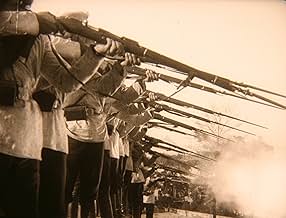
The story begins on the battleship Potemkin where the men are served rotten meat. A sailor named Vakulinchuk (Aleksandr Antonov) steps up and after a series of events mutiny is what follows. Out of revenge an officer is able to kill Vakulinchuk. The men on the ship want to honor him and try to bring their revolution to the shore, to the city of Odessa. They place him in the harbor in a tent with a sign that says he was killed over a boil of soup. The people of Odessa sympathize with the sailors from the Potemkin and they are welcomed in their city. A massacre, in one of the most famous sequences of the cinema, is what follows on the Odessa Staircase.
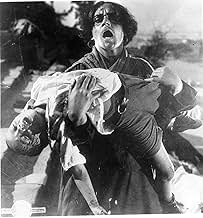
It is especially this great sequence that shows some real horrors, uncompromising I should add. There are images, like the slit eyeball from 'Un Chien Andalou', you will remember. The people on the staircase, troops firing at them, a crushed hand, a woman with her child shot dead, but most of all a carriage with a baby in it, rolling down the staircase. Every image is effective, showing things what few (or no) films did back then. I was amazed of how good this scene still works today; I was watching in disbelieve.
On a technical scale the film is also very good. Most of the time we believe we are watching what the film wants us to see, the visuals work. Eisenstein is able to make things even more effective the way he cuts between the images. Famous for its montage, 'Bronenosets Potyomkin' sometimes seems like a choreographed sequence of presented images, with a rhythm and a tempo. I could say so much more about this film, one you should have seen if you are interested in the history of the cinema. If you do not really care you might give it a chance. It is one of the most effective silent films I can think of, still very accessible for a large audience.
The story begins on the battleship Potemkin where the men are served rotten meat. A sailor named Vakulinchuk (Aleksandr Antonov) steps up and after a series of events mutiny is what follows. Out of revenge an officer is able to kill Vakulinchuk. The men on the ship want to honor him and try to bring their revolution to the shore, to the city of Odessa. They place him in the harbor in a tent with a sign that says he was killed over a boil of soup. The people of Odessa sympathize with the sailors from the Potemkin and they are welcomed in their city. A massacre, in one of the most famous sequences of the cinema, is what follows on the Odessa Staircase.
It is especially this great sequence that shows some real horrors, uncompromising I should add. There are images, like the slit eyeball from 'Un Chien Andalou', you will remember. The people on the staircase, troops firing at them, a crushed hand, a woman with her child shot dead, but most of all a carriage with a baby in it, rolling down the staircase. Every image is effective, showing things what few (or no) films did back then. I was amazed of how good this scene still works today; I was watching in disbelieve.
On a technical scale the film is also very good. Most of the time we believe we are watching what the film wants us to see, the visuals work. Eisenstein is able to make things even more effective the way he cuts between the images. Famous for its montage, 'Bronenosets Potyomkin' sometimes seems like a choreographed sequence of presented images, with a rhythm and a tempo. I could say so much more about this film, one you should have seen if you are interested in the history of the cinema. If you do not really care you might give it a chance. It is one of the most effective silent films I can think of, still very accessible for a large audience.
landmark
Sergei Eisenstein's silent masterpiece is a very influential and possibly the most famous landmark film ever made. Many, many memorable scenes, including one of the best and most powerful scenes in film history, the massacre on the Odessa steps. No film in our time has captured such power and amazement from one sequence. Along from being a landmark in film history, it also has a strong message on brotherhood and power hungry leaders. This one has stood the test of time and will for ever more.
"The time has come for us to speak out."
On June 14 1905, during the Russian Revolution of that year, sailors aboard the Russian battleship Potemkin rebelled against their oppressive officers. Frustrated with the second-rate treatment they receive, and most particularly the maggot-infested meat that they are forced to eat, the ship's crew, led by the inspirational Bolshevik sailor Grigory Vakulinchuk (Aleksandr Antonov), decide that the time is ripe for a revolution. And so begins Sergei M. Eisenstein's rousing classic of Russian propaganda, 'Bronenosets Potyomkin / The Battleship Potemkin.'
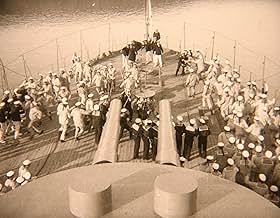
The film itself is brimming with shining examples of stunning visual imagery: the spectacles of an overthrown ship captain dangle delicately from the side rope over which he had been tossed; the body of a deceased mutineer lies peaceful upon the shore, the sign on his chest reading "KILLED FOR A BOWL OF SOUP;" close-up shots of the clenching fists of the hundreds of spectators who are finally fed up with the Tsarist regime; a wayward baby carriage careers down the Odessa Steps as desperate onlookers watch on with bated breath (this scene was memorably "borrowed" by Brian De Palma for a particularly suspenseful scene in his 'The Untouchables'); the barrels of numerous canons are ominously leveled towards the vastly-outnumbered battleship Potemkin.
However, the film itself is best analysed not as a fragmented selection of memorable scenes but as a single film, and, indeed, every scene is hugely memorable. Though divided into five fairly-distinct chapters, the entire film flows forwards wonderfully; at no point do we find ourselves losing interest, and we are absolutely never in doubt of whose side we should be sympathetic towards.
The film is often referred to as "propaganda," and that is exactly what it is, but this need not carry a negative connotation. 'The Battleship Potemkin' was produced by Eisenstein with a specific purpose in mind, and it accomplishes this perfectly in every way. Planned by the Soviet Central Committee to coincide with the 20th century celebrations of the unsuccessful 1905 Revolution, 'Potemkin' was predicted to be a popular film in its home country, symbolising the revitalization of Russian arts after the Revolution. It is somewhat unfortunate, then, that Eisenstein's film failed to perform well at the Russian box-office, reportedly beaten by Allan Dwan's 1922 'Robin Hood' film in its opening week and running for just four short weeks. Luckily, despite being banned on various occasions in various countries, 'The Battleship Potemkin' fared more admirably overseas.
The film also proved a successful vehicle for Eisenstein to test his theories of "montage." Through quick-cut editing, and distant shots of the multitudes of extras, the audience is not allowed to sympathise with any individual characters, but with the revolutionary population in general. Eisenstein does briefly break this mould, however, in a scene where Vakulinchuk flees the ship officer who is trying to kill him, and, of course, during the renowned Odessa Steps sequence, as our hearts beat in horror for the life of the unfortunate child in the tumbling baby carriage. The accompanying soundtrack to the version I watched, largely featuring the orchestral works of Dmitri Shostakovich, served wonderfully to heighten the emotional impact of such scenes.
One of the greatest films of the silent era, 'The Battleship Potemkin' is a triumph of phenomenal film-making, and is a significant slice of cinematic history. The highly-exaggerated events of the film (among other things, there was never actually any violent massacre on the Odessa Steps) have so completely engrained themselves in the memory, that we're often uncertain of the true history behind the depicted events. This is a grand achievement.
The film itself is brimming with shining examples of stunning visual imagery: the spectacles of an overthrown ship captain dangle delicately from the side rope over which he had been tossed; the body of a deceased mutineer lies peaceful upon the shore, the sign on his chest reading "KILLED FOR A BOWL OF SOUP;" close-up shots of the clenching fists of the hundreds of spectators who are finally fed up with the Tsarist regime; a wayward baby carriage careers down the Odessa Steps as desperate onlookers watch on with bated breath (this scene was memorably "borrowed" by Brian De Palma for a particularly suspenseful scene in his 'The Untouchables'); the barrels of numerous canons are ominously leveled towards the vastly-outnumbered battleship Potemkin.
However, the film itself is best analysed not as a fragmented selection of memorable scenes but as a single film, and, indeed, every scene is hugely memorable. Though divided into five fairly-distinct chapters, the entire film flows forwards wonderfully; at no point do we find ourselves losing interest, and we are absolutely never in doubt of whose side we should be sympathetic towards.
The film is often referred to as "propaganda," and that is exactly what it is, but this need not carry a negative connotation. 'The Battleship Potemkin' was produced by Eisenstein with a specific purpose in mind, and it accomplishes this perfectly in every way. Planned by the Soviet Central Committee to coincide with the 20th century celebrations of the unsuccessful 1905 Revolution, 'Potemkin' was predicted to be a popular film in its home country, symbolising the revitalization of Russian arts after the Revolution. It is somewhat unfortunate, then, that Eisenstein's film failed to perform well at the Russian box-office, reportedly beaten by Allan Dwan's 1922 'Robin Hood' film in its opening week and running for just four short weeks. Luckily, despite being banned on various occasions in various countries, 'The Battleship Potemkin' fared more admirably overseas.
The film also proved a successful vehicle for Eisenstein to test his theories of "montage." Through quick-cut editing, and distant shots of the multitudes of extras, the audience is not allowed to sympathise with any individual characters, but with the revolutionary population in general. Eisenstein does briefly break this mould, however, in a scene where Vakulinchuk flees the ship officer who is trying to kill him, and, of course, during the renowned Odessa Steps sequence, as our hearts beat in horror for the life of the unfortunate child in the tumbling baby carriage. The accompanying soundtrack to the version I watched, largely featuring the orchestral works of Dmitri Shostakovich, served wonderfully to heighten the emotional impact of such scenes.
One of the greatest films of the silent era, 'The Battleship Potemkin' is a triumph of phenomenal film-making, and is a significant slice of cinematic history. The highly-exaggerated events of the film (among other things, there was never actually any violent massacre on the Odessa Steps) have so completely engrained themselves in the memory, that we're often uncertain of the true history behind the depicted events. This is a grand achievement.


Did you know
- TriviaThe flag seen flying on the ship after the crew had mutinied is white, which is the color of the tsars, but this was done so that it could be hand-painted red (the color of communism) on the celluloid. Since this is a black-and-white film, if the flag had been red it would have shown as black in the film. The flag was hand-tinted red for 108 frames by director Sergei Eisenstein for the film's premier.
- GoofsIn the Imperial squadron near the end, there are closeups of triple gun turrets of Gangut-class dreadnought. It possibly was made this way to show the power of Imperial fleet, but battleships of 1905 were much smaller pre-dreadnoughts, with twin turrets only, just like "Potemkin". "Ganguts" entered service in 1914.
- Alternate versionsSergei Eisenstein's premiere version opened with an unattributed quote from Leon Trotsky's "1905": The spirit of mutiny swept the land. A tremendous, mysterious process was taking place in countless hearts: the individual personality became dissolved in the mass, and the mass itself became dissolved in the revolutionary impetus. This quote was removed by Soviet censors in 1934, and replaced by a quotation from V.I. Lenin's "Revolutionary Days": Revolution is war. Of all the wars known in history, it is the only lawful, rightful, just and truly great war...In Russia this war has been declared and won. The original text was restored in 2004.
- ConnectionsEdited into Seeds of Freedom (1943)
- How long is Battleship Potemkin?Powered by Alexa
Details
- Release date
- Country of origin
- Languages
- Also known as
- Potemkin
- Filming locations
- Sevastopol, Crimea, Ukraine(battleship scenes)
- Production company
- See more company credits at IMDbPro
Box office
- Gross US & Canada
- $51,198
- Opening weekend US & Canada
- $5,641
- Jan 16, 2011
- Gross worldwide
- $71,210
- Runtime
- 1h 6m(66 min)
- Color
- Sound mix
- Aspect ratio
- 1.37 : 1
Contribute to this page
Suggest an edit or add missing content