

Luis Buñuel and Salvador Dalí present 16 minutes of bizarre, surreal imagery.Luis Buñuel and Salvador Dalí present 16 minutes of bizarre, surreal imagery.Luis Buñuel and Salvador Dalí present 16 minutes of bizarre, surreal imagery.
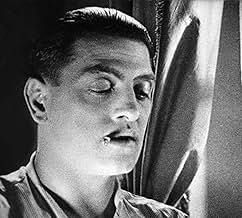
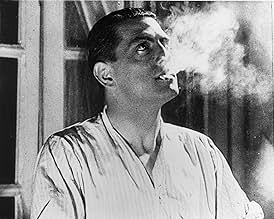

Pierre Batcheff
- Man
- (as Pierre Batchef)

Simone Mareuil
- Young Girl
- (as Simonne Mareuil)

Luis Buñuel
- Man in Prologue
- (uncredited)

Pancho Cossío
- Stroller
- (uncredited)

Salvador Dalí
- Seminarist
- (uncredited)
Juan Esplandiu
- Stroller
- (uncredited)

Robert Hommet
- Young Man
- (uncredited)
Marval
- Seminarist
- (uncredited)

Fano Messan
- Hermaphrodite
- (uncredited)
Jaume Miravitlles
- Fat Seminarist
- (uncredited)
- Director
- Writers
- All cast & crew
- Production, box office & more at IMDbPro
7.656.1K
1
2
3
4
5
6
7
8
9
10
Featured reviews
Don't overthink it, folks.
I find it hilarious that so many people who have posted here are even attempting to place any meaning whatsoever into this film's imagery! The only point to be made in this movie is that there should be no point to be made. Any significance placed onto anything contained in this film is a complete fabrication of the narrow-minded viewer who believes movies are only made to carry some message. That is the genius of Bunuel and Dali. They were surrealists. The point of surrealism is that there is no point, no meaning whatsoever.
Personally, you all may dissect (pun intended) and pore over this great film if you please, but you are fools in the eyes of the (deceased) filmmakers for doing so.
Personally, you all may dissect (pun intended) and pore over this great film if you please, but you are fools in the eyes of the (deceased) filmmakers for doing so.
surrealist rebellion against society
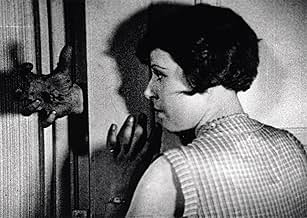
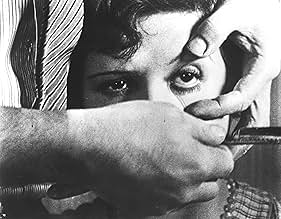
this movie may be dated in a certain sense, but the vitality and passion of its vicious rebellion against societal taboos and constraints still comes through full throttle. bunuel, master of cinematic/surrealist revolt, violates every boundary he can think of. a woman's eyeball is slashed open, her chest brutally groped, ants crawl out of a man's hand, etc. this is more of a curiosity than anything else, but I am a surrealism fanatic and love this along with Cocteau's "Blood of a Poet". the reviewers here who downplay it's value are simply wrong and probably decided in advance to dislike it to look different.
Holy Eyeball Slicing, Batman!
"Sitting comfortably in a dark room, dazzled by the light and the movement which exert a quasi-hypnotic power... fascinated by the interest of human faces and the rapid changes of place, [a] cultivated individual placidly accepts the most appalling themes...and all this naturally sanctioned by habitual morality, government, and international censorship, religion, dominated by good taste and enlivened by white humor and other prosaic imperatives of reality." - Luis Bunuel
Un Chien Andalou exists to shock the viewer of this stupor that Bunuel elucidates above. Freudian dream imagery, amorphous space/time, and absurdist humor combine in this drawn out mating ritual between a confused cyclist and the female he pursues. May be the most inventive fifteen minutes of film anywhere.
Un Chien Andalou exists to shock the viewer of this stupor that Bunuel elucidates above. Freudian dream imagery, amorphous space/time, and absurdist humor combine in this drawn out mating ritual between a confused cyclist and the female he pursues. May be the most inventive fifteen minutes of film anywhere.
Surrealist Masterpiece That Defies Rationality
Luis Buñuel and Salvador Dalí's "Un Chien Andalou" (1929) is not merely a film-it is a visceral assault on logic, a 16-minute plunge into the subconscious that redefined the boundaries of cinema. Emerging from the feverish collaboration of two avant-garde titans, this short film remains a cornerstone of surrealist art, blending dreamlike absurdity with shocking imagery to challenge the very notion of narrative coherence.
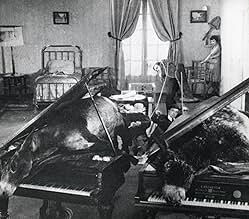
The film's structure mirrors the disjointed, irrational flow of a dream, eschewing traditional storytelling for a series of jarring vignettes. From the infamous opening scene-a cloud slicing the moon as a razor slits a woman's eyeball -to ants crawling from a man's palm and rotting donkeys draped over pianos, Buñuel and Dalí weaponize Freudian symbolism to evoke primal fears and desires. The creators famously declared that their only rule was to reject any rational explanation for the film's imagery, insisting that interpretation lies solely in the realm of psychoanalysis. This deliberate ambiguity transforms the viewer into an active participant, forced to confront their own subconscious reactions.
Shot on a shoestring budget over two weeks, the film's technical audacity remains striking. Buñuel's stark black-and-white cinematography and abrupt edits amplify the surreal atmosphere, while the use of a cow's eye for the slicing scene (to avoid harming an actor) underscores the visceral realism of the grotesque.
"Un Chien Andalou" defies categorization. It is neither a story nor a manifesto but a raw, unfiltered excavation of the human psyche. As Buñuel later quipped, "Nothing in the film symbolizes anything" , yet its power lies precisely in this refusal to conform. To watch it is to surrender to chaos-to let the ants crawl, the razors slash, and the donkeys rot. Nearly a century later, it remains a testament to art's ability to unsettle, provoke, and transcend.
A landmark of surrealism, "Un Chien Andalou" is essential viewing for anyone willing to brave its unnerving beauty. Just don't expect answers-only questions, writ large in blood and celluloid.
The film's structure mirrors the disjointed, irrational flow of a dream, eschewing traditional storytelling for a series of jarring vignettes. From the infamous opening scene-a cloud slicing the moon as a razor slits a woman's eyeball -to ants crawling from a man's palm and rotting donkeys draped over pianos, Buñuel and Dalí weaponize Freudian symbolism to evoke primal fears and desires. The creators famously declared that their only rule was to reject any rational explanation for the film's imagery, insisting that interpretation lies solely in the realm of psychoanalysis. This deliberate ambiguity transforms the viewer into an active participant, forced to confront their own subconscious reactions.
Shot on a shoestring budget over two weeks, the film's technical audacity remains striking. Buñuel's stark black-and-white cinematography and abrupt edits amplify the surreal atmosphere, while the use of a cow's eye for the slicing scene (to avoid harming an actor) underscores the visceral realism of the grotesque.
"Un Chien Andalou" defies categorization. It is neither a story nor a manifesto but a raw, unfiltered excavation of the human psyche. As Buñuel later quipped, "Nothing in the film symbolizes anything" , yet its power lies precisely in this refusal to conform. To watch it is to surrender to chaos-to let the ants crawl, the razors slash, and the donkeys rot. Nearly a century later, it remains a testament to art's ability to unsettle, provoke, and transcend.
A landmark of surrealism, "Un Chien Andalou" is essential viewing for anyone willing to brave its unnerving beauty. Just don't expect answers-only questions, writ large in blood and celluloid.
Weird, Interesting, & Memorable
Even those who do not like Buñuel's "Un Chien Andalou" will probably never forget it once they see it. It's one of the weirder and more interesting films that you'll ever run across, and even aside from its significance, it would be worth seeing for the distinctive style and material.
It is also very well-crafted, despite its apparently chaotic narrative (or lack thereof). Even when it is impossible to attach meaning to some of the images, it seems clear that it has been filmed almost exactly as Buñuel and Dali intended. Even the music seems to have been chosen deliberately, and at times it complements the images surprisingly well.
While the exact meanings of many of the symbols are probably deliberately obscure, it strongly suggests some general themes such as desire, frustration, and the like. To attempt to analyze it carefully is almost certainly a mistake, and it is probably best taken as a dream or a dream-like series of events without the kinds of obvious connections that one might want to find.
Likewise, it's hard to determine just how good or how important it may be. The extreme disregard of cinema conventions is hard to evaluate now, in that the movie itself established some alternative conventions of a sort. The images themselves are often fascinating, sometimes unsettling or even off-putting, almost always interesting and suggestive.
Perhaps the one thing that can be said about such a movie without much risk of going astray is that almost anyone who has a real interest in cinema or cinema history will (or ought to) want to see "Un Chien Andalou" for himself or herself. Hearing it described by someone else really cannot adequately convey what it is like.
It is also very well-crafted, despite its apparently chaotic narrative (or lack thereof). Even when it is impossible to attach meaning to some of the images, it seems clear that it has been filmed almost exactly as Buñuel and Dali intended. Even the music seems to have been chosen deliberately, and at times it complements the images surprisingly well.
While the exact meanings of many of the symbols are probably deliberately obscure, it strongly suggests some general themes such as desire, frustration, and the like. To attempt to analyze it carefully is almost certainly a mistake, and it is probably best taken as a dream or a dream-like series of events without the kinds of obvious connections that one might want to find.
Likewise, it's hard to determine just how good or how important it may be. The extreme disregard of cinema conventions is hard to evaluate now, in that the movie itself established some alternative conventions of a sort. The images themselves are often fascinating, sometimes unsettling or even off-putting, almost always interesting and suggestive.
Perhaps the one thing that can be said about such a movie without much risk of going astray is that almost anyone who has a real interest in cinema or cinema history will (or ought to) want to see "Un Chien Andalou" for himself or herself. Hearing it described by someone else really cannot adequately convey what it is like.


Did you know
- TriviaAt the Paris premiere, Luis Buñuel hid behind the screen with stones in his pockets for fear of being attacked by the confused audience. Nothing of the sort happened. In fact, the audience loved its mysterious and incomprehensible plot.
- Alternate versionsThe film was re-released in 1960 with soundtracks.
- ConnectionsEdited into Avant Garde Cinema (1960)
Details
- Release date
- Country of origin
- Language
- Also known as
- Un Chien Andalou
- Filming locations
- See more company credits at IMDbPro
- Runtime
- 16m
- Color
- Sound mix
- Aspect ratio
- 1.33 : 1
Contribute to this page
Suggest an edit or add missing content