IMDb RATING
5.6/10
2.5K
YOUR RATING


An all-star revue featuring MGM contract players.An all-star revue featuring MGM contract players.An all-star revue featuring MGM contract players.
- Directors
- Writers
- Stars
- Nominated for 1 Oscar
- 1 win & 1 nomination total


Cliff Edwards
- Ukelele Ike
- (as Ukulele Ike)


Nils Asther
- Nils Asther
- (scenes deleted)

Brox Sisters
- The Brox Sisters
- (as Brox Sisters - Singing Trio)


- Directors
- Writers
- All cast & crew
- Production, box office & more at IMDbPro
5.62.4K
1
2
3
4
5
6
7
8
9
10
Featured reviews
A Fun Time Capsule
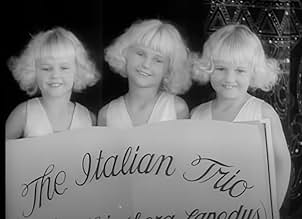
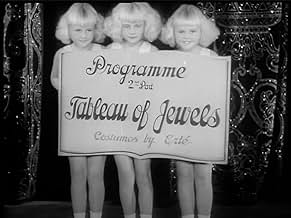
This is the very first of the all-star, no-plot revues that proliferated during 1929 and 1930. Just about every star at Metro is featured, and there are many fun sequences to be savored in this film. The most famous one is probably the Joan Crawford segment, where she sings and dances to "Gotta Feeling For You". Her singing is passable, and her dancing is, well, "energetic". Marion Davies seems quite nervous in her "Tommy Atkins On Parade" number, but Bessie Love is pretty good in her wild acrobatics. Marie Dressler is fun, as always, and you can glimpse Carla Laemmle as the pearl in the oyster during "Tableau Of Jewels", which opens the second half. John Gilbert's speaking voice dosen't sound nearly as bad as had been rumored, even when considering the antiquity of the recording. The "Singin' In The Rain" number is fun, and offers a good contrast to the more famous one in the film of the same name. There are some special effects and two-color Technicolor that must have wowed the audiences back then, and it's been said that during the premiere, the theater put a gallon or so of orange-scented perfume into the ventilators during the "Orange Blossom Time" finale. In all, this film is well worth a look if you are into early sound films of historical value.
Lavish, But Dated All-Star Revue
I have seen this film a few times and always think boy they were the good old days. In 1929, for their first talking film, MGM put together this lavish, all-star revue with absolutely no plot. It contains guest appearances from many of MGM's top silent film stars. If you do ever see this you will notice many of them did not make it through the transition of the talking pictures. Joan Crawford stands out doing her horrible dance and singing routine, but the best is the technicolor SINGIN' IN THE RAIN finale. This is a must for any film buff.
A delightful treasure!
This film will not get a good reception from most modern audiences, and certainly much of the film shows its seventy plus years, but this is a delight for some of us who see the '20s as a golden age, and this movie as a small window into it. It is also a humble reminder that in seventy-five years or so, what we consider entertainment will hold little or no interest to mass audiences.
If you are familiar at all with who the people are (Jack Benny, Joan Crawford, Cliff Edwards, Buster Keaton, etc.), the film is worth seeing. All of these people were one of a kind, not to be replicated by big name performers of today (great stars in their own right, but sorry, folks, they just don't have the class!). Just to see Joan Crawford as a young and beautiful woman is worth watching the film!
Technically, of course, the movie is what it says it is--a revue--intended to show audiences that their favorite silent stars can function in the new medium of sound. That purpose fulfilled (more or less), the film now might seem to have no point. The passage of time and the loss of context have made some of the humor corny (a term, by the way, from that period). The editing is clumsy (we have learned from their mistakes), but the personages themselves, and some of the song and dance, are better than anything we have today, and could not be duplicated.
I'd rather watch this than anything on the screen now.
If you are familiar at all with who the people are (Jack Benny, Joan Crawford, Cliff Edwards, Buster Keaton, etc.), the film is worth seeing. All of these people were one of a kind, not to be replicated by big name performers of today (great stars in their own right, but sorry, folks, they just don't have the class!). Just to see Joan Crawford as a young and beautiful woman is worth watching the film!
Technically, of course, the movie is what it says it is--a revue--intended to show audiences that their favorite silent stars can function in the new medium of sound. That purpose fulfilled (more or less), the film now might seem to have no point. The passage of time and the loss of context have made some of the humor corny (a term, by the way, from that period). The editing is clumsy (we have learned from their mistakes), but the personages themselves, and some of the song and dance, are better than anything we have today, and could not be duplicated.
I'd rather watch this than anything on the screen now.
Only Musical Revue to Earn Academy Awards' Best Picture Nomination
MGM was one of the last studios to convert from silent to sound movies. To break the ice for the stars' talkie transformation, studio executives felt if they dipped their collective toes on a sound stage these silent movie actors and actresses wouldn't be so scared to hear their recorded voices for the first time. The June 1929 "The Hollywood Revue of 1929" proved to be a grab bag of MGM performers mixing song-and-dance routines with comedic acts. The movie served as a predecessor to television variety shows such as 'Ed Sullivan Show,' while at the same time harkened back to those earlier vaudeville days.
The 'moving camera' of the later silent movie era was all but discarded for a stationary one anchored just behind the orchestra pit in the audience seats. Additional cameras captured close-up and two shots. But the majority of scenes took in all the stage action in one wide frame. The two-hour length of "The Hollywood Revue of 1929" served as an entire evening's entertainment to those not used to seeing huge Broadway musicals. Despite being contained on one stage, the movie still cost over $400,000 to produce, and was filmed over a 25-day period.
The revue, billed as an "All-Star Musical Extravaganza," was well received by the curious public. Stars not known for their singing and dancing, such as Marion Davies and Bessie Love, were given quick lessons in both to showcase their limited musical talents. Joan Crawford, a previous dancer, said "the revue "was one of those let's-throw-everyone-on-the-lot-into-a musical thing, but I did a good song-and-dance number." The feature film had so many fans flocking to those theaters wired for sound to hear their silent film stars vocalize on film for the first time that MGM earned an enormous $1 million profit. "The Hollywood Revue of 1929" was nominated Outstanding Picture, the only revue movie ever to be considered for the Academy Awards Best Picture.
The many acts were tied together by emcees Conrad Nagel and Jack Benny, appearing in his first film. As a vaudeville and stand-up comedian beginning in 1911, Benjamin Kubelsky (stage name Jack Benny), along with his trusty violin, bounced around the country for years. His agent, Sammy Lyons, approached MGM's Irving Thalberg, and asked the producer to give Benny a look-see at the local Orpheum Theatre in Los Angeles. Thalberg liked Benny so much he sign him to a contract, beginning with "The Hollywood Revue of 1929." Not only was Benny a co-anchor to the show, he came up with the special effects introducing actress Bessie Love by taking a miniature version of her out of his pocket and placing her on the stage. She quickly grows larger like the Wonder Bread commercial boy. To achieve such an effect, the actress was in front of a black velvet curtain while the camera moves in.
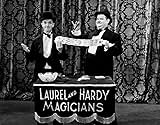
The movie is also noteworthy for the performance of actor John Gilbert, who plays Romeo in a tongue-in-cheek sketch with Thalberg's wife, Norma Shearer. Claims of Gilbert possessing a high, shrill voice aren't found in the color clip where his deliberate pacing isn't as bad as film historians claim it was in his later films. Additionally, one of the highlighted comedic acts was delivered by the Laurel and Hardy team, who had just released the pair's first talkie a few weeks earlier in "Unaccustomed As We Are."
In another skit where the song "Lon Chaney Will Get You if You Don't Watch Out," viewers are introduced to the Chaney character played up by actor Gus Edwards. Chaney inked a three-picture a year deal with MGM. The actor wanted "The Hollywood Revue of 1929" to count as one of those films, even though his appearance would be only five minutes of reel time. The studio balked at the expense of paying Chaney for the short performance, which would eat up a good portion of the film's planned budget. It flatly refused. The actor wasn't happy to find out the song about him was going forward. But the untimely death of Chaney a few months later forced MGM to cut the song while in theaters that summer. The studio did put the sequence back into the motion picture when re-released years later.
Director Charles Reisner got MGM to film the last-minute inclusion of the grand finale with the song 'Singin' in the Rain.' The sequence was shot 10 days before the movie's premier at Grauman's Chinese Theatre. The Technicolor ending included those stars who appeared in the previous acts to report to the studio stage to film late into night. Movie critics in the day appreciated the final coda with the New York Times praising "the most extravagant and extensive musical comedy so far presented by the talking pictures, and is in itself a complete evening's entertainment."
The 'moving camera' of the later silent movie era was all but discarded for a stationary one anchored just behind the orchestra pit in the audience seats. Additional cameras captured close-up and two shots. But the majority of scenes took in all the stage action in one wide frame. The two-hour length of "The Hollywood Revue of 1929" served as an entire evening's entertainment to those not used to seeing huge Broadway musicals. Despite being contained on one stage, the movie still cost over $400,000 to produce, and was filmed over a 25-day period.
The revue, billed as an "All-Star Musical Extravaganza," was well received by the curious public. Stars not known for their singing and dancing, such as Marion Davies and Bessie Love, were given quick lessons in both to showcase their limited musical talents. Joan Crawford, a previous dancer, said "the revue "was one of those let's-throw-everyone-on-the-lot-into-a musical thing, but I did a good song-and-dance number." The feature film had so many fans flocking to those theaters wired for sound to hear their silent film stars vocalize on film for the first time that MGM earned an enormous $1 million profit. "The Hollywood Revue of 1929" was nominated Outstanding Picture, the only revue movie ever to be considered for the Academy Awards Best Picture.
The many acts were tied together by emcees Conrad Nagel and Jack Benny, appearing in his first film. As a vaudeville and stand-up comedian beginning in 1911, Benjamin Kubelsky (stage name Jack Benny), along with his trusty violin, bounced around the country for years. His agent, Sammy Lyons, approached MGM's Irving Thalberg, and asked the producer to give Benny a look-see at the local Orpheum Theatre in Los Angeles. Thalberg liked Benny so much he sign him to a contract, beginning with "The Hollywood Revue of 1929." Not only was Benny a co-anchor to the show, he came up with the special effects introducing actress Bessie Love by taking a miniature version of her out of his pocket and placing her on the stage. She quickly grows larger like the Wonder Bread commercial boy. To achieve such an effect, the actress was in front of a black velvet curtain while the camera moves in.
The movie is also noteworthy for the performance of actor John Gilbert, who plays Romeo in a tongue-in-cheek sketch with Thalberg's wife, Norma Shearer. Claims of Gilbert possessing a high, shrill voice aren't found in the color clip where his deliberate pacing isn't as bad as film historians claim it was in his later films. Additionally, one of the highlighted comedic acts was delivered by the Laurel and Hardy team, who had just released the pair's first talkie a few weeks earlier in "Unaccustomed As We Are."
In another skit where the song "Lon Chaney Will Get You if You Don't Watch Out," viewers are introduced to the Chaney character played up by actor Gus Edwards. Chaney inked a three-picture a year deal with MGM. The actor wanted "The Hollywood Revue of 1929" to count as one of those films, even though his appearance would be only five minutes of reel time. The studio balked at the expense of paying Chaney for the short performance, which would eat up a good portion of the film's planned budget. It flatly refused. The actor wasn't happy to find out the song about him was going forward. But the untimely death of Chaney a few months later forced MGM to cut the song while in theaters that summer. The studio did put the sequence back into the motion picture when re-released years later.
Director Charles Reisner got MGM to film the last-minute inclusion of the grand finale with the song 'Singin' in the Rain.' The sequence was shot 10 days before the movie's premier at Grauman's Chinese Theatre. The Technicolor ending included those stars who appeared in the previous acts to report to the studio stage to film late into night. Movie critics in the day appreciated the final coda with the New York Times praising "the most extravagant and extensive musical comedy so far presented by the talking pictures, and is in itself a complete evening's entertainment."
Updated from Previous Comment
I love this film. I've commented before but just saw it again and have a few more "insights." It seems I like it better with each viewing. Along with The Broadway Melody and 42nd Street, one of the great early musicals--films that set the style and standard for decades to come. Yes there is debate as to the singing and dancing of Joan Crawford and Marion Davies, but there are great moments from Marie Dressler, Stan Laurel, Oliver Hardy, Buster Keaton, John Gilbert (I'm Utsnay about Ouyay), Norma Shearer, Cliff Edwards, the swell Brox Sisters, Conrad Nagel, Charles King, Polly Moran, Bessie Love, William Haines, Anita Page, the snappy June Purcell, Lionel Barrymore, Gus Edwards, a sly Jack Benny, and a slap-happy Ann Dvorak. Who could resist.
Oddities for a talkie include silent bits by Keaton and Laurel (Hardy does all the talking, and some schtick from Karl Dane and George K. Arthur (neither destined for talkie success) during a Benny violin solo. To carry forth the "revue" concept the film is introduced over a live orchestra pit and the intermission sees the musicians taking their seats to reprise the early tunes--Crawford's "Gotta Feelin' for You" chief among them. As noted in other comments, some acts are introed; some are not.
Considering all were singing live (no lip syncing here) the musical numbers are not bad at all. The recording (still primitive) hurts a little. Charles King comes off best as a straight singer, and the great Cliff Edwards (as Ukelele Ike) is a treat as the comic singer. Edwards does a straight intro to Singin' in the Rain as well as his signature falsetto scat. Joan Crawford, who sang in a bunch of early talkies, has a decent if unpolished voice, and her dancing was par for the course for 1929: lively but a little clunky. Remember, movie musicals were new and hadn't really developed a cinematic choreography. Marion Davies' number is the weakest in the film, which is too bad because she was a delightful performer, but singing and dancing weren't her high points. Marie Dressler cannot hit a false note. No matter how badly she mugs and hams it up, she is great. This film also shows hints of what Bessie Love might have done during the 30s with better handling by MGM. And ditto Polly Moran, who was diminished to playing Dressler's foil in a series of early comedies.
The Jack Benny we remember from his 1950s TV show is exactly the same 25 year earlier. All his mannerisms are in place as is his superb timing. Several parts of the film are very badly edited and sometimes hurt the timing or punchlines of comic bits. William Haines, nearly choking on a licorice button he rips from Benny's jacket, is handsome and gracious in a cameo.And Conrad Nagel reveals a not-bad singing voice as he serenades a ravishing Anita Page.
The Singin' in the Rain number rates highest. From the art deco set of Cedric Gibbons to the terrific singing of Cliff Edwards and the Brox Sisters, this number is a true classic. The dancing is simple but effective, the rain effects are OK as is the reflecting "pool." The reprise by the Brox Sisters (all 3 wrapped in 1 raincoat) is wonderful--as is the comic reprise by Dressler, Love, and Moran. Note the arm motions made by the Brox Sisters; they are same as used by Jean Hagen in the 1952 Singin in the Rain.
I love this film.
Oddities for a talkie include silent bits by Keaton and Laurel (Hardy does all the talking, and some schtick from Karl Dane and George K. Arthur (neither destined for talkie success) during a Benny violin solo. To carry forth the "revue" concept the film is introduced over a live orchestra pit and the intermission sees the musicians taking their seats to reprise the early tunes--Crawford's "Gotta Feelin' for You" chief among them. As noted in other comments, some acts are introed; some are not.
Considering all were singing live (no lip syncing here) the musical numbers are not bad at all. The recording (still primitive) hurts a little. Charles King comes off best as a straight singer, and the great Cliff Edwards (as Ukelele Ike) is a treat as the comic singer. Edwards does a straight intro to Singin' in the Rain as well as his signature falsetto scat. Joan Crawford, who sang in a bunch of early talkies, has a decent if unpolished voice, and her dancing was par for the course for 1929: lively but a little clunky. Remember, movie musicals were new and hadn't really developed a cinematic choreography. Marion Davies' number is the weakest in the film, which is too bad because she was a delightful performer, but singing and dancing weren't her high points. Marie Dressler cannot hit a false note. No matter how badly she mugs and hams it up, she is great. This film also shows hints of what Bessie Love might have done during the 30s with better handling by MGM. And ditto Polly Moran, who was diminished to playing Dressler's foil in a series of early comedies.
The Jack Benny we remember from his 1950s TV show is exactly the same 25 year earlier. All his mannerisms are in place as is his superb timing. Several parts of the film are very badly edited and sometimes hurt the timing or punchlines of comic bits. William Haines, nearly choking on a licorice button he rips from Benny's jacket, is handsome and gracious in a cameo.And Conrad Nagel reveals a not-bad singing voice as he serenades a ravishing Anita Page.
The Singin' in the Rain number rates highest. From the art deco set of Cedric Gibbons to the terrific singing of Cliff Edwards and the Brox Sisters, this number is a true classic. The dancing is simple but effective, the rain effects are OK as is the reflecting "pool." The reprise by the Brox Sisters (all 3 wrapped in 1 raincoat) is wonderful--as is the comic reprise by Dressler, Love, and Moran. Note the arm motions made by the Brox Sisters; they are same as used by Jean Hagen in the 1952 Singin in the Rain.
I love this film.


Did you know
- TriviaIn the "Singin' in the Rain" finale, Buster Keaton is shown carrying a small package in his left hand. This visual gag is a reference to Uneeda Biscuits, then a popular product made by Nabisco. The Uneeda Biscuit trademark showed a small boy wearing a yellow rain slicker and hat (similar to the outfits that the cast is wearing in this number) and walking home in the rain with a package of Uneeda Biscuits under his arm.
- GoofsAfter Cliff Edwards' opening number, one of the chorus girls in the background is chatting away with the girl next to her, when a sudden cut appears, and the same girl is now stone still (apparently the director told her in between to stop talking, and pay attention).
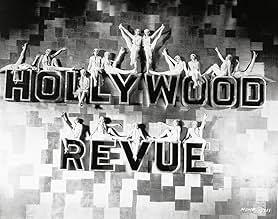
- Alternate versionsSome sources list the original running time of "Hollywood Revue of 1929" as 130 minutes. At least two sequences in the original roadshow version are missing from current prints: an opening recitation by the showgirls who are seen posing in the "Hollywood Revue" sign after the opening credits, and the appearance of Nils Asther, who assisted Jack Benny in introducing the final "Orange Blossom" number.
- ConnectionsAlternate-language version of Wir schalten um auf Hollywood (1931)
- SoundtracksSingin' in the Rain
(1929) (uncredited)
Music by Nacio Herb Brown
Lyrics by Arthur Freed
Played during the opening by The MGM Symphony Orchestra
Played on ukulele and sung by Cliff Edwards and The Brox Sisters; Danced by chorus
Sung by the major stars at the end
Details
- Release date
- Country of origin
- Official site
- Language
- Also known as
- Hollywood Revue
- Filming locations
- Production company
- See more company credits at IMDbPro
Box office
- Gross worldwide
- $5,277,780
- Runtime
- 2h 10m(130 min)
- Color
Contribute to this page
Suggest an edit or add missing content