IMDb RATING
6.8/10
1.3K
YOUR RATING

An unhappily married woman is caught up in scandal and murder when her affection toward a young man is misinterpreted.An unhappily married woman is caught up in scandal and murder when her affection toward a young man is misinterpreted.An unhappily married woman is caught up in scandal and murder when her affection toward a young man is misinterpreted.
- Director
- Writers
- Stars



Symona Boniface
- Gossip in Museum
- (uncredited)

Allan Cavan
- Prison Warden
- (uncredited)
André Cheron
- Prosecutor
- (uncredited)

Carrie Daumery
- Party Guest
- (uncredited)
Ruth Feldman
- Scrubwoman
- (uncredited)
Lee Phelps
- Tour Guide
- (uncredited)

Philip Sleeman
- Lounge Lizard
- (uncredited)
- Director
- Writers
- All cast & crew
- Production, box office & more at IMDbPro
6.81.3K
1
2
3
4
5
6
7
8
9
10
Featured reviews
The Last MGM and Greta Garbo's Silent Film
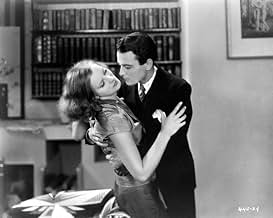
In Lyons, Irene Guarry (Greta Garbo) is not happy with her marriage with the old businessman Charles Guarry (Anders Randolf) and is in love with the young lawyer André Duball (Conrad Nagel). Irene knows that the jealous Charles will never give the divorce to her; therefore they decide to stop seeing each other since she does not want to be an unfaithful wife and defy the convention. André also decides to move to Paris. One day, Irene knows the eighteen year-old college student Pierre Lassalle (Lew Ayres) in a party during his vacation and she learns that the youngster is infatuated with her. By the end of his vacation, Pierre asks a photo for Irene and she promises to give one to him. Meanwhile Charles has a meeting with Pierre's father Lassalle (Holmes Herbert) and discloses that he is on the verge of bankruptcy. Lassalle promises to help his friend and they schedule a meeting in the night. When Charles goes to the encounter, Pierre arrives at his home and asks for a goodbye kiss to Irene. Meanwhile Charles does not feel well and returns home, witnessing their kiss. Charles tries to kill Pierre and later the student arrives home and tells his father that Charles is dead. Irene is arrested accused of murdering her husband. What happened in Charles's office?
"The Kiss" is a melodramatic romance and the last MGM and Greta Garbo's silent film and the debut of Lew Ayres. The movie has beautiful shots, a mystery and Greta Garbor extremely beautiful. Despite being a silent film, MGM uses sound technology with a powerful orchestral soundtrack. My vote is seven.
Title (Brazil): "O Beijo" ("The Kiss")
"The Kiss" is a melodramatic romance and the last MGM and Greta Garbo's silent film and the debut of Lew Ayres. The movie has beautiful shots, a mystery and Greta Garbor extremely beautiful. Despite being a silent film, MGM uses sound technology with a powerful orchestral soundtrack. My vote is seven.
Title (Brazil): "O Beijo" ("The Kiss")
Good Silent
Kiss, The (1929)
*** (out of 4)
A flirtatious married woman (Greta Garbo) has an innocent relationship with a young kid (Lew Ayres) but when she gives him a friendly kiss goodbye tragedy follows. The main highlight here is Garbo, in her final silent and Ayres, in his film debut and their chemistry together. The two work remarkably well together and their innocent relationship really comes off as fun. The "tragedy" that happens plays out well but the really poor direction by Jacques Feyder kills this from being better. The TCM print ran 62 minutes but Maltin's book lists the running time at 82 minutes. I don't think anything was cut but instead they played the film at a higher FPS rate. This was also MGM's final silent picture.
*** (out of 4)
A flirtatious married woman (Greta Garbo) has an innocent relationship with a young kid (Lew Ayres) but when she gives him a friendly kiss goodbye tragedy follows. The main highlight here is Garbo, in her final silent and Ayres, in his film debut and their chemistry together. The two work remarkably well together and their innocent relationship really comes off as fun. The "tragedy" that happens plays out well but the really poor direction by Jacques Feyder kills this from being better. The TCM print ran 62 minutes but Maltin's book lists the running time at 82 minutes. I don't think anything was cut but instead they played the film at a higher FPS rate. This was also MGM's final silent picture.
Garbo's Image
In star Greta Garbo's silent films especially, I think the stories are secondary to the images. They tend to be similarly melodramatic romances about adultery and love triangles and the surrounding scandals and tragedies. This one is more of a love rectangle, with Garbo's husband and the characters played by Conrad Nagel and Lew Ayres all trying to possess her. It's a generic formula, especially for the vehicles of MGM's star Garbo. Yes, there's a mystery element, but that's none too appealing, either. There's even dinner-party and courtroom scenes, and, of course, her husband is an old rotund businessman. The title cards are gushy, and the musical score, including the love theme from Tchaikovsky's "Romeo and Juliet," is unoriginal. Yet, the narrative does focus in some interesting and different ways on Garbo's image, and this is yet another lovely-looking late silent film, as Garbo's 1920s MGM productions tend to be. It's fortunate that Garbo, with her foreign accent, was the last of the studio's stars to transition to talkies--this being the last silent film of both Garbo and MGM--because they're some of the most deliberately gorgeous pictures of the era. They're far superior to the awkward early talkies concurrently being made by others.
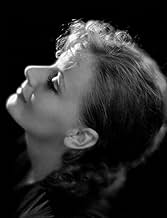
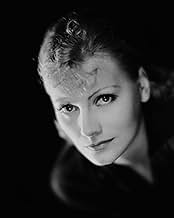
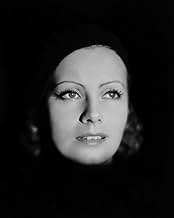
Appropriately, "The Kiss" begins with Garbo and one of her lovers in a French art gallery; from there, the film itself is a piece of visual art. Much of that is the glossy close-ups of Garbo's face, but there's an emphasis on shots of her walking and riding away from men in this one, too. There are several overhead establishing shots, superimposed images and dolly-shot transitions. The best moving camera shot is in the assault scene, with the camera pulling back after the door closes. The gunshot and phone ringing are also a better use of sound effects than in most contemporary talkies. There are two flashback scenes of this incident as narrated, or imagined, by Garbo--one is a lie and the other, presumably, is the truth. Both are filmed differently and from different angles than the first instance. The Art Deco sets are impressive, too--mainly for Garbo's home. The abstract skyscrapers design on her bedroom wall is a standout. Additionally, there's the motif of Garbo's image: Ayres wants a photograph of her, the newspapers print her image, the courtroom artists draw it, while the overall film and machinery of MGM's star making focuses on creating it. In this case, that machinery is partly of European imported artists, including Garbo herself, the director and the writer. The transition to talkies would surrender much of such foreign talent, although, fortunately, not Garbo.
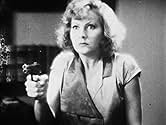
With about an hour runtime, this is a relatively-brief feature and taut. For instance, when the husband has his wife tailed, it's to establish his jealous suspicions, which are sure to foreshadow later events. And when we're shown "Chekhov's gun," expect it to be fired by the end.
Appropriately, "The Kiss" begins with Garbo and one of her lovers in a French art gallery; from there, the film itself is a piece of visual art. Much of that is the glossy close-ups of Garbo's face, but there's an emphasis on shots of her walking and riding away from men in this one, too. There are several overhead establishing shots, superimposed images and dolly-shot transitions. The best moving camera shot is in the assault scene, with the camera pulling back after the door closes. The gunshot and phone ringing are also a better use of sound effects than in most contemporary talkies. There are two flashback scenes of this incident as narrated, or imagined, by Garbo--one is a lie and the other, presumably, is the truth. Both are filmed differently and from different angles than the first instance. The Art Deco sets are impressive, too--mainly for Garbo's home. The abstract skyscrapers design on her bedroom wall is a standout. Additionally, there's the motif of Garbo's image: Ayres wants a photograph of her, the newspapers print her image, the courtroom artists draw it, while the overall film and machinery of MGM's star making focuses on creating it. In this case, that machinery is partly of European imported artists, including Garbo herself, the director and the writer. The transition to talkies would surrender much of such foreign talent, although, fortunately, not Garbo.
With about an hour runtime, this is a relatively-brief feature and taut. For instance, when the husband has his wife tailed, it's to establish his jealous suspicions, which are sure to foreshadow later events. And when we're shown "Chekhov's gun," expect it to be fired by the end.
The last silent film for both Garbo and MGM
This isn't the best Garbo silent ever made, but it was the last, and it was also the final silent film made by MGM. What makes this film good is the combination of Garbo's acting and the cinematography here. Movies like this and Sunrise make me somewhat sad that the silent film era ended, because what could be done creatively with the camera was lost from this point until the early 30's once the problems of the static camera got worked out and the novelty of sound at the expense of everything else wore off.
Garbo convincingly plays the sympathetic yet no-longer-in-love wife when in the presence of her husband (Anders Randolf), the longing lover who wishes to defy convention and just leave her marriage behind regardless of the consequences when with André Dubail (Conrad Nagel), and the knowledgeable "older" woman who is enjoying the attention she is getting when with the very young and naive Pierre Lassalle (Lew Ayres). Whenever she is alone she has no trouble conveying which of these three moods she is in. The story is a very good tale of tortured romance with a little bit of mystery thrown in towards the end, but the main attractions are the romance and the beautiful and creative shots. The only thing really annoying is the original Vitaphone score that went along with the movie. With all of the other subtle expression going on in this film, the choice of the theme song from "Romeo and Juliet" to convey the feelings between Garbo and Nagel every time they shared a scene just seemed a bit over the top.
Garbo convincingly plays the sympathetic yet no-longer-in-love wife when in the presence of her husband (Anders Randolf), the longing lover who wishes to defy convention and just leave her marriage behind regardless of the consequences when with André Dubail (Conrad Nagel), and the knowledgeable "older" woman who is enjoying the attention she is getting when with the very young and naive Pierre Lassalle (Lew Ayres). Whenever she is alone she has no trouble conveying which of these three moods she is in. The story is a very good tale of tortured romance with a little bit of mystery thrown in towards the end, but the main attractions are the romance and the beautiful and creative shots. The only thing really annoying is the original Vitaphone score that went along with the movie. With all of the other subtle expression going on in this film, the choice of the theme song from "Romeo and Juliet" to convey the feelings between Garbo and Nagel every time they shared a scene just seemed a bit over the top.
Garbo's Finale To Silents
"The Kiss" has a fairly predictable plot, but interesting acting from the excellent cast keeps you watching on this one. As others wrote, the Vitaphone soundtrack here was pretty poor, except for one section; all the melodies have been used before in many silent films. Listening to classical Tchaikovsky is not really appropriate for a modern film like "The Kiss."
Greta has some great closeups in this film, but in certain sections seems to be sleepwalking through her role. Conrad Nagel was a delight to watch, he always seemed much more handsome on screen than in his still photos. He is the hero in this film, if the film could really be said to have a hero after everyone lies in court.
Lew Ayres was adorable, and had to have made a great impression on studio bosses when the film was first released, for he went straight from this film into his classic "All Quiet On The Western Front", which made him a star. Holmes Herbert, so good in Pola Negri's "A Woman of the World", here is aged with makeup and plays Lew Ayres' father convincingly. Anders Randolf was a bit jarring as Greta's husband, but his performance was fine too.
The print was decent on this MGM release, compared to another Garbo feature, "The Single Standard", made earlier. But of both films, "The Single Standard" is by far the superior film technically, plot-wise, and in its performances, though its print is more worn.
Greta has some great closeups in this film, but in certain sections seems to be sleepwalking through her role. Conrad Nagel was a delight to watch, he always seemed much more handsome on screen than in his still photos. He is the hero in this film, if the film could really be said to have a hero after everyone lies in court.
Lew Ayres was adorable, and had to have made a great impression on studio bosses when the film was first released, for he went straight from this film into his classic "All Quiet On The Western Front", which made him a star. Holmes Herbert, so good in Pola Negri's "A Woman of the World", here is aged with makeup and plays Lew Ayres' father convincingly. Anders Randolf was a bit jarring as Greta's husband, but his performance was fine too.
The print was decent on this MGM release, compared to another Garbo feature, "The Single Standard", made earlier. But of both films, "The Single Standard" is by far the superior film technically, plot-wise, and in its performances, though its print is more worn.


Did you know
- TriviaMGM's last non-talking picture.
- GoofsIn the opening credits, the name André, Conrad Nagel's character, is spelled "Ardré."
- Alternate versionsMGM also released this movie without a soundtrack, as a totally silent film.
- ConnectionsFeatured in MGM Parade: Episode #1.30 (1956)
- How long is The Kiss?Powered by Alexa
Details
Box office
- Budget
- $257,000 (estimated)
- Runtime
- 1h 2m(62 min)
- Sound mix
- Aspect ratio
- 1.33 : 1
Contribute to this page
Suggest an edit or add missing content