IMDb RATING
6.8/10
1.3K
YOUR RATING

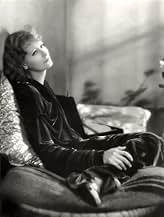
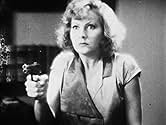
An unhappily married woman is caught up in scandal and murder when her affection toward a young man is misinterpreted.An unhappily married woman is caught up in scandal and murder when her affection toward a young man is misinterpreted.An unhappily married woman is caught up in scandal and murder when her affection toward a young man is misinterpreted.
- Director
- Writers
- Stars





Symona Boniface
- Gossip in Museum
- (uncredited)

Allan Cavan
- Prison Warden
- (uncredited)
André Cheron
- Prosecutor
- (uncredited)

Carrie Daumery
- Party Guest
- (uncredited)
Ruth Feldman
- Scrubwoman
- (uncredited)
Lee Phelps
- Tour Guide
- (uncredited)

Philip Sleeman
- Lounge Lizard
- (uncredited)
- Director
- Writers
- All cast & crew
- Production, box office & more at IMDbPro
6.81.3K
1
2
3
4
5
6
7
8
9
10
Featured reviews
One of Garbo's better silents
I've got to admit up front that I have long felt that Greta Garbo was a bit overrated as an actress. All too often, she was stuck in super-melodramatic films involving either adultery or with Garbo playing an irresistible "super-vamp". While the public loved this persona, the films seemed quite derivative and clichéd. There are only so many films like this you can watch until they blend together.
Fortunately, she also made some dandy films like NINOTCHKA, QUEEN Christina and THE KISS. While superficially the film seems just like another adultery film, Garbo was given better material--as she was a woman who WANTED to commit adultery but couldn't bring herself to cheat on her much older husband. I'm glad the film didn't pursue this expected plot line but instead the film is about the consequences when the husband THINKS she's cheating on him when she isn't. This led to a dandy finale where there is a nice plot twist.
Overall, this film excelled because Garbo did NOT stare in a pained way into space as she so often did in films where she played a married woman trapped in a loveless marriage. Here, she plays a more believable and well-rounded personality--someone who seemed much more human than the usual Garbo character.
With good production values and only one minor problem (a repetitive and sappy soundtrack), this is well worth a look.
Fortunately, she also made some dandy films like NINOTCHKA, QUEEN Christina and THE KISS. While superficially the film seems just like another adultery film, Garbo was given better material--as she was a woman who WANTED to commit adultery but couldn't bring herself to cheat on her much older husband. I'm glad the film didn't pursue this expected plot line but instead the film is about the consequences when the husband THINKS she's cheating on him when she isn't. This led to a dandy finale where there is a nice plot twist.
Overall, this film excelled because Garbo did NOT stare in a pained way into space as she so often did in films where she played a married woman trapped in a loveless marriage. Here, she plays a more believable and well-rounded personality--someone who seemed much more human than the usual Garbo character.
With good production values and only one minor problem (a repetitive and sappy soundtrack), this is well worth a look.
Garbo's Finale To Silents
"The Kiss" has a fairly predictable plot, but interesting acting from the excellent cast keeps you watching on this one. As others wrote, the Vitaphone soundtrack here was pretty poor, except for one section; all the melodies have been used before in many silent films. Listening to classical Tchaikovsky is not really appropriate for a modern film like "The Kiss."
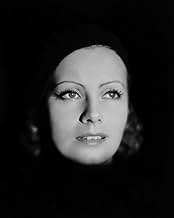
Greta has some great closeups in this film, but in certain sections seems to be sleepwalking through her role. Conrad Nagel was a delight to watch, he always seemed much more handsome on screen than in his still photos. He is the hero in this film, if the film could really be said to have a hero after everyone lies in court.
Lew Ayres was adorable, and had to have made a great impression on studio bosses when the film was first released, for he went straight from this film into his classic "All Quiet On The Western Front", which made him a star. Holmes Herbert, so good in Pola Negri's "A Woman of the World", here is aged with makeup and plays Lew Ayres' father convincingly. Anders Randolf was a bit jarring as Greta's husband, but his performance was fine too.
The print was decent on this MGM release, compared to another Garbo feature, "The Single Standard", made earlier. But of both films, "The Single Standard" is by far the superior film technically, plot-wise, and in its performances, though its print is more worn.
Greta has some great closeups in this film, but in certain sections seems to be sleepwalking through her role. Conrad Nagel was a delight to watch, he always seemed much more handsome on screen than in his still photos. He is the hero in this film, if the film could really be said to have a hero after everyone lies in court.
Lew Ayres was adorable, and had to have made a great impression on studio bosses when the film was first released, for he went straight from this film into his classic "All Quiet On The Western Front", which made him a star. Holmes Herbert, so good in Pola Negri's "A Woman of the World", here is aged with makeup and plays Lew Ayres' father convincingly. Anders Randolf was a bit jarring as Greta's husband, but his performance was fine too.
The print was decent on this MGM release, compared to another Garbo feature, "The Single Standard", made earlier. But of both films, "The Single Standard" is by far the superior film technically, plot-wise, and in its performances, though its print is more worn.
The Last MGM and Greta Garbo's Silent Film
In Lyons, Irene Guarry (Greta Garbo) is not happy with her marriage with the old businessman Charles Guarry (Anders Randolf) and is in love with the young lawyer André Duball (Conrad Nagel). Irene knows that the jealous Charles will never give the divorce to her; therefore they decide to stop seeing each other since she does not want to be an unfaithful wife and defy the convention. André also decides to move to Paris. One day, Irene knows the eighteen year-old college student Pierre Lassalle (Lew Ayres) in a party during his vacation and she learns that the youngster is infatuated with her. By the end of his vacation, Pierre asks a photo for Irene and she promises to give one to him. Meanwhile Charles has a meeting with Pierre's father Lassalle (Holmes Herbert) and discloses that he is on the verge of bankruptcy. Lassalle promises to help his friend and they schedule a meeting in the night. When Charles goes to the encounter, Pierre arrives at his home and asks for a goodbye kiss to Irene. Meanwhile Charles does not feel well and returns home, witnessing their kiss. Charles tries to kill Pierre and later the student arrives home and tells his father that Charles is dead. Irene is arrested accused of murdering her husband. What happened in Charles's office?
"The Kiss" is a melodramatic romance and the last MGM and Greta Garbo's silent film and the debut of Lew Ayres. The movie has beautiful shots, a mystery and Greta Garbor extremely beautiful. Despite being a silent film, MGM uses sound technology with a powerful orchestral soundtrack. My vote is seven.
Title (Brazil): "O Beijo" ("The Kiss")
"The Kiss" is a melodramatic romance and the last MGM and Greta Garbo's silent film and the debut of Lew Ayres. The movie has beautiful shots, a mystery and Greta Garbor extremely beautiful. Despite being a silent film, MGM uses sound technology with a powerful orchestral soundtrack. My vote is seven.
Title (Brazil): "O Beijo" ("The Kiss")
The end of an era
The Kiss (1929) was the final silent film produced by Metro-Goldwyn-Mayer. It was also the final silent film of stars Greta Garbo and Conrad Nagel.
The subtle acting and sophisticated (and purely visual) storytelling show how far silent cinema had come by the late 1920s. When talkies took over Hollywood, the acting regressed back to that of the stage, the background music was replaced with static hiss, and even basic film-making techniques were restrained due to the sound equipment. It would take a few years for sound technology to grow in sophistication.
Removed from its distinction as the end of an era, The Kiss is an average melodrama, especially for Garbo, who plays an unhappily married woman in love with another man. She looks luminous and acts completely with her eyes, her brilliance showing through even in material such as this. Conrad Nagel is competent in an unchallenging role, and Lew Ayres is simultaneously adorable and somewhat sinister as the young man smitten with Garbo.
The big twist is predictable and the recorded score is cheesy, using Tchaikovsky's Romeo and Juliet theme as the lovers' leitmotif, but overall, this is a skillfully made bit of melodramatic fluff, the last gasp of MGM's silent output.
The subtle acting and sophisticated (and purely visual) storytelling show how far silent cinema had come by the late 1920s. When talkies took over Hollywood, the acting regressed back to that of the stage, the background music was replaced with static hiss, and even basic film-making techniques were restrained due to the sound equipment. It would take a few years for sound technology to grow in sophistication.
Removed from its distinction as the end of an era, The Kiss is an average melodrama, especially for Garbo, who plays an unhappily married woman in love with another man. She looks luminous and acts completely with her eyes, her brilliance showing through even in material such as this. Conrad Nagel is competent in an unchallenging role, and Lew Ayres is simultaneously adorable and somewhat sinister as the young man smitten with Garbo.
The big twist is predictable and the recorded score is cheesy, using Tchaikovsky's Romeo and Juliet theme as the lovers' leitmotif, but overall, this is a skillfully made bit of melodramatic fluff, the last gasp of MGM's silent output.
Pretty good silent flick ... might be more enjoyable if you watch it with the sound turned off
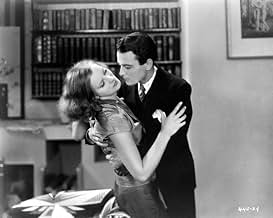
"The Kiss" happens about midway into the movie ... Greta Garbo gives young admirer Lew Ayres a friendly kiss goodbye as he's about to leave town, Ayres, who cannot control his infatuation with the beautiful Garbo, goes in for another, less platonic kiss, at which point Garbo's husband sees them from afar and goes berserk. A fight amongst the three ensues, gets carried into another room where the door is shut to us, the audience, and we hear a shot. Garbo's husband is dead, but who did it?
Prior to the "kiss" moment, we've seen Garbo and her lover (Conrad Nagel) in a torturous romance ... they both love each other madly but Greta doesn't see any way out of her loveless marriage. In the meantime, Lew Ayres follows Greta around like a puppy dog; he's an 18-year-old completely infatuated with the beautiful married lady.
The latter half of the movie deals with the investigation of the husband's death, Greta's arrest, and her trial where she is defended by Nagel who in addition to being her former lover is also a lawyer.
I won't give away the outcome of the trial, but I will say that the jury believes it is Person A who did it and after the trial we learn it was Person B.
The musical score to this flick was absolutely horrible. I especially could have done without the "Romeo and Juliet" theme that was played every time the flick wanted to telegraph Greta's and Conrad's love to the audience.
Despite the score, this was a very enjoyable silent movie. I find some silents tedious, others quite well done. "The Kiss" definitely falls into the latter category. Worth watching.
Prior to the "kiss" moment, we've seen Garbo and her lover (Conrad Nagel) in a torturous romance ... they both love each other madly but Greta doesn't see any way out of her loveless marriage. In the meantime, Lew Ayres follows Greta around like a puppy dog; he's an 18-year-old completely infatuated with the beautiful married lady.
The latter half of the movie deals with the investigation of the husband's death, Greta's arrest, and her trial where she is defended by Nagel who in addition to being her former lover is also a lawyer.
I won't give away the outcome of the trial, but I will say that the jury believes it is Person A who did it and after the trial we learn it was Person B.
The musical score to this flick was absolutely horrible. I especially could have done without the "Romeo and Juliet" theme that was played every time the flick wanted to telegraph Greta's and Conrad's love to the audience.
Despite the score, this was a very enjoyable silent movie. I find some silents tedious, others quite well done. "The Kiss" definitely falls into the latter category. Worth watching.


Did you know
- TriviaMGM's last non-talking picture.
- GoofsIn the opening credits, the name André, Conrad Nagel's character, is spelled "Ardré."
- Alternate versionsMGM also released this movie without a soundtrack, as a totally silent film.
- ConnectionsFeatured in MGM Parade: Episode #1.30 (1956)
- How long is The Kiss?Powered by Alexa
Details
Box office
- Budget
- $257,000 (estimated)
- Runtime
- 1h 2m(62 min)
- Sound mix
- Aspect ratio
- 1.33 : 1
Contribute to this page
Suggest an edit or add missing content