IMDb RATING
7.3/10
3.9K
YOUR RATING


Two couples spend an interesting day together.Two couples spend an interesting day together.Two couples spend an interesting day together.




Kurt Gerron
- Self
- (uncredited)

Valeska Gert
- Self
- (uncredited)
Heinrich Gretler
- Self
- (uncredited)
Moriz Seeler
- Photo Subject at Beach
- (uncredited)

Ernö Verebes
- Self
- (uncredited)
7.33.8K
1
2
3
4
5
6
7
8
9
10
Featured reviews
beautifully shot, surprisingly modern performances
One of the surprising things about this film is the very acute, naturalistic and fundamentally humorous performances from an amateur cast, lacking all the usual strange, exaggerated mannerisms of silent cinema. The other impressive aspect of the film is the beauty of the photography, always playful and probing: the scene where an old man responds to the pompous nationalistic statues in the park is brilliant and affecting, if rather ambiguous. The modern score that was provided in the version I saw was effective and fitting: to be recommended. I agree that it all seems rather unreal, given that it takes place in 1929- yet it strikes me as not so much realistic, as naturalistic: perhaps striving to depict normality in difficult times. A very good and fundamentally humane film, lacking any real plot or suspense, but full of really interesting moments.
German precursor to Italian neo-realism
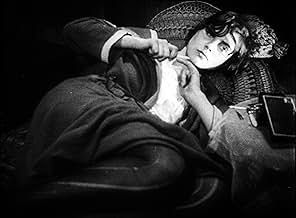
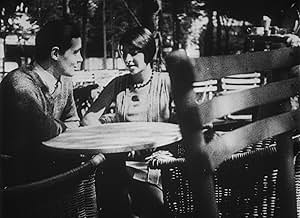
Five non-professional actors star in this tale of a typical Sunday idyll in and around Berlin. We meet taxi driver Erwin Splettstober, wine salesman Wolfgang von Waltershausen, music store clerk Brigitte Borchert, film extra Christl Ehlers, and model Annie Schreyer, attractive young people who are looking to relax on a sunny Sunday. The first four travel out to the country for a frolic in and around a lake, during which romantic attachments are formed and lost. This is cut together with documentary footage of average German citizens enjoying their Sunday in various ways.
This hard-to-classify effort has a stellar line-up behind the scenes: Billy Wilder and Curt Siodmak worked on the screenplay, the direction was by Robert Siodmak and Edgar G. Ulmer, and an uncredited Fred Zinnemann worked on various aspects of the movie, as well. The cinematography, although primitive and obvious in its trickery (I'm thinking of the often reflected light creating a sun-dappled effect on the actors' faces), has a modernity and immediacy seldom seen in films of the time. I think my favorite sequence of the film was a montage of close-up faces, of all shapes and sizes, of people around the lake. Recommended.
This hard-to-classify effort has a stellar line-up behind the scenes: Billy Wilder and Curt Siodmak worked on the screenplay, the direction was by Robert Siodmak and Edgar G. Ulmer, and an uncredited Fred Zinnemann worked on various aspects of the movie, as well. The cinematography, although primitive and obvious in its trickery (I'm thinking of the often reflected light creating a sun-dappled effect on the actors' faces), has a modernity and immediacy seldom seen in films of the time. I think my favorite sequence of the film was a montage of close-up faces, of all shapes and sizes, of people around the lake. Recommended.
Sunday in Berlin
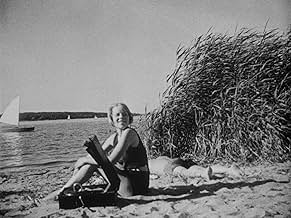
On a Sunday, four young befriended people make an excursion to the lake Wannsee in Berlin to spend their free time in the sun with boat trips, bathing and flirting.
This low budget production demands to remain at the surface of everyday life and to show certain scenes, coincidences and trivialities of it. It is mostly interested in the details and shows the other side of the hectic, restless Berlin - the peace of a summerly Sunday. Here, the people are removed from the daily rush, and it is discernible how the makers agree with their protagonists. They celebrate the self-confidence of the young generation - which is not yet overshadowed by the big crisis at the beginning of the 1930s - and demonstrate the physical joy of life, the carefreeness and playfulness. The other side of this urban way of life is, which apparently only banks on superficialness and the momentary, promiscuity and the wounds coming from this, the harshness and the cold of changing feelings. It's cynically depicted in one long tracking shot over tree-tops (indicating symbolically sexual intercourse) that ends at a pile of thoughtlessly ditched trash.
This low budget production demands to remain at the surface of everyday life and to show certain scenes, coincidences and trivialities of it. It is mostly interested in the details and shows the other side of the hectic, restless Berlin - the peace of a summerly Sunday. Here, the people are removed from the daily rush, and it is discernible how the makers agree with their protagonists. They celebrate the self-confidence of the young generation - which is not yet overshadowed by the big crisis at the beginning of the 1930s - and demonstrate the physical joy of life, the carefreeness and playfulness. The other side of this urban way of life is, which apparently only banks on superficialness and the momentary, promiscuity and the wounds coming from this, the harshness and the cold of changing feelings. It's cynically depicted in one long tracking shot over tree-tops (indicating symbolically sexual intercourse) that ends at a pile of thoughtlessly ditched trash.
Die Glückliche Jahre
In France ,Marcel Carné released his first film ,a short ,at about the same time:it was called "Nogent ou l'Eldorado du Dimanche" and it depicted the Parisians' life ,leaving the city for the banks of the Marne river ,spending a wonderful sunny day,then waiting for the next Sunday...
Carné's work was only a short (15 min) whereas Siodmak/Ulmer's film is about one hour and a quarter long.But the subject is the same.The main difference lies in the fact that,being much longer,the script writers could introduce characters .As an user has already pointed out,its games of love and jealousy in the sun ,the picnic and the pedal boat predate Jean Renoir's "Une Partie de Campagne" by six years.But Maupassant's short story was then and "Menschen am Sonntag" is now.Its documentary side is absorbing and should appeal to historians.
With "Menschen" ,a great director,too often forgotten or overlooked,Siodmak was born.Almost everything the man directed -not only the mind-boggling film noirs of the forties but the French ones ("Mister Flow" "Mollenard" "Pièges" ) and the German ones (this one,"Stürme der Leidenschaft" "Brennendes Geheimnis") as well- demands to be watched.
Carné's work was only a short (15 min) whereas Siodmak/Ulmer's film is about one hour and a quarter long.But the subject is the same.The main difference lies in the fact that,being much longer,the script writers could introduce characters .As an user has already pointed out,its games of love and jealousy in the sun ,the picnic and the pedal boat predate Jean Renoir's "Une Partie de Campagne" by six years.But Maupassant's short story was then and "Menschen am Sonntag" is now.Its documentary side is absorbing and should appeal to historians.
With "Menschen" ,a great director,too often forgotten or overlooked,Siodmak was born.Almost everything the man directed -not only the mind-boggling film noirs of the forties but the French ones ("Mister Flow" "Mollenard" "Pièges" ) and the German ones (this one,"Stürme der Leidenschaft" "Brennendes Geheimnis") as well- demands to be watched.
What Hitler destroyed! An effortless depiction of the joy of life.
Extraordinary and very simple silent film, put together by some of the most remarkable talents of Twentieth Century Cinema - just read those credits! Within a few years most of these people were in Hollywood, and Hitler had destroyed both the wonderful film industry they had helped build and the joyous Berlin that this film depicts.
The film tells the story of four strangers, two men and two women, enjoying a lazy Sunday by a lake in Berlin. Nothing much seems to happen, but there is a lot going on, as the four interact. There is innocence, the potential for love, the danger of sex, the force of jealousy and the pain of longing. And through it all is the joy of living!
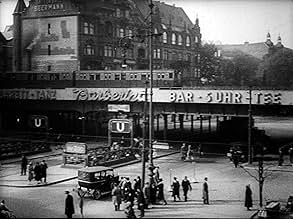
Magnificently shot - largely in extreme close-up - the film allows us a glimpse of Berlin between the wars and it is sad to watch it with the knowledge of what was soon to be. It would have been impossible to make this film with dialogue - the words would have destroyed the nuance and the emotion. It reveals the power of silent cinema.
If the print you see is without a soundtrack, as mine was, then may I recommend playing the Essential Marlene Dietrich during the film. I did this and the combination was unforgettable.
The film tells the story of four strangers, two men and two women, enjoying a lazy Sunday by a lake in Berlin. Nothing much seems to happen, but there is a lot going on, as the four interact. There is innocence, the potential for love, the danger of sex, the force of jealousy and the pain of longing. And through it all is the joy of living!
Magnificently shot - largely in extreme close-up - the film allows us a glimpse of Berlin between the wars and it is sad to watch it with the knowledge of what was soon to be. It would have been impossible to make this film with dialogue - the words would have destroyed the nuance and the emotion. It reveals the power of silent cinema.
If the print you see is without a soundtrack, as mine was, then may I recommend playing the Essential Marlene Dietrich during the film. I did this and the combination was unforgettable.


Did you know
- TriviaThe film was a major hit when it was released in Germany in 1930. Five of the people who worked on the film went on to direct films in Hollywood: Curt Siodmak, his brother Robert Siodmak, Edgar G. Ulmer, Fred Zinnemann, and Billy Wilder.
- GoofsWhen the movie star picture cards are torn off the wall, the number of cards still on the wall constantly changes. Sometimes more cards are still on the wall than in the shot before, etc.
- Quotes
Self - Extra in Films: Fine. Tomorrow... Sunday! You're on. 10:00 sharp. Nikolassee!
- Alternate versionsRESTORATION PROLOGUE: "People on Sunday premiered in Berlin in February 1930. It was then 2,014 meters long. The original negative has been lost. No complete copy of it survives. This version is derived from a print from in the Nederlands Filmmuseum, a shorter version of 1,615 meters. Missing scenes have been inserted wherever possible using prints from the Cinémathèque Suisse, the Cinémathèque Royale de Belgique, and the Fondazione Cineteca Italiana. New German intertitles were created based on censors' records. The film is now 1,839 meters long."
- ConnectionsFeatured in Histoire(s) du cinéma: Toutes les histoires (1988)
- How long is People on Sunday?Powered by Alexa
Details
- Release date
- Country of origin
- Languages
- Also known as
- People on Sunday, a Film Without Actors
- Filming locations
- Production companies
- See more company credits at IMDbPro
- Runtime
- 1h 13m(73 min)
- Color
- Sound mix
- Aspect ratio
- 1.20 : 1
Contribute to this page
Suggest an edit or add missing content