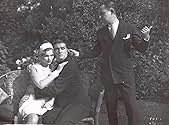
A Eugenics expert convinces his sister and her husband, a barren couple, to adopt the offspring of his carefully selected "thoroughbreds": the family's chauffeur and maid who themselves are ... Read allA Eugenics expert convinces his sister and her husband, a barren couple, to adopt the offspring of his carefully selected "thoroughbreds": the family's chauffeur and maid who themselves are engaged.A Eugenics expert convinces his sister and her husband, a barren couple, to adopt the offspring of his carefully selected "thoroughbreds": the family's chauffeur and maid who themselves are engaged.
- Directors
- Writer
- All cast & crew
- Production, box office & more at IMDbPro
5.177
1
2
3
4
5
6
7
8
9
10
Featured reviews
An Interesting Early Talkie
This early talkie is rather static and at times it feels like the actors are playing to a theater audience. "The Very Idea" is adapted from a play.
The story is simple: a couple wants to have a baby and they employ a surrogate mother (and father) to produce a baby for them.
This does not seem very different from the surrogacy that is now very popular in the U.S. But dialogue about improving the human race make this story feel more like it is about eugenics, the social movement that existed during the early 20th century.
I found the story rather insipid and the acting amateurish and stiff, but this film is somewhat interesting just as a representation of film quality in 1929 and because of its intimations of eugenics, which later became tainted due to Nazi associations.
The story is simple: a couple wants to have a baby and they employ a surrogate mother (and father) to produce a baby for them.
This does not seem very different from the surrogacy that is now very popular in the U.S. But dialogue about improving the human race make this story feel more like it is about eugenics, the social movement that existed during the early 20th century.
I found the story rather insipid and the acting amateurish and stiff, but this film is somewhat interesting just as a representation of film quality in 1929 and because of its intimations of eugenics, which later became tainted due to Nazi associations.
Not one of the "good" movies from 1929, just a typical example
There was a handful of early talkies from 1929 which can still be watched today as pieces of entertainment rather than museum curiosities. This is not one of them - this has all the problems you'd expect from a studio wondering how to make a talkie.
If you can endure the horribly static staging and the acting is....if you can call that acting - you can just about watch this through the eyes of a pre-depression 1929 audience and even glean a few chuckles from it. Compared with pictures which came shortly after or even that handful of "good" 1929 movies, this one is pretty awful. That this was the only "A picture" which Frank Craven directed is quite telling! Frank Craven incidentally is the only actor in this who seems to be able to act - he almost comes across as natural - almost. He was the only one of this bunch who managed to carve out a career in the talkies.
Because the story is actually quite interesting, you will just about be able to watch all of this without reaching for the fast forward button. Surprisingly that fairly unique plot was written by RKO's head of production, William LeBaron. That this bombed at the box office was ominous for the increasingly beleaguered studio boss. Eighteen months later, he was replaced by David Selznick who's credited as saving the studio.
If you can endure the horribly static staging and the acting is....if you can call that acting - you can just about watch this through the eyes of a pre-depression 1929 audience and even glean a few chuckles from it. Compared with pictures which came shortly after or even that handful of "good" 1929 movies, this one is pretty awful. That this was the only "A picture" which Frank Craven directed is quite telling! Frank Craven incidentally is the only actor in this who seems to be able to act - he almost comes across as natural - almost. He was the only one of this bunch who managed to carve out a career in the talkies.
Because the story is actually quite interesting, you will just about be able to watch all of this without reaching for the fast forward button. Surprisingly that fairly unique plot was written by RKO's head of production, William LeBaron. That this bombed at the box office was ominous for the increasingly beleaguered studio boss. Eighteen months later, he was replaced by David Selznick who's credited as saving the studio.
Let's Make a Baby Deal
Wealthy writer Frank Craven (as Alan Camp) is a believer in eugenics (defined by the Oxford Dictionary as "the science of improving a human population by controlled breeding to increase the occurrence of desirable heritable characteristics. Developed largely by Francis Galton as a method of improving the human race, it fell into disfavor only after the perversion of its doctrines by the Nazis"). After publishing a book on the topic, Mr. Craven wants to help his sister and her husband have a baby. The couple has been trying to start a family for years, with no luck. Craven believes his driver Hugh Trevor (as Joe Garvin) is a perfect male specimen. He is engaged to very beautiful maid Sally Blane (as Nora Tracy). The exceptionally attractive couple have not yet married because Ms. Blane wants to be a supported housewife...
Craven approaches Mr. Trevor with his proposal. For $15,000, the handsome chauffeur is to impregnate the pretty maid. Then, he must give the baby to Craven's brother-in-law Allen Kearns and his wife Doris Eaton (as Gilbert and Edith Goodhue). The latter couple will go to California for a year, then return for their child. Trevor and Blane jump at the deal. One year later, the cast reassembles. Naturally, things do not go according to plan. There is a very long set-up to the comic highlight, but the last act is very funny. "The Very Idea" is a fine (and inoffensive) adaptation of William LeBaron's stage play, brought to the screen by Mr. LeBaron with actor/directors Richard Rosson and Craven managing the players. Longing to hear "the patter of little feet," Broadway stage actor Kearns is particularly memorable.
****** The Very Idea (9/15/29) Frank Craven, Richard Rosson ~ Frank Craven, Allen Kearns, Hugh Trevor, Sally Blane
Craven approaches Mr. Trevor with his proposal. For $15,000, the handsome chauffeur is to impregnate the pretty maid. Then, he must give the baby to Craven's brother-in-law Allen Kearns and his wife Doris Eaton (as Gilbert and Edith Goodhue). The latter couple will go to California for a year, then return for their child. Trevor and Blane jump at the deal. One year later, the cast reassembles. Naturally, things do not go according to plan. There is a very long set-up to the comic highlight, but the last act is very funny. "The Very Idea" is a fine (and inoffensive) adaptation of William LeBaron's stage play, brought to the screen by Mr. LeBaron with actor/directors Richard Rosson and Craven managing the players. Longing to hear "the patter of little feet," Broadway stage actor Kearns is particularly memorable.
****** The Very Idea (9/15/29) Frank Craven, Richard Rosson ~ Frank Craven, Allen Kearns, Hugh Trevor, Sally Blane
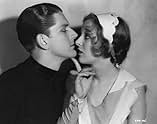
Did you know
- Trivia(1917). Stage Play: The Very Idea. Written by William LeBaron. Astor Theatre: 9 Aug 1917- Aug 1917 (closing date unknown/15 performances). Cast: Mabel Allan, Richard Bennett, William Probert Carleton, Ruth Collins, Josephine Drake, Dorothy Mackaye, Florence Oakley, Purnell Pratt (as "George Green"), Ernest Truex (as "Gilbert Goodhue"). Produced by Gilbert M. 'Broncho Billy' Anderson and L. Lawrence Weber. Note: Filmed by Radio Pictures as The Very Idea (1929).
Details
- Runtime
- 1h 5m(65 min)
- Color
Contribute to this page
Suggest an edit or add missing content