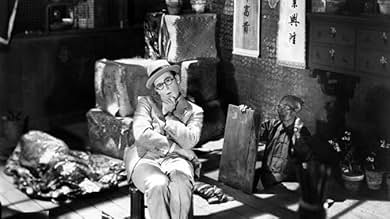
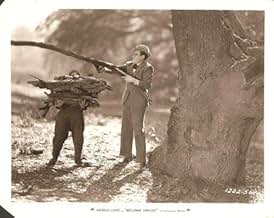
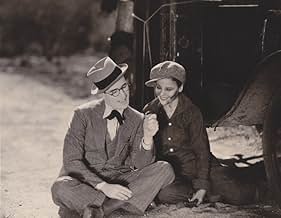
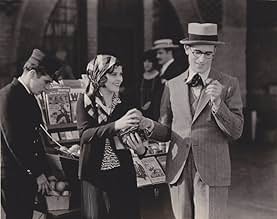
Harold Bledsoe, a botany student, is called back home to San Francisco, where his late father had been police chief, to help investigate a crime wave in Chinatown.Harold Bledsoe, a botany student, is called back home to San Francisco, where his late father had been police chief, to help investigate a crime wave in Chinatown.Harold Bledsoe, a botany student, is called back home to San Francisco, where his late father had been police chief, to help investigate a crime wave in Chinatown.
Charles Middleton
- John Thorne aka The Dragon
- (as Chas. Middleton)
Will Walling
- Police Captain Walton
- (as William Walling)
Grady Sutton
- Man at Party (silent version)
- (scenes deleted)
Eddy Chandler
- Cop
- (uncredited)
Rae Daggett
- Woman Sitting in Police Station
- (uncredited)
Douglas Haig
- Buddy Lee
- (uncredited)
Edgar Kennedy
- SFPD Desk Sergeant
- (uncredited)
Tetsu Komai
- Florist Henchman
- (uncredited)
Wang Lee
- Chinaman with Queue
- (uncredited)
James B. Leong
- Florist Henchman
- (uncredited)
- …
Jim Mason
- Barry Steele
- (uncredited)
- …
Nelson McDowell
- 1st Train Passenger
- (uncredited)
Soo Hoo Sun
- Dead Chinese Man
- (uncredited)
James Wang
- Dr. Chang Gow
- (uncredited)
5.9887
1
2
3
4
5
6
7
8
9
10
Featured reviews
Too long, but still pretty entertaining
Harold Lloyd's first talkie is an uneasy transitional film between the silent and the sound era. It was originally made to be a silent, and it was re-written, and much of it was re-filmed in order to make it play. What would have been best for the movie would have been to cut out the fat. It goes on for far too long, just five minutes short of two hours, which must have been Lloyd's longest film. And I've read that the original cut was nearly three hours! I love Harold more than anybody, but two hours is a little too much. I couldn't even imagine a longer version. It is a pretty good comedy, though. There are a handful of brilliant comedy bits, and Harold Lloyd, more so than either Keaton or Chaplin, was just as good in his talkies as he was in his silents. There's also a lot of brutal slapstick. That was always a part of Lloyd's work, more than Keaton's or Chaplin's, but not even the Three Stooges are this violent! Harold must brain about thirty people. It is mostly funny I'll give him that credit but sometimes I had to give his enemies a sympathy `OUCH!' In the film's very funny finale, Lloyd fights a gigantic black man. To knock him out once and for all, Harold shoves his hand in one of those giant conch shells and clubs the guy on the head several times in a row. OUCH! 7/10.
A huge letdown
While one can admire Harold Lloyd's willingness to plunge into sound films, this effort is a huge letdown after the brilliance of his silent films, culminating in `Speedy.' Many of the gags go on WAY too long, and sound makes much of the slapstick more painful than funny. It may be that sound also contributes to making Lloyd's character extremely annoying, especially in the early reels. If that weren't enough, the dubbing process used in the scenes not reshot for sound is very primitive and distracting. Worth seeing for Lloyd fans, but not too funny.
A window into Hollywood history
Anyone who's seen `Singin' In The Rain' knows the panic engendered by the arrival of sound in Hollywood. Virtually overnight, the accepted methods and styles of filmmaking had to change to accommodate the new technology, and comedies were perhaps affected most of all. Instead of relying on wild car chases, broad gestures and sight gags, movies now had to include verbal comedy of the sort that wouldn't fit neatly onto title cards, and the dialogue had to be delivered with comic timing, since it was being heard rather than read off the screen. The most remarkable thing about this movie is how easily Harold Lloyd seemed to navigate this conversion to sound. The dialogue is clever, naturalistic, well-delivered and well-recorded, and the music has obviously been scored to support the action, and all this a matter of months after the first appearance of sound technology in Hollywood! The difference in technique is apparent when you compare the broader, overdubbed silent scenes with Clancy the cop and the somewhat more subtle, sound scenes at the police station and with Billie Lee.
As a side note, notice how the character of the Chinese doctor is treated respectfully, and even the black henchman of the Dragon, apparently invulnerable except for his glass shins, isn't the usual stereotype we expect in movies of the period. On the minus side, the movie is overlong and could have done without the opening sequence involving Lloyd and his `disguised' girlfriend. But overall, this is an enjoyable comedy and an interesting record of Hollywood's transition to sound.
The Most Chinese Head Injuries in an American Movie
How many bludgeonings can you have in a movie before it ceases to be funny? My five year old and I might disagree on this, but I think that Harold Lloyd crossed that subtle line in this movie. It started off cute and funny, but quickly became sadistic. Compared to Hot Water and Safety Last, this was a poor comedy; however, compared to the Three Stooges or The Ritz Brothers, it wasn't bad.
Maybe hitting several dozen Chinese immigrants in the head with a club was funnier back then...
Silence is Golden
There are actually two different versions of this film available. Yes, Lloyd re-shot a lot of his silent footage and released it as a "talkie". But he also released the silent version to the overseas markets and to theaters not yet wired for sound. While the story remains the same, the two versions are quite different in several areas.
I recently had the privilege of seeing the silent version restored by Jere Gulden of the UCLA Film & Television archives with a new score by Robert Israel at the Motion Picture Academy.
I enjoyed it. While not as good as the classic Lloyd films like "Safety Last", "The Freshman" and my personal favorite, "The Kid Brother", it's still pretty good and I think is superior to the sound version, particularly in the use of music. Also, it seems like once Lloyd found sound, sometimes he didn't know when to shut up. There are some nice moments in the sound version, but by 1928 Lloyd really knew what he was doing with silence and I think this version is superior.
Barbara Kent provides a nice, though tiny love interest (her bio says she was only 4'11). The scene in which Lloyd, without knowing she is the girl in the picture, goes on and on how beautiful she is, is heart warming and romantic. It plays so much better in the silence. Kent was brought back for Lloyd's "Feet First".
Just a note: the great Edgar Kennedy only appears in the sound version. He replaces the desk Sargent from the silent movie.
Hopefully they will soon release both versions on one DVD, similar to what they did with the two versions of "The Big Sleep" (war and post war versions).
I recently had the privilege of seeing the silent version restored by Jere Gulden of the UCLA Film & Television archives with a new score by Robert Israel at the Motion Picture Academy.
I enjoyed it. While not as good as the classic Lloyd films like "Safety Last", "The Freshman" and my personal favorite, "The Kid Brother", it's still pretty good and I think is superior to the sound version, particularly in the use of music. Also, it seems like once Lloyd found sound, sometimes he didn't know when to shut up. There are some nice moments in the sound version, but by 1928 Lloyd really knew what he was doing with silence and I think this version is superior.
Barbara Kent provides a nice, though tiny love interest (her bio says she was only 4'11). The scene in which Lloyd, without knowing she is the girl in the picture, goes on and on how beautiful she is, is heart warming and romantic. It plays so much better in the silence. Kent was brought back for Lloyd's "Feet First".
Just a note: the great Edgar Kennedy only appears in the sound version. He replaces the desk Sargent from the silent movie.
Hopefully they will soon release both versions on one DVD, similar to what they did with the two versions of "The Big Sleep" (war and post war versions).
Did you know
- TriviaBegan shooting as a silent in August, 1928 at Metropolitan Studios, it would become an agonizingly long and complicated production. It was finally released on October 12, 1929 as a talkie after largely being re-shot with another director - Clyde Bruckman as a talkie (marking the first time Lloyd worked from a script) and painstakingly edited down from an original 16-reels (some 2 hours and forty-five minutes) to 12-reels. The silent version cost $521,000 and another $281,000 was spent on the sound negative. While the novelty of hearing Lloyd speak made it his largest grossing hit since The Freshman (1925), those steep production costs resulted in a huge drop in net profits from his earlier features.
- GoofsAfter the dish washing scene ends between Harold and Billlie and the screen goes dark, CUT! can clearly be heard before the next scene begins.
- Quotes
Billie Lee: I just put my foot in the wrong place.
Harold Bledsoe: Oh, you did. Well, if you do it again, I'll put my foot in the right place!
- Alternate versionsThere is an all-silent version of this film distributed to unwired cinemas which includes more of the original "silent" version and is adapted with inter-titles for the newer sound sequences.
- ConnectionsFeatured in American Masters: Harold Lloyd: The Third Genius (1989)
Details
- Release date
- Country of origin
- Languages
- Also known as
- The Fingerprint
- Filming locations
- Production company
- See more company credits at IMDbPro
Box office
- Budget
- $979,828 (estimated)
- Runtime
- 1h 53m(113 min)
- Color
Contribute to this page
Suggest an edit or add missing content