IMDb RATING
6.5/10
3.8K
YOUR RATING

A young woman reunites with her estranged father and falls in love with a sailor, but struggles to tell them about her dark past.A young woman reunites with her estranged father and falls in love with a sailor, but struggles to tell them about her dark past.A young woman reunites with her estranged father and falls in love with a sailor, but struggles to tell them about her dark past.
- Director
- Writers
- Stars
- Nominated for 3 Oscars
- 6 wins & 3 nominations total


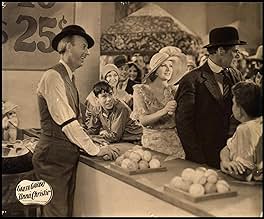


Jack Baxley
- Coney Island Barker
- (uncredited)
Roberta Gregory
- Girl at Coney Island
- (uncredited)
- …
Jack McHugh
- Boy at Coney Island
- (uncredited)
- …

William H. O'Brien
- Waiter at Coney Island
- (uncredited)

Robert Parrish
- Boy at Coney Island
- (uncredited)
- …
- Director
- Writers
- All cast & crew
- Production, box office & more at IMDbPro
6.53.7K
1
2
3
4
5
6
7
8
9
10
Summary
Reviewers say 'Anna Christie' is significant for Greta Garbo's first talking role, with her memorable line. Garbo's performance is lauded for charisma but criticized for her accent. Static camera work and stagy feel are common complaints. Marie Dressler's role is a standout. The story is appreciated for its strong female character and themes of redemption. Despite flaws, it's a historical must-see for Garbo enthusiasts.
Featured reviews
Anna Christie
A woman with a past returns to her alcoholic father living on a shabby boat and falls in love with a sailor.
A deliberately grim movie gained fame as Garbo's first talkie (revealing her warm, silky deep voice), and was simultaneously made in Germany - from a well-known O'Neill play. This version now seems pretty stilted and shows the most typical mistakes of early talkies, but full of vivid moments of great power, full-blooded performances (especially the genial interplay between Garbo and Dressler)and the rare Hollywood quality of gritty realism.
A deliberately grim movie gained fame as Garbo's first talkie (revealing her warm, silky deep voice), and was simultaneously made in Germany - from a well-known O'Neill play. This version now seems pretty stilted and shows the most typical mistakes of early talkies, but full of vivid moments of great power, full-blooded performances (especially the genial interplay between Garbo and Dressler)and the rare Hollywood quality of gritty realism.
Garbo talks!...But unfortunately, so does everyone else!...
Chris is a sailor who owns a coal barge. He finds out that the daughter he hasn't seen since she was an infant, Anna (Greta Garbo), is coming to see him. What he doesn't know is that she had a childhood of abuse and molestation followed by her running away to St. Paul and becoming a prostitute. He says he left her in Minnesota for her own good, to grow up on a farm, but it seems the truth of the matter is that he just couldn't be bothered. As most such men do, he's very interested in his neglected child now that he's old and she's grown. One night Chris and Anna are out on his barge and rescue several sailors. Among them is Matt (Charles Bickford), an Irishman who takes a shine to Anna. But she's still struggling with her past. Complications ensue.
MGM was the only studio Greta Garbo ever worked for in America, and as a studio, MGM was late to the game of talking film. MGM was aware of the risk of putting Garbo before the microphones, and so they delayed her talking debut until 1930, and she actually made the last silent film MGM ever made. But making her character someone who grew up around Swedish Americans in Minnesota explains her accent and it suits her.
Anna Christie, like so many early talking films, is too talkie. Everybody, even tertiary characters, have endless dialogue. Everything is static. By this time the static camera was not such a problem, so I don't know why this comes off as a filmed play.
Garbo, who was always a film actress, seems to get acting in a sound film just fine, even if she does over-emote at times, as though she's still in a silent film and nobody can hear her. Bickford is a bit of a mystery though. He was a stage actor before sound came to films, yet you'd never know that by watching this. He'd made three films before this one - all with sound - so I have no idea what the problem was.
The one really bright spot here? Marie Dressler. She plays Chris's mistress and a former prostitute. Upon meeting Anna, she immediately figures out that Anna belongs to her union, so to speak, but she doesn't give Anna away. Marie Dressler is doing some outrageously good acting here. Her ability to make magic out of plain life jump-started her career.
I'd say this is worth your while for its place in film history.
MGM was the only studio Greta Garbo ever worked for in America, and as a studio, MGM was late to the game of talking film. MGM was aware of the risk of putting Garbo before the microphones, and so they delayed her talking debut until 1930, and she actually made the last silent film MGM ever made. But making her character someone who grew up around Swedish Americans in Minnesota explains her accent and it suits her.
Anna Christie, like so many early talking films, is too talkie. Everybody, even tertiary characters, have endless dialogue. Everything is static. By this time the static camera was not such a problem, so I don't know why this comes off as a filmed play.
Garbo, who was always a film actress, seems to get acting in a sound film just fine, even if she does over-emote at times, as though she's still in a silent film and nobody can hear her. Bickford is a bit of a mystery though. He was a stage actor before sound came to films, yet you'd never know that by watching this. He'd made three films before this one - all with sound - so I have no idea what the problem was.
The one really bright spot here? Marie Dressler. She plays Chris's mistress and a former prostitute. Upon meeting Anna, she immediately figures out that Anna belongs to her union, so to speak, but she doesn't give Anna away. Marie Dressler is doing some outrageously good acting here. Her ability to make magic out of plain life jump-started her career.
I'd say this is worth your while for its place in film history.
OK Overall; Garbo Makes It More Than Worthwhile
This early sound era adaptation of O'Neill's "Anna Christie" would be a decent movie worth seeing on its own, but it is Greta Garbo that makes it particularly worthwhile. The rest of the production is solid, and for the most part, its limitations are common to many other sound movies made in 1930. Garbo herself rises well above the level of the rest of the production, and Marie Dressler is also memorable and effective in her smaller role.
It's easy enough to see why a story like this was chosen for Garbo's first "talking" role. It provides a female central character who offers a ready-made opportunity for an actress like Garbo to demonstrate a good range of abilities, from strength to tenderness, from coarseness to elegance. She has good scenes with several of the other characters. Dressler's raucous performance works well, and she has some very good moments. George Marion is very believable as Garbo's father.
The story itself is an interesting one, with some worthwhile themes, though it does not necessarily lend itself that well to cinema. There are a few times when it might as well just be a filmed stage play, but then there are also a number of times when the camera picks up some good atmospheric details, such as the dockside setting or the New York skyline, that make a good complement to the emotional story.
It's easy enough to see why a story like this was chosen for Garbo's first "talking" role. It provides a female central character who offers a ready-made opportunity for an actress like Garbo to demonstrate a good range of abilities, from strength to tenderness, from coarseness to elegance. She has good scenes with several of the other characters. Dressler's raucous performance works well, and she has some very good moments. George Marion is very believable as Garbo's father.
The story itself is an interesting one, with some worthwhile themes, though it does not necessarily lend itself that well to cinema. There are a few times when it might as well just be a filmed stage play, but then there are also a number of times when the camera picks up some good atmospheric details, such as the dockside setting or the New York skyline, that make a good complement to the emotional story.
"Give me a whiskey, ginger ale on the side, and don't be stingy, Baby."
Garbo's first speaking line, and it must have been thrilling to have such a tremendous foreign star able to make that transition from silent to sound.
The movie is "Annie Christie," the year is 1930, and it is an adaptation of the play by Eugene O'Neill. It concerns a young farm woman, Anna, from Minnesota who comes to New York to find her father, whom she hasn't seen in 15 years. Molested some time earlier, she hates men and has prostituted herself.
Her father takes her on his barge, and she comes to love the sea. One day, they rescue a young man (Charles Bickford), and he and Anna fall in love. However, neither he nor her father know anything of her past.
Garbo is very beautiful and her command of English is amazing. You can tell that she understands every word she is saying, just as you can tell when some actors have learned their role by rote. She acquits herself very well.
Marie Dressler as Marthy, a friend of her father's whom Anna meets in a bar, is marvelous, playing each scene as a drunk. And you really think she is. As someone wrote, you can smell the alcohol on her breath.
That's the good news. The bad news is that this is a very difficult film to watch. Sound and dealing with the camera when you have sound was all very new. The camera didn't move around so it is a very static movie. The actors have several scenes where they all talk at once.
An acting teacher once said, "Eugene O'Neill was our greatest novelist." The actors don't just talk at once, they talk incessantly. There is no action to be had.
I love Eugene O'Neill, I have seen his plays on stage. This film is 85 years old, and it shows.
Definitely worth seeing, however. After all, "Garbo talks!"
The movie is "Annie Christie," the year is 1930, and it is an adaptation of the play by Eugene O'Neill. It concerns a young farm woman, Anna, from Minnesota who comes to New York to find her father, whom she hasn't seen in 15 years. Molested some time earlier, she hates men and has prostituted herself.
Her father takes her on his barge, and she comes to love the sea. One day, they rescue a young man (Charles Bickford), and he and Anna fall in love. However, neither he nor her father know anything of her past.
Garbo is very beautiful and her command of English is amazing. You can tell that she understands every word she is saying, just as you can tell when some actors have learned their role by rote. She acquits herself very well.
Marie Dressler as Marthy, a friend of her father's whom Anna meets in a bar, is marvelous, playing each scene as a drunk. And you really think she is. As someone wrote, you can smell the alcohol on her breath.
That's the good news. The bad news is that this is a very difficult film to watch. Sound and dealing with the camera when you have sound was all very new. The camera didn't move around so it is a very static movie. The actors have several scenes where they all talk at once.
An acting teacher once said, "Eugene O'Neill was our greatest novelist." The actors don't just talk at once, they talk incessantly. There is no action to be had.
I love Eugene O'Neill, I have seen his plays on stage. This film is 85 years old, and it shows.
Definitely worth seeing, however. After all, "Garbo talks!"
Redemption Through Love
In New York, the alcoholic skipper of a coal barge Chris Christofferson (George F. Marion) receives a letter from his estranged twenty year old daughter Anna "Christie" Christofferson (Greta Garbo) telling that she will leave Minnesota to stay with him. Chris left Anna fifteen years ago to the countryside to be raised by relatives in a farm in St. Paul and he has never visited his daughter.
Anna Christie arrives and she is a wounded woman with a hidden dishonorable past since she had worked for two years in a brothel to survive. She moves to the barge to live with her father and one night, Chris rescues the sailor Matt (Charles Bickford) and two other fainted sailors from the sea. Soon Anna and Matt fall in love with each other and Anna has the best days of her life. But when Matt proposes to marry her, she is reluctant and also haunted by her past. Matt insists and Anna opens her heart to Matt and to her father disclosing the darks secrets of her past.
"Anna Christie" is the first talkie of Greta Garbo and a heartbreaking story of a young woman that finds redemption through love. I bought the DVD with both versions of 1930 and 1931, and the version in English is restored and has additional scenes in the beginning and in the ending; however, Jacques Feyder's version in German is better than Clarence Brown's. My vote is seven.
Title (Brazil): "Anna Christie"
Anna Christie arrives and she is a wounded woman with a hidden dishonorable past since she had worked for two years in a brothel to survive. She moves to the barge to live with her father and one night, Chris rescues the sailor Matt (Charles Bickford) and two other fainted sailors from the sea. Soon Anna and Matt fall in love with each other and Anna has the best days of her life. But when Matt proposes to marry her, she is reluctant and also haunted by her past. Matt insists and Anna opens her heart to Matt and to her father disclosing the darks secrets of her past.
"Anna Christie" is the first talkie of Greta Garbo and a heartbreaking story of a young woman that finds redemption through love. I bought the DVD with both versions of 1930 and 1931, and the version in English is restored and has additional scenes in the beginning and in the ending; however, Jacques Feyder's version in German is better than Clarence Brown's. My vote is seven.
Title (Brazil): "Anna Christie"


Did you know
- TriviaThis film was the fifth most popular movie at the U.S. box office for 1930.
- GoofsAt about 1 hr 16 min during Garbo's long speech there is a brief unidentifiable noise, possibly off-stage, that was left in the take.
- Quotes
Anna Christie: Gimme a whisky, ginger ale on the side, and don't be stingy, baby!
- Alternate versionsTwo versions of this film exist: this English-language version was directed by Clarence Brown, while a simultaneously filmed German-language version was directed by Jacques Feyder. The German version has a different running time and features a different supporting cast.
- ConnectionsAlternate-language version of Anna Christie (1930)
- SoundtracksIn the Good Old Summertime
(1902) (uncredited)
Music by George Evans
Lyrics by Ren Shields
Played and sung on a gramophone and by Marie Dressler
- How long is Anna Christie?Powered by Alexa
Details
- Release date
- Country of origin
- Language
- Also known as
- Анна Кристи
- Filming locations
- Production company
- See more company credits at IMDbPro
Box office
- Budget
- $376,000 (estimated)
- Runtime
- 1h 29m(89 min)
- Color
Contribute to this page
Suggest an edit or add missing content