IMDb RATING
5.7/10
1.8K
YOUR RATING

An episodic biography of the 16th President of the United States.An episodic biography of the 16th President of the United States.An episodic biography of the 16th President of the United States.
- Director
- Writers
- Stars
- Awards
- 4 wins total


William L. Thorne
- Tom Lincoln
- (as W.L. Thorne)


Edgar Dearing
- Armstrong
- (as Edgar Deering)


Jason Robards Sr.
- Herndon
- (as Jason Robards)


Cameron Prud'Homme
- John Hay - Secretary to the President
- (as Cameron Prudhomme)

James Eagles
- Young Soldier
- (as Jimmie Eagle)
- Director
- Writers
- All cast & crew
- Production, box office & more at IMDbPro
5.71.8K
1
2
3
4
5
6
7
8
9
10
Featured reviews
Cliff-Notes biopic of the 16th President...
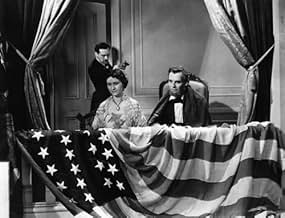
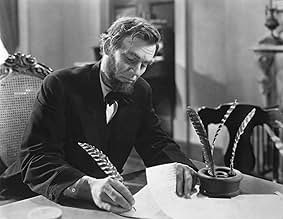
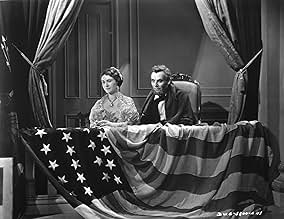
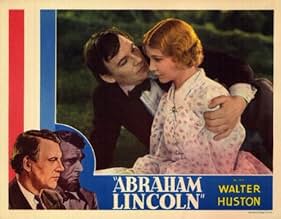
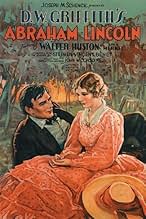
... "personally directed" by D. W. Griffith. Walter Huston stars as Lincoln, shown from his birth through his rough-and-tumble early years, his doomed romance with Ann Rutledge (Una Merkel), his marriage to the eccentric Mary Todd (Kay Hammond), and his election to the presidency, where he presided over the U. S. Civil War, during which he wrote the Emancipation Proclamation freeing the slaves, before being felled by an assassin's bullet.
Like most of Griffith's movies, this is a mixed bag of interesting choices, corny populism, and a rose-colored vision of the past. I was surprised by the opening of the film, set aboard a trans-Atlantic slave ship, featuring slave traders coldly discussing their remaining "inventory" as they toss a dead African overboard. As this was one of a few scenes missing its audio, I have a feeling it was often cut out during exhibition.
I was confused by Griffith's decision to cast E. Alyn Warren as both Stephen Douglas and Ulysses Grant: were there not enough qualified actors around? I liked seeing silent film stalwarts Hobart Bosworth and Henry B. Walthall as General Robert E. Lee and his attendant colonel, respectively. I liked Walter Huston as Honest Abe, and was surprised by how much he looked like the photographs of Lincoln in the last third of the film.
The biopic elements themselves are simplistic and hagiographic, and things seemed rushed, trying to tell his entire life story in 90 minutes. I was not a fan of Hammond as Mary Todd, and felt she dragged the proceedings down quite a bit.
Like most of Griffith's movies, this is a mixed bag of interesting choices, corny populism, and a rose-colored vision of the past. I was surprised by the opening of the film, set aboard a trans-Atlantic slave ship, featuring slave traders coldly discussing their remaining "inventory" as they toss a dead African overboard. As this was one of a few scenes missing its audio, I have a feeling it was often cut out during exhibition.
I was confused by Griffith's decision to cast E. Alyn Warren as both Stephen Douglas and Ulysses Grant: were there not enough qualified actors around? I liked seeing silent film stalwarts Hobart Bosworth and Henry B. Walthall as General Robert E. Lee and his attendant colonel, respectively. I liked Walter Huston as Honest Abe, and was surprised by how much he looked like the photographs of Lincoln in the last third of the film.
The biopic elements themselves are simplistic and hagiographic, and things seemed rushed, trying to tell his entire life story in 90 minutes. I was not a fan of Hammond as Mary Todd, and felt she dragged the proceedings down quite a bit.
Charming biopic undermined by historical revisionism
If Griffith had stuck to Lincoln's personal life, this could have been an interesting, amusing, and occasionally insightful film. Griffith gives us a multi-layered and largely accurate portrait of Lincoln the man. We see the ungainly country lawyer, countrified in speech and manner, often serious, even melancholy, but with a rare ability to find humor in the most unlikely places and to laugh even at himself. We see Lincoln the inveterate story-teller, the insomniac, the doting father, the determined commander-in-chief the patient husband. If this had been the whole of the film, it would have been easy to overlook its painfully outdated style and to forgive its frequent omissions and exaggerations as poetic license.
Unfortunately, the film necessarily includes Lincoln's political life, and here it moves from poetic license to outright falsehood. Slavery was the central issue of Lincoln's political career, a fact that Griffith tries to obscure, going so far as to turn Lincoln's pivotal 'House Divided' speech into an argument against secession. This is particularly ironic since it was really Lincoln's battle cry against encroaching slavery. When South Carolinians seceded two years later, this was the speech they pointed to as proof that when Lincoln took office, "the slaveholding States will no longer have the power of self-government ... and the Federal Government will have become their enemy."
During Lincoln's presidency, the question of slavery occupied much of his time and attention, yet again Griffith chooses to ignore it. His Lincoln spends more time admiring the courage of Confederate soldiers than worrying about slavery. Even the Emancipation Proclamation gets only the briefest attention. Lincoln reads a line from the document, signs it, and says, "Well, gentlemen, it is done." It's oddly dismissive, coming from a man who considered emancipation the central act of his presidency and the most meaningful act of his life.
Denied his opposition to slavery and concomitant commitment to democracy and the inalienable rights of man, Lincoln is reduced to endlessly repeating, "The Union must be preserved." Why it must be preserved is left to the audience's imagination. The film never gives us the slightest clue.
Unfortunately, the film necessarily includes Lincoln's political life, and here it moves from poetic license to outright falsehood. Slavery was the central issue of Lincoln's political career, a fact that Griffith tries to obscure, going so far as to turn Lincoln's pivotal 'House Divided' speech into an argument against secession. This is particularly ironic since it was really Lincoln's battle cry against encroaching slavery. When South Carolinians seceded two years later, this was the speech they pointed to as proof that when Lincoln took office, "the slaveholding States will no longer have the power of self-government ... and the Federal Government will have become their enemy."
During Lincoln's presidency, the question of slavery occupied much of his time and attention, yet again Griffith chooses to ignore it. His Lincoln spends more time admiring the courage of Confederate soldiers than worrying about slavery. Even the Emancipation Proclamation gets only the briefest attention. Lincoln reads a line from the document, signs it, and says, "Well, gentlemen, it is done." It's oddly dismissive, coming from a man who considered emancipation the central act of his presidency and the most meaningful act of his life.
Denied his opposition to slavery and concomitant commitment to democracy and the inalienable rights of man, Lincoln is reduced to endlessly repeating, "The Union must be preserved." Why it must be preserved is left to the audience's imagination. The film never gives us the slightest clue.
Lincoln: "From the log cabin to the White House"
ABRAHAM LINCOLN (United Artists, 1930), directed by movie pioneer D.W.
Griffith, is an interesting antique, being Griffith's first of two
ventures in talking pictures.
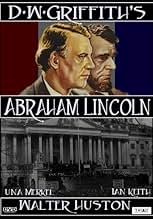
This movie about an American president is more of Griffith's style, in spite that his technique in movie directing has become passé since the start of the roaring twenties. Handicapped by its slow pacing, Walter Huston gives a very fine performance in his title role, with Kay Hammond somewhat satisfactory as his wife and later first lady, Mary Todd Lincoln, along with Ian Keith adding fine support with his few scenes as John Wilkes Booth, a crazed stage actor who puts an end to Lincoln's life on that tragic day of April 14, 1865. However, it is Una Merkel as Ann Rutledge, Lincoln's true love interest in the early portion of the story, whose performance weakens the film. This capable actress might have made a go with her role if it weren't for some bad dialog she recites, such as responding to Lincoln following his proposal to her, "Yes, Abe. You've got your gingerbread." Then there are Griffith screen veterans of the silent era, Henry B. Walthall as Colonel Marshall; Hobart Bosworth as General Robert E. Lee; and the great character actress, Lucille LaVerne, the spiteful old hag in ORPHANS OF THE STORM (1921) appearing in an opening scene as Mrs. Lincoln's midwife. Her raspy voice fits her personality to a "T".
With the screenplay by Stephen Vincent Benet, this epic biography with episodic events opens with the birth of a great man, Abraham Lincoln, on February 12, 1809. Moments later viewers find the infant now "the ugliest and smartest man in New Salem" clerking at Denton Offut's general store, his romance with young Ann Rutledge who later dies, and functioning as a young lawyer. After he meets Mary Todd at a society ball, the scene shifts to Lincoln as a bridegroom having second thoughts about attending his own wedding. He eventually marries her. Move forward to the 1860 Lincoln-Douglas (E. Alyn Warren) debate, which, as seen on screen, is not much of a debate but just two participants delivering a few words of dialog each. Lincoln wins the presidency and is soon faced with his long battle with the Civil War and placing Colonel Ulysses S. Grant (Fred Warren) in charge to put an end to it. After the end of the war, 1865, Lincoln wins his second term election, but doesn't live to fulfill it.
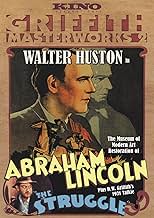
Originally released in theaters at 97 minutes, ABRAHAM LINCOLN in recent years has become a public domain title distributed by various video companies, most presenting bad copies with shorter lengths, many cut down to about 84 minutes, some eliminating scenes with Lincoln heading over towards the cemetery during a thunder storm crying over Ann's grave; another involving Lincoln tender moments with his youngest son, Tad (Gordon Thorpe). After coming across these inferior copies in video stores, I've managed to locate an excellent and more accurate video copy in 1986, compliments of Blackhawk Video. Not only was the video print clear in both visuals and sound, it included restored events eliminated from reissue copies, the ones that had played on Arts and Entertainment channel, Turner Classic Movies (where it made its debut March 8, 2007) and many public television stations during the late night hours. Reissue prints begin with a view of a log cabin and sound track of whistling winds superimposed with the title of February 12, 1809. In the nearly restored 93 minute video copy, it begins with a five minute prologue done in the silent film tradition showing slaves being shipped to the United States followed by other historic events and conversations amongst various politicians (one of them played by Henry Kolker), before shifting towards the event of Lincoln's birth in a log cabin. There are other silent sequences interacted into the story later on, as well as some off screen singing in the sound track not shown in the edited versions.
It's been said that ABRAHAM LINCOLN was a financial and critical success upon release. By today's standards, it hasn't stood the test of time. Future retelling on Lincoln's life, YOUNG MR. LINCOLN (1939) with Henry Fonda, and ABE LINCOLN IN ILLINOIS (1940), with Raymond Massey, are both excellent in their own way and continue to hold interest. However, Griffith's adaptation is the only one of the three mentioned to focus on the Civil War. Regardless of its handicaps, Griffith's first talkie on the life of Lincoln has some interesting moments, but otherwise it's a rather dull affair. Worth viewing for history buffs, but aside from Lincoln's frequent remark, "The union must be preserved," don't expect an accurate history lesson out of this. (**1/2)
This movie about an American president is more of Griffith's style, in spite that his technique in movie directing has become passé since the start of the roaring twenties. Handicapped by its slow pacing, Walter Huston gives a very fine performance in his title role, with Kay Hammond somewhat satisfactory as his wife and later first lady, Mary Todd Lincoln, along with Ian Keith adding fine support with his few scenes as John Wilkes Booth, a crazed stage actor who puts an end to Lincoln's life on that tragic day of April 14, 1865. However, it is Una Merkel as Ann Rutledge, Lincoln's true love interest in the early portion of the story, whose performance weakens the film. This capable actress might have made a go with her role if it weren't for some bad dialog she recites, such as responding to Lincoln following his proposal to her, "Yes, Abe. You've got your gingerbread." Then there are Griffith screen veterans of the silent era, Henry B. Walthall as Colonel Marshall; Hobart Bosworth as General Robert E. Lee; and the great character actress, Lucille LaVerne, the spiteful old hag in ORPHANS OF THE STORM (1921) appearing in an opening scene as Mrs. Lincoln's midwife. Her raspy voice fits her personality to a "T".
With the screenplay by Stephen Vincent Benet, this epic biography with episodic events opens with the birth of a great man, Abraham Lincoln, on February 12, 1809. Moments later viewers find the infant now "the ugliest and smartest man in New Salem" clerking at Denton Offut's general store, his romance with young Ann Rutledge who later dies, and functioning as a young lawyer. After he meets Mary Todd at a society ball, the scene shifts to Lincoln as a bridegroom having second thoughts about attending his own wedding. He eventually marries her. Move forward to the 1860 Lincoln-Douglas (E. Alyn Warren) debate, which, as seen on screen, is not much of a debate but just two participants delivering a few words of dialog each. Lincoln wins the presidency and is soon faced with his long battle with the Civil War and placing Colonel Ulysses S. Grant (Fred Warren) in charge to put an end to it. After the end of the war, 1865, Lincoln wins his second term election, but doesn't live to fulfill it.
Originally released in theaters at 97 minutes, ABRAHAM LINCOLN in recent years has become a public domain title distributed by various video companies, most presenting bad copies with shorter lengths, many cut down to about 84 minutes, some eliminating scenes with Lincoln heading over towards the cemetery during a thunder storm crying over Ann's grave; another involving Lincoln tender moments with his youngest son, Tad (Gordon Thorpe). After coming across these inferior copies in video stores, I've managed to locate an excellent and more accurate video copy in 1986, compliments of Blackhawk Video. Not only was the video print clear in both visuals and sound, it included restored events eliminated from reissue copies, the ones that had played on Arts and Entertainment channel, Turner Classic Movies (where it made its debut March 8, 2007) and many public television stations during the late night hours. Reissue prints begin with a view of a log cabin and sound track of whistling winds superimposed with the title of February 12, 1809. In the nearly restored 93 minute video copy, it begins with a five minute prologue done in the silent film tradition showing slaves being shipped to the United States followed by other historic events and conversations amongst various politicians (one of them played by Henry Kolker), before shifting towards the event of Lincoln's birth in a log cabin. There are other silent sequences interacted into the story later on, as well as some off screen singing in the sound track not shown in the edited versions.
It's been said that ABRAHAM LINCOLN was a financial and critical success upon release. By today's standards, it hasn't stood the test of time. Future retelling on Lincoln's life, YOUNG MR. LINCOLN (1939) with Henry Fonda, and ABE LINCOLN IN ILLINOIS (1940), with Raymond Massey, are both excellent in their own way and continue to hold interest. However, Griffith's adaptation is the only one of the three mentioned to focus on the Civil War. Regardless of its handicaps, Griffith's first talkie on the life of Lincoln has some interesting moments, but otherwise it's a rather dull affair. Worth viewing for history buffs, but aside from Lincoln's frequent remark, "The union must be preserved," don't expect an accurate history lesson out of this. (**1/2)
Yes, it is bad, but...
I think it qualifies as a must-see film for all true scholars of the cinema. That is not to say that it is a good film. It is most certainly not. But this is really a perfect film in which to study the biggest change that this artistic medium ever experienced, the change from silence to sound. The whole film comes off as so, so awkward. It doesn't help that the script is awful. The film is actually over-ambitious, trying hard to cover the entire life of Abe, from birth to death. However bad Abraham Lincoln is, though, I myself found it more than watchable and always fascinating. 6/10.
"A nightmare of the mind and nerves" indeed, for Griffith and us!
No doubt about it, D.W. Griffith was one of the great directors of the early silent era. "Birth of a Nation," "Intolerance," "Orphans of the Storm," even a lesser-known film like "The Musketeers of Pig Alley" are all now regarded as classics. Unfortunately, for whatever reasons, Griffith couldn't maintain his success record, and, by the time he made his first all-talking film, "Abraham Lincoln," he was in the midst of a major slump that he just couldn't pull out of. The film is static, stilted, and moves at a snail's pace. Walter Huston, Ian Keith, Henry B. Walthall, and most of the rest of the cast all had distinguished careers in sound films, but here they are merely wasted, unable to cope with the tedious dialogue and Griffith's uncharacteristicly stiff direction. Worst-served of all, though, is Una Merkel, here in one of her first films. I can't believe that Anne Rutlidge could have been such a sugary simp as we're led to believe by her performance here, and her death scene is only exceeded for bathos by Ali McGraw in the last scene of "Love Story." In sum, a major disappointment, a good cast wasted, and a sad farewell form one of American film's true pioneers. Griffith described making this film as "a nightmare of the mind and nerves," and, unfortunately, that's just what it is, for him and us.


Did you know
- TriviaThis was D.W. Griffith's first sound film. Abraham Lincoln (1930) was also the first sound film about the Civil War which veterans of that war could view.
- GoofsIn both the Union and Confederate parades, the musicians play trombones with forward facing bells. During the Civil War, the bells faced backwards.
- Quotes
[death scene]
Ann Rutledge: I know the truth, dear. It's goodbye.
Abraham Lincoln: No, no, Ann, dear. You're not going to leave me. I won't let you!
Ann Rutledge: We must be brave, dear...
[looking up to the heavens]
Ann Rutledge: Don't take me away. Don't take me away! It's so dark and lonesome!
Abraham Lincoln: Ann, you mustn't let go.
Ann Rutledge: If they'd sing, I wouldn't be so afraid.
[a chorus of "Sweet By and By" swells up in the background]
Ann Rutledge: We will meet there, dear.
- Alternate versionsOriginally, this film was color-tinted in sepia-tone, with blue for night scenes. These prints also had a prologue. Current public-domain prints are in black and white, minus the prologue with a shorter running time.
- ConnectionsEdited into General Spanky (1936)
- SoundtracksBattle Hymn of the Republic
(ca 1856) (uncredited)
Music by William Steffe
Lyrics by Julia Ward Howe (1862)
Played during the opening credits and often in the score
Sung by an offscreen chorus during a civil war scene
- How long is Abraham Lincoln?Powered by Alexa
Details
- Release date
- Country of origin
- Language
- Also known as
- D.W. Griffith's Abraham Lincoln
- Production companies
- See more company credits at IMDbPro
- Runtime
- 1h 36m(96 min)
- Color
- Aspect ratio
- 1.20 : 1
Contribute to this page
Suggest an edit or add missing content